Featured Post

SIX KEYS TO A LITERARY GENETIC CODE

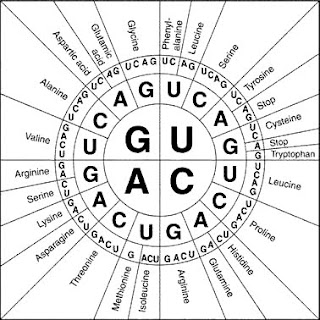
In essays on the subject of centricity, I've most often used the image of a geometrical circle, which, as I explained here,  owes someth...

Tuesday, July 11, 2023

THE READING RHEUM: THE WONDERFUL WIZARD OF OZ (1900)


At the time Baum's WONDERFUL WIZARD OF OZ was published, the adult fantasy genre had arguably just been launched, however uncertainly, by William Morris in the decade before his death in 1896. Adult fantasy got off to a slow start in the early twentieth century, but juvenile fantasy had already enjoyed many successes in the Victorian era. Baum's immediately successful book was the first major American fantasy-work, although Great Britain was not slow to follow up with the more complicated genesis of Peter Pan, whose earliest iteration appeared in 1902.

Like most contemporary readers I'm only familiar with the well-known works of juvenile fantasy in this period. Still, I think it's likely that most such works were episodic, like the earlier ALICE books by Carroll. There are many unifying themes and tropes in WIZARD, but I emphasize that for everyone who first experienced the classic 1939 film, one will not find the strictly linear structure of the Hollywood effort. 

The biggest discrepancy I noticed on this re-read is that the title is something of a misnomer. As in the movie, the Wizard of Oz is a humbug who only satisfies the wish-dreams of Dorothy's companions with benign trickery, but who utterly fails to get Dorothy home. Dorothy's Silver Shoes, the legacy of her accidental slaying of the Witch of the East, possess the same inherent power as the movie's ruby slippers: to get her back home immediately. The movie's good witch Glinda withholds this information from the protagonist, but in the novel, the unnamed Witch of the North, who succors Dorothy in Munchkin-land, does not seem to know this. In response to Dorothy's tearful desire to get back to Kansas, the North-Witch transforms her cap into a magical slate, and the slate advises, "LET DOROTHY GO TO THE CITY OF EMERALDS." Note that the oracular slate does not actually tell Dorothy to seek out the Wizard of Oz; that's the North-Witch's interpretation of the message.

Of course the true "wizard" behind the narrative wants Dorothy to go to the Emerald City so that she will encounter all of her "magical friends." Scarecrow, Tin Woodsman and Cowardly Lion, whatever their assorted limitations, are all male and thus make reasonably formidable protectors for Dorothy and Little Toto on her journey. Certainly they are more efficacious masculine presences than the Wizard himself. Neither Baum nor the 1939 movie ever justify the Wizard's claim that he will solve his petitioners' problems if they slay the Witch of the West. But since the Wizard's mainly concerned with protecting his reputation with his subjects, the logical suspicion is that he doesn't really expect the four travelers to accept the task.

Dorothy's three buddies make an impressive stand against the Witch's allies-- wolves, crows, and bees-- but this just forces the sorceress to use her ace in the hole: the flying monkeys, who decimate both the Woodsman and the Scarecrow while abducting Dorothy, Toto and the Lion. A protective spell from the North-Witch ensures that the Witch can't kill Dorothy, so she turns her into a serving-drudge (not sure how different this is from the little girl's Kansas chores) while trying to bend the Lion to her will. (I don't think anything is said about what protects Toto.) It's only when Dorothy is in the Witch's power that the latter realizes that the little girl has the Silver Shoes, so the dried-up old crone tries to steal them. It's at this point that the Witch's imposition of hard chores backfires. Baum's text only says that there's a bucket of water nearby in the kitchen when the Witch trips Dorothy and steals one of her shoes. But since the Witch's dried-up nature is explicitly said to forbid her touching water, it's implicit that Dorothy filled the bucket in order to mop the floor. Though Dorothy has disavowed both any desire, or any ability, to kill anyone, the theft of one Silver Shoe, the only thing she still possesses, enrages her into hurling the water, killing the sorceress.

Through an involved set of circumstances, Dorothy gets the right advice not from any magical entity, but from an unnamed soldier of Oz, who speculates that maybe Glinda, Witch of the South, can help her get to Kansas. Arguably the real purpose of this secondary quest is to make sure all of Dorothy's friends will prosper once she's gone. The now-brainy Scarecrow has already succeeded the absent Wizard in ruling Oz, and in the process of seeking Glinda, the now-courageous Lion finds a forest where he can rule, and the Woodsman expresses a rather belated desire to become the ruler of the Winkies in the West-Witch's former domain. Once this is done, Dorothy wishes herself back home, albeit losing the Silver Shoes in the process. She returns to gray old Kansas, where her uncle has even built a new farmhouse to replace the one lost to Oz-- though in later books, Baum would eventually have his young protagonist move permanently to Oz and leave dull Kansas behind.

Though Dorothy is always presented as a thoroughly average little girl, she fulfills the role of "the reluctant hero," who transforms the lives of her friends and of an entire domain, even though all she wants to do is return home. It's interesting that even though the protagonist does need male protectors, the female Witches are the real repository of knowledge in Oz, and in a symbolic sense Dorothy really is a witch-in-training, acquiring the weapons of her opponents, even though she uses them to set others free from tyranny. In this she reflects an ethos which, while not exclusively American in nature, definitely reflects the reformist American ethos at the time of Baum's authorship. At this time I've read none of the Oz sequels, but I would expect that many of the author's favorite themes and tropes continue to take interesting forms.


Thursday, July 6, 2023

THE READING RHEUM: NYARLATHOTEP (1920)

 In this story the narrator is barely more than a floating eyeball as he describes the advent of the titular being. The story is also a return to the "vignette form," which may show a certain Poe influence.

Nyarlathotep is the first named being whom HPL later imports into the panoply of god-like beings in the so-called Cthulhu Mythos. He would seem to be the only one who can assume human form, for the narrator relates that during a time of major world upheavals, Nyarlathotep appears in the guise of an Egyptian who looks "like a Pharaoh." The mysterious being begins attracting numerous listeners to his lectures on "electricity and psychology," none of which HPL details.

The Egyptian lecturer comes to the narrator's bailiwick, a "terrible city of unnumbered crimes." (I found myself thinking of Biblical Sodom, visited by angels who implicitly inform God that He should destroy the city.) The narrator attends the lectures along with "restless crowds," and somehow they are all translated into one or more alien worlds, dominated by "the blind, voiceless, inindless gargoyles whose soul is Nyarlathotep."

THE READING RHEUM: BEYOND THE WALL OF SLEEP (1919)

BEYOND THE WALL OF SLEEP was written before STATEMENT OF RANDOLPH CARTER but saw print after CARTER, both appearing in amateur zines before seeing reprint in WEIRD TALES. SLEEP is therefore the first true manifestation of HPL's great talent.

Herein the author first articulates his idea that human who experience dreams that suggest weird, transmundane realities are in truth tuned in to such cosmic abnormalities. The narrator is an employee at a mental asylum who just happens to be experimenting with a telepathy machine. He gets the chance of a lifetime when Joe Slater, a dirt-poor, uneducated Catskills man, is sent to the asylum for having killed one of his fellows in a moment of violent delirium.

The "alienist," as he is sometimes termed, is fascinated that an utterly ignorant specimen of "white trash" can relate "chaotic but cosmic word pictures." In particular Slater rants about beholding some malign entity, a "thing that shines and shakes and laughs," that seems to be his enemy, and that Slater feels "himself a luminous thing of the same race as his enemy." The alienist has no empathy for the confused mental patient, reflecting much of the author's contempt for Slater; the narrator just wants to get to the bottom of the mystery. 

His early efforts are unsuccessful, but Slater takes a turn for the worse, apparently dying due to the "turmoil in his brain." It's at this point that the experimenter attaches his telepathy machine to both Slater and himself. Falling asleep, the alienist finds himself experiencing spectacular extraterrestrial planes of existence. He also communicates with a being of pure light, who purports to be "an entity like that which you yourself become in the freedom of dreamless sleep." HPL may have derived this basic notion from occult concepts of "higher selves," though he ties the concept into SF-concepts such as time-travel and alien life, since the light-being's kind can also inhabit the dreams of creatures like "the insect-philosophers" from the fourth moon of Jupiter. The light-being concludes his colloquy with the narrator by expressing the hope that he will someday re-encounter the alienist in his light-form, but only after the light-being gains vengeance on his enemy, located out near "Algol, the Demon Star." The narrator wakes and finds Slater dead, and later hears of what seems to be a massive stellar explosion in the area of Algol.

Many commentators have talked about HPL's abhorrence for non-white races, and sometimes even for white ethnicities that the author considered decadent. I don't deny that he sported these racist views to make himself feel superior. Yet it's interesting that the first example of a wretched ethnicity in HPL's fiction-cosmos is lowborn "white trash," and the author treats Slater just as condescendingly as he would ever treat any other ethnic figure. Even when Slater is dead, the alienist can't resist commenting on his "hideous face" and "repulsively rotten fangs." In my opinion HPL was always separated from most of humanity thanks to his superb intellectual attainments, meaning that he related no better to most whites than he did to non-whites. Yet because HPL knew that he was of the same common clay as the most ignoble human being, and thus his fiction is filled with examples of his fear of degenerating into something inferior. (In Jungian terms Slater would be "the shadow" who incarnated that dominating fear of bodily devolution.) But in contrast to this trepidation, HPL poses the possibility of enchanting, ethereal vistas of the sort he experienced in his most cosmic dreams-- and SLEEP is notable for giving both sides equal symbolic representation.

THE READING RHEUM: "THE STATEMENT OF RANDOLPH CARTER" (1920)

 Unlike DAGON, STATEMENT is a story with a clear beginning, middle and end. Though the narrator Randolph Carter begins much like the unnamed DAGON protagonist, by relating a story that will end with a dire revelation, HPL doesn't execute Carter at story's end, and he went on to use the character in three later stories. 

In STATEMENT the calamity befalls Carter's boon friend Harley Warren, who is clearly the initiator of "terrible researches into the unknown." Warren drags Carter to a cemetery at night so that Carter can help Warren break into a sealed sepulchre. Warren tells Carter than his researches indicate that some strange entities may abide in the tomb, but he doesn't want Carter to go down into the sepulchre because Carter has "frail nerves." But while he descends, Warren calls up "color commentary" on what he's experiencing to Carter. Warren doesn't describe what he sees, but he suddenly yells for Carter to replace the sepulchre slab and run away. Carter doesn't leave, but he also can't force himself down into the tomb, and then he passes out when a strange voice from the tomb announces that "Warren is dead." Carter apparently passes out and is later found by police, who are probably the persons listening to Carter at the story's outset. Carter's last sight is of "amorphous, necrophagous shadows" dancing beneath "an accursed waning moon," but whether or not these are literal monsters or not is never clear.


DEPARTMENT OF COMICS CURIOSITIES #24: "NOAH'S ARK FROM SPACE" (BLACKHAWK #162, 1960)

 Largely by accident I chanced upon this forgotten issue from the generally forgettable DC BLACKHAWK title that lasted roughly from 1956 to 1970. "Noah's Ark" features a nuclear family of aliens who come to Earth seeking a new home, and who get aid and comfort from the justice-loving Blackhawks. For no explicit reason the three aliens bring along some alien beasts from their dying world, which of course cause some of the story's conflict. Arguably the story's raconteurs did come up with a menagerie of monsters that was slightly more imaginative than the average. 


Not so much the Dridath Bull:


But rather the Lightning-Lion--


And more importantly for Students of DC Anthropoidology, an "Octi-Ape" on the cover.


But what's curious about this 1960 story is that the three aliens are opposed by hostile, prejudiced Earthlings, who call the ETs "Greenies." 


By story's end, exigent circumstances force the ark-aliens to depart. Still, minor though the story is, I'm not aware of any DC superhero stories between 1955 and 1965 that even address any sort of prejudice. Yes, some war stories and PSAs, but not so much the fantasy-content books.

Wednesday, June 28, 2023

GLAD TO MEET YOU FOR THE FIRST TIME AGAIN

 So, Batman. He spends about a year fighting crime on his lonesome. According to my system of interordination, he's the sole superordinate icon, and everyone in his orbit, whether allies like Commissioner Gordon or adversaries like Doctor Death (the crusader's first super-villain), are subordinate icons, aligned to his cosmos and that of no one else.

Then Robin appears in early 1940, and for whatever reason, the creators behind the comics also begin churning out many of the important adversaries-- Joker, Penguin, Catwoman, Scarecrow-- and at least one of the most important allies, a tubby butler named Alfred. Now, because Batman and Robin have become the two members of a bonded ensemble, all of the icons in Batman's cosmos are also icons in Robin's cosmos. This state of affairs persists until about 1970, when the original Batman-and-Robin team is essentially terminated, perhaps to help scrub the comic-book features from lingering associations with the 1966 teleseries.

A fine point of this shared cosmos, though, is that Robin, by virtue of being in a bonded ensemble with Batman, also shares all the icons he never actually encounters, and the same is true of Batman.


For instance, Robin does not meet the aforementioned Doctor Death in either of the villain's two 1939 exploits. Dick Grayson doesn't meet a villain of that name until the 1970s. Nevertheless, by the transitive effect I've outlined elsewhere, Doctor Death is a "Robin villain" as much as he is a "Batman villain," even though Robin never meets him.


On a similar theme, Robin had his own stand-alone series in STAR-SPANGLED COMICS, beginning in 1947. Batman occasionally guest-starred in some stories but in general Robin handled each story's conflict on his own, such as the Boy Wonder's first encounter with a recurring, generally unimpressive criminal called The Clock. Nevertheless, by the same transitive property, The Clock is also in Batman's alignment-cosmos even if Batman never meets the evildoer.

All that said, the bonded ensemble of the Dynamic Duo comes to an end in the 1970s, For the remainder of that decade, Robin either operates alone, or in two other forms of ensembles: 

--the "unbonded" ensemble in which he has brief, semi-regular teamups with Batgirl II--

 --or the semi-bonded ensemble, in which he gravitates to two different iterations of the TEEN TITANS: one iteration a huge successful, the other a pathetic flop.


During this time, when he's no longer in an ensemble with Batman, no subsequent Bat-villains are within Robin's cosmos. So, even though Original Doctor Death is in the Batman-and-Robin cosmos even though Robin never meets him, Ra's Al Ghul is not in Robin's separate cosmos even though Robin DOES meet the villain when he Robin is guest-starring in one of Batman's stories. 

Robin-on-his-own does not lose his alignment with any earlier B& R villains, like Poison Ivy. Second Robin Jason Todd is immediately aligned with all previous Bat-villains as soon as he's part of the official Bat-ensemble, of course, because Jason inherits the transitive effect of the bonded ensemble through his relationship with Batman. But any villain encountered first by the Bruce-and-Jason team in the eighties, such as Black Mask, is outside the cosmos of Dick Grayson, who by that time takes on the distinct identity of Nightwing.


Now, this gets amusingly complicated with respect to those allies who weren't designed to be part of the bonded ensemble. The Barbara Gordon Batgirl is an ally, and a subordinate icon, to the Batman-Robin team for roughly the first five years of her comic-book existence. Because the character receives an ongoing series within five years of her last peripatetic appearance, all of her appearances in any BATMAN features, or in titles like JUSTICE LEAGUE or BRAVE AND BOLD, can be deemed "stature-crossovers" between her, the Batman-Robin team, and any other stature-character, because the Gordon-girl does get a clear path to the stature of a featured character. 


Because Batgirl Number Two exists in her own separate cosmos, and is not part of the bonded ensemble,a Batman-and-Robin villain like Killer Moth is in no way aligned with the Batgirl cosmos as it eventually develops, even though he's the first costumed villain Gordon-girl literally encounters. Even when Killer Moth eventually encounters the "Dominoed Dare-Doll" in a story within her own feature, the Moth remains unaligned with Batgirl and remains a "guest villain."


HOWEVER, in the 1967-68 season of the BATMAN teleseries, Batgirl becomes part of the bonded ensemble with the season's first episode, and within that separate media-cosmos, the "Dynamic Duo" becomes "the Terrific Trio." I have deemed the initiating episode of that series to be a stature-crossover, based on the separate status of the characters in the comics, but after that every subsequent episode is a non-crossover because Batgirl *has* joined a bonded ensemble within the context of the TV show. Thus, when Batgirl meets, say, Catwoman for the first time, Catwoman is immediately just as much Batgirl's foe as she is that of Batman and Robin-- and so there is no villain-meeting-unaligned-hero vibe present.


Sunday, June 25, 2023

NULL-MYTHS; BATMAN: THE DOOM THAT CAME TO GOTHAM (2015)


Someone somwhere might be able to do something worthwhile with the idea of overlapping Batman's Gothic horrors with the cosmic calamities of H.P. Lovecraft. But neither artist Troy Nixey nor writers Mike Mignola and Richard Pace came anywhere near the mark.

So it's another Batman Elseworlds. This time Bruce Wayne and his parents are around for Gotham City's founding in the early 20th century, and twenty-plus years after the death of the Waynes, Bruce launches his career as Batman. He even has two wards this time, Tim Drake and Dick Grayson, though neither is being prepared for sidekick status. He has no rogues' gallery, nor does he get involved with any form of street crime, and yet, when a Lovecraftian doom comes to Gotham, many analogues of the rogues show up in new guises: Penguin, Two-Face, Man-Bat, and Mister Freeze. At least the authors didn't resort to the overused Joker and Catwoman.

Ra's Al Ghul and his daughter Talia are fundamentally responsible for unleashing some sort of demon-gods. None of them are given the same names as the Lovecraft myth-figures, and though I tend to think there's no copyright protection for the original stories, it's possible that some gaming concern has control of, say, the name "Yog-Sothoth," which might be the reason the raconteurs came up with a facsimile fiend. Of course that means that these aren't even weak templates of the Lovecraft monsters, and so there's no crossover potential with any of these new creations. 


Troy Nixey's art sometimes achieves a good creepy vibe, but he draws a lot of characters off-model, and his demon-gods aren't particularly compelling. The story's hard to follow thanks to the authors' desire to play to Bat-fans by injecting rogue-analogues all over the place. Not only is the story a disservice to the concepts of Lovecraft, it's even dull as a Batman story. I only read it because it's been adapted into a DTV animated film and I may want to review that in future.