Featured Post

SIX KEYS TO A LITERARY GENETIC CODE

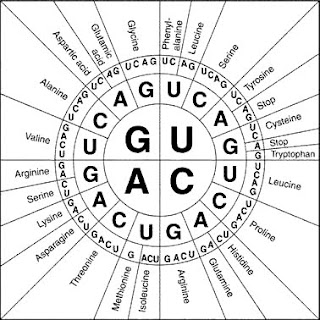
In essays on the subject of centricity, I've most often used the image of a geometrical circle, which, as I explained here,  owes someth...

Showing posts with label stan lee. Show all posts

Thursday, September 3, 2026

CATFIGHT AT THE P.P. CORRAL

 In my review of ONE MORE DAY, I said:

I also heard that this retcon came about because editor Joe Quesada-- who also furnished the art for DAY-- didn't like the status quo of Peter Parker being married to Mary Jane. Unlike many of DAY's critics, I didn't have strong feelings about the marriage. I found it mildly pleasing that Parker should enjoy a measure of domestic contentment, not least because the post-Silver Age Parker wasn't, in my opinion, ever likely to generate scads of romance-subplots.

What I should have said was "scads of GOOD romance-subplots." Even though I ceased keeping track of SPIDER-MAN continuity by the end of the nineties, I was aware that there had been various attempts to give Peter Parker girlfriends aside from Mary Jane Watson. I've forgotten most of them, except for the Black Cat, who was a lot of fun but not any real competition for Mary Jane, any more than any of the others.

This thought, however, did send me down a new rabbit-hole. Why did it work, the schtick of Peter having two beautiful glamour-queens courtesy of John Romita? Obviously, editor/writer Stan Lee wanted to promote the idea of "Peter the Swinger," and I was far from the only one who liked it, since SPIDER-MAN's preteen/adolescent audience embraced the change. 

To be sure, it wasn't totally out of left field. Parker started out with just one prospective girlfriend, secretary Betty Brant, but within a year or so Lee and Ditko gave Betty competition in high-school vixen Liz Allen. Throughout the Ditko years Parker dressed and talked like a square, but since he was good-looking, the idea of two pretty-but-not-glamorous girls competing for him was not far-fetched. 


However, in ASM #25 the creators decided to further tease the romance-loving readers by giving them an on-camera sample of a third source of competition. Up to that point Mary Jane Watson had only been referenced by name a few times, as the niece of Aunt May's friend. Mary Jane finally appears, but cagey Ditko doesn't allow readers to see her face. Lee's dialogue, however, established that when Betty and Liz lay eyes on her, they think she's movie-star gorgeous-- which was clearly meant to be a joke on Parker, since he had been avoiding any introduction to MJ, on the supposition that she was a dog.


The Mary Jane situation was dropped for the next year, during which time the decision was made to write out Liz and to officially kill Parker's relationship with Betty. However, both Lee and Ditko weren't intending at that point to leave their hero pining away, for at college Parker had his first encounters with Gwen Stacy. As abrasive as those encounters were, there could be little doubt that Lee and Ditko meant to promote Gwen as the new love-interest. Presumably Ditko didn't forget Mary Jane entirely, but when he quit the book in 1966, any plans he might have formed became null and void. Lee was thus responsible for resurrecting Mary Jane, partly in the knowledge that John Romita would be perfect to depict the red-haired gamine.


Surprisingly, given Lee's history with romance-humor strips like MILLIE THE MODEL, it took a long time for Gwen and MJ to become rivals, particularly in comparison to the rapid declaration of the Betty-Liz hostilities. Since Gwen's introduction, Parker hadn't dated Gwen or even asked her out, but he clearly fancied her. As for Gwen, in her less demanding moments she defended Parker against the attacks of Flash Thompson, whom she did apparently date (though one presumes he was always kept at arm's-length). Gwen seems indifferent when Parker starts dating MJ, but in issue #48 it finally becomes evident that the two girls are fully aware of one another's hot-titude, and that a subtle feminine gauntlet has been thrown.


 With ASM #53 the duel begins in earnest. Gwen, despite not having pursued Parker before this, wangles an invite to accompany Parker to a science exhibit on the excuse that she's a "sci major." This may be the first and last time she or anyone else makes such a statement until the character shows up in the 2012 AMAZING SPIDER-MAN movie. Flash Thompson gets drafted during the time-period and it seems that Gwen makes him no promises about not sitting under any apple-trees with other suitors.


Once Flash is out of the way, the duel morphs into an ongoing set of skirmishes, in which it's obvious that Gwen and MJ are both warm for the same form, and they compete with assorted putdowns and catty remarks. At the same time, it's interesting that even though there was a superficial attempt to make Parker seem less square, Lee did not keep the two competitors in an endless Betty-and-Veronica dance. Even during MJ's earliest appearances, Lee took pains to show Gwen as the "good girl," while MJ was "the good times girl." That said, in the SPIDER-MAN universe neither lady would have slept with anyone out of wedlock, so both were essentially "good girls" in practice. But Gwen's affections were the "hard get," and so she got the editorial nod of preference.

In due time, though, once the feud was over and Gwen won the field, it became readily apparent that if Parker had a permanent girlfriend, that boxed in the hero romantically. And so when Roy Thomas and Gerry Conway proposed killing off Gwen Stacy, Lee-- who was no longer writing the feature anyway-- enthusiastically agreed, according to Thomas's assertions. Presumably all of them knew that this would necessitate moving Mary Jane back into romantic prominence. And though I'm no fan of the Gerry Conway SPIDER-MAN overall, I must admit he did a decent job of elevating the "good times girl" into respectable sweetheart material.

Shuttling back at last to my main point, why did the Gwen-MJ competition work in its day? Certainly Parker was more charismatic than average shlub Archie Andrews, who also managed to become the quarry for two females who looked like professional models. But I find it interesting that while Lee could have tossed Gwen and MJ into competition right away, as he and Ditko had done earlier with Betty and Liz, Lee played out the rivalry for close to a year's worth of stories until it finally took shape. Was Lee just drawing things out because he'd allowed Ditko to plot the feature for the last few years of their collaboration? Lee may have wanted to take more time with the soap-operatics, particularly if it was the case that his main collaborator Romita needed more script-guidance than Ditko had. But for me at least, the rivalry of Gwen and MJ succeeds because the two females decide of their own accord to compete over Parker. They certainly did not do so in response to his propensity to be any sort of "ladies' man." As presented by Lee and Romita, at least part of their motivation is to see whose glamorous light shines more brightly.


Monday, June 22, 2026

MARVEL COMICS: IMAGINE A WORLD WITHOUT THEM PT 2


In Part 1, I credited Stan Lee with founding Marvel Comics. This does not mean that I think he created every Marvel character or even necessarily oversaw every development during his period of peak creativity from roughly 1961 to 1972. But I consider the opposite position-- that either Jack Kirby or Steve Ditko did everything and that Lee just took the credit-- to be utterly moronic. The slightly more nuanced view that Lee allowed Kirby and Ditko to maximize their creativity while he just kibitzed a little isn't much better. But it does at least touch on an important truth, one that impacts on how Lee's Marvel saved the comics industry from going the way of an extinct phenomenon like the Big Little Book (a comparison advanced by Big Name Fan Dwight Decker in the pages of AMAZING HEROES). 

Stan Lee as a writer did not possess the raw creativity of Kirby or Ditko, but in some cases his creative instincts were better than theirs and of anyone else in his employ. He was an editor first and a writer second, but since it's an editor's job to oversee a company's offerings to its customer base, that meant that he always had to see the Big Picture. And his oversight, starting with FANTASTIC FOUR #1 in 1961, can be summed up in one word: connectivity, "the state of being connected." 

In most of my earlier writings on Early Marvel, I've asserted that there were two factors that made Marvel appealing across several generations to fans of all ages. Factor One was that of continuity, the notion that all the Marvel characters existed in the same world and could all potentially interact with one another, even if some encounters might require traversing time, or space, or both. Factor Two was that of deeper characterization, at least for the superhero genre in comics.


Now, I would see those two factors as manifestations of one phenomenon, that of connectivity. Continuity as practiced by Stan Lee might be described as "outer connectivity:" the physical interactions brought about by assorted superbeings occupying the same world. This might range from various heroes just popping up in one another's features to detailed histories about (say) how ex-Nazi Baron Strucker launched terrorist cabals like Hydra and AIM. (Curiously, this history was first set forth in the ultra-obscure Marvel war-title CAPTAIN SAVAGE AND HIS LEATHERNECK RAIDERS.)  

Factor Two, that of more detailed characterization, may be fairly termed "inner connectivity." This was a much more radical innovation for comics, for the broad tendency in all genre-comics was to subordinate character to plot. There were a few exceptions-- the Golden Age BATMAN comics, the occasional contretemps between the Human Torch and the Sub-Mariner, and the better-conceived EC short stories. But at 1960s Marvel, it became de rigeur for creators to keep the characters consistent-- which is a more commonplace way of saying that all the characters' traits connected with one another logically.    


Quick example: by the time of AMAZING SPIDER-MAN ANNUAL #3, the Spider-Man readership was aware of the way the hero's character shaped up. Everything about Peter Parker stemmed logically from his history as a put-upon nerd: his insecurities, his sardonic sense of humor, and his occasional flareups of bad temper. The main story of the Annual concerns the Avengers deciding to nominate Spider-Man for membership, though once they agree to do so, they have to find him to inform of the honor. Lee could have chosen any of six heroes to stumble across Spidey, but the editor chose Thor, who as an alpha male best contrasted with Parker. In a sequence lasting only about two pages, the arachnid adventurer hits all of his consistent tropes. First Spider-Man gets a trifle quarrelsome when Thor asserts that candidates must be tested, then he gets insecure about the ramifications, and finally he seeks to defuse the pressure with the humorous line, "Come up for air, helmet head." Thor for his part holds up his end by being slightly pushy but still coming off as ultimately fair-minded. This story shows Lee's genius at the art of "inner connectivity" with respect not only to the main hero and his avenging guest-stars, but also to his support-characters and the added attraction of The Incredible Hulk.      

Even at a time when Marvel Comics was limited as to how many titles their distributor would accept, the company's most popular titles started cutting in on DC's action. Further, Marvel's characters had an archetypal quality not seen in comic books since the decline of the Golden Age in the 1940s, and thus many characters remained evergreen for future generations, or even became received more sophisticated treatment by later raconteurs (Frank Miller on DAREDEVIL, Chris Claremont on X-MEN). Marvel's success story was that of the scrappy underdog who wins the day, and thus even people who weren't hardcore comics-nerds understood the rudiments of Marvel's new standard and of some of the more appealing characters. 

The perennial attractiveness of Marvel Connectivity forced DC and other companies to attempt to cope with the audience's new expectations. This resulted in a more dynamic direct market, which resulted in both small-press successes and major, adult-themed releases from the big companies, not least WATCHMEN and DARK KNIGHT RETURNS. Keeping genre-comics viable may not have lightened the hearts of elitists like Gary Groth, but the survival of comics ensured that by the 1990s and 2000s Hollywood finally invested major money in adaptations of comic book properties. Thus more artists, even those that hated Stan Lee (paging *Alan Moore*) reaped the benefits of Lee's entrepreneurial skills. The medium of comic books may still perish, but if that happens, said medium will have reached a point of superior vantage from where it was in 1961.              


MARVEL COMICS: IMAGINE A WORLD WITHOUT THEM PT 1

 My essay's title references the title of Dinesh D'Souza's 2014 political-philosophy book AMERICA: IMAGINE A WORLD WITHOUT HER, but the resemblance goes deeper than that. 


In this book D'Souza, who immigrated from India to the U.S. in his youth, seeks to articulate a reasoned argument in support of American exceptionalism. Rather than depending upon self-aggrandizing patriotic bromides-- "we're freer than anyone else," "we're more generous than anyone else"-- D'Souza follows the historian Alexis de Toqueville in finding America's uniqueness in its entrepreneurial spirit. In D'Souza's view, all the nations of the Earth-- including the native tribes who originally occupied the territories of "The New World"-- were governed principally by an "ethic of conquest." The strongest tribe or nation prospered by non-consensual force of arms, and the winners not only wrote the history, they often considered their victories a mark of divine favor. America, however, was the only nation of the New World to fully invest in the entrepreneurial spirit.

...entrepreneurs created demand by introducing a product that no one asked for, but millions of people wanted once it was available. I call this "extreme empathy" because it's a case of entrepreneurs providing for the wants of consumers before consumers even know what they want. -- Chapter 10.

What D'Souza proposes as the antithesis to the ethic of conquest might best be termed an "ethic of commerce," though D'Souza does not advance this term. The commerce-ethic serves the self-interest of the entrepreneur as much the ethic of conquest serves that of the conqueror. However, the entrepreneur can only prosper by empathetically anticipating the wants of customers, and by persuading them to give him their business, consensually.

One may cavil at this or that aspect of D'Souza's thesis, but I believe he's on solid ground with regard to the element that sets the United States apart from other nations. Fundamentally the country's foremost virtue lay in being founded either by merchants or immigrants who wanted to become merchants, leading to an emphasis upon consensus over conquest. And that leads me to the man who saved the medium of comic books with his relentless promotion of his company's unique products.


Imagine a world where Stan Lee quits the company founded by his cousin-by-marriage Martin Goodman and never brings together a diverse of writers and artists-- some great, some mediocre-- to form the Marvel Universe. Lee himself might have faded into obscurity-- but the comics-medium might have followed him within another 10-15 years.


Some things would have remained the same, without Marvel. The "DC Big Three" who had survived the Golden Age-- Superman, Batman, and Wonder Woman-- would have stayed the course. Yet by the late 1950s, DC Comics, the premiere publisher of funnybooks, would still have had mediocre sales on their westerns and SF-books, and the editors still would have sought to goose sales by launching new versions of the company's 1940s superheroes. So The Flash, Green Lantern, and the Justice League would have appeared in that world just as they did in this one. The new heroes, juxtaposed against the staid "Big Three," would have still galvanized the nascent comic-book fandom. And one of the defining events of the sixties, the 1966 BATMAN teleseries, still would have driven the nation temporarily Bat-mad for a couple of years. 


Various publishers would still have jumped on the superhero bandwagon in that same period. But Martin Goodman might not have been one of them. Without Stan Lee to run the funnybooks on a shoestring budget, the publisher probably would have shuttered his comics division to concentrate on his line of "sweat mags."


Yet without Marvel, DC probably would have stayed locked in the creative attitudes of the 1950s. A few of DC's more oddball creations might have still appeared, such as Robert Kanigher's METAL MEN. But without FANTASTIC FOUR shaking things up, does any DC editor okay DOOM PATROL? Carmine Infantino might still have ascended to the position of editorial director in 1967, and he might have suggested that DC invest more heavily in horror in case the superheroes flamed out, just as they had at the end of the 1940s. Yet without Marvel as competition, maybe Infantino gets overruled by the people who liked to play things safe. And so the fans don't get Gothic Batman or SWAMP THING, much less the later "British Invasion" of US comics. 


Worse, in a comics-world where the dominant creative voices would have been Gardner Fox and Robert Kanigher, comics would have remained rather dull, and so comics fandom might have foundered. Everyone loves a battle between opponents of equal stature, and if all the other history stays the same, none of DC's other 1960s competitors had a chance in hell. Charlton, Tower Action, imprints like Mighty Comics and Harvey Thrillers-- they all had to terminate their superhero lines within a few years. Warren Magazines introduced a smattering of heroes in their black-and-white publications, but that company's base was horror, and arguably they profited only because most of the other companies avoided the genre. In our world generations of comics fans took pleasure in the combative question "Marvel or DC?" and that was because the healthy competition forced entrepreneurs in both bailiwicks to exert themselves, trying to anticipate what comics fans would buy.     

Without that crucial competitive spirit, are there enough enthusiastic fans to support a Direct Market in its 1970s infancy? If the DM turns belly-up in its early years, that puts all surviving comics-companies at the tender mercies of traditional distributors. And so maybe by the 1980s, DC is the Last Comics-Company in the U.S., eking out an existence publishing Superman reprint books.


Fortunately, in our world Stan Lee did not quit. Taking at face value his statements on the origins of the Marvel superhero line, it's obvious that he had no thought of becoming the nemesis of the monolithic DC comics. He was bored with his job and wanted to have some fun with the superhero genre that he'd enjoyed as a young man. He may have not expected that the titles he launched with raconteurs like Jack Kirby, Steve Ditko and Larry Lieber would outlast the decade, and indeed, characters like Ant-Man and the Hulk initially did not set the comics-reading world on fire. But Lee was not just a "pitchman" as so many ignorant fans have claimed. He was a creative entrepreneur, and the Hulk eventually did catch fire because Lee kept sending the model back to the shop for improvements. Lee and his collaborators broadly followed DC's example of reviving old heroes. But because they had a different approach to costumed heroes-- an approach that would never have been realized except under the aegis of a creative managing editor-- they formed a mythology that ran counter to DC's. That approach eventually convinced all comics-readers that a world without Marvel Comics was all but unimaginable.

As to what made the approach seem new and different-- see Part 2.         


Sunday, June 21, 2026

1950: THE NEXUS OF MARVEL "REALISM" PT. 3

 Well, when I announced this project early today, I assumed it would take me through the next day at very least to scan through the fifty-plus issues of JOURNEY INTO UNKNOWN WORLDS, the first "Timely-Atlas" SF-anthology series, even if I was only stopping to read the stories with strong SF-content. However, I found that JIUW had two phases, only one of which is relevant to my project.


JIUW Phase One consists of just three issues. The first issue, #36 (Sept 1950), picks up the numbering of an Atlas teen-humor comic, and two more issues follow in Dec 1950 and Feb 1951. All three have space-opera covers and contain a mix of both "gosh-wow" and "thoughtful" SF. 


JIUW Phase Two picks up in April 1951 with a new numbering, starting with issue 4 for no apparent reason, but the covers begin emphasizing horror, as shown by the supernaturally-themed "Train to Nowhere." I read about 20 issues of Phase Two and in my opinion all the stories with SF-content were horror-themed. That makes them the affective opposite of "gosh-wow" in that such stories emphasize the excitements of the grotesque rather than the sublimity of heroic triumph. Then, just to make sure that there was no major shift in Phase Two down the line, I chose a few random issues to survey, and got the sense that horror still held sway by the time JIUW Phase Two ended with issue 59 in 1957. (I assume that all the terror-tales published after the Code were "horror in name only.")

Now, both phases were edited from start to finish by Stan Lee. Since JIUW appeared on stands a few months after EC's WEIRD SCIENCE and WEIRD FANTASY, and since Lee's boss Martin Goodman was notorious for imitating perceived trends, Goodman may have told Lee to turn a SF-book like the EC titles. But the EC SF-titles did not sell as well as their horror-books, and Goodman may have ordered a quick shift to horror for JIUW once Phase One didn't sell well enough. All this means that only those first three issues of JIUW, covered in Part 2, focused upon "thoughtful SF," though I did stumble across a rare example of same in "The Faceless Man" (JIUW #51, 1956), by writer Carl Wessel and artist Steve Ditko:


I did have another observation from my partial survey of JIUW Phase Two: those horror-stories I did read were bad. Atlas Comics did publish some decent if rarely exceptional horror in the 1950s, but I have the strong sense that Stan Lee, unlike William Gaines and Al Feldstein, didn't really care that much about horror, even when he wrote terror-tales himself. By contrast, I see him coming back to "thoughtful SF" again and again, even in the last days of Marvel's anthology-comics in the early 1960s. Additionally, Lee showed little interest in the "gosh-wow" SF that so strongly moved Julie Schwartz. (Schwartz's STRANGE ADVENTURES, of the three titles launched in 1950, lasted through the early 1970s and so was the most successful title.)    

My current hypothesis, then, is that though Lee enjoyed writing and/or editing "thoughtful SF," he couldn't make that SF-subcategory sell well. But I think that he, Jack Kirby and Steve Ditko were able to channel the reflective attitude found in "thoughtful SF" tropes into superhero-tropes, with obvious success. And that's what helped give the Marvel Universe fantasy-verse a veneer of realistic character-values.          

Sunday, April 12, 2026

DENSITY=EXCESS

 This essay exists for the most part to draw a line between both 2013's THE NARRATIVE RULE OF EXCESS and its corollary from 2017, EXCESSIVE COMBINATORY FORCE, and the more recent LOVE, DENSITY AND CONCRESCENCE from 2025. In the last of these, I wrote:

because density has a stronger association than does concrescence with the quality of some physical substance, it also proves somewhat better for describing the finished product. I might say, using my most recent emendations of my potentiality terminology, that "Dave Sim's work excels at dealing with didactic cogitations, while Grant Morrison's work excels at dealing with mythopoeic correlations." That quality of excellence can be metaphorically expressed as a given work's density, in that such density shows how thoroughly the author was invested in a given set of fictional representations (sometimes, though not usually, on a subconscious level).


In contrast to my meager usage of the term "density," I probably have many references to "excess" scattered throughout this blog, since that philosophical concept was thoroughly explored by one of my major influences, Georges Bataille, particularly in the first of his works I ever read, VISIONS OF EXCESS.  In the two linked essays above, my main concern was to apply Bataille's concept to my own concepts of the two forms of sublimity. I won't get into those formulations here, for I'm concerned with showing that excess is a general standard, like density, for judging the presence or absence of excellence in fictional works.   

The difference between the two concepts relates to authorial motive. The author who achieves excellence in one or more of the four potentialities does so because he/she becomes engaged enough with the material to DESIRE to give it a density, a thoroughness, that seems to be like that of lived experience. The creator of a poor work, within whichever potentiality one judges the work by, has no desire, or next to none, to convey investment in the material to his audience. The creator of a fair work has some desire, but only up to a point. It's only the creator of a good work who's totally invested with respect to at least one potentiality.

One example of authors investing "excess effort" in various potentialities can be seen in a comparison I floated between the Lee-Kirby FANTASTIC FOUR and the Drake-Premiani DOOM PATROL. I still believe that the Lee-Kirby work shows an excess of the mythopoeic imagination and that the Drake-Premiani work does not. However, I now realize that the later issues of DOOM PATROL put forth a density of specification with respect to the dramatic potentiality. More simply put, even though the Lee-Kirby FF set the early standard for using soap-opera dramatics, one might argue that Drake was, over time, better than Lee and Kirby at finding interesting ways to exploit the dramatic conflicts of the team and its opponents, at creating the illusion of character progress. 


Further, though Stan Lee was the boss in his collaboration with Kirby, he often let Kirby "have his head"-- and Kirby was not really a "details man." On close study the sixties FANTASTIC FOUR has a rather herky-jerky progress with respect to its characters' serial development, even if Lee's dialogue usually managed to paper over any perceived discontinuities. I said that I doubted that artist Premiani contributed much original material to the collaboration; he probably just drew whatever Drake related in his full scripts. Drake wasn't often capable of mythopoeic imagination, unlike Kirby. But he conveyed a sense of density in the interrelations of the Patrol members, because that was the part of his inspiration to which he best related.


Sunday, February 22, 2026

MYTHCOMICS: THE INHUMANS SAGA, FANTASTIC FOUR #44-48 (1965-66)


The title of FF #44"-- "Lo, There Shall Come an Ending"-- is more appropriate than its creators knew, for it can be seen as the ending of the First Phase of the Lee-Kirby FANTASTIC FOUR. The first phase of the title was marked by a blend of both science-fiction explorations and regular crimefighting adventures, usually done-in-one-issue stories. The Second Phase plays up the FF's science-fiction milieus, and some storylines last four or more issues. Further, the later issues of the First Phase initiated the first shakeup to the super-group's status quo, for in FANTASTIC FOUR ANNUAL #3-- cover-dated October 1965 and taking place in between the continuity of FF #43 and #44-- as Reed Richards makes an "honest woman" of Sue Storm. Most comics-critics would probably agree that the period in 1965 marked the greatest creative phase for the two collaborators. As specified before, Lee probably allowed Kirby to pursue more ambitious storylines than they'd been attempting earlier, a creative period I believe ended with issues #67. After that, the issues 68-102 comprised the Third and Final Phase, in which the creators largely returned to a new status quo, mostly repeating previously seen menaces.


Because Lee may not have been exercising as much editorial input as before, INHUMANS SAGA has a more disjointed structure than most of the previous storylines. For reasons I'll enlarge upon shortly, I believe Kirby didn't have a consistent narrative worked out for his Big Reveal of Medusa's true nature. But Lee and Kirby are entirely on the same page so far as realizing how the Thing and the Torch react to the increase in the domesticity factor at the Baxter Building. Ben Grimm becomes maudlin about the chances of his enjoying any wedded bliss with Alicia, and Johnny Storm seems manifestly uncomfortable with his sister's "Suzie Homemaker" routine. For the first time within a FANTASTIC FOUR story, the Torch alludes to Doris Evans, his girlfriend from his own solo strip. Her character appeared irregularly in the TORCH feature from 1963 to 1965, but Johnny didn't have any romantic arc in the FF magazine, just a few minor dates with characters who never appeared again. Ben Grimm would never get any fulfillment of his romance with Alicia during the Lee-Kirby years. However, INHUMANS SAGA was clearly meant to shake up the previous status quo with respect to the younger Storm sibling.


Just as the Torch decides to hit the road and seek out his girlfriend, Medusa decides to hide herself in Johnny Storm's car. She never admits that she was coming to seek aid from her former enemies, though this would seem to be the only logical reason for her to be lurking around the Baxter Building. She puts a gun to Johnny's head and forces him to drive out of the city to get away from some menace named "Gorgon," presaged by the sight of his cloven hoof creating a earthquake under Johnny's car. Johnny and Medusa get away, but Gorgon pursues by stealing a helicopter from the FF. At no point does either the superhero or his comely captor make reference to the way Johnny let Medusa go free in issue #43, so clearly Lee had decided to let that plot-thread unravel. But connubial matters seem to be on Johnny's mind, for he "coincidentally" takes Medusa to the grounds of the very university where Reed proposed to Johnny's sister. To be sure, Lee has the hero do this so that, by dumb luck, the two of them revive the android Dragon Man, plunged into a coma in FF #35.                             


Dragon Man, more or less a child in an artificial body, forms an attachment to Medusa, only to fight Gorgon when the latter arrives. Medusa tries to flee both of them, but the flying android seizes her and takes her-- back to the vicinity of the Baxter Building, for no plausible reason. The four heroes alternate between fighting the dragon-creature and the goatish-faced Gorgon, until Gorgon finally explains his purpose in seeking Medusa: to take her back to her people. But this brief convo is just an interlude to set up events in issue #45.


Gorgon escapes with Medusa, but the Invisible Wife is able to work her feminine charms so as to pacify the childlike android. The Torch gets some down-time, and readers soon learn that the only reason the script brought up Doris Evans was to dispense with her. Depressed that his steady wasn't waiting breathlessly for his call, Johnny goes for a walk and meets the first real love of his life, Crystal of the Inhumans. (Stan captures the youth's passion by having him think that Doris seems "like a boy" next to the redheaded enchantress.)
Crystal, seeing the Torch demonstrate his power, mistakes him for one of her people, The Inhumans, and she happily invites him to meet her family, which includes new faces Karnak and Triton in addition to Medusa and Gorgon. Lee doesn't tell us much about the relationships of these five characters-- six if one counts their teleporting dog Lockjaw, and seven with the absent Black Bolt, who shows up for the next installment. Again, the writer-editor might have been deferring to Jack Kirby to fill in some blanks, but neither of them bothers to account for why Medusa was afraid of Gorgon back in issue #44.


Johnny summons his partners to the conveniently deserted neighborhood, setting up a big donnybrook between the crusaders and the fugitives in issue #46. And now Kirby shifts the conflict to a new plane. The story is no longer "Medusa's afraid of being captured by Gorgon," it's "all of the Inhumans are afraid of being captured by an entity called The Seeker." It's quite possible that Kirby's original idea was that Gorgon would be working for the real villain of the story. Then he may have realized that he wanted Gorgon to be more sympathetic, so the artist changed horses in midstream and concocted the Seeker, a pretty colorless flunky armed only with super-weapons and some henchmen. When we meet the Seeker later in #45, he seems even less well-informed than Crystal as to who is and isn't an Inhuman, for he rather comically gets the idea in his head that the Dragon Man must be one of his people, based on nothing but news reports of the android's recent rampage. (I guess he would've made the same assumption had the rampager been anyone from the Hulk to the Living Totem.) Dragon Man never really coheres with the rest of the SAGA, and after one more big battle with the FF in the next issue he's summarily packed off to some installation. Kirby may have revived the monster just to give regular readers a touchstone in the midst of this panoply of new characters.
The FF-Inhumans battle wraps up when one of the Seeker's agents abducts Triton-- though the agent somehow misses the other five Inhumans (and super-pooch Lockjaw) engaged in a big fracas nearby. Crystal and Johnny are torn asunder amid many Romeo-and-Juliet histrionics. The heroes later track down the Seeker, and he finally provides the SAGA's big exposition moment, giving the good guys a brief history of the hidden race of genetically manipulated superhumans. The Seeker doesn't explain why he and his men, if they are Inhumans, don't have super-powers, nor does he cite any reason for wanting to take the six fugitives (and dog) back to the "Great Refuge." aside from stating that their return is the will of "Maximus the Magnificent." 


Reed allows the Seeker and his minions to leave with Triton but puts a tracer on their ship. The colloquy between Reed and Sue makes clear that despite Sue's contributions to the team, Reed wears the pants in the family. On a sidenote, some fans liked to believe that Lee alone was responsible for Reed's chauvinism, and that their idol Kirby would never be so toxic-- except that later in this issue, Sue displays a feminine flightiness that's clearly been concocted by Kirby.      


So where did the five Inhumans (plus dog, but minus Triton) go, when they teleported away from New York? Why-- they shunted their way to the Great Refuge, the very place they were supposedly attempting to stay away from, in order to live covertly among the humans. We meet Maximus, ruler of the Great Refuge, though it's quickly revealed that he's taken over from his brother Black Bolt, who was supposed to be the designated monarch of the Inhumans. What happened to exile Black Bolt and his fellows, whose relationships are far from pellucid (though Medusa calls Crystal her sister here)? Kirby hasn't allowed much space for exposition here, for suddenly Black Bolt re-assumes the Inhumans crown and the craven Maximus allows it to happen. The villain's only ace in the hole is that he has some sort of doomsday weapon, designed to eliminate the humans with whom Inhumans have been forced to share the planet.
Finally, when the story's close to being over, Lee and Kirby deliver the sociological moral: the Inhumans, like the Japanese before the advent of Admiral Perry, are wrong to isolate themselves from the rest of the world. Reed's utterly positive that the super-powered race has nothing to fear from humans, which strikes a false note given all the times Marvel heroes got hassled for "being different." But the argument becomes academic when Maximus triggers his human-killing weapon.     


In the conclusion-- wrapped up in the first seven pages of issue #48-- there follows an unintended "WATCHMEN moment," for the heroes are unable to prevent the villain from triggering his doomsday device. What defeats Maximus is not heroism but his own hubris: his belief that his people are a race apart from human beings, despite their having arisen from a common stock. No one on Earth perishes from the device of Maximus. However, the "Good Inhumans" are spared the decision as to whether to embrace inclusiveness, for Maximus seals off the Great Refuge with his own version of an Iron Curtain. Cue more fiery bathos from Johnny Storm, though he doesn't get much time to grouse, for this issue also begins the first installment of the three-part GALACTUS TRILOGY.       

As most Marvel-fans know, the Inhumans did not remain isolated from the Fantastic Four but rather became the most regular supporting-cast members of the series during the feature's second and third phases.  Indeed, for a time Crystal even takes Sue's place as the group's female member. Whereas I think that Lee and Kirby probably worked together on deciding the nature of the Fantastic Four's members, Kirby probably conceived the Inhumans without input from Lee. It's rather hard to say what the King was going for, though. Unlike both the Silver Surfer and the Black Panther, who also emerged during the Second Phase, the Lee-Kirby Inhumans have just one dominant character-trait: dourness. They all feel like road-company spear-carriers from a Shakespeare historical play, and during the Lee-Kirby years they don't bounce off one another as do the members of other Marvel teams. Only Crystal shows a range of emotions, and that may be because Kirby had some idea of her functioning to "merge" the two families. Rather than just letting the Torch have a mundane girlfriend the way Ben Grimm had Alicia, I think Kirby wanted to tap into the pomp and circumstance of stories about royal families coming together-- though I can't say he was ever consistent in putting across this ideal. I commented elsewhere that I didn't think Stan Lee ever had much interest in the Inhumans, and that may be because Kirby didn't put that much thought into the characters' eccentricities. There are various mythic "bachelor threads" that don't coalesce very well, not least the apparent "runaway bride" thread dealing with Medusa. But the master thread, dealing with the Human Torch's struggles to chart his own romantic destiny through an exogamous marriage, proves strong enough to give INHUMANS SAGA high-mythicity.       

Saturday, February 21, 2026

NEAR-MYTHS: "LO, THERE SHALL COME AN ENDING," FANTASTIC FOUR #41-43 (1965)


For my four-hundredth mythcomic, I'm going to put the original "Inhumans Saga" under the myth-scrutiny lens. But Lee and Kirby built up to that ambitious multi-parter with a less impressive three-part arc, lasting from FF #41-43. I'm not going to examine this arc-- which I'll just call "Ending" after its final installment-- in depth, because the story doesn't really have any. But "Ending" does play into one of the major elements of the Inhumans Saga in the way the arc presents the character of Medusa.

Before getting into the story proper, I have to make the usual disavowals: I don't believe Jack Kirby created the FANTASTIC FOUR stories on his own, as he (in)famously claimed in a JOURNAL interview. But I believe he created most of the iconic characters in a process of discussions with credited editor/writer Stan Lee, and that creative interaction made even a minor story-arc like this one more consequential than many of Kirby's solo outings. Also, it is indisputable that after a certain point Lee did start to follow Kirby's lead more than in the earliest collaborations, because Lee himself said that he did so.   

There's nothing very venturesome about the villains of this arc: the Frightful Four, making their third appearance as a team here, following their previous appearances in issues #36 and #38. Three of the members were just recycled reprobates from other strips: the Sandman from the Lee-Ditko SPIDER-MAN and both the Wizard and Trapster from HUMAN TORCH. The fourth member of the so-called "Evil FF," though, made her debut in FF #36 under the name "Madame Medusa." No origin is provided for the long-haired villainess, nor does she voice any particular reason for joining these three criminals-- all of whom at least had previous jousts with the Human Torch-- in their mission to overthrow the Fantastic Four. I could easily believe that Kirby created Medusa and worked her into the story without yet knowing what he and Lee would do with her, in terms of origin or motives. So Kirby and Lee just played her as a standard super-villain, eliminating crimefighters for some vague purpose of gaining power later on.   


"Ending" is largely formulaic. At the start of #41, the Thing quits his partners, feeling like they've been taking advantage of him. He's captured by the Frightful Four, and the Wizard brainwashes the hero so that he wants to destroy his former allies. The three older villains are all routine in their characterization, but Lee and Kirby do start expanding on Medusa a little. As the "evil counterpart" to Sue Storm, Medusa seems briefly interested in Mister Fantastic, and by the way Kirby depicts this scene, it's pretty standard "evil girl has a yen for noble hero." But nothing more comes of this momentary infatuation, here or in any other FF story I've come across. As Lee's dialogue for the scene states, Medusa has no feelings about the other three heroes, and in the second part of the tale, she shows her willingness to mousetrap the Torch, knock him out, and deliver the youth to the Wizard's tender mercies.


However, in the concluding installment, all one can say is that by that time, Kirby had decided that he wanted that story to end with Medusa getting away, so that she could make a separate appearance in the beginning of the Inhumans Saga, starting in FF #44. Judging only from the art-- which might or might not have some ancillary story-notes in the margins of the original artboards-- the Torch chases the long-haired villainess and seems to pause while she gets away. The Torch returns to his partners-- including a de-brainwashed Ben Grimm-- and from the art alone, one can't be sure that Kirby meant (a) to have Mr. Fantastic question the younger hero about failing in his task, or (b) to have the older hero imply that Johnny Storm allowed the comely criminal to escape just because she's hot and he's a horny teenager. Then nothing more is said about the hypothetical "torch" Johnny might be carrying for Medusa for the rest of the Lee-Kirby run. However, in issue #44 Medusa will meet the Torch one-on-one again, and though there's no romantic vibe between them, here Lee and Kirby introduce the idea that Medusa is a member of a race of hidden superhumans, and Johnny does forge a love-connection with one of them-- to be sure, one more age-appropriate than Medusa would have been.

It's not impossible that Kirby never meant to imply that the Torch had the hots for Medusa. He might as easily have hesitated to overtake the villainess because his flame was getting weak, which was a common thing in those days. (Note the above panel where Johnny complains that because his flame has gotten weaker, Medusa can defeat him with the equivalent of a wet mop.) Lee might then have decided to toss out the idea of Johnny having a fiery twinkle in his eye for the older female, just because it was more dramatically interesting than Johnny just complaining that his flame was about to go out. If Kirby hadn't mentioned his burgeoning plans for Medusa to Lee, then to Lee that would have been as good an idea to pursue as any other, even if they didn't follow through. But whether the two creators were on the same page when they ended "Ending," they soon began a new phase in the career of Marvel's First Family.          


Sunday, February 1, 2026

NEAR MYTHS: THE THING VS. THE IMMORTAL HULK (2019)


Though "TTVTIH" (FF vol 6 #12) doesn't have the symbolic discourse of a mythcomic, it does ring in one of the best takes on that near-mythic question dear to the hearts of Marvelites: "who's stronger, the Hulk or the Thing?"


Now, in a technical sense the real question wasn't "who was stronger." If Lee and Kirby had been in any way ambivalent when the two characters first met in FF #12, "The Hulk vs. the Thing" in FF #25 made it abundantly clear that the larger Hulk had the strength advantage. The real question was "what can the Thing, the FF's heavy hitter, do to beat an unbeatable adversary?" Issue #25, which focuses mostly on the Thing and the Hulk, and its second part in #26, which brings in the Avengers as well, is practically a masterclass from Jack Kirby in the depiction of dynamic combat-scenes (even despite the ham-fisted inks of George Bell). During the same period, the Thing often had battles with other powerhouses, such as the Sub-Mariner and the Silver Surfer, and some of these battles were repeated. But without checking I'd guess about 10-15 later artists attempted to exploit the suspense of a Thing-Hulk battle once again. Some of these latter-day battles were adequate, and others mediocre, but none of them even came close to the high standard of Lee and Kirby-- until 2019.

The great cover by Esad Ribic presages what turns out to be an exceptional story built around yet another contest between Orange Guy and Green Guy, drawn by Sean Izaakse and scripted by Dan Slott. And, almost unbelievably, Slott makes a silk purse out of one of Marvel's hoariest "sow-ear" plots: the one where the villainous Puppet Master uses a radioactive puppet to force one hero to attack another hero.

 Now, unlike many writers who resorted to the "Puppet Master plot," Slott set up a special connotation to the villain's actions. The Puppet Master, currently in prison, has become aware that his stepdaughter Alicia intends to marry Ben Grimm, one of the evildoer's worst enemies. So the irate puppet-maker takes control of the Hulk and sics the behemoth on the Thing when the hero is beginning his honeymoon with his new bride. Thus, the villain's motives are much more personal than usual. In addition, in contrast to every other such story I've read, this time the Hulk is aware of being controlled, but he has such a long-standing grudge against the Thing that he somewhat cooperates with Puppet Master. Slott does this, I believe, because when he comes up with a unique way for Ben Grimm to win his battle, the writer wants readers to feel like the hero finally beat his green-skinned nemesis "fair and square"-- that is, with the Hulk largely in control of his faculties, even while being controlled.

And how does Ben win? Well, even though I don't have a large readership, I won't say, on the chance it might compel even one person to check out THE THING VS THE IMMORTAL HULK. And "not revealing the ending" is a courtesy I almost never extend to any other thing I've ever reviewed.

TTVTIH doesn't top THVTT. But it's now a close second.                   


COSMIC FLIGHT, SPIDER BITE

 I'm currently working on an extensive FANTASTIC FOUR critical evaluation that will encompass the two mythcomics posts I have planned for this month, respectively posts #399 and #400. (Since the first time my posts reached 100, I have endeavored to make each hundredth-post something special, as do many comics-serials.) Since I'm planning to eschew my critical jargon where possible, I decided to get at least some of that out of my system by expanding on the following remarks from last year's DUELING DUALITIES PT. 3:

I should qualify this, though, by stating that the L/K FANTASTIC FOUR still had a very strong ontocosm with respect to developing the kinetic and dramatic potentialities, in comparison with even the best of the other contemporary Marvel offerings from the Silver Age... In fact, the kinetic qualities of the Lee-Kirby FF are at least equal to those of the Lee-Ditko SPIDER-MAN. However, with respect to the dramatic potentialities, the L/D SPIDER-MAN is more fully devoted to the soap opera model, generating a superior level of melodramatic intensity with what must have been comics' largest-ever ensemble of regular support-characters. By comparison. the L/K FANTASTIC FOUR concentrated most of its energies on the four principals, and the most-used group of support-characters in the series-- The Inhumans -- didn't so much mesh with the four principals as randomly bounce off them.

Here, then, are some demonstrations of my perceptions re: the four potentialities in each Silver Age serial.

 The kinetic potentiality in fiction concerns anything that's an analogue to physical sensation. Often I've referenced this potentiality with respect to those immortal selling-points, "sex and violence," but it also includes all sympathetic and antipathetic affects linked to sensation. Within the sphere of the L/K FANTASTIC FOUR, Jack Kirby designed an almost unparalleled rogues' gallery of unattractive villains to engage in combat with the generally attractive heroes (and yes, over time the Thing becomes cute than horrifying). This cover to FF #100-- which I for one wish could have been Kirby's last contribution to the series-- shows a good cross-section of the heroes and their opponents.


Ditko's run on SPIDER-MAN was not as long as Kirby's on FF, and he never showed a literal assemblage of all his best villains. (To be sure, both artists produced a handful of loser-foes, whom no one would particularly want to see again.) The closest thing to a Ditko "greatest hits" would be the "Sinister Six" tale in AMAZING SPIDER-MAN ANNUAL #1.


Despite how long each artist worked on each series, they're both in the same domain as far as how well they exploited the kinetic potentialities for repulsion and attraction. However, as I said above, the ways in which each writer/artist combo approached the dramatic potentiality took very different forms.

In the L/K FANTASTIC FOUR, melodramatic tragedy arose every once in a while, as in the story "This Man, This Monster." Yet I believe editor Lee chose most of the time to soft-pedal such emotional tumult, if only because he was always writing about four characters in an ensemble that had to remain together for the series' sake, no matter how often they talked about breaking up. Thus I'd argue that comedy rather than tragedy tended to rule the FF-realm, as seen in these pages from FF #54:         


In contrast to this series, though, SPIDER-MAN was a loner. Thought the series displayed an ample amount of comedy-- often in the form of playing jokes on J. Jonah Jameson-- there was a marked emphasis upon Peter Parker being caught in a tangled web, woven by some dispassionate god and in which Parker was tormented as for sport. From AMAZING SPIDER-MAN #17:


I'm not in any way devaluing comedy over drama; that's the sort of thinking that makes the Oscar Awards such a drag. But I am saying that because Lee and Ditko focused so much on teen melodrama, with some parallel crime-melodrama content, they often didn't veer into the vertical level of meaning very often.

 All of the famous Spidey villains seen above are just crooks in costumes; they want to steal things, Spider-Man gets in their way, and they want to kill him so that they can go back to stealing with impunity. That's why I've found so few mythopoeic or dramatic complexities in the L/D SPIDER-MAN, or, for that matter, in later iterations of the franchise. A couple of Spider-foes have world-conquering ambitions, like Doc Ock and the Lizard, but arguably Lee and Ditko devoted less space to their abstract motivations. 

The Red Ghost, in his first (and only good) story, wants to dominate Earth's moon for the glory of Communism. The Puppet Master has more interest in controlling other people's lives than in interacting with his stepdaughter. Doctor Doom is obsessed with being the best at everything and thus wants more than anything to prove that he can beat his detested rival. All of these motivations BEGIN in the dramatic potentiality, but as I've argued in the various mythcomics essays I devoted to each FF-villain, the creators found ways to organically develop the mythopoeic and the didactic OUT of the dramatic motivations.       

And with all that in mind, my next essay will deal with a quick and dirty history of the Fantastic Four after Lee and Kirby.