Featured Post

SIX KEYS TO A LITERARY GENETIC CODE

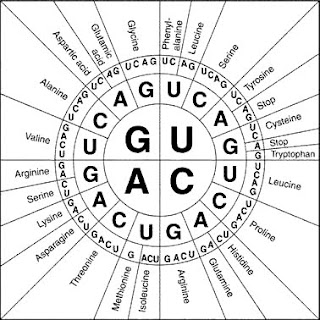
In essays on the subject of centricity, I've most often used the image of a geometrical circle, which, as I explained here,  owes someth...

Wednesday, August 8, 2018

COGNITIVE CHAINS

Man is born free, and everywhere he is in chains.-- Rousseau.

I don't have any interest in visiting Rousseau's antiquated explanation of the disparity between freedom and its lack, but his aphorism does throw a little light on the acquaintance/discursive duality I've been investigating lately.

I re-read the relevant sections of Langer's PHILOSOPHY IN A NEW KEY, and her division of "presentational symbolism" and "discursive symbolism" are definitely structured in a similar fashion to the dualities propounded by James and Russell. The main difference between Langer's formula and earlier "a/d" formulations is that Langer has been heavily influenced by Cassirer's distinction between "mythical thinking" and "theoretical/discursive thinking." Thus, rather than conceiving of "acquaintance" in a generalized sense, Langer substitutes presentational symbolism as a way of conceiving how human beings separate the data of the senses into discrete, meaningful symbols that do not "describe" anything, but simply "present" themselves to the subject in terms of their emotional values.

I favor Langer's alteration, but as I noted in FOUNTS OF KNOWLEDGE PT. 3, the two forms of symbolism interpenetrate one another, possibly more than Langer credited:

Thus, it would seem that even when humans are seeking to plumb the depths of presentational symbolism in order to employ tropes that transmit deep emotional states of mind, the same humans cannot help but reproduce aspects of discursive symbolism characteristic of the theoretical mind...

Earlier I expressed these two tendencies in a more opposed fashion in AFFECTIVE FREEDOM, COGNITIVE RESTRAINT:


One mythical idea to which Cassirer refers occasionally is myth’s view of the origins of the world. Some mythical tales hold the world comes into being only because some giant being—Ymir in Norse stories, Purusha in Hindu stories—is torn apart, so that the different parts of the giant’s body become the earth, the seas, the moon, etc. Within the scope of these narratives, there is no attempt to provide a rationale as to why the world had to made from the flesh and bones of a giant. It is true purely because it confers the aura of human associations upon the whole of creation, even those aspects of creation that may seem entirely alien to human experience. This is what I’ve called “affective freedom,” humankind’s ability to imagine almost anything, whether it accords with experience or not... Rational conceptions of causal relations, of course, could not care less about the aura of subjective emotions and drives: the desire is to extrapolate a closed system of relations that depend entirely on physical force: CAUSE A exerts FORCE B upon OBJECT C, resulting in RESULT Z. This tendency to rely exclusively upon material experience is one that I’m now terming “cognitive restraint.” Just as in psychology “the affective” and “the cognitive” describe complementary aspects of human mentality, “cognitive restraint” exists in a complementary relationship with “affective freedom.” In other words, human beings are entirely defined by neither: we need both the ability to imagine what seems impossible and to discourse about what we believe to be immediately possible.

This is where Rousseau becomes relevant. For me, man is "free" only in the sense that he can imagine any number of situations that may (or may not) contribute to his real freedom. The same man is "in chains" because he will always be faced with circumstances arising from simply being a corporeal entity subject to all sorts of realistic limitations.

More later.


Tuesday, August 7, 2018

MYTHCOMICS: "FRANK'S REAL PA" (1995)

I've never found much mythic content in the majority of "pantomime comics," that is, comics wherein stories make no use, or nearly no use, of words, either in captions or speech balloons. I'm largely familiar with American works like Carl Anderson's HENRY, Otto Soglow's THE LITTLE KING, and various Sergio Aragones features, as well as a few similar efforts from Moebius. Even at their best, pantomime comics's lack of words seems to rob them of depth, in a manner parallel to the findings of Susanne Langer re: music:

 "[Music] is a limited idiom, like an artificial language, only even less successful; for music at its highest, though clearly a symbolic form, is an unconsummated symbol.  Articulation is its life, but not assertion; expressiveness, not expression.  The actual function of meaning, which calls for permanent contents, is not fulfilled; for the assignment of one rather than another possible meaning to each form is never explicitly made."-- Susanne Langer, PHILOSOPHY IN A NEW KEY, p. 240.

However, wordless pictures are not nearly as bereft of "permanent contents" as wordless musical compositions. Though I've never agreed with comics-critics who privilege the art over the words in every respect, art by itself can convey particularized forms of expression, rather than just "expressiveness." However, I tend to think that pantomime comics with overt fantasy-content are more likely to avoid the representational simplicity that I've found in, say, the works of Anderson and Soglow.


In the 1990s Fantagraphics published four issues of FRANK, featuring the titular "generic anthropomorph," to use Woodring's  term for him. Since there are no words in the stories, one can only know the main character's name from the cover, and the same is true for other regular cast-members, whose roles in the stories are fluid and vary from story to story: "Whim," a devil-like figure with a thin body and a crescent-moon face, the Manhog, a conflation of man and hog, Frank's faithful pet Pupshaw, who looks like a sofa-cushion with features, legs and a tail, and "the Jersey Chickens," various intelligent chickens. FRANK'S REAL PA was also published by Fantagraphics in a one-shot comic, after having first appeared in segments in THE MILLENNIUM WHOLE EARTH CATALOG.


Though the title suggests that the titular character may at some time go looking for his "real pa," Frank doesn't show much interest in such parent-quests in the early pages of the story. Frank's first seen looking at various sights in what turns out to be an enclosed city. As he looks through a particular window, he sees a well lined with eye-motifs (or maybe real eyes). Frank experiences a vivid dream in which he imagines himself falling into the well and being transformed into a weird geometrical shape. He awakes from the dream and leaves the city, whereupon he encounters one of the Jersey Chickens selling a rug that looks like the eye-well. Frank buys the rug and takes it home.

\

At home Frank's greeted by Pupshaw, but the pet doesn't like the rug and tries to throw it out. Frank retrieves the rug, but he's so fascinated by the eye-motifs that he falls asleep on it rather than sleeping in his bed. He dreams of walking around with his father-- who looks largely like Frank, but walks around on all fours like Pupshaw. He sees another well and experiences more bizarre things in his dream. Pupshaw sees his master suffering amid nightmares and destroys the rug.

However, horrific dreams notwithstanding, Frank is well and truly hooked on, well, the well. He wanders into the wilderness, and happens upon yet another real well in a cave-dwelling. This well is tended by another of Woodring's regulars, Lucky, a fellow with an absurdly elongated face. Frank can''t reach this well any more than he could get to the first one, but he sees Lucky take some water out of the well. The reader-- though not Frank, who gets left behind-- watches as Lucky takes a long, water-filled jar through his caves, invites the crescent-faced Whim to jump into the jar, and then ties the Manhog so that he'll drag the jar outside the cave. Once outside, the pig-man gets loose of his traces and leaves the jar behind. Frank claims it. However, a giant spectre pours out of the jar and resolves itself into Whim.


Whim takes Frank into the caverns but shuts him up in a room that has a few random objects in it: a pistol, a bicycle, and a ladder leading down into a hole in the floor. Lucky brings in the disobedient Mamhog and sticks him in the room with Frank. For no reason I could see, the pig-man threatens to shoot Frank, who takes the gun away. He dumps the gun into the hole and then climbs down the ladder.

In an otherwise dark chamber below, Frank meets two identical versions of his father. He apparently feels he has to choose between them, and does so, though Woodring gives no input as to whether Frank has made the correct choice or not.


Finally, accompanied by his maybe-real pa, Frank finally comes across the eye-well, and jumps into its waters. He almost drowns, but faithful Pupshaw has tracked his mater to the cave and rescues him. Frank has been weirdly transformed even as he was in the dream, so Pupshaw manages to pester Whim into reversing the transformation. The maybe-real pa escorts Frank and his pet to the exit, but stays behind while Frank and Pupshaw implicitly go home.

So what does it all mean? Normal textual analysis is obviously impossible, but if I were to reduce the symbolic complexity FRANK'S REAL PA to a Levi-Straussian binary, I'd probably say that Frank is an "ordinary guy" who becomes so captivated by the allure of an extra-ordinary experience that he risks his life to obtain it. It's interesting that Woodring joins Frank's obsessive quest for a horrific experience with the more universally accepted motif of "the quest for the lost father." Given that the reader never knows whether or not Frank's made the right choice re: the two fathers, FRANK'S  REAL PA qualifies for the Fryean mode of the irony, in which the reader never knows as to the certainty of the characters' experiences.

Monday, August 6, 2018

OSCAR-BAIT AND ULTRALIBERAL POWER FANTASIES

On a political thread, I wrote (at least partly with reference to the activities of Antifa):


The other day I got round to seeing Oscar nominee THREE BILLBOARDS, ETC. I knew only bits and pieces about the film going in, but now I see that the movie, however unintentionally, delivers a great metaphor for the current confusion of liberals, ultraliberals, and whatever most of the posters here call themselves. It's a movie that shows how the descendants of liberals have become the thing they profess to hate: advocating senseless violence and vigilantism-- I highlight "senseless" as opposed to efficacious activity-- willing to do anything so that they, the quasi-liberals, no longer feel weak and disempowered.

Some SPOILERS now, since I want to touch on some pertinent details on this weird, thoroughly unfocused piece of Oscar-bait:

(1) In Ebbing, Missouri, middle-aged Mildred Hayes puts up three billboards to castigate the local lawmen for failing to solve the rape and murder and Mildred's teenaged daughter. The lawmen can't legally force her to take down the uncomplimentary billboards, but most of the Ebbing people are against Mildred. Much of the resistance stems from "the old boy's network," though some locals sympathize with police chief Willoughby-- who is named in a billboard that reads, "How come, Chief Willoughby?"--  because he's dying of cancer.

(2) Willoughby's principal deputy, Dixon, is said to be a racist because he supposedly hassles Ebbing's black citizens, though only one incident takes place during the main story. Dixon supposedly regards the older Willoughby as some sort of father-figure, though the early part of the film doesn't really make this case. Yet one has to assume something along these lines, because when Willoughby commits suicide, Dixon goes berserk and beats up the guy who owns the billboards. This gets him fired from the police force.

(3) An unknown vandal burns down Mildred's billboards. Mildred assumes that one of the cops did it and bombards the police station with Molotov cocktails. Dixon, who happens to be inside the closed station after hours, gets severely burned. However, because Dixon has received a letter from the dead Willoughby, Dixon feels a belated desire to be a real cop rather than the town bully-boy.

(4) Mildred finds out that the billboard vandal was none other than her ex-husband, whose reasons for the arson make no sense at all.

(5) Dixon, by dumb luck (if that's the word for it), goes to a bar and overhears a conversation between two men, one of whom references a rape not unlike that of Mildred's daughter. Through an involved process Dixon manages to get a DNA sample from the big-talker. He prematurely tells Mildred that he may've located the rapist-murderer. However, the sample avails Dixon nothing, for the sample doesn't match that of the uncaught rapist of Mildred's daughter, and for good measure the big-talker wasn't even in the country at the time.

(6) Nevertheless, Mildred and Dixon are so frustrated by not receiving their share of justice that they decide to hunt down the big-talker, assuming that he must have raped someone. The film ends without revealing whether or not the allies go through with their resolution to visit vigilante justice.

NOW-- I've seen a lot of art-films in which a skillful scenarist creates valid ambivalence about what a protagonist will or should do. But Martin McDonagh-- producer, director, and co-writer of THREE BILLBOARDS-- has produced the worst "fake ambivalence" I've ever seen. His characters are alternately shrill and stupid, righteous and unprincipled, and, as I said in the post, driven to exorcise their own pain through violence, even AFTER they've made blunders of mistaken identity.

I've been often contemptuous of current Oscar nominees, for their sheer lack of talent and originality. But I'd dedicate a billboard with the words, "How come, Martin McDonagh"-- with the added phrase, "--you don't get into a career more suited to you, like selling life insurance, since all you can do is push people's fear-buttons?"

Saturday, August 4, 2018

MYTHCOMICS: THAT YELLOW BASTARD (1996)

In crime fiction, crime is often compared to a disease of the body politic. Some crimefighters prove immune to crime's allure, such as Chester Gould's Dick Tracy, but often crime can infect anyone. Sometimes the victims are only relatively innocent, as with the feckless booze-purchasers in Faulkner's SANCTUARY. Yet even hardened professionals can succumb. In Hammett's RED HARVEST, the otherwise unnamed "Continental Op" becomes so obsessed with destroying the crime-ridden hierarchy of the city Poisonville that he goes, in his own words, "blood simple."


John Hartigan, protagonist of  THAT YELLOW BASTARD, starts the story free of any criminal taint. Most cops in Sin City are on the payroll to Roark, the boss of crime bosses, whose evil is so pervasive that he holds the position of State Senator (in what is implicitly a version of California). Hartigan, though, is so straight-arrow that in one scene Roark remarks that he wanted to hold a party when he heard the almost-sixty-year-old Hartigan would be forcibly retired due to an angina condition. Yet on the eve of Hartigan's retirement, the aging cop-- married for many years, but significantly childless-- decides not to go gentle into the night. It's common knowledge among Sin City cops that Senator Roark's sole son, known only as "Junior," is a serial murderer of underage girls. When Hartigan hears that Junior has captured a new victim, eleven-year-old Nancy Callahan, the cop goes after the child-killer.


After much gunplay with Junior's thugs, Hartigan rescues little Nancy and removes the source of Junior's personal joy, castrating the pervert with a well-placed shot. Hartigan's own partner betrays him and shoots him, but Hartigan is satisfied to die if he's saved an innocent.


What dies, though, is not Hartigan but his good name. Senator Roark himself shows up at the cop's bedside and informs Hartigan that he will now be charged with Junior's crimes, and that if Hartigan raises any objection, Roark's people will kill anyone to whom Hartigan confesses.


Nancy Callahan, however, has not forgotten her rescuer. She appears at Hartigan's bedside and rails at her parents for not letting her tell the truth. Unable to keep her savior from prison, she takes a page from Victorian literature and promises to write Hartigan every week-- real paper letters, no e-mails or (God forbid) tweets.


Hartigan is condemned as a child molester, and since he won't defend himself, his wife divorces him. He's sentenced to solitary confinement. He doesn't take little Nancy's promise seriously, but every week, her letters come, giving the old cop his only life-line to the outside world. She becomes, in his mind, "the daughter I never had." However, Hartigan's enemies aren't satisfied to put him into jail for eight years; they want to twist the knife even more. In a surreal moment, Hartigan finds a man in his cell with him: a man with yellow flesh and a horrible smell.


After meeting the "yellow bastard," Hartigan is manipulated into believing that Roark's organization has located the innocent Nancy once more. The ex-cop debases his last principles to obtain an early release, and goes looking for a girl whom he still imagines as eleven years old. However, when he finds her dancing at a strip club, his paternal illusions are shattered.


Realizing that he's been used as a Judas goat to help Roark's people locate Nancy, Hartigan tries to elude his mustard-hued tail. More gun-violence ensues:


Escaping his tail briefly, Hartigan then faces a new problem. Despite not having been in contact with her savior for eight years, the young woman has made him her only true passion.


Despite a long absence from the fair sex, Hartigan forces himself not to succumb, but his antagonist re-appears, and reveals that he's none other than a hideously reconstructed Junior Roarke.


Junior thus gets the chance to shaft his old enemy both by killing him and letting him go out knowing that his beloved will endure hideous torture. Naturally things don't go the villain's way, but Hartigan still doesn't end up with the nubile Nancy, for reasons I won't go into.


To return to my opening point, some crime stories compromise the hero by causing him to succumb to evil in order to undermine the reader's sense of moral compass. Miller doesn't go that far. Junior's crimes are unremittingly evil, and none of Hartigan's vigilante actions palliate Roark's crimes. Yet Miller was surely aware of an uncomfortable parallel between Junior's despicable taste in pre-pubescent girls-- which is portrayed as being wrong apart from his larger crimes of torture and murder-- and Hartigan's burgeoning lust for his "imaginary daughter." Miller pens a revealing line for Hartigan, when he tells Nancy, "There's right and there's wrong, and then-- there's *this.*" Both Hartigan and Nancy are past the age of consent, and so their union is theoretically permissible-- hence not quite "wrong"-- and yet the age-gap is so great that it can't be "right" either.

Miller's not on the level of William Faulkner in terms of crafting crime-fiction with heavy ironic/tragic overtones. But there is in THAT YELLOW BASTARD a sense of tragic dimension far in excess of his other major SIN CITY work, THE HARD GOODBYE.


Thursday, August 2, 2018

FOUNTS OF KNOWLEDGE PT. 3

I've frequently cited this passage from Jung on the combinatory nature of archetypes:

"[The archetype's] form, however ... might perhaps be compared to the axial system of a crystal, which, preforms the crystalline structure in the mother liquid, although it has no material existence of its own. This first appears according to the specific way in which ions and molecules aggregate. The archetype in itself is empty and purely formal, nothing but a facultas praeformandi, a possibility of representation which is given a priori. The representations themselves are not inherited , only the forms, and in that respect they correspond in every way to the instincts."-- Jung, THE ARCHETYPES AND THE COLLECTIVE UNCONSCIOUS, p. 79.

Pursuant to the current discussion, the aspect of the archetype that can be "inherited" is only a "possibility of representation," whereas the specific representations-- say, whether or not the sun is represented as the boat of Ra or the chariot of Helios-- are limited to whatever culture conceives them. So the pure form of the archetype may be compared to Langer's presentational symbolism, which simply discerns the role of a given archetypal trope in the culture. But given that Langer's other category, discursive symbolism, is focused on the pursuit of logic and rule-making, is there any way in which a culture's elaboration of specific representations aligns with that form?

In JUNG LOVE, FIRST LOVE, I wrote:

In Jung's view, myth, both in its archaic and modern manifestations, is a creative response to the archetypal experience.  He opposes the idea of "myth as primitive science" advanced by E.B. Tylor and James Frazer, claiming that primitive man possesses an "imperative need... to assimilate all outer sense experiences to inner, psychic events."  I agree, but with the caveat that in many instances primitive humans did look for aspects of "outer sense experiences" that were regularly replicated.  This is the sort of thing Tylor mistook for primitive science; the idea that, for instance, a story about a sun-god was an attempt to understand how the real sun worked. 

In Jung's paradigm, it's impossible to imagine a primitive trying to explain the regular motions of the sun in terms of a figure like Helios driving his chariot across the sky.  However, it would be fair to state that many of the features of the physical world that science would study in terms of their etiology-- the movement of celestial bodies, the characteristics of vegetation, et al-- were sacred clues to the nature of divine power.  The "empty and purely formal" archetype is the principle around which these "clues" aggregated.  For Jung the emotional wonder of beholding the sun as a sacred mystery would be the keystone of making a myth about it, while the specific local details of any given myth were the "ions and molecules" upon which the organizing power acts.

Now, Jung was a psychologist, not a theoretical anthropologist, so he never focused on the ways archaic cultures utilized myth. When he pursues the rituals of alchemy, he's not especially concerned with whether or not the ancient alchemists were alluding to real or imagined chemical processes: he's concerned with how alchemical processes parallel the experiences of patients undergoing visionary states. In contrast, Joseph Campbell was more focused on the social functions of archaic religion, and thus he's arguably been a better guide to me than Jung in terms of seeing how myths in all eras encode what I called "sacred clues." I stated as much in 2014's FOUR BY FOUR:

For the majority of my essays on both THE ARCHETYPAL ARCHIVE and NATURALISTIC! UNCANNY! MARVELOUS!, I have somewhat privileged Campbell's functions in terms of analyzing the mythical representations found in both canonical and popular fiction. That's because Campbell's functions deal with functions of information-- forms he earlier termed "metaphysical, cosmological, sociological and psychological"-- rather than pure states of consciousness. 

I would now add that Campbell's four functions are intrinsically discursive in nature, and so he proves this in this passage from MYTHS TO LIVE BY, presented in greater context here:

... there is a third factor, furthermore, which has everywhere exerted a pervasive influence on the shaping of mythologies, a third range and context of specifically human experience, of which the developing individual becomes inevitably aware as his powers of thought and observation mature, the spectacle, namely, of the universe, the natural world in which he finds himself, and the enigma of its relation to his own existence: its magnitude, its changing forms, and yet, through these, an appearance of regularity. Mankind's understanding of the universe has greatly altered in the course of the millenniums -- particularly most recently, as our instruments of research have improved. But there were great changes also in the past: for example, in the time of the rise of the early Sumerian city-states, with their priestly observers of the heavenly courses; or in that of the Alexandrian physicists and astronomers, with their concept of an earthly globe enclosed within seven revolving celestial spheres.

However, even though discursive observations like the heavens' "appearance of regularity" appear in both religious and literary myths, they have a very different function than they do in the purely discursive discipline of science. Scientific investigations can be executed within what Wheelwright called a *monosignative* language, where every word used is intended to signify a discrete phenomenon. Myth and literature have an innate tendency toward the *plurisignative,* which, as I noted in a Cassirer-quote in Part 2, is also necessary to the formation of human language.

Thus, it would seem that even when humans are seeking to plumb the depths of presentational symbolism in order to employ tropes that transmit deep emotional states of mind, the same humans cannot help but reproduce aspects of discursive symbolism characteristic of the theoretical mind-- which may later have some repercussions to my evolving theories regarding the interactions of human work and human play (to be discussed at some future time).

ADDENDUM: I should add that I regard even scientifically incorrect theoretical conclusions, like the concept of the seven spheres of heaven, or early theories on spontaneous generation, to be well within the scope of the discursive.

FOUNTS OF KNOWLEDGE PT. 2

At the end of Part 2, I said:

It seems evident that all of the "common words" Wheelwright lists are common because everyone knows basic representations such as "dog" and "sky" through what Russell calls "acquaintance." More complex chains of associations, however, can only be built up through a process of description. No sky has ever looked like the representation of the Greek Ouranos, but Greeks understood the idea of Ouranos through a process of describing the sky-god's nature-- though in some ways the word used by Kim Stanley Robinson, "discursive," may fit the topic better. This is also one of the terms utilized by Ernst Cassirer in his PHILOSOPHY OF SYMBOLIC FORMS, which I'll discuss somewhat in the next post.

The "acquaintance/description" duality appeared in the works of two philosophers I've often quoted, Ernst Cassirer and Susanne Langer. In Cassirer's LANGUAGE, he says:

Like thought, language must pass from the known to the unknown, from what is perceived by the senses to what merely thought...
While Langer's dichotomy of "the discursive" and "the presentational" has often influenced my own examination of symbolism. In this quote, Langer aligns her concept of presentational symbolism with the immediacy of sense-impression:

  "The symbolic materials given to our senses, the Gestalten or fundamental perceptual forms which invite us to construe the pandemonium of sheer impression into a world of things and occasions, belong to the 'presentational order'. They furnish the elementary abstractions in terms of which ordinary sense-experience is understood."-- Susanne Langer, PHILOSOPHY IN A NEW KEY, p. 98.

I discussed Langer's two forms of symbolism first in RULES OF ESTRANGEMENT PT. 3,  where I associated "presentational symbolism" with fantasies without an appeal of logic, while I associated "discursive symbolism" with fantasies governed by logical rules about what can or cannot happen. However, obviously the two constantly intertwine, not only in fantasy-literature but in all art, myth, and in human language itself. Prior to Kant, most European philosophers subscribed to what Cassirer called "the copy-theory of language," in which it was assumed that reason and logic guided the evolution of language. Toward the end of LANGUAGE, however, Cassirer naturally argues that the formation of language is as much aesthetic as logical.

...it lies in the very nature of language that each of these syntheses is not governed exclusively by theoretical but by imaginative factors as well, and that consequently, much of linguistic "concept formation" seems to be less of logical comparison and combination that of the linguistic fantasy... In so far as we can gain insight into them, the factors which guide language in its classifications seem closely related to primitive mythical concepts and classification"-- LANGUAGE, p. 297. 

So Cassirer offers a view of the interactions of what Langer calls 'the discursive" and "the presentational," though I would say that he does not explore  such interactions in depth, any more than does Langer. I believe that I've come up with an interesting take on the matter, courtesy of Jung's theory of archetypes.

Wednesday, August 1, 2018

FOUNTS OF KNOWLEDGE PT. 1

In WHITE NOISE I addressed two types of knowledge. I'll continue to call these "knowledge by acquaintance" and "knowledge by description" after Bertrand Russell, with the stipulation that I'm not following his system, given that I've barely read Russell's work. I have read quite a bit more William James, and admire his work above what I know of Russell's philosophy, but I also have not read the particular work I cited in NOISE, the 1895 PRINCIPLES OF PSYCHOLOGY.

It stands to reason that even if James and Russell were among the first to frame the problem in these terms, many philosophers before them had grappled with similar questions. For instance, I quoted James's reference to perceptual and conceptual knowledge in PRINCIPLES, categories which appeared in Schopenhauer fifty years earlier (albeit in German).

Now, I've addressed something akin to the "acquaintance/ description" duality in my writings on symbolic complexity. My concerns were never epistemological, as I believe to be the case for both James and Russell. Rather, in my early definition of my terms "functionality" and "super-functionality," I was concerned with the ways in which literary constructs display complexity or its lack. Still, in one passage from DON'T FEAR THE FURNITURE I touched on the epistemological matters:

....even the most avant-garde artists can't do without some representational functionality. If James Joyce wants a character to go through a door, and doesn't have it in mind to discourse on the doorness of doors everywhere, then the door through which the Joyce character steps will be no less functional-- or even "conventional"-- than the one through which a Poe or Doyle character steps.

Within the context of a purely fictional story, a merely functional representation of a door is no more real than, say, a door in another story that embodies "the doorness of doors." But the purely representational door is supposed to function within a story's diegesis as if the person seeing it knows it purely through "knowledge by acquaintance." A door that was "super-functional" would have to have its "Platonic qualities of door-ness" explicated via "knowledge by description."

In 2011 I glossed my Frye-derived remarks with my reading of Philip Wheelwright's THE BURNING FOUNTAIN. This book is also more concerned with evaluating literary works rather than epistemology, though I suspect that Wheelwright was familiar with the two forms of knowledge described by James and Russell-- not least because both of them are cited in FOUNTAIN, and one James reference is to PRINCIPLES OF PSYCHOLOGY. Without re-reading Wheelwright's book in toto, I can't be sure that it has no epistemological concerns. However, this passage from METAPHOR AND REALITY seems to imply such concerns in the author's formulations of "stheno-language" and "poeto-language:"

…meanings that can be shared in exactly the same way by a very large number of persons—in general, by all persons using the same language or the same group of inter-translatable languages. Examples are so obvious that they may be mentioned without explanation. Common words like child, parent, dog, tree, sky, etc., are steno-symbols, and their accepted meanings are steno-meanings, because what each of the words indicates is a set of definable experiences (whether actual or only possible) which are, in certain recognizable respects, the same for all who use the word correctly. (Metaphor and Reality, p. 33.)
 In this paragraph, Wheelwright is not talking purely about functional representations within a poetical work, but about the way said representations are built up in human society. It seems evident that all of the "common words" Wheelwright lists are common because everyone knows basic representations such as "dog" and "sky" through what Russell calls "acquaintance." More complex chains of associations, however, can only be built up through a process of description. No sky has ever looked like the representation of the Greek Ouranos, but Greeks understood the idea of Ouranos through a process of describing the sky-god's nature-- though in some ways the word used by Kim Stanley Robinson, "discursive," may fit the topic better. This is also one of the terms utilized by Ernst Cassirer in his PHILOSOPHY OF SYMBOLIC FORMS, which I'll discuss somewhat in the next post.