Featured Post

SIX KEYS TO A LITERARY GENETIC CODE

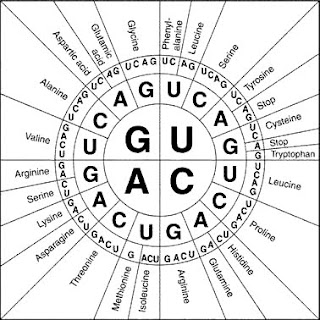
In essays on the subject of centricity, I've most often used the image of a geometrical circle, which, as I explained here,  owes someth...

Thursday, April 13, 2023

THE LONGING OF THE WEAK

One of these days I'd like to see a compilation of references to Sigmund Freud and his theories in popular culture. I don't imagine I'll attempt one myself, but here's a curious entry for such a list.


In preparation for a review on the NUM blog, I re-watched the 1952 musical SHE'S WORKING HER WAY THROUGH COLLEGE, in which star Virginia Mayo is a burlesque performer who only bumps and grinds so that she can earn the money to get her college degree. I remember that whenever I first saw COLLEGE, I happened to have seen the film adaptation of James Thurber's play THE MALE ANIMAL, and thought it interesting that this musical-ized version of Thurber's play more or less reversed Thurber's meaning. I assume that the movie version of the play fairly reflected Thurber's theme, since I've seen other Thurber works in which he was rather scathing toward the fetishization of visceral entertainments like sports and sex-games. COLLEGE is just the opposite, exulting in the world of the senses (with musical numbers that celebrate, among other things, Madame Du Barry, royal mistress of King Louis XV). It's an extremely lightweight film, though the Mayo character is interesting given that she's trying to escape her (rather high class) burlesque past by becoming a playwright, and she ends up writing a play about how great sex and love are.

All of the songs by the well-heralded Sammy Cahn are lightweight too, except for one section of a song entitled "The Stuff That Dreams are Made Of." Here's a link to the full lyrics, but the only section that interests me here is Cahn's curious take on Freud:

I’m sure that Mister Freud
Would really be annoyed
If I presumed to contradict him
To him all dreams are explainable
As the longing of the weak for the unattainable
Admitting Mister Freud was very, very wise
My personal dreams I alone can analyze

I'm not sure if there are any big Freudian references in the original Thurber play, but it's a distinct possibility that Cahn was building on something Thurber wrote, given the statement from this site:


Thurber's first book, Is Sex Necessary?, came out in 1929. It was jointly written with the fellow New Yorker staffer E.B. White. The book presented Thurber's drawings on the subject, and instantly established him as a true comic talent. Thurber made fun of European psychoanalysis, including Freud's work, and theorists who had been attempting to reduce sex to a scientifically understandable level. In 'The Nature of the American Male: A Study of Pedestalism' (1929) Thurber claimed that "in no other civilized nation are the biological aspects of love so distorted and transcended by emphasis upon its sacredness as they are in the United States of America." (Writings and Drawings by James Thurber, 1996, p. 3) According to Thurber, baseball, prize-fighting, horse-racing, bicycling, and bowling have acted as substitutes for sex. The female developed and perfected the "Diversion Subterfuge" to put Man in his place. "Its first manifestation was fudge-making."

Regardless of Thurber's reasons for dismissing Freud, I would certainly also dismiss the psychologist's tendency to view all dreaming-activity in terms of "the longing of the weak for the unattainable." At the very least, this attitude certainly appears in Freud's interpretations of his Oedipus complex, in which a child feels sexual possessiveness toward his/her opposite-sex parent, and takes refuge in fantasies that satisfy that repressed desire.

I've given multiple reasons on this blog for rejecting Freud's views of fantasy, so I won't repeat any of those. But curiously, before Mayo and Gene Nelson sing the "Dreams" duet, the professor character played by Ronald Reagan-- who is very close to the one in MALE ANIMAL-- listens to a stodgy authority figure complain about seeing a play that he thought was "dirty," and the professor objects that this philistine has just talked crap about the Greek classic "Oedipus Rex." This may be a line in the original Thurber play. But whether it is or not, this tip of the hat to Sophocles seems to be at odds with Sammy Cahn's determination to dispel Mister Freud's logic regarding fantasy's origins in "the longing of the weak."

And all this in a film which loosely addresses the conflict between sexuality and the intellect, yet really has no significant Oedipal conflict between its characters...


Wednesday, April 5, 2023

MIGHT AND MYTH

 In addition to the subjects of the previous essay, my cross-comparison of three influential intellectuals here stimulated an interesting return to a subject I've not addressed much lately: that of sublimity.

A quick recap: when I first began writing about the various literary and philosophical conceptions of sublimity, I was probably overly influenced by Kant's concept of the "dynamic-sublime" as expressed in THE CRITIQUE OF JUDGMENT. I wrote quite a bit on the subject as to whether different forms of "might" were exclusively responsible for the fictional manifestations of sublimity, with this 2012 essay as a representative example.

In 2013, though, I reflected upon Kant's other manifestation of the sublime, which he termed "the mathematical-sublime." This conception had no great relevance to the fictional worlds with which I was concerned, but I realized that other scholars ranging from Burke to Tolkien had often spoken of perceiving the sublime through a combination of images and elements. From that insight, I formulated the notion that within a literary matrix there existed two forms of the sublime: the "dynamic-sublime" and "the combinatory-sublime," and I set this observation forth in the TWO SUBLIMITIES HAVE I series.

Now, my conception of the four potentialities were not specifically focused on any manifestation of the sublime. However, as a result of refining my definition of the potentialities in this essay, I realized that each of Jung's "perceiving functions" had a rough equivalence to the two forms of the sublime that I deduced from Kant.

In Jung's arrangement, the "perceiving functions" of sensation and intuition furnish a given subject with raw data about experience, and the two "judging functions" evolve in order to guide the subject's assessments of the data. I've specified in PARALLEL PATHS that Jung may made his "perceiving functions" a bit too passive in nature in contrast to the more active role that "prehensions" serve in the system of Whitehead. Rather than seeing the judging functions as having a superior role over the perceiving functions, I like better the idea that they are "co-definitional" as the term is used by Stuart Kaufman.

All that said, there's some justification for thinking of the mental products of the sensation and intuition functions as being a sort of prima materia from which a distinct secunda materia arises. My newest refinement of the conceptual quanta present in each of the four potentialities supports this reading. The sensation-responses of a subject to "energy," both his own and that of other entities, give rise to emotional evaluations of himself and those entities, while intuition-based responses that build mythic correlations regarding oneself and other entities are inevitably subjected to the rigor of ordered cogitation. 

Further, the quanta I now call "excitations" align well with what I've called "the dynamic-sublime," while the quanta I call "correlations" align well with the "the combinatory-sublime." Both potentialities are also more strongly associated with the non-utile activities of "play," while the "secunda" potentialities are primarily about helping the subject survive and prosper through the hard work of discrimination.

The essay's title "Might and Myth" is also oriented upon seeing both of the prima materia functions as including a range of those fictional manifestations that do or do not possess a certain level of either "pre-epistemic" OR epistemological knowledge encoded into their discourses. I return to my example of this range from VERTICAL VIRTUES:

...I might say that from the POV of "tenor-excellence" alone, the Lee-Kirby FANTASTIC FOUR excels the Lee-Ditko SPIDER-MAN, because I've detected more concrescent stories in the former than in the latter. But in terms of "vehicle-excellence," they are equals. for both generated an impressive array of icons fraught with mythopoeic POTENTIAL, even if the FF is somewhat ahead in terms of mythopoeic ACTUALITY.


So "might" would include even those elements meant to appeal to sensation, even if those elements are insufficiently organized, while "myth" would include all elements meant to appeal to intuition, even when not glossed by epistemological insights. And of course the respective "judging functions" would each be aligned with the categories of "might" and of "myth."

Possible meat for future meditations, as usual. 


KNOWING THE KNOWLEDGE FROM THE EPISTEMOLOGY

 As I reconsidered this in greater depth, I feel it necessary to explain that though the kinetic and the dramatic potentialities certainly do draw upon "patterns" derived from sense experience, those two potentialities don't make substantial use of what I've called "epistemological patterns." I suppose I might term the first type of patterns "existential," since these two potentialities are more concerned with translating existence as the fictional characters *seem* to experience it.


The other two potentialities, however, are rooted in a fictional form of epistemology, because the forms they deal with depend on abstract constructions.-- AND THE HALF TRUTH WILL SET YOUR FREE, PT. 2.


This statement from my 2019 essay requires some modification thanks to my cross-comparison of three major thinkers here, though the modification depends on the accuracy of this online statement regarding Alfred North Whitehead's philosophy:

...the word “prehension,” which Whitehead defines as “uncognitive apprehension” (SMW 69) makes its first systematic appearance in Whitehead’s writings as he refines and develops the kinds and layers of relational connections between people and the surrounding world. As the “uncognitive” in the above is intended to show, these relations are not always or exclusively knowledge based, yet they are a form of “grasping” of aspects of the world. Our connection to the world begins with a “pre-epistemic” prehension of it, from which the process of abstraction is able to distill valid knowledge of the world. But that knowledge is abstract and only significant of the world; it does not stand in any simple one-to-one relation with the world. In particular, this pre-epistemic grasp of the world is the source of our quasi- a priori knowledge of space which enables us to know of those uniformities that make cosmological measurements, and the general conduct of science, possible.


I don't discard the general applicability of the statement I made; it's true that the two "vertical/abstract" potentialities make greater use of epistemological patterns than the two "lateral/existential" potentialities. But the Encylopedia makes the interesting analysis that Whitehead does not present his "prehension" operations as being "exclusively knowledge based." This suggests to me that prehension is not foreign to the activities of cognitive activity, but rather is called "pre-epistemic" because it's capable of including all forms of knowledge, cognitive and affective. 

In fact, since I started applying my concept of Whiteheadian concrescence to fictional works, I've already functionally contradicted the HALF TRUTH statement without intending to do so.

Roughly two months before I wrote the two-part HALF-TRUTH essay, I posted CONCRESCENCE AND THE KINETIC PHENOMENALITY. In this, I examined two comics-works in terms of their "kinetic discourses," showing why the Jack Kirby work was superior to the Mike Zeck work in terms of illustrating how a diversely powered group of beings would battle one another. (To repeat an earlier qualification, it was widely rumored that artist Zeck may have been obliged to follow layouts set down by his editor Jim Shooter.) In this essay I concentrated on Kirby's superior ability to depict the interactions of "disparate elements," but much of this ability stemmed from a form of non-epistemological knowledge; the knowledge of how human beings of different capacities interact in a fight.

Similarly, I applied concrescence purely to the dramatic potentiality in 2022's SO THE DRAMA, SO THE MYTH. Despite the sound of the title, I was taking the position that my subject, the rom-com manga NAGATORO, was concrescent within the dramatic potentiality even though the feature had few if any moments of "myth" in its more epistemological manifestations. I found that, upon surveying a particular trope in NAGATORO, the narrative also depended not on any elements with mythopoeic content, but was based in the reader's knowledge of Japanese customs about the use of personal names. This too might be termed a form of "non-epistemological knowledge," and that knowledge is also expressed through the interaction of two disparate elements in this particular story, though in the form of an "accomodation narrative" rather than a "confrontation narrative."


Monday, April 3, 2023

STALKING THE PERFECT TERMS: THE FOUR POTENTIALITIES

My recent meditations re: Jung's four functions and the four potentialities I deduced from them lead to another revision-- hopefully, the last, in which I attempt to define just what narrative quanta are evoked whenever an author employs one of the four potentialities. I wouldn't tread this ground again except I think it's necessary for a more extensive formulation.

The last major attempt to form terminology for the four quanta-types appeared in 2017's GOOD WILL QUANTUMS PT. 2:

The KINETIC is a potentiality that describes the relationships of strength-quanta.
The DRAMATIC is a potentiality that describes the relationships of affect-quanta.
The DIDACTIC (formerly "thematic") is a potentiality that describes the relationships of idea-quanta.
The MYTHOPOEIC is a potentiality that describes the relationships of symbol-quanta.

Since then, however, I decided that in place of "ideas" and "symbols" I would use "cogitations" and "correlations" in this 2022 essay, and thus far I'm sticking with that revision. In another essay I experimented with substituting "potency" for "strength" under the kinetic umbrella. However, I've used both "power" and "potency" in an earlier terminological opposition. So, since the context of using "strength" was that of discrete forces impinging upon the various human senses, I'm going to substitute the new term "excitations," because I'm concerned with the excitation of neural perceptions by those forces. Whatever emotional context human beings then place upon their neural sensations then line up as "emotion-quanta," which takes the place of the vaguer "affect-quanta." So now my schema comes down to:

The KINETIC is a potentiality that describes the relationships of excitation-quanta.
The DRAMATIC is a potentiality that describes the relationships of emotion-quanta.
The DIDACTIC (formerly "thematic") is a potentiality that describes the relationships of cogitation-quanta.
The MYTHOPOEIC is a potentiality that describes the relationships of correlation-quanta.


The new terminology of course essentially coheres with Jung's general formulation that the potentialities rooted in the sensation and intuition functions are what Jung called "perceiving functions," while those rooted in the feeling and thinking functions are what Jung called "judging functions." That said, I do have some departures from Jung's system on which I'll expound in a future essay, in line with remarks already made in PARALLEL PATHS: ARTHUR, CARL, AND ALBERT.


Saturday, April 1, 2023

PARALLEL PATHS: ARTHUR, CARL, AND ALBERT

Though in past essays I've drawn some limited comparisons to the philosophical systems of Schopenhauer, Jung, and Whitehead, here I'll try to dovetail the major similarities between all three together.

Though I'd read a lot of Jung before I made my way through THE WORLD AS WILL AND REPRESENTATION, in the early days of this blog I believe I focused a bit more on Schopenhauer's contrast of different types of will. In 2016's THE LONG AND SHORT OF WILL, I attempted to fold Carl Jung's somewhat Kantian "four functions" into Schopenhauer's system:

Plainly, what I call a work's "lateral meaning," glossed with a combination of two of Jung's psychological functions, is confined to what sort of things happen to the story's characters (sensation) and how they feel about those developments (feeling). The function that Jung calls "intuition" finds expression through the author's sense of symbolic combinations, which provides the *underthought* of a given work, while the function of "thinking" finds expression through the author's efforts at discursive cogitation, which provides the work's *overthought.* It's possible for a work to be so simple that both its underthought and overthought amount to nothing more than cliched maxims, like "good must triumph over evil," but even the most incoherent work generally intends to engross the reader with some lateral meaning.


One thing that is not made clear by this excerpt is what Jung said about the nature of his four functions, in that he labeled "sensation" and "intuition" are purely perceptual functions, while "feeling" and "thinking" served, respectively, to sort and judge the raw data provided by the perceptual functions. I think this arrangement is implicit from the way I restated Jung's theory as it would apply within a purely literary matrix, but it's best to make it the point as explicit as possible. (I will again note that the above terms "underthought" and "overthought" have to a great extent fallen to the wayside in the course of this ongoing project.)


In many respects this formulation is still fundamental to my system. However, because of my still imperfect assimilation of the process philosophy of Whitehead, I think one might argue that both Schopenhauer and Jung, who share a considerable influence from Immanuel Kant, that both thinkers may have tended to portray the experience of "perception" as essentially passive, while both Jung's "judging functions" and Schopenhauer's higher form of will are comparatively "active." At least one of Jung's pronouncements on the origins of intuition strikes me as rather problematic:

like sensation, intuition is a characteristic of infantile and primitive psychology. It counterbalances the powerful sense impressions of the child and the primitive by mediating perceptions of mythological images, the precursors of ideas. 


Whitehead, who takes issue with Kant in PROCESS AND REALITY, did not deem perception to be passive, as shown by this interpretation from The Internet Encyclopedia of Philosophy:

The critical aspects of SMW were ideas that Whitehead had already expressed (in different forms) in his previous publications, only now with more refined clarity and persuasiveness. On the other hand, the constructive arguments in SMW are astonishing in their scope and subtlety, and are the first presentation of his mature metaphysical thinking. For example, the word “prehension,” which Whitehead defines as “uncognitive apprehension” (SMW 69) makes its first systematic appearance in Whitehead’s writings as he refines and develops the kinds and layers of relational connections between people and the surrounding world. As the “uncognitive” in the above is intended to show, these relations are not always or exclusively knowledge based, yet they are a form of “grasping” of aspects of the world. Our connection to the world begins with a “pre-epistemic” prehension of it, from which the process of abstraction is able to distill valid knowledge of the world. But that knowledge is abstract and only significant of the world; it does not stand in any simple one-to-one relation with the world. In particular, this pre-epistemic grasp of the world is the source of our quasi- a priori knowledge of space which enables us to know of those uniformities that make cosmological measurements, and the general conduct of science, possible.


This emphasis on "pre-epistemic" forms of cognition matches up fairly well with my adaptation of Whitehead's term "concrescence," which I applied to my literary version of Jung's four functions in 2021's PREHENSIONS AND PERSONAS PT. 2:

A "prehension," as noted before, is a process by which an organism gains knowledge of and organizes its experience, whether that knowledge is organized through the concrescence of sensation (the kinetic potentiality), of feeling (the dramatic potentiality), of thinking (the didactic potentiality), of intuition (the mythopoeic potentiality), or any possible combinations of the four. All four potentialities would have been available to the human species ever since they split off from smaller-brained mammals, so none of the potentialities predate one another.


In the preceding paragraph I limited my line of inquiry to the human species, but I can accept in a general sense Whitehead's extensive of the "pre-epistemic" stage even to non-sentient phenomena like electrons. Despite some of the conceptual discontinuities between these three philosophical luminaries, I feel that all of them were seeking to unravel the same conundrum of existence, and that their similarities outweigh their differences.


Tuesday, March 28, 2023

THE FIRST MARVEL CROSSOVER PT. 2

So in the first part of this two-part essay series, I analyzed all the stories in "Marvel's first shared-universe, multiple-series crossover," and I came to the following conclusions.

All of the stories are ordinary at best. There's no significant content in the stories that Stan Lee-- whether he wrote all of them or orchestrated a few through other writers-- was trying to promote.

Of the four stories, only one is definitely situated to be a "hype-job" for a new series: the PATSY WALKER tale which advertises Marvel's recently debuted LINDA CARTER STUDENT NURSE title. The other characters had all been around in some form over the course of years. Lee, having worked in the comics business for most of his life, surely knew that the majority of his customers were what might be called "browsers," who did not keep track of things like crossovers, and would not be likely to increase purchases of titles because of such "big events." In the very early 1960s comics-fandom was in its infancy, and most of those fans were both male and focused on superheroes, so none of them would have noticed the interaction of the protagonists of "girls' comics."

I also pointed out that Lee did not seem overly invested in character-crossovers for the first year or so when he began writing and editing Marvel's new superhero line. In 1963, once FANTASTIC FOUR was a definite success, he at last had characters like Hulk and Ant-Man guest star in the title, as well as making the foursome guest-stars in the inaugural issue of THE AMAZING SPIDER-MAN. Because of this hesitation on Lee's part, I tend to doubt that his motives for the "girls' comic" crossover had any relevance to the editor's later, very business-oriented focus on crossovers after 1963.

So I can conceive of but one real motive: boredom.

Consider: we know Lee claimed in his most cited reminiscence about the early, pre-hero Marvel period because he said he was thoroughly bored with his job as Marvel editor and was strongly thinking about quitting. There's no way to know whether or not this recollection is true in every respect, but there certainly doesn't seem to be much evidence of Lee feeling creatively engaged with much of anything published in 1961, with the possible exception of his collaborations with Steve Ditko. In 2009 Lee recollected:


"All I had to do was give Steve a one-line description of the plot and he'd be off and running. He'd take those skeleton outlines I had given him and turn them into classic little works of art that ended up being far cooler than I had any right to expect"

Lee evidently liked the Ditko stories enough that he transformed AMAZING ADVENTURES, one of the standard horror-mystery titles that had run for six issues throughout most of 1961, into AMAZING ADULT FANTASY. The first issue of AAF, continuing the AA numbering and thus starting with issue #7 was, like the girl-crossover comics, cover-dated Dec 1961. AAF was subtitled "The Magazine That Respects Your Intelligence," and emphasized Lee-Ditko collaborations. However, the new version of the magazine was not successful and was placed on the chopping block-- which, ironically, led Lee and Ditko to launch the chancy concept of Spider-Man in the fifteenth and last issue of the title, cover dated August 1962.

So around roughly the same time, Lee debuted FANTASTIC FOUR #1 and issue  #7 of AMAZING ADULT FANTASY, which would seem to be comics he found less boring than most of what he'd been doing, at least within recent months. And in that same time, he also came up with the girl-comic crossover.

Since the four stories in this "shared universe" were not at all ambitious in any way, I theorize that Lee's use of the crossover-concept was not intended to be profitable, just a good gimmick to fill pages. 

In this OUROBOROS DREAMS post, I mentioned a crossover between two war-themed Fawcett characters, Commando Yank and the Phantom Falcon. Though one or both characters probably got their character-names on the covers of WOW COMICS (their only venue), neither was a high-profile figure. Since their teaming up would not be likely to make customers buy more issues of the exact same comic, it's likely that the writer of the interlinked Yank-Falcon stories just thought of the crossover as a "gimmick to fill pages." Following the growth of Marvel's GENUINE shared universe, dozens of writers would write hundreds of comics-stories in which crossovers were just gimmicks that took the place of writing compelling stories with new characters. And this is most likely to be the only reason Lee wrote three of these four inconsequential stories, with the fourth being motivated, however weakly, by the rationale of hyping a new feature.

I'm sure that even if any fan has asked Lee about the girl-comics crossovers a few years after he'd done them, he probably would not have remembered them. For my own satisfaction, though, I wanted to work out whatever significance The First Marvel Crossover might have-- and the only take I find satisfactory is the idea that it shows Stan Lee as the spiritual perceptor not only to all the good crossover stories-- many of which he personally wrote-- but also to all of the bad ones as well.


THE FIRST MARVEL CROSSOVER PT. 1

I didn't get much out of Douglas Wolk's 2021 book ALL OF THE MARVELS, an admittedly yeoman effort to observe how Marvel Comics used its chosen tropes both in a historical, synchronic sense and in a developmental, diachronic sense. Ironically, if I'd actively disliked it, I probably would have reviewed it here. But as things stand, I'll confine myself to praising Wolk for pointing out what he called "Marvel's first shared-universe, multiple-series crossover, which was published immediately after FANTASTIC FOUR #1." 


Some histories speak as if the initial issue of FF marked the transition between the new Marvel brand and such older (sometimes tenuous) publishing-entities like "Timely" and "Atlas." However, the company changed its branding status--denoted the letters "MC," stylized to form a barely noticeable insignia-- on the covers of two magazines dated June 1961, PATSY WALKER #95 and JOURNEY INTO MYSTERY #69. A quick scan of both comics online shows that all of the stories in these issues are indistinguishable from other monster-tales and teen humor antics that the company had been publishing for several years, so whatever purpose the re-branding served for the company, it was not to indicate a new approach to the type of material published. Indeed, these would probably be the sort of stories Lee was reacting against when he set out to do superhero yarns to suit himself (at least in part), rather than confining himself to anticipating the tastes of a perceived audience.

There is of course no hint of a shared universe in the earliest issues of FANTASTIC FOUR. Issue #4 revives the Golden Age hero The Sub-Mariner as a recurring opponent for the quartet, but Lee and Kirby don't stress Namor's history as a previously published icon. In issue #5 the Human Torch is seen reading a HULK comic and baiting the Thing about his resemblance to the Green Goliath, but the first true crossover, with the actual Hulk appearing in the FF's pages, doesn't take place until issue #12, dated March 1963. Other features launched in 1962 display no great hurry to acknowledge any connections in Marvel's slowly evolving superhero line.

Yet in late 1961 and early 1962, Lee apparently took it into his head to suddenly tie together the protagonists of three "girl humor" comics and one "female professional" comic. It seems unlikely that the only person in authority over Lee, publisher Martin Goodman, would have ordered this unusual stratagem. By all accounts Goodman was largely concerned with his more profitable publishing ventures and only rarely interfered with Lee's editorial decisions. 

In Part 2 I'll devote more space to why Stan Lee might have chosen to institute the first Marvel Comics crossover, but for now, I'll confine myself to the content that appeared in this initial "multi-issue crossover."


KATHY #14 (dated Dec 1961)-- The titular "teen-age tornado" (who's really just a standard "nice girl") alerts her friendly enemy Liz to the fact that the comic magazine PATSY AND HEDY #78 has just reached newstands. Kathy anticipates that the comic will spotlight a fashion design she sent to the company to be reproduced for one of the characters to wear, which was a standard real practice in "girls' comics" dating back to the forties. Snarky Liz becomes irate because she too sent in a design, but she wasn't contacted. Liz insists that they go to Patsy Walker's house and beard her in her lair because, in a trope also later used in FANTASTIC FOUR, the characters in published comics actually have a lived existence on this Earth. The teen girls are received by both Patsy Walker and her boyfriend Buzz (who in the 1970s  will be transformed into super-heroine "Hellcat" and super-villain "Mad Dog"). Liz yells a lot, and is mollified when Patsy tells her that her submitted design will be used in future. In this silly story's only witty joke, Buzz flirts with Kathy by asking, "how come you aren't in a comic mag of your own," and the poor teen-age tornado can't find the words to tell him that they're in her comic at this very moment.


LIFE WITH MILLIE #14 (also dated Dec 1961) -- Kathy then jumps books not to guest-star with either Patsy or Hedy, but with Marvel's oldest "girl humor" comic character, Millie the Model. The above cover stands in for the story well enough, depicting the travails Kathy goes through trying to get the autograph of the world-famous model.


PATSY WALKER #98 (ALSO dated Dec 1961)-- This time it's Patsy, who in theory is a high-school teenager, who decides to attend a costume party dressed up as the world-famous Millie. Even though Millie is theoretically an adult and ought to look rather different from a teenager posing as her, Millie's boyfriend Clicker encounters disguised Patsy and is totally fooled. (Fun fact: the boyfriend's name was originally "Flicker;" can't imagine why the publishers decided to change it...) 


PATSY WALKER #99-- Though it's the very next issue of PW, its cover-date is Feb 1962, but I think it's reasonable to assume that Lee either scripted the issue (or assigned the scripting) around the same time as the other three stories. Of all four stories, this is the only one that strongly looks like hype for a new series, since the first issue of Marvel's LINDA CARTER STUDENT NURSE (dated Sept 1961) had just debuted a few months previous. It's an odd story since it lacks any humor except for snarky remarks by Patsy's friendly enemy Hedy. Linda Carter simply turns up at Patsy's class and talks to girl students about the importance of nursing as a career, and a final hype-box encourages readers to check out Linda's own comic.


In Part 2 I'll discuss possible motives for this comparative orgy of crossovers, but I'll state right now that Lee certainly wasn't trying to be ambitious in any way. All of these are really bad stories for their genre, and I speak as someone who has a minor liking for "girl humor" comics-stories. I didn't try to read all the other stories in the cited issues, but by chance I did read a separate tale in LIFE WITH MILLIE #14. This isn't a crossover, but it's metafictional like KATHY #14. Millie's parents show up at her studio and inform their daughter that they've been reading her comic, and they've decided to upbraid her fellow model Chili for constantly messing with Millie. However, Chili overhears Mom and Pop discussing their intentions, and she moves to defuse their anger by shamelessly flattering both of them. The two rubes are so stoked by her praise that they end the story by criticizing Millie for not appreciating her nemesis. I'm not saying this is a GOOD story either, but it looks forward to oddball superhero stories like FF #10, in which Lee and Kirby are seen creating a FANTASTIC FOUR magazine with at least partial input from Reed Richards.

Before I address the crossover-situation more in Part 2, I will note that Stan Lee wrote a ton of these humor comics, and though none of them are extraordinary, they did help him hone his skill with witty badinage so that he became renowned as the best writer of verbal humor in comics, albeit with considerable backup from his artist-collaborators. Every time I read the endless sniping between one of the Nice Girls and her Nasty Girl counterpart, I hear Lee whetting his wit for the endless yakkety-yak between the Thing and the Human Torch.