Featured Post

SIX KEYS TO A LITERARY GENETIC CODE

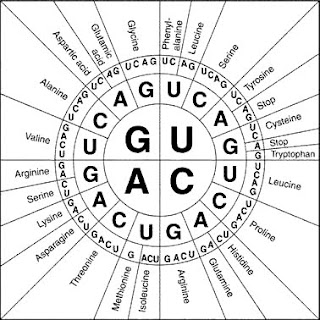
In essays on the subject of centricity, I've most often used the image of a geometrical circle, which, as I explained here,  owes someth...

Wednesday, July 10, 2024

THE READING RHEUM: FRIDAY (1982)


The most interesting thing to me about this 1982 Heinlein novel is that its fairly shapeless narrative is not unlike some of the 21st century novels that I've found equally shapeless. I've often thought that many 21st century SF authors have lacked the ability to "up the stakes" for their characters, to make the characters' travails meaningful through involved conflict. Yet here's one of the authors from the Classic Era of American SF, and he's not doing any better.

There's no indication that Heinlein wanted to give main character Friday Jones anything but a series of intermittent small conflicts. In a future where America has become balkanized into separate states, Friday works as a courier for an undercover organization, whose boss, we'll later learn, is more or less her adoptive father. Friday doesn't know this, because she was a "test tube baby," grown from genetic material and tinkered with so that she has superior strength and speed in comparison to a female human. Neither capacity helps her when she's captured by a small group of enemy agents, who interrogate, torture and rape Friday. Given that Friday cannot conceive, the latter ignominy doesn't bother her that much. She's rescued by her fellow operatives, who wipe out most of Friday's captors-- which should signal instantly to the reader that Heinlein does not intend to make his heroine's detainment any big deal in the life of a secret agent.

Instead, her superior, whom she always calls "Boss" (and who apparently appeared in any earlier Heinlein story), briefly tries to convince her to become an assassin. If the reader thinks this was introduced for purposes of plot development, he should guess again, for after Friday demurs, the subject never comes up again. Friday goes on an "R and R" trip which, in essence, never properly ends, because the rest of the novel is just one sight-seeing episode after another, as Heinlein takes his heroine into various future-scenarios in order that he can make whatever witty analysis he cares to. (Not that the future-society holds together as a SF-concept, compared to famous Heinlein works like THE MOON IS A HARSH MISTRESS.) She does hook up with Boss again for a while, who suddenly decides she ought to make a great researcher, and Friday does that job for a little while. Boss dies for some reason and his bequest reveals to Friday some history of her origins. There are a handful of action-scenes, but they're all very brief and, as I said, none of them lead to any major plot developments.

FRIDAY was nominated for (but did not win) both a Nebula and a Hugo, and that may be because the book's a good read in its meandering way, as long as one doesn't expect a lot. I found myself thinking of the novel as a *picaresque* tale, in that such novels are structurally loose and depend largely upon exposing the hero (or heroine) to a variety of situations until he or she eventually finds a stable home. Defoe's MOLL FLANDERS is one of the few works in this vein I've reviewed here, and I think Heinlein *meant* FRIDAY to be equally formless. I don't believe there were any direct quotes of Defoe's more famous novel in this book, but there's really no other work that has made famous a character with the first name "Friday." (Clearly Joe Friday does not count.)

Just to close with a snipe at another 21st-century work, I also finished 2015's THE LONG WAY TO A SMALL ANGRY PLANET by one Becky Chambers, and although that too is pretty formless, there was hardly anything intellectually bracing about it. Even weak Heinlein is still stronger stuff than most of the posers of recent years.


Wednesday, July 3, 2024

NEAR-MYTHS: KICK ASS 2 (2012)


 In my review of Mark Millar's first KICK ASS collection, I commented that I didn't think it registered very strongly as either null-myth or near-myth. However, the sequel, while it has a lot of the same schematic feel as the first series (and the movie adapted from it), Millar and his artistic collaborator John Romita Jr do a better job of developing their basic idea.

After the end of KICK ASS, the titular hero briefly retires and leaves the job of superheroing to other vigilantes following his example (the exception being Hit-Girl, a grade-school kid trained to be the ultimate costumed crusader by her obsessed father). But he quickly gets bored and drifts back to vigilante activity. Initially Hit-Girl gives Kick-Ass some training, but her guardian finds out and grounds her. Kick-Ass then contacts other amateur superheroes, and though initially they perform a lot of community service, inevitably they get on the bad side of the underworld once more. Even without their more adventurous activities, Chris, the son of the mob-boss that Kick-Ass and Hit-Girl originally took down, vows to eradicate all superheroes, and assembles a group of ruthless killers to become his "Legion of Doom."

Most of the ultraviolence in KICK ASS 2 is as predictable as what appeared in the first series. But there's a much better development of the two central characters' mundane identities of Dave and Mindy, and Millar devotes more time to understanding the motives as to why numerous amateurs risk their lives to dress up as superheroes. This sociological myth is the only thing that gives the sequel a little more gravitas than the first entry. 

Saturday, June 29, 2024

PHASED AND INTERFUSED PT. 1

 In algebra, the phrase "phase shift" is defined thusly:

The phase shift of a function is when a function moves to the left or right a certain number of units. It can also be called a horizontal shift.

As I haven't worked with algebra since high school, I don't know if I encountered the phrase back then, picked up the phrase from some secondary source (like a science fiction novel), or if I only recently whipped up the phrase myself for my literary project and only accidentally paralleled a bit of existing mathematical jargon.

Regardless, "phase shift" is my term for the process by which a function in literature-- which parallels my term "icon"-- shifts from one state of being (within the "horizontal" world of its purely fictional existence) to another state of being.

I have undoubtedly described phase shifts many times without having formulated a term for the process, though for now I'll confine the application to one department of my lit-crit project: that of crossover-ology. For instance, here's a passage in which I described a phase shift without using the term, from the 2023 essay INDIVIDUAL AND COLLECTIVE STATURE:

AVENGERS #16 changed its [Inclusive] template to that of the Semi-Inclusive when the new lineup consisted of one Prime with strong stature, Captain America, and three that had only been charismatic Subs within the universes of other featured heroes. Since Hawkeye, Quicksilver and the Scarlet Witch only accrued stature once they'd been in one AVENGERS story, the first appearance *alone* was a charisma-crossover. From then on, they all possessed "collective stature" due to their continued membership in the team, and the more they appeared in the team, by the principle of escalation they quickly progressed from being Charisma Dominant Primes to Stature Dominant Primes.

In the same essay I touched upon a different type of phase shift, that of Primes whose stature arises from being the sole stars of a continuing feature-- the example being Ant-Man/Giant-Man and his partner The Wasp-- to having a stature arising from being members of an ongoing team in a continuing feature. I elaborated on this type of phase shift last month thusly:

Therefore, Henry Pym and Janet Van Dyne benefit from their association with the better stories of AVENGERS, as opposed to those of their own feature, and "qualitatively" their Collective Stature supervenes their Individual Stature. And of course, this is also true given that these two icons made many more appearances in AVENGERS in the ensuing decades and so they remain best known to comics-fans as members of that team, not as solo acts. Even stories that may be dramatically bad, like "Henry Pym, Wife Beater," have become inextricable to the cosmos now designated as "Earth-616" in a limited mythopoeic sense. 

There are many other phase shifts I've described, sans the special term, in other earlier essays. However, my next post on the subject will pick up on a new subject for the time being, one that makes the above shifts seem pellucid by comparison.


Wednesday, June 26, 2024

CURIOSITIES #36: ["KERRY'S LITTLE LECTURE"], KERRY DRAKE #10 (1948)


This one-page item appeared on the inside front cover of a comic book devoted to reprinting the Sunday pages of KERRY DRAKE, a patent DICK TRACY imitation. One interesting aspect is that though the lecture appears in a comic book, the complaining citizen is actually irate about violent crime stories in the newspapers, which for her set a bad example for the young. Prior to this, I hadn't seen much documentation of calls for comic-strip censorship, and indeed Wertham's SEDUCTION largely gives the newspaper comics a pass. According to Jay Maeder's history of the DICK TRACY strip, Chester Gould constantly dealt with complaints about violence for the entire history of TRACY. I imagine KERRY DRAKE might have caught some of the same criticism, though from what I've seen DRAKE was much tamer than TRACY. This proposition is strengthened by the fact that this lecture is signed by DRAKE's creator Alfred Andriola. Of course, some other artist might have ghosted the one-pager in his style. But if Andriola had been the victim of real citizen complaints, then there's no reason he would have refrained from using the interior of a reprint comic book as a "bully pulpit" to argue his case-- especially since he could not do so in the various newspapers that circulated his comic strip.

As an added amusement, the comic-strip continuity reprinted in issue #10 concerns illegal drugs, a topic which would be forbidden for comic books following the Comics Code. There never was an official Code for newspaper comics, but I imagine the existence of the Code might have had a chilling effect on, say, the depiction of various topics in the strips during the late fifties and the following decade.

Sunday, June 23, 2024

MYTHCOMICS: "SINS OF THE FLESH" (SPIDER-WOMAN #18, 1979)


As I said in the previous essay, Jessica/Spider-Woman breaks up with her boyfriend Jerry in issue #16. Issue #17 in part concerns the "Dark Angel" trying to get back into the dating scene by attending a disco. She meets a guy named Eric and allows him to drive her home, though he ends up parking with her on a lonely knoll. The issue ends with Eric hiding his face from Jessica as his very flesh starts to dissolve. At the beginning of "Sins," he bolts from the car into a nearby forest. Jessica, concerned that her pheromones might be having a bad influence on an innocent man, follows. When she overtakes him, he seems totally fine again. He leans for a friendly kiss, and...


 "I can't hold it anymore," indeed! I'm rather surprised that in the early 2000s, when snarky comics fans entertained themselves trying to find panels that put pop-fiction characters in compromising positions, none of them apparently came across this oddball gem.


Of course, my interest isn't mere snark, but the ongoing psychology underlying the War Between Men and Women. Instead of acting like an imperturbable superhero, Jessica is quite naturally freaked out by having "worms of flesh" crawl over her after coming off the face of a melting man. She copes somewhat through her ability to zap away the flesh-threads with her venom-powers.


In her Spider-Woman guise, the heroine tails Eric to another disco, but fails to see him leave his car, considering the likelihood that the strange man may be "able to mold his face like putty and change his appearance." She stakes out the disco and sees a different-looking man drive away in the car, accompanied by a pickup. Spider-Woman surveils the house where the suspect takes the young woman, but when nothing happens for a bit, the heroine flies away, wondering if she could have hallucinated the episode. But she gets no surcease of trepidation when she goes home, haunted by the experience of "having flesh crawl on me that is not my own."


To no reader's surprise, the young woman Spider-Woman watched the previous night is a corpse in the morning. Angry at her own negligence, the Dark Angel begins hitting the discos again, trying to look for anyone who behaves analogously to the mysterious Eric. She finally meets a likely candidate, but instead of taking the man to her own domicile, she conducts the fellow to the unoccupied house of her former landlord Mrs. Dolly. Jessica leaves the man alone, steals out of the house and changes into her super-identity. As she confronts the man whom the captions call "The Waxman," he has a flashback as to how he mutated to his melting-man form. Then he hits the heroine with a gob of loose flesh and flees upstairs.


The final two pages, while not a "fight" in the usual Marvel sense, plays merry hob with the nature of identity. Waxman alters his appearance to that of Jessica herself, poleaxing her long enough to unleash a flesh-trap. But this time Spider-Woman zaps the killer and his flesh-worms with her venom, and all of his "sinful flesh" apparently collapses from his denuded skeleton.

The ambiguous ending allowed a later writer to revive the Waxman further down the road, but thankfully Gruenwald "lets the dead lie," so to speak. Despite the presence of a superhero, "Sins of the Flesh" is a better example of "body horror" than most comparable stories from later comics-generations.

ADDENDUM: Carmine Infantino only penciled one more issue of SPIDER-WOMAN after #18, while Gruenwald finished up his run the issue after that. I will probably reread the other thirty issues, but I doubt there will be much worth commenting on, since Wolfman and Gruenwald had provided the groundwork for the Jessica Drew/Spider-Woman mythos. As noted earlier, Roger Stern would weave that mythos and several other loose ends into an overarching continuity. But in the SPIDER-WOMAN title, I don't believe there were any major developments, particularly eliminating the "weirdie" vibe seen in the first twenty issues. Michael Fleischer wrote some rather pedestrian tales, Chris Claremont rendered various strong formula-stories (most often with artist Steve Leialoha), and Ann Nocenti finished up the last four issues with a controversial narrative in which Spider-Woman was erased from Marvel history. Naturally, this was soon reversed, for the essence of Marvel Comics was the potential interfusion of every element with every other element. It's my loose impression, though, that even though the SPIDER-WOMAN series was not a great sales success, few if any later iterations have eclipsed its accomplishments.


SPIDER-FEMME, SPIDER-FEMME PART 2

 As I said earlier, I'm working my way to my second mythcomic, which happens to be the eighteenth issue of SPIDER-WOMAN. I don't propose to go over each of the seventeen previous issues, but to give some flavor of the feature's early history, I want to touch on the high points.


#1-- I don't want to overstate the importance of Marv Wolfman having the insight to recycle Goodwin's idea that the starring heroine seemed to repel people, though not for Goodwin's original reason. It was typical for all Marvel heroes to have some sort of trauma or character flaw that would make them sympathetic to the audience. Yet Wolfman's treatment of his costumed champion was far more interesting than his uninventive treatment of his superhero "Nova" around the same time, and in some ways she's one of Marvel's first truly "feminine" superheroines. On the fifth page of the first issue, she's still in London, trying to make a living, but frozen out by many citizens, *especially* other women. She gets a new costume, new name Jessica Drew, a fuller origin and a potential new boyfriend, SHIELD agent Jerry Hunt.


#2-- Though I said elsewhere that Jessica's only connection with knights-in-armor were the demi-human Knights of Wundagore, here she has a Close Encounter of the Medieval Kind. While visiting a museum she finds she has a strange intuitive knowledge of Matters Arthurian. At the same time, the sorceress Morgan Le Fay-- only seen in a non-magical iteration back in the BLACK KNIGHT comic book of 1955-- projects her spirit to 1978. She uses a magic sword that's on display to take control of a petty thief, changing him into a super-knight to achieve her ends. The false knight seeks out an old, Merlin-like sorcerer, Charles Magnus, because Morgan wants Magnus's copy of the Book of the Darkhold. Spider-Woman befriends Magnus, defeats the pawn and banishes Morgan for the time being.


#3-6-- In a smorgasbord of storylines, Magnus accompanies Jessica to Los Angeles. In swift succession she meets a new villain called Brother Grimm (later revealed to be two villains in one, the Brothers Grimm), the Hangman (a WEREWOLF BY NIGHT foe created by Wolfman), the Werewolf himself, and Morgan LeFay again. The Morgan plotline links her desire for the Darkhold to the past history of the Werewolf, which is a more mainstream exposure for the evil tome than its appearances in the monster-books. Agent Jerry Hunt tracks Jessica to L.A. and the two become lovers.


#9-- After two more Wolfman issues, he departed the book. (A podcast quoted him as saying he didn't know what he was doing on the feature.) Mark Gruenwald assumed writing duties, and he, in tandem with artist Carmine Infantino, amped up the eerie qualities of the book. Infantino had been on the title since issue #1 but his arabesque artwork seemed pent-up in his work with Wolfman. Gruenwald's weird menaces gave Infantino lots of weirdness to illustrate-- the Needle, the Gypsy Moth, Madame Doll (admittedly set up for her role by Wolfman), the Cult of Kali and the albino mutant Nekra (originally from the short-lived SHANNA THE SHE-DEVIL title). I felt during this period that Gruenwald showed a strong predilection for sussing out the feminine nature of Jessica Drew-- particularly when she learns that her inability to make friends is the result of her giving off "allure or alarm" pheromones as a result of the spider-serum that mutated Jessica as a child.  


Not that the title was foreign to the sort of hard-hitting action that male readers tend to prefer. Even allowing for the fact that Marvel Comics almost never showed bloodshed, the battle between Spider-Woman and the near-invulnerable Nekra is one of the most brutal fights seen in Marvel Comics up to 1978. Curiously, it's also at this point that Gruenwald, who had slowly built up tensions between Jessica and Jerry, has Jerry take his leave, so that Jessica must deal with being the odd woman out again. That leads Jessica to the world of the L.A. dating scene-- and by the end of #17, she makes her first contact with the perfidious Waxman, the subject of my review in the forthcoming essay.

Parenthetically, the main reason Infantino was available to draw SPIDER-WOMAN was because he had been ousted from his position of editorial director at DC Comics. Since he's been responsible for the "Gothicization" of DC Comics beginning in the mid-sixties-- as I described here-- it's appropriate that one of Infantino's first assignments at Marvel was one of its few "Gothic" serials.

 ADDENDUM 7-13-2024: Since I commented above on Wolfman's rewriting of Goodwin, I may as well follow up with quick comments on Chris Claremont's rewriting of both previous SPIDER-WOMAN writers during his run, particularly in issue #41 (December 1981). This story has the heroine tilt once more with the sorceress Morgan LeFay, whom Wolfman introduced into the feature-- and into mainstream Marvel-- in issue #2 (1978). Claremont has LeFay put Jessica Drew through an Arthurian illusion, which is part of a complicated plot to make Spider-Woman serve her. Wolfman had Jessica experience some unusual psychic knowledge of Matters Arthurian in his issue #2 story, but Claremont does not follow up on this never developed plot-thread. 

Whereas Wolfman's Morgan simply tried to use the heroine to acquire the book of the Darkhold, in issue #41 Claremont's Morgan believes Spider-Woman to be an embodiment of the Darkhold powers. This concept was unquestionably a response to the 1979 "Yesterday Quest" story in AVENGERS #185-187, which tied together the story-threads of Morgan, the Darkhold, Wundagore and Modred the Mystic far more intimately. Claremont also brought up the Darkhold again in SPIDER-WOMAN #42-44 (1982). Yet Claremont made the odd statement that Spider-Woman remained in stasis at Wundagore for thirty years. Since Little Jessica looks to be about five before she succumbs to radiation poisoning, that would make her thirty-five as soon as she finally emerges from stasis, feels rejected by the New Men, leaves Wundagore, finds love in some European village, and then gets recruited by Hydra. All very well, but no artist ever rendered Jessica Drew as anything but a young woman in her twenties.

These minor ruminations on the AVENGERS retcon, some of which were reversed by later Marvel raconteurs, sum up Claremont's only significant additions to the "Spider-Woman myth." I will also note, though, that Claremont largely dropped the idea that the heroine had to regularly cope with repelling certain humans with her pheromones, which was one of the more interesting tropes of the character. 

SPIDER-FEMME, SPIDER-FEMME PART 1

 Though Spider-Woman is hardly the worst character to debut during the chaos of the early Bronze Age of Comics, her initial origin is certainly one of the least prepossessing.


Most Marvel fans know that Spider-Woman was born from an attempted trademark violation. Sometime in 1976, the year after Modred the Mystic made his two appearances, Filmation Animation Studios contemplated a new set of superheroes for Saturday morning television. One of those superheroes was going to be named Spider-Woman. Marvel Comics, who held the trademark on Spider-Man, may have made some legal protest to Filmation. The upshot of the conflict seems to have been that in order for the company to claim "Spider-Woman" as a Marvel trademark, the company needed to publish a Spider-Woman. Thus, in MARVEL SPOTLIGHT #32-- dated February 1977 and thus actually issued in late 1976-- a Spider-Woman was introduced. Presumably Marvel so informed Filmation, for when the studio debuted its cartoon lineup in late 1978, their arachnid-character had assumed the new name "Web Woman." The lineup failed so quickly that had Filmation done their own Spider-femme, few would have remembered her.

The debut of Marvel's heroine was not much better. Archie Goodwin cobbled together a loose story in which an amnesiac woman named "Arachne" was captured somewhere in Europe when agents of the organization Hydra observed that she had strange powers. Hydra's leader Count Vermis formulated a plan to turn Arachne into an assassin to kill Hydra's foremost enemy, Nick Fury of SHIELD. Hydra apparently makes Arachne's costume for her and gives her the Spider-Woman name (though Arachne never uses that cognomen). Rather than taking time to devise some brainwashing device, the evildoers command a handsome blonde Hydra agent, one Jared, to make love to Arachne. Then the schemers arrange for Jared to be captured by SHIELD's European division while Nick Fury happens to be present.

 Arachne attacks SHIELD, apparently willing to kill Fury even though Jared is still a living prisoner. Arachne herself accidentally wounds Jared fatally, after which Fury reveals how Hydra tricked the heroine, and Jared dies expressing revulsion for having even touched his super-pawn. Arachne then speeds to Hydra's base and decimates it, chasing down Vermis. The master villain then reveals that he knows that Arachne was the creation of the mad scientist The High Evolutionary, who mutated animals to become the demi-human Knights of Wundagore. Arachne was ostracized by the other creatures there, and thanks to Vermis' prodding, she breaks through her memory blocks and remembers that the reason for her outsider status was her heritage of being a mutated spider, given a human body.

Perhaps Arachne would have retained that status had she never been revived. But for whatever reasons, those of good SPOTLIGHT sales or of long-term trademark protection, Marvel decided to launch Spider-Woman in her own title. However, to give her some early exposure, the heroine became entangled in a very messy five-issue arc by Marv Wolfman in MARVEL TWO-IN-ONE #29-33 (July-November 1977).


Though the spider-femme's origin is only incidentally touched upon, the sequence does end with the revelation that she's actually a human mutated by exposure to a spider-serum, which story would be expanded upon in the series proper. It isn't necessary to go over every beat of Wolfman's five-part story. It's only relevant that Spider-Woman is recaptured by Hydra, that she becomes part of a whole world-conquering scheme, and that, though it's revealed that she's not repugnant because she's a reborn spider, Wolfman loosely repurposes Goodwin's idea that she somehow repulses people for an unknown reason.


The only other interesting point is that all five issues are confined to England-- and I theorize that Wolfman chose that setting so that he could revive Modred the Mystic, in whose creation Wolfman was loosely implicated. True, one of the other guest-stars who teams with the series-star The Thing is also Shang Chi Master of Kung Fu, and his character was based in England. But Shang Chi vanishes from the sequence after issue #29, while other, more important aspects of the story evolve from the release of four elemental demons who are trying to capture Modred, who's still a resident of Old Blighty. At the story's conclusion, Modred is actually the individual who divines that Spider-Woman is a human being. Wolfman would later seek to explicate this facet of the character's nature in the first eight issues of SPIDER-WOMAN.

I don't know if Wolfman cherished some hope that Modred would accrue some strong repute from the story. But what happened was that roughly two years later, Roger Stern made Modred one of the puzzle-pieces of the aforementioned AVENGERS arc, "The Yesterday Quest"-- and for the most part, Modred did not come off looking good in said arc and the character remained a minor figure for several years after.

As for Spider-Woman, neither her SPOTLIGHT debut nor her TWO-IN-ONE appearances cast her in a very strong light. Yet as Modred declined, she advanced-- and the early issues of her own title show that she had more staying-power than the trademark-swipe that led to her creation.