Featured Post

SIX KEYS TO A LITERARY GENETIC CODE

In essays on the subject of centricity, I've most often used the image of a geometrical circle, which, as I explained here,  owes someth...

Friday, April 5, 2019

MYTHCOMICS: {THE FALL OF DRACULA], TOMB OF DRACULA #45-70, 1976-79)

[SPOILERS, SPOILERS everywhere]

During the Silver Age the long story-arc (defined here), long a standard in the comic-strip medium, became both fiscally and artistically rewarding to comic-book practitioners. However, the very success of features that allowed for the development of long arcs-- FANTASTIC FOUR, THOR and SPIDER-MAN-- may have made it tough for other features to compete. The Early Bronze Age is littered with unfinished fantasy-epics, and even Jack Kirby himself, partly responsible for the Silver Age arcs, saw his "Fourth World" wrecked on the reefs of market preferences.

Marvel's TOMB OF DRACULA-- the company's most popular "monster comic"-- lasted almost the entire decade of the 1970s. But initially the feature conceived by artist Gene Colan and writers Roy Thomas and Gerry Conway took an episodic approach to storytelling typical of the early 70s. The vampire count, brought back to life during the 20th century, sought to find new ways to establish a new empire among the living. His main opponents were a group of vampire-hunters: one was Frank Drake, a distant descendant of the mortal Dracula line, while the other two were descendants of characters from the Bram Stoker novel: aged Quincy Harker and his protege Rachel Van Helsing. With issue #7 (1973), Marv Wolfman took the scripting reins, and he and Colan continued to their collaboration on the title until it ended in 1979 (though other Marvel-Dracula stories by other hands appeared elsewhere). Although Wolfman's long tenure included many episodic, "done-in-one" stories-- indeed, many such stories are interpolated in the long arc I've termed "Fall of Dracula"-- he gave the continuing characters more emotional continuity than they had possessed under previous writers, including the star himself. Dracula was not just a thirty bloodsucker, but a medieval aristocrat who believed absolutely in his right to command, as illustrated by the vampire's words in this 1974 storyline:

Man does not have his choice in things. He follows the will of his betters—and he is destroyed if he does not.
Though TOMB OF DRACULA was a steady paycheck for both Wolfman and Colan, they surely saw many other features dying around them, not least other "monster-titles." I've avoided looking at anything Wolfman or Colan may have said about the disposition of the TOMB title, except for responses in the letters-columns. The specific rationale for working in a possible conclusion to the undead count's saga does not matter. it only matters that in TOD #45 (1976), Wolfman took the first step toward chronicling the ruthless vampire's downfall.


In issue #45, Dracula has just survived a crossover-encounter with Marvel's resident sorcerer Doctor Strange. Possibly in response to his near-defeat, the vampire conceives of a new way to wield power in the human world: that of starting a religion. Earlier issues establish that in antiquity Dracula forswore the Christian beliefs of his upbringing and affiliated himself to God's enemy Satan, though there are no indications that the Count was a true believer in anything but himself. Drac hits upon the idea to create a Satanic cult that will somehow become dominant in world government, though the vampire seems pretty sketchy about the details of his program. He happens across an abandoned church and decides it's the perfect place for a Satanic hang-out. But although the church has been divested of most of its religious accoutrements, one memento remains: a large oil painting of Jesus of Nazareth, looking soulfully outward. Dracula finds that he cannot remove or even come near the painting. Instead of giving up the church as off limits, the villain defiantly swears to make the former place of worship the bastion of a religion in which Dracula himself will become a living god.


Dracula seeks out a nearby Satanist cult, a small coven run by a nasty customer named Anton Lupeski (note the "wolfish" name). Since Dracula sees the cultists attempting to summon Satan himself to marry a female cultist, the vampire hits on the idea of pretending to be Satan given human form. The cult buys Drac's imposture, though Lupeski knows better. However, since the coven was in the middle of conducting an unholy marriage-ceremony, Dracula finds himself expected to make an infernal union with the female cultist in question, name of Domini (explicitly translated as "belonging to God.") Since Domini is a good looking woman, the vampire has no objection to assuming the role of her husband.


Following this initial step in the Count's plans for conquest, Wolfman begins to emphasize the presence of angelic/ Christ-like figures in Dracula's world, figures which had been largely absent in earlier issues. Flashbacks in issue #48 establish that even back in medieval times Dracula had a few episodic contacts with ambivalent beings who seem to be heavenly emissaries.  Issue #50 features another crossover with the mainstream Marvel universe, but the choice is more metaphysically interesting than Doctor Strange. Lupeski, seeking a way to get rid of his new boss, mystically persuades the Silver Surfer, Marvel's secular Christ-figure, to attack Dracula. Dracula survives the alien hero's attack in part when the Surfer gets a look at the Jesus-painting. The hero apparently has some sort of communion with the powers behind the painting, and thus decides to leave the undead Count to the destiny of Heaven.


Domini (no last name) emerges as the mediator between Dracula and his heavenly opponents. Wolfman does not spend much time explicating her history: for reasons unknown Domini was sent to a nunnery by her unnamed father, but she eventually escaped to join the Satanists-- not out of any devotion to that religion, but seeking some anodyne for her own sense of weakness. She comes alive as a character, though, because she seems the opposite of the relentless count, and the two genuinely fall in love despite Dracula's original purpose. In fact, Domini's father shows up at the Satanist church, using a rifle against the cultists. Dracula, brooking no opposition, slays Domini's father, though Domini is inscrutably sure that her dead father will not be doomed to vampiric resurrection.


It's decided at some point that Dracula and Domini will conceive a child, the better to promote the new cult with a messiah-figure, and the mystic rituals of the Satanists serve, apparently, to make an undead person capable of conceiving. Dracula's motivations here become somewhat fuzzy: on one hand, he wants to be the center of the cult, yet, because of his frustrations with earlier offspring, he also wants an heir to his throne.

However, in issue #52 Dracula makes a new enemy: a nameless, golden-skinned man who attacks the vampire with assorted super-powers. Dracula wounds the attacker, who flees-- and apparently disappears into the Christ-painting, signalling that he's some sort of angel-figure like the ones that dogged Drac in medieval times.


Despite interference from Quincy Harker's gang of hunters, Dracula's child is born, though the vamp is duly vexed to see that the infant has golden skin like that of his adult adversary. Domini has no real explanation for this, and even Drac doesn't seem inclined to wonder if she's been unfaithful to him. In issue #55 Lupeski, seeking to drive a wedge between the vampire and his messianic spawn, rather high-handedly bestows on the child the name of the Roman god Janus, "the god of "beginnings and endings" (or maybe "Alpha and Omega," as per the New Testament?) However, though Dracula and Domini begin the life of Janus, Lupeski provides an ending: during a battle in which Lupeski suborns the vampire-hunters against Dracula, the cult-leader accidentally slays the infant. Dracula slays Lupeski but becomes distraught at the loss of his son and heir.


Though Domini joins Dracula in mourning their son, issue #61 reveals another bolt in her quiver. In a parody of vampiric revival-- itself a parody of Christian resurrection-- Domini brings her infant son back to life by causing the dead child to merge with the unnamed golden angel. The angel thus takes on some of the personality of the human child, and announces with supreme regret his intention to slay his father.


Despite Dracula's replacement of Domini's father as "the only man in her life," Janus's battles with the vampire-lord don't verge into the realm of the Oedipal, though Wolfman ratchets up the melodrama for all it's worth.


However, yet another player enters the game in issue #64. Satan himself summons Drac, Janus and a human witch named Topaz into his infernal domain, and waxes wroth with his alleged servant for having upset the balance between Heaven and Hell:

You brought into existence a child-- a son who destroys the carefully woven tapestry that permits our survival.

The gist of Satan's remarks imply that he's punishing Dracula in order to keep the celestial heat off himself. Satan releases all of his captives back to the mortal world-- including Topaz, who mainly served in the capacity of a glorified guest-shot-- but now Dracula has lost all of his vampire abilities. The Count is thus forced to scrabble for existence like an ordinary mortal, and though he's still a tough old bat without his powers, Satan hits Drac in his weakest point: his inordinate sense of pride in having the powers of the undead. The Devil only returns Drac's powers when the latter has foolishly forsworn Satan as well as God, which, according to the demon-lord, is going to put the vampire in big trouble in the final accounting.


If Wolfman had any intention of a final contest between Dracula and his son, this plan is abandoned. Instead Dracula's last challenge is from an older vampire, one Torgo, who turns all of the Count's legions of undead against him. Even though the doughty Drac again triumphs, for the first time he's unable to find any glory in the victory, and so is ripe for slaying by his oldest living foe, Quincy Harker.


To be sure, even in the feature's final issue, Wolfman mentions plans to re-launch the Count in another format, so it was a given that Marvel wasn't quite finished with Dracula. Nevertheless, this broad breakdown of the events of "Fall of Dracula" should indicate that Wolfman and Colan managed to send the bloodsucker to a doom which, while entirely deserved, nevertheless carries the aura of solid melodramatic tragedy.


Tuesday, April 2, 2019

NULL-MYTHS: THE SILVER AGE SUICIDE SQUAD (1959-66)

In this essay, which contains an explanation of my term "null-myth," I mentioned that Mark Millar's WANTED was one of the few works I considered inconsummate in every way, that is, in terms of all four literary potentialities. Now here's another one.


I hate to knock this omnibus collection of the Silver Age SUICIDE SQUAD, which, as most DC fans will know, indirectly gave rise to the SUICIDE SQUAD concept of the Late Bronze Age. Since to my knowledge none of these stories were reprinted before, the collection is of great benefit to the devoted comics-historian who wants to know the origins of everything. These tales were almost entirely executed by editor-writer Robert Kanigher and his possibly-favorite artist-team Ross Andru and Mike Esposito. (There's one story written by another writer and a couple of entries by Joe Kubert and by Gene Colan.) One group of stories were set in the 1960s, featuring four government agents, who usually battled recrudescent dinosaurs. The other group concerned an assortment of non-recurring characters who belonged to a secret commando squad, and who-- also usually ended up fighting dinosaurs. To be sure, the later batch belonged to an overarching serial concept, also mostly by Kanigher, "The War That Time Forgot," in which American GIs kept encountering big saurian monsters whose modern presence went largely unexplained. Of the two concepts, the 1960s one was a direct influence upon the Bronze Age concept, which took the first serial's stalwart hero Rick Flag and put him in command of a team of DC supervillains. I really have nothing to say about the WWII tales, except that I found them all very boring, even the one with an early version of that curious DC creation, "the G.I. Robot."

The stories of the "Rick Flag Squad" are no better, but it's historically interesting to show how poorly Kanigher works out his concept. First of all, he selects his four adventurers-- Flag, nurse Karen Grace, and scientists Evans and Bright-- for all having one thing in common: survivor guilt, after having witnessed other persons perish while the future Squad-members themselves survived.  This sounds a lot like the idea Jack Kirby and Dave Wood debuted for the long-running 1958 feature CHALLENGERS OF THE UNKNOWN, wherein the four heroes all survived brushes with death. However, whereas the Challengers all pretty much forget about their trauma in their quest for fun exploits, it becomes a source of ongoing melodrama in the hands of Kanigher.


Naturally, Kanigher doesn't have any of these survivor-victims literally court death; "suicide" is only a tag-line to suggest how dangerous their missions are. To supply optimal melodrama, Kanigher comes up with a romantic schtick in which Flag and Karen ache with mutual love for one another, but cannot be seen together. Why not? Well, their other Squad-members, Evans and Bright, are both in love with Karin too, though neither man ever seems to make the slightest pass at Karin. However, virtuous Flag insists that the Squad's missions come first, and therefore he and Karen cannot wed. 

Kanigher rolls out this trope over and over with no development, as if each pseudo-romantic encounter were produced via Xerox machine. The group's menaces are the same: they're almost all dinosaurs that have survived somehow, sometimes with super-powers. The last adventure has the characters, who have never functioned as crimefighters, threatened with death by a gang-boss who pays a villain, "the Sculptor Sorcerer," to turn the quartet into gold statues. It's not a good story either, but it's certainly better than any of the dino tales.

I've often pointed out that Kanigher had an unusual ability to breed real poetry out of his endless repetition of pulp-tropes, which often seems  a minor miracle, given how much junk Kanigher wrote. But the only significance of the Silver Age SUICIDE SQUAD is that of providing a template for the superior Bronze Age creation.


Monday, April 1, 2019

NEAR MYTHS: THE WORLD GOD ONLY KNOWS PT. 1 (2008)

Since there are over 200 installments of the 2008-2014 manga series THE WORLD GOD ONLY KNOWS, and I've only read the first 20 or so, it's too early for me to tell if any episodes will have the qualities I seek in a mythcomic. However, at least the early stories have some engaging myth-elements.

WORLD follows one of the most popular tropes in manga: "cute magical teen girl involves ordinary teen boy in all sorts of trouble." This simple formula may make the guy the eternal goat, as with Ataru in URUSEI YATSURA...


...but he may step up and take on heroic proportions, like Tenchi in at least some episodes of TENCHI MUYO...


....Or he may just be part of an outright guy-girl romance, like VIDEO GIRL AI.


WORLD's viewpoint character, Keima Katsuragi, is a nerd like the fellow in VIDEO GIRL AI. Such subtypes are often known for retreating from the real world into video games, comic books, cosplay and other such activities, and the magical girl's intrusion forces him to cope with reality, up to and including getting to know real girls. Keima is a video-game addict, but of a particular subsection: that of "dating-sims." Keima has an unblemished record in terms of seducing sim-girls because of his uncanny comprehension of the programming practices. Keima has absolutely no interest in girls in the real world, who are too unpredictable for his taste.

However, this self-styled "god of conquest" is selected for a perilous mission by the Powers of Hell, and they send their representative-- a cute ditz named Elsee-- to make him sign a contract. Elsee succeeds in this task only because Keima doesn't believe in Hell, and belatedly learns that if he doesn't help this doofus from perdition, his head will get blown off his shoulders.


What seems, at this early point, to separate Keima from the average dopey teen-boy is that he has a samurai-like devotion to his pursuit of fictional sim-girls. Elsee's intrusion on his life forces Keima to use his faux dating skills to approach real girls at his school; girls who have become unwitting receptacles for Hell's escaped spirits. Keima doesn't have to seduce the girls so much as "fill the gap within their hearts," which will expel the spirits so that Elsee can re-capture them. Thus this thoroughly monastic game-player now has to figure out strategies to resolve the hidden conflicts of young feminine hearts, thus giving them epiphanies enabling them to live their lives better. The only saving-grace of this undesirable situation is that once Keima works his dating-magic on each subject, each subject forgets all about her interactions with Keima, though implicitly the psychic lesson remains intact on a subconscious level. (For instance, a tough karate-girl abjures soft things, but secretly wants to indulge in her feminine liking for softness: Keima helps her reconcile her psychological dichotomy.)

Keima's monomaniacal devotion to dating-sims is of course endlessly comic, and it's almost a given that at some point some female, most likely his daffy co-star Elsee, will persuade him of the virtues of reality. But creator Tamiki Wakaki has at least arranged the elements of this very over-familiar trope in some relatively new ways.

QUICK THOUGHTS ON SPIKE LEE'S BLACKKLANSMAN


The above image is the cleverest thing to have come out of the 2018 BLACKKLANSMAN, partly because of the juxtaposition of the threatening-looking hair comb with the Klan hood.

Prior to viewing this Oscar nominee, I'd heard that BK was something of a return to form for Lee, whose 1989 DO THE RIGHT THING remains a major cinematic work despite its agitprop politics. I confess that as a white guy I grew tired of seeing white people portrayed as either active racists or naive fools (more or less aligned with the two Italian brothers in RIGHT THING). Consequently I'd given all Lee films a pass since 1994's CROOKLYN. Thus I can't speak to whether any of the films in between CROOKLYN and BK showed any improvement in his ability to characterize white people. However, since there's no improvement in BK whatever, I tend to doubt it.

True, the script for BK, based on a real-life book by former black police officer Ron Stallworth, was concocted without Lee's direct input, so those writers may be partly responsible for any and all fatuities of characterization-- which, in fact, include all of the black people as well. All of the characters are thinly drawn: the fictionalized version of Stallworth, a Colorado Springs cop who initiates contact with local Klan members, his girlfriend, the cops he works with, and the Klan-dolts being investigated. It doesn't really matter that the goons of the Klan are portrayed as cretins, since their belief-system justifies cartoonish treatment. But when the film has Stallworth and his girlfriend argue about the role of  cops in relation to Black American culture, and Stallworth can't justify his profession beyond the fact that he always wanted to be a policeman, I think I'm justified in suspecting that none of the authors really cared anything but putting across the ideology.

And what is the ideology? Well, it comes down to the ideal of Nietzschean ressentiment, which has become almost the only ideology of the American Left today. Going on the assumption that, given his still considerable clout, Lee probably reworked everything in the script to suit his ideology, he has but one message that he tiresomely reiterates in most if not all of his movies: White People Have Done Black People Evil in the Past and They Will Keep Doing So, Unless Stopped Somehow. No individual evil springs from any historical contingency: the resurgence of the KKK following the success of Griffith's 1915 film BIRTH OF A NATION is one with the 2016 election of Donald Trump, and even with the negative depiction of Black Africans in TARZAN movies.

But while Lee has much to say about the ways black people have been persecuted, his depiction of the Klan's harassment of Jews is underwhelming. Though the Klan-members do spout a lot of anti-Jewish sentiments, there's no attempt to glean what activities the Klan undertakes against the Jews of Colorado Springs. Only the Klan's activities against the city's blacks are depicted. Lee and his collaborators try to hoax reviewers into thinking that he has some concern for Jews. A real-life character from Stallworth's book, whose name and ethnicity are not revealed beyond the bare fact of his being white (so that he can infiltrate the Klan using Stallworth's name), is made into a Jewish-American white guy named Zimmerman. However, I'm tempted to believe that the only reason he's Jewish is so that Lee and Co. could avoid the trope of "black and white cop fighting racism together." If Zimmerman is, in the view of the Klan, " non-white," then the alliance can be read as two non-whites battling against the "white devils," and so the anti-white ideology remains intact. Zimmerman only gets one character-moment, when he considers resigning from the operation. This gives the Stallworth character the chance to chide his fellow cop not just for his unprofessional reluctance, but also for the real sin Jews commit in the eyes of radical black activists: the sin of being able to "pass" by concealing the fact of Jewish difference. Stallworth even references "light-skinned" blacks who have chosen to pass, implying that this is a betrayal of The Cause. Not surprisingly, Zimmerman utters no more protests for the rest of the film.

Lee was at his most honest about his true feelings in a MALCOLM X scene. A young white girl approaches Malcolm during the latter's years of political celebrity, and asks what can someone do about the sins of whites against blacks, only to be told, "There's nothing you can do."  No enormities against any people in history-- not Jews, nor Native Americans, not even Black Africans-- outweigh the sins against Black Americans, and Lee is entirely mendacious when he pretends otherwise. Lee neither wants nor thinks feasible any rapprochement between the races such as MLK imagined. He stokes resentment to no end except encouraging black rage and white guilt, which combination he must think will work to the benefit of Black People. For him, the rise of Trump can only signify that the White Devils have not yet been made guilty enough. Lee would never consider the possibility that Trump might be the result of a little too much white guilt.

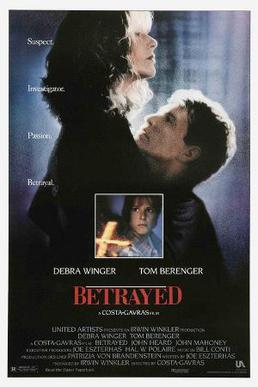
Though a minor film, BK is at least coherent in its single-minded ideology, which puts it miles ahead of the odious THREE BILLBOARDS OUTSIDE EBBING, MISSOURI. But in terms of dramatic development, it's not even as good as Costa-Gavras's film on a similar theme, the 1988 BETRAYED.


Friday, March 29, 2019

CONCRESCENCE AND THE KINETIC POTENTIALITY

At the end of CONCRESCENCE AND COMPLICATION I wrote:


....since I've gone to great effort to expound upon the ways in which complexity can only be judged through examination of the four potentialities, I won't repeat that argument here, except to say that I've allowed for the possibility that symbolic complexity is not the only form of complexity.

Some time before adopting the term "concrescence," I illustrated the ways in which different comics-artists constructed fight-scenes, arranging all of the "quanta" of kinetic representations in order to satisfy the reader.  I used Jack Kirby FANTASTIC FOUR #3 as an example of a "good kinetic discourse," while Mike Zeck's SECRET WARS was an example of a "bad kinetic discourse."

Here's a more specific example of Kirby art from the same FF Annual:


In the previous panels, the Cobra leaps on Captain America's back. The Cobra's "kinetic quanta" consists of attacking enemies in a "snake-like" fashion, while Captain America is the epitome of speedy athleticism. Not only does the hero stymie the villain's attack by slamming Cobra into a wall, he then uses the Cobra's body as a bludgeon against his next opponent. Since the Executioner is a super-strong demigod, the hero has to then duck and dodge his opponent's blows-- though the ending of this particular contest is not seen, since Kirby moves the action to other heroes and villains, all battling to prevent the wedding of Reed and Sue (or something like that).

In contrast, here's a scene from Zeck's SECRET WARS, in which a bunch of heroes attempt to make a frontal assault on Galactus:


Zeck may well have been constrained to follow the demands of editor/writer Jim Shooter, but whoever was to blame, there's no attention to the logic of the combative activity depicted here. The good guys shoot rays or throw rocks, Galactus shoots rays back at them. There's no attention to the distinctive "energy-quanta" represented by any of the heroes, much less Galactus, who, based on previous depictions, shouldn't even bother to engage in such a fight. The same scene could've been created with different heroes in place of those used.

In the case of the kinetic phenomenality, the operation of concrescence depends on bringing together disparate elements into what appears a seamless whole, just as it does with respect to symbolic discourses.


Wednesday, March 27, 2019

MYTHCOMICS: "CLOUD OF WITNESS" (SON OF SATAN #4-7, 1976)

NOTE: I'm using "Cloud of Witness," the title of the first story in this four-issue arc, to denote the whole arc. I'm not sure why writer John Warner chose this title. Curiously enough, "Cloud of Witness" is the title of a 1891 compilation of devotional prayers, but this would seem to have nothing to do with the content of the arc. If anything, "Cloud" seems to be moving away from the Judeo-Christian basis of the "Son of Satan" mythos.

The brief run of the "Son of Satan" feature in two Marvel magazines, MARVEL SPOTLIGHT and THE SON OF SATAN, followed the pattern of Satanic films that became more popular following the success of 1968's ROSEMARY'S BABY. Daimon Hellstrom, the son of the Devil and a mortal woman, is first seen as an adult who has renounced his paternal heritage but undergoes periodic werewolf-like transformations from a super-powered devil's spawn to a Catholic priest. The priest angle was quickly dropped, and when writer Steve Gerber took over the series, Hellstrom became sort of a combination superhero/exorcist. Gerber also brought in some non-Christian elements into the mix, but during the MARVEL SPOTLIGHT run the whole never exceeded the sum of its parts.

John Warner became the writer for the series when SON OF SATAN became a solo title. The first three issues delve heavily into the opposition of Hellstrom and his father, but this sequence ends with Satan foreswearing any more involvement with his son's life. Warner almost certainly took this tack in order to ground the feature within the Western tradition of ceremonial magic. The arc from issues #4-7, however, were Warner's last hurrah on the series, and the title was cancelled following the publication of an inventory story, reviewed here.


In this essay, I observed that certain stories, such as the Golden Age HAWKMAN origin, might be fairly simple with respect to their dialectic overthoughts, but complex with respect to their symbolic underthoughts. "Cloud of Witness" follows the same pattern. Starting with issue #3, Warner and his assorted artists (mostly Craig Russell and Sonny Trinidad) set up a new direction for Hellstrom, including a new job (occult instructor at Georgetown University) and a new support-cast. The first new addition to the Hellstrom cast is a fellow teacher (and inevitably romantic interest), Saripha Thames. She's later revealed to be a practicing witch who doesn't believe in Hellstrom's father, thus refuting the common conflation of witches and Satanists in American pop culture. To some extent Hellstrom finds himself alienated from this hotbed of occultism, since in his earlier exploits he rarely interacted with large groups, as he does when he's obliged to teach a course to a roomful of students. Thus Warner uses the standard revising of a serial character's setup to delve somewhat into the character's lack of socialization.


But since he's also a superhero as well as an occultist, he has to meet a new villain. although his introduction to this foe comes through a hieratic dream. Once he arrives at his university apartment, the hero falls asleep and finds himself beholding a procession of Egyptian votaries. There's also a "cloud" of incense-vapor that the dreaming Hellstrom likens to "ambrosia," the food of the Greek gods, and inhaling this shifts him to another dreamscape. He meets the image of his mother, who claims that she's about to enter a convent. Hellstrom is never less than aware than he's in a dream, not least because in life his late mother only talked about becoming a nun.


However, the Christian piety is immediately undercut when this "bride of God" greets and embraces her "demon lover" Satan, and Hellstrom is repulsed by his mother's acceptance of this unholy union.


As the dream-parents fade, Hellstrom encounters the puppet-master of the dream: an androgynous, satyr-horned being named Proffet, who claims to be an oracle. Despite the satan-son's attempt to escape the dream, Proffet keeps propelling the hero into more dreamscapes, not least being a confrontation with the two parts of his own soul, the destructive "darksoul" and a normal-seeming Hellstrom who's able to wield a cross to subdue the evil "dark half." Finally the dream ends and Hellstrom wakes up in his apartment, but his next conflict is signaled by a mysterious explosion from the apartment neighboring his own.


Though Hellstrom never met the other apartment's occupant, it's plain that the latter was involved in occultism, because the explosion throws his corpse against a wall in the posture of the Tarot "Hanged Man." Hellstrom reads the "symbolic allegory" of this supernatural manifestation, interpreting the body's posture as that of "a pyramid surmounted by a cross-- or an ankh." Warner does not mention that this opposition of images duplicates that of the dream-fight between the two Hellstroms, where a symbol of life (an Egyptian ankh) transcends an image of death (a pyramid, which is, of course, a glorified tomb, and thus reflective of all the death-imagery in the dream).


To be sure, Warner's beginning is more mythic than his resolution. The villain who caused the occult student's death is a megalomaniac who's taken the supervillain name "Mindstar," and he was attempting to capture the student, for very involved reasons, to turn him over to his divine perceptor, the Egyptian god Anubis. Because Mindstar screws up his mission, he attempts to confuse the issue by convincing the god that the Son of Satan is Anubis's quarry. This proves a rather weak plotline, largely setting up Hellstrom's superheroic battles with Mindstar. Still, at least Anubis conforms to the representation of both death and destruction, the negative elements with which Hellstrom regularly contends. Indeed, Saripha, though not yet romantically involved with Hellstrom, invokes the pagan powers of life to help Hellstrom against the Egyptian god of death.


Had the series continued for a time, Warner probably would have come up with some inventive takes on Marvel characters with an esoteric edge. As things stand, the short run of the SON OF SATAN comic merely hints at some tantalizing possibilities.

Thursday, March 21, 2019

MYTHCOMICS: "RANDOM CHOICE" (SECRET ORIGINS OF SUPER-VILLAINS #1, 1999)

Psychological myths, as I've mentioned, are not the same as just as any functioning psychological aspect of this or that fictional character. As with the other three myth-categories, myths about human psychology depend on revealing a deep, symbolically-rich structure to the phenomenon under consideration. There are any number of non-mythic works which may suggest such a structure in a superficial manner, but in order to formulate a literary myth, the structure must possess symbolic density. Psychological myths are also independent of what I've termed the "dramatic potentiality," which is principally about the interactions of fictional characters rather than their deeper aspects/


The GREEN LANTERN villain Sinestro, from his debut in GREEN LANTERN #7 (1961), has always been regarded as the hero's arch-enemy. That said, writer John Broome only provides a sketchy account as to how the red-skinned alien-- whom Green Lantern once calls "my Satanic-faced foe"-- becomes the universe's only renegade Green Lantern. The readers are only told that, through an unknown process, the Guardians of the Universe selected Sinestro to serve as galactic cop to his star-sector, including his birth-planet Korugar. After a period of serving nobly in the Corps, Sinestro fell victim to "the virus of power" and established himself as a despot over his people, after which the Guardians stripped him of his ring and his station, and then exiled him to the anti-matter universe Qward, where evil and destructive impulses are the norm. The Qwardians had already appeared about half a year earlier in GREEN LANTERN #2, but they had no leader as such. Broome presumably decided that a world of evil needed a ruler, and what better ruler than a "rebel angel" cast out by his heavenly bosses?


Sinestro's background remained sketchy for the next thirty-plus years, until Ron Marz and Scott Kolins put forth a "secret origin" in 1999.

The story is structured as a tale being narrated by a  Guardian named Ganthet to a cloaked figure who, by the end of the framing device, proves to be Hal Jordan during his brief tenure as the Spectre. No reason iks given as to why Jordan, who was Sinestro's greatest enemy when the former was a Green Lantern, is belatedly hearing this secret origin at this late date.

Prior to this origin-tale, there had been dozens if not hundreds of villains who started out as non-entities who choose to rebel against society by becoming evildoers. Marz, having been a comics-fan, had almost certainly seen many, many origins in which the villain's motivation was resentment, and it's possible that for that reason Marz decided not to follow that bif of cliched psychologizing.


Instead, the future villain-- whose real Korugarian name has, Ganthet says, long been forgotten-- begins as a nonentity who nurtures no obvious resentment of anyone. Sinestro begins as a low-ranking anthropologist on his homeworld, described by Ganthet as a "relatively unremarkable man." His only passion revolves around his project of reconstructing an ancient Korugarian city from its ruined condition, and his passion stems, Ganthet says, from his need for symmetry and order. Marz does not enlarge on how Sinestro reconstructs a whole city by himself, but at the opening of the narration, he's all alone amid the dead dwelling-places-- just as an alien Green Lantern crashes into one of the reconstructed buildings.

Sinestro, showing none of his future remorselessness, strives to help the alien. The creature, knowing that he's being pursued by the enemy who defeated him, passes his ring to Sinestro in what it obviously a mirror-image of Hal Jordan's ascension to ring-bearing status.


Seconds after Sinestro receives the mystic jewelry, the alien's enemy, one of the Weaponers of Qward descends to the site and begins attacking Sinestro. Though the Korugarian has no time to learn how to work the ring, he uses his knowledge of the archaic city, and the Qwardian is "crushed by the clockwork structure of Sinestro's mind" when the neo-Lantern drops a building on the warrior's head.


However, the destruction of the only thing Sinestro cares about pushes him toward the path of ruthlessness. Since he has been harmed by the city's demolition, he turns a deaf ear when the alien Lantern begs for the return of the ring in order to heal his fatal wounds.


The Guardians, unaware of Sinestro's complicity in this death, allow the Korugarian to assume the status of guardian of his star-sector-- after which the rest of Sinestro's career follows its designated course. The only other interesting detail Marz supplies is that when it comes time for the Guardians to punish the renegade, they choose to send Sinestro to Qward "because the irony of it appealed to us." Since there's no such irony as such in the original Broome backstory, Marz presumably means that said irony proceeds from Sinestro's revised history. Since the renegade first distinguished himself by defeating a Qwardian warrior, giving him over to the Qwardians would be not unlike a U.S. cavalry officer surrendering a rebellious Indian scout to a tribe that wants to kill him. But the Guardians' sense of poetic justice trips them up, because Sinestro harnesses the great resources of the anti-matter world against the world of goodness.

The frame-story wraps up with some nattering about correcting old mistakes, but the meat of the story is Marz's idea of giving evil a more mundane origin than Broome's notion of the seductiveness of power. Marz purposely does not give Sinestro any sort of personal life, and a writer more wedded to cliche would have probably harped on the character's inability to make interpersonal connections, as indicated by his passion to resurrect a dead city. Rather, Marz is interested in showing evil arise from "random choice." Sinestro's stated passion for order is presented as if it came about by fiat, rather than from his pedagogical history, and so his decision not to return the power ring to its original owner also comes about from a random choice, the choice to find a new orderliness in the career of a Green Lantern. In accordance with his established history, he distinguishes himself for a time, but since Sinestro has made his choice in response to a new passion, itself coming about from a random encounter, he's easily seduced to the "virus of power."