Featured Post

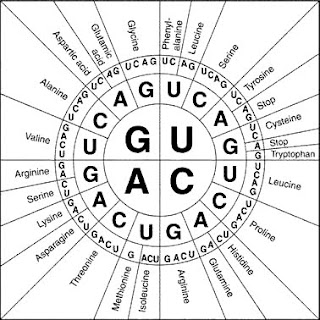
SIX KEYS TO A LITERARY GENETIC CODE

In essays on the subject of centricity, I've most often used the image of a geometrical circle, which, as I explained here,  owes someth...

Wednesday, July 13, 2022

PRIME STATURE, DEPENDENT STATUS

In my review of Edgar Rice Burroughs' 1930 novel A FIGHTING MAN OF MARS, I mentioned that I was reluctant to call the book a crossover simply because the book includes one or two scenes in which new hero Tan Hadron interacts with the main hero of the first three Mars books, John Carter. 

There's no question that in this particular book, Hadron is the main, or Prime, character, while Carter, despite his having greater fame, has been demoted to a subordinate, or Sub, role. This was not by any means the first time Burroughs had employed this technique. In my review of the 1915 SON OF TARZAN, I pointed out that SON was the only book in the series not to star Tarzan, though the original ape man does get more scenes than John Carter does in FIGHTING MAN. But by the logic I asserted in A CROSSOVER MISCELLANY PT. 1, Tarzan's role in SON would have to be a crossover just because he does have a little "activity" in the novel. 

The idea of having one character appear just long enough to introduce a newer one has precedent in a film like the 1972 BLACULA. In this movie's opening scenes, the original Dracula is around for ten minutes or so at the outset, talking turkey with Prince Mamuwalde. Then the vampire decides to make the African prince into an undead creature, sticks the newly vampirized unfortunate into a tomb for the next seven decades, and even gives the neo-vamp a sarcastic version of Drac's iconic name. During the main action of the film, when Blacula revives in the early 1970s, the Count does not reappear, nor is he mentioned again. To the extent that any viewer thinks about the matter, said viewer probably assumes that the racist vamp gets knocked off some time before Blacula revives in 1972. But because Dracula is such a major fictional figure, BLACULA (but not SCREAM, BLACULA, SCREAM) is a crossover-- though again, a very low-charisma type, since the iconic vamp makes only a token appearance.

Nevertheless, in crossovers of such low charisma, I find myself compelled to speak of such crossovers as "stature-dependent." In other words, Blacula exists because of the stature of Dracula, and Korak exists because of the stature of Tarzan. And so it's easy to see the relatively obscure hero Tan Hadron as being "stature-dependent" on the greater repute of John Carter. But this dependent status, in contrast to crossover-status, would not necessarily depend on whether or not John Carter had any scenes in the new hero's novel. It's been a year since I re-read THUVIA MAID OF MARS, which I reviewed here, but I recorded that John Carter was entirely absent. Yet because the novel's male hero Carthoris was the son of Carter, obviously any fame he accrued was borrowed from his famous peer.


A different form of Prime Yet Dependent Stature can be viewed in some of the hero-groups I've called "Semi-Inclusive Ensembles" in CROSSOVER MISCELLANY PT. 5. In this and other crossover-essays I mentioned that such ensembles were defined by their blending of both new and previously established characters into a new ensemble-franchise. Arguably the most famous example of this sort of franchise in comics history is the Silver Age AVENGERS. For fifteen issues, this series focused on heroes who either starred in ongoing serials (Thor, Iron Man) or who had been franchise-stars but didn't currently have a berth (The Hulk, Giant-Man and the Wasp, and Captain America). Then in issue #16, editor Stan Lee decided to push out almost all established stars, except for Captain America, who became the mentor to three "superhero trainees," Hawkeye, Quicksilver and the Scarlet Witch.


Though I have not looked at sales figures, I would assume that AVENGERS sold decently after the change, since "Cap's Kooky Quartet" plugged on in this "semi-inclusive" mode for thirteen issues. When the lineup was changed, it was not to bring back relative heavy-hitters like Thor or Iron Man, but to provide a berth for failed franchise-heroes Giant-Man and Wasp (with the former getting a new cognomen, "Goliath.") Without belaboring the obvious, from then on THE AVENGERS continued to follow this model, sometimes cycling in "big name" heroes, sometimes playing up extreme obscurities like Doctor Druid.


This raises yet another wrinkle: since such characters as Hawkeye, Quicksilver and Scarlet Witch had no stature prior to the Avengers, is their stature not also dependent upon being members of the super-group? Over time, the Scarlet Witch had a few more stabs at starring status, either by herself or in combination with the Vision, while neither Hawkeye nor Quicksilver ever enjoyed great fame as solo acts. Over time a number of heroes appeared in such semi-inclusive groups who would never have any stature outside such a group, and so they too would be even more "stature-dependent" than a protagonist who does later get a shot at a solo outing. 


In some cases semi-inclusive ensembles might even be used after the fashion of TV's "back door pilots." For three issues of THE INVADERS, writer Roy Thomas took the two juvenile members of the group, Bucky and Toro, and lined them up with two new similarly aged heroes, Golden Girl and the Human Top. The more famous members of the group-- Captain America, the Human Torch, and the Sub-Mariner-- did appear in selected scenes within the story, but clearly these issues were meant to emphasize the new team. In a much later interview Thomas admitted that he created the Kid Commandos as a means to shuffle Bucky and Toro out of the group, since he didn't like having to cope with the teenaged characters. Yet for the space of three issues, the Kid Commandos do acquire at least a dependent form of stature. Yet because their group never became independent of the Invaders, they are best seen as an adjunct of the Invaders group.


Next to lastly, I used THUVIA MAID OF MARS as an example of a novel within the "John Carter series" even though Carter did not appear in it. Similarly, the DC comic GOTHAM CITY SIRENS teamed up three of Batman's femme-adversaries: Catwoman, Poison Ivy, and Harley Quinn. Yet in the third issue of the series, the three of them barely appear, and writer Scott Lobdell focuses rather upon The Riddler as he tries to solve a serial killer case. A version of Batman-- actually Nightwing disguised as the Caped Crusader for continuity-reasons-- has like the Sirens a subordinate role in the story. If anyone behind this comic had some thoughts of giving the Riddler his own series as a quasi-hero, his "dependent stature" role here could have served as an adequate "pilot."


I might also add that "dependent stature" also attends to a lot of characters without their own serials who appear in discontinuous team-up titles like THE BRAVE AND THE BOLD and MARVEL TEAM-UP. Some of these characters included former villains, also discussed in A CONVOCATION OF CROSSOVERS PT. 3, and some were characters who never stood a chance at getting a series, like the entirely forgettable "Bat-Squad" from BRAVE AND BOLD #92.

THE READING RHEUM: A FIGHTING MAN OF MARS (1930)


My main reason for delving into this Martian novel after finishing my survey of the first four last year was to assess its crossover potential. It is one of five books written from 1929-30 in which Edgar Rice Burroughs loosely linked some of his franchises, as I noted in my review of one such book, TARZAN AT THE EARTH'S CORE:

AT THE EARTH'S CORE, like other books in the ERB canon, opens with the conceit that its narrative-- the story of how David Innes and his colleague Abner Perry found a huge primitive environment at the center of the earth-- is actually a true story related by Innes to Burroughs himself. However, for the crossover project ERB decided to create a fictional character, Jason Gridley, to serve as a linking element between his disparate fictional worlds. In two of crossover novels, radio-technician Gridley is just an onlooker. First, in TANAR OF PELLUCIDAR (the third in that series, and the first to center on a hero other than David Innes), Gridley uses his advanced radio to receive a transmission from Abner Perry, which tells the story of the titular Tanar and his adventure. Later, Gridley also receives a similar transmission from Mars, which allows him to relate the story of 1930's A FIGHTING MAN OF MARS, the seventh of the "Mars" series, but there too Gridley merely relays information. 

There were no surprises when I reread FIGHTING, in that the interlocutors Gridley and ERB only appear in an introductory scene. However, the story that Gridley receives from Mars is not related by the main hero of the story, but by an Earthman, Ulysses Paxton, who now lives on Mars and who had been the star of the fifth and sixth books in the series after ERB shunted John Carter off to one side. Paxton has no real role in the story, and one wonders why ERB didn't simply have Gridley talk with John Carter, since Carter has a very minimal involvement in the main story. Carter's appearance might also qualify FIGHTING as a low-stature crossover story, though I'm of two minds about this. I'll detail this ambivalence in a separate essay.

The aforesaid hero of the story is a native Red Martian, Tan Hadron of Hastor. (I've no idea if ERB was aware that H.P. Lovecraft had used the name "Hastor" for one of his elder gods, having borrowed that name from an Ambrose Bierce tale, but it seems more likely that ERB acquired the name from Bierce.) ERB always calls his hero "Hadron" as if he thought the hero's surname more impressive than "Tan,"  despite the first name's slight resemblance to "Tarzan." Hadron is a poor soldier in the capital city of Helium, and despite being the "fighting man" of the title, he's initially defined not by war but by love. Hadron loves above his station, courting a beautiful noblewoman, Sanoma Tora. Sanoma toys with the earnest young soldier but clearly wants to marry the richest of her suitors. Then mysterious intruders steal Sanoma from Helium, and the besotted Hadron finds a way to give pursuit.

The reader sees what Hadron will not; that Sanoma Tora is a treasure not worth seeking. However, Hadron's pursuit causes him to cross the path of Tavia, a runaway female slave wearing men's garb, causing Hadron to briefly mistake her for a boy. Tavia just happens to have come from Jahar, the Martian city to which Sanoma had been taken. Tavia explains to Hadron that both she and Sanoma were abducted by the emissaries of Jahar's monarch Tul Axtar, as were many, many other women taken to serve in the king's harem. Tavia remained a prisoner in Jahar several years, though to her good fortune Tul Axtar had so many women around that he just never noticed her. In fact, some of the local soldiers even trained Tavia in swordsmanship and in piloting Martian flight-ships. But when Tul Axtar sent for Tavia, she escaped. 

Hadron remains fixed on his quest, and because he saved Tavia from marauders she pledges her service to him as his slave. Her real reason, of course, is that she has immediately fallen in love with the impetuous warrior, though she does manage to talk him into trying to find other allies before storming the gates of Jahar. This gambit leads to the first of many misadventures for both Hadron and Tavia as they make their erratic course toward Jahar and the rescue of Sanoma Tora. One adventure takes Hadron and a new ally into the laboratory of mad scientist, who's invented a method to make airships invisible to detection. Though Hadron makes frequent use of one such ship throughout the story, he's morally opposed to the use of such deception and ends up destroying both the evil scientist (who aspires to control all of Mars) and the invisibility process. 

Eventually Hadron does find Sanoma Tora, but she ends up betraying him to Tul Axtar, because she thinks she may be able to become a queen in Jahar. During all of his exploits, Hadron becomes attached to Tavia but doesn't realize that he's falling in love with the martial maiden. Most readers will cut him a break on this lack of self-awareness, though other scenes tend to make Hadron look like one of ERB's stupider heroes. At one point he foolishly lets Tul Axtar steal the invisible airship, and Sanoma, who sees the theft coming, fails to warn the hero even though the evil king flies away, leaving both Hadron and Sanoma to the tender mercies of a furious mob. So maybe Hadron and Sanoma are about even in the brains department.

The deferred love-story between Hadron and Tavia is a little better than a lot of ERB's other formulaic romances, and FIGHTING provides a lot more lively action-scenes than many other Martian novels. Tavia is interesting in that ERB, an author who didn't favor martial heroines, even devotes a scene to the young woman defeating a couple of male adversaries. In fact, there's a very short mention late in the book that Tul Axtar has a cadre of female soldiers who exist to guard his harem. Nothing more is said about these harem-Amazons, who may have existed simply because ERB wouldn't have wanted to allude to the Middle Eastern custom of eunuchs. Maybe even the mention of dismasted guards would have been a little too spicy for ERB's perceived audience. But it's an interesting, possibly accidental parallel between Hadron and his kingly enemy, given that ERB hardly ever allowed any parallels between his relentlessly moral heroes and his generally decadent villains. 

Wednesday, July 6, 2022

COSMIC ALIGNMENT PT. 3

 Another note on the topic of cosmic alignment...

I discussed more than a few western-related examples of alignment in the first essay in this series, and here I'll discuss a largely forgotten western with crossover aspects. 

In the first essay, I noted that a character like Doc Holliday became a "Sub" in at least one of his fictional re-creations, where he regularly assisted buddy Wyatt Earp in the 1950s TV show of the same name. Holliday seems to have only rarely garnered solo status as a Prime, an exception being the 1971 DOC, in which the dissolute former dentist was portrayed by Stacy Keach. I also mentioned that Holliday accrued Prime stature in a 1999 TV-movie, PURGATORY, though only by teaming up with three other deceased gunfighters.


Like Holliday and Billy the Kid, Jesse James has generated numerous innominate texts about his supposed career. One such is the 1960 B-western YOUNG JESSE JAMES, in which Jesse is re-imagined as a young hothead in the "juvenile delinquent" mode still popular during the period. The film resembles little about the real lives of the James Brothers or their allies the Youngers, except in stating that they all rode at one time or another with Quantrill's Raiders. The film shows Jesse gaining vengeance on a man who killed his father, after which he tries, not very successfully, to live a just life, only to be pulled back into outlawry. 

The subject of alignment applies particularly well to the way that all other members of the James-Younger gang became "Subs" to the "Prime" presence of Jesse (Ray Strickland), including older brother Frank, Major Quantrill, and all of the Younger Brothers. For whatever reason, most depictions of the two gangs tend to make Jesse James the center of attention, whatever the realities of history.


The most curious insertion, though, is that of Belle Starr (Merry Anders). The real "shady lady" had nothing to do with Jesse James, though a disproven story did circulate about her having married the uncle of Cole Younger. I'd conjecture that the story of that tenuous relationship was the reason the writer shoehorned Belle Starr into the story, though she only has a few scenes in which she gives the outlaws a haven and has a romantic interlude with Cole Younger himself. I can imagine that the movie-makers wanted a little extra sex appeal in the mix, if only for promotional ads, since there's one moment in which Jesse makes a pass at Belle and she slaps him down, calling him a "young colt." (Amusingly, Strickland was six years older than Anders.) So in my system, while Frank James and the Youngers are normally aligned to the story-cosmos that was Jesse James, Belle Starr was "out of alignment" with Jesse's cosmos, much like the interaction with the four gunfighters in the aforementioned PURGATORY are out of alignment with one another, not having been associated either in real history or in legend. Thus YOUNG JESSE JAMES would not be a crossover film if it had confined itself to subordinating the real associates of Real Jesse James to the narrative authority of Fictional Jesse. But Belle Starr's presence makes the film a crossover, however minor.

THE READING RHEUM: TORTURE GARDEN (1899)


For horror fans. the name "Torture Garden" calls to mind a 1967 film-anthology that adapted a bunch of unrelated Robert Bloch terror-tales. Even in 1967 I doubt many readers remembered the 1899 fin-de-siecle novel by French writer Octave Mirbeau. Thus I've no clue as to why any of the film's producers thought the title worth conjuring with for contemporary filmgoers, in contrast, say, to titles borrowed by Edgar Allan Poe. For my part, I'd read a few remarks about this 19th-century book in Mario Praz's study of transgressive literature, THE ROMANTIC AGONY. Yet I didn't really expect much of a story, so I didn't get round to reading GARDEN until now, though I'd had a second-hand copy lying around for over ten years.

My intuition was correct: Mirbeau's work is a nearly plotless meditation on the human fascination with diverse kinds of torture, structured much like a travelogue. There's not much question in my mind that Mirbeau was grappling with issues raised by the Grand Master of Literary Sadism, the Marquise de Sade, though Mirbeau's ambivalence to the topic makes unclear as to how much he was of Sade's party. The novel might be considered the last of the European decadent movement of the 19th century, and the fact that Europeans were still emulating Sade might be deemed a compliment of sorts, given that most of Sade's major works had been completed (if not always published) before the end of the previous century.

Sade's works are so fervid in their description of torture that they verge on falling into the domain of naturalistic horror, and even possibly even the uncanny variety at times. GARDEN, however, is too meandering to sustain a mood of horror, and despite some description of inventive tortures, Mirbeau's work is too reality-based to rise to an uncanny level of artifice.

So what's it about? After a framing-device in which several men debate morality in a French men's club, one man, whom I'll call NoName because he refuses to give one, tells the story that fills the rest of the novel, without ever coming back to the frame-story. He briefly describes himself as a young layabout who imposes on a friend and gets a sinecure to study biology in Ceylon, though he's not at all a biologist, and is really just scamming the system. 

There are assorted comments about torture before NoName tells his story, usually in the context of people talking about using extreme measures to enforce colonial dictates. Mirbeau *may * be satirizing French colonialism in these segments, or he may be simply contrasting these functional uses of torture with Sade's uncompromising fascination with the subject-- though to be sure Sade is never mentioned. However, while taking a ship to Ceylon, NoName hooks up with Clara, a wealthy young European woman. Implicitly NoName becomes her gigolo, and he abandons his plans, following Clara to her home in an unnamed city in China prior to the Boxer Rebellion.

Clara is in essence Mirbeau's take on Sade's Juliette: a wealthy woman who is unregenerately fascinated with suffering and torture. In the city closest to Clara's estate, the Chinese authorities maintain a palisade known as "the Torture Garden," wherein criminals are subjected to harsh punitive torments even though they're surrounded by meticulously managed flower-gardens, replete with peacocks. While NoName merely flirts with transgression, Clara is orgasmically obsessed with the pain of others, celebrating the Chinese for their inventiveness in this art. "No other race," says Clara late in the novel, "knows how to tame and domesticate nature with such painstaking skill." The parallel between culling both flowers and rebellious citizens will probably strike contemporary readers as a pretty backhanded compliment to the Chinese. But one might note that Mirbeau speaks only through the voice of Europeans: there are almost no Chinese characters who get any dialogue to articulate their beliefs or obsessions. I tend to think that NoName is an unserious dilettante, who merely flirts with transgressive topics yet still has vestiges of conscience. Clara-- whose total fascination with human suffering remains undiminished by the novel's end-- stands comparison with those Sade characters who manage to liberate themselves from all conscience-considerations. Since the author does seem at times to be satirizing the deeds of European colonizers, maybe there was a part of Mirbeau that envied a Sade-like being who could look upon horror without any pangs of remorse or empathy.

Just as the tortures are too realistic to stand as uncanny crimes, Clara is never bizarre enough to stand alongside the many "fatal women" who, according to Mario Praz, throng the pages of European prose and poetry during this period. The one advantage GARDEN has over most of Sade's works is that, precisely because Mirbeau may have been ambivalent on the torture-topic, he doesn't become as obsessed as Sade with chronicling acts of cruelty until they become profoundly boring. That said, TORTURE GARDEN, while it has the virtue of brevity, is still just a mediocre fiction-travelogue with a few mildly memorable passages. Despite its subject matter, it belongs neither to the genre of horror or to any category of metaphenomenal fiction. 

Tuesday, July 5, 2022

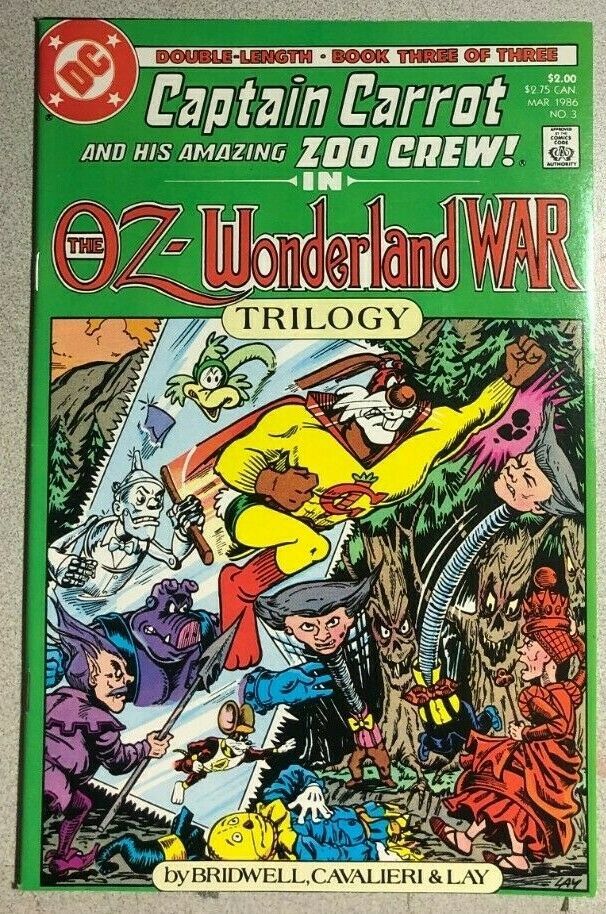
NULL-MYTHS: THE OZ-WONDERLAND WAR (1985)


By coincidence, this null-myth suffers from the same symbolic deficiency as the last one I reviewed here, WONDER WOMAN: WAR OF THE GODS.  Said deficiency might be called "the shoehorn problem," in which the creator becomes preoccupied (whether out of personal taste or from business considerations) with shoehorning so many disparate elements into the narrative that none of them possess any individual charm. But whereas as a multi-crossover work like WAR OF THE GODS had to tie into a dozen or more other DC comics features, the raconteurs behind this 1985 project-- plotter E. Nelson Bridwell, scripter Joey Cavalieri, and artist Carol Lay-- might have been able to trim away a lot of the extraneous elements in order to allow the strictly necessary characters some room to breathe. (To be sure, the project's editor was Roy Thomas, so based on his eighties writing, he too might have thought that "more is always better.")

Right off the bat, the project-- henceforth abbreviated to OZ-- has to work with a team of seven main characters, the members of "Captain Carrot and His Amazing Zoo Crew." This group of anthropomorphic animal-superheroes debuted in 1982, written by Roy Thomas and penciled by Scott Shaw, and the OZ storyline was originally intended to appear in the regular magazine. The feature was cancelled, so the idea of the Zoo Crew countering a threat to both the fantasy-lands of L. Frank Baum's Oz and of Lewis Carroll's Wonderland became a stand-alone opus. The narrative consisted of three issues published in 1985, just one year before Captain Carrot's world of humanoid animals would be expunged (however temporarily) by the Crisis of Infinite Earths.

I should note here that I was not a fan of CAPTAIN CARROT at its best moments, for its creators tried to walk a tightrope between adventure and humor, and succeeded in neither arena. At most I experienced a mild liking for the design of the group's "Thing," a big porcine crusader named Pig Iron. But all the others were tedious in the extreme. If they weren't just blandly designed and poorly characterized-- Captain Carrot, Rubberduck, Fastback and Little Cheese-- they also had horribly punny names like Yankee Poodle and (ugh) Alley-Kat-Abra. So on top of finding deeds for all seven of these comical crusaders to accomplish in the narrative proper, Bridwell and Cavalieri-- possibly working to Thomas's specifications-- had to find a rationale for the beast-heroes to go adventuring in both Oz and Wonderland. Further, while the title seems to suggest a literal martial conflict between those two fantasy-domains, the truth is that there's just one evil overlord, the Oz-derived "Nome King," who's attempting to subjugate both realms.

I won't dilate upon the plot, which IMO is just a patchwork of episodes in which the Zoo Crew jaunts from one fantasy-realm to another for this or that forgettable errand. This extremely loose structure allows the writers to work in numerous characters from Baum and from Carroll, which might have worked out well if Bridwell or Cavalieri had shown any ability to continue the witty characterizations of such figures as the Mad Hatter or Dorothy Gale (who appears in OZ, though there's no accounting for Alice, the feminine muse for Wonderland). But the writers might as well have been attempting to emulate stock figures for a D&D game. As with the regular ZOO CREW comic, OZ is astoundingly unfunny and underwhelming in the adventure department.

Carol Lay's art is OZ's only saving grace, for her successful tightrope-act consists of rendering all the beast-heroes in typical bigfoot style, while the Carroll characters are all rendered along the lines of illustrator John Tenniel and the Oz characters follow the conceptualizations of illustrators Neill and Denslow. And there's one decent joke at the end of OZ, for after Captain Carrot has returned to his home from defeating the Nome King, the story ends with him getting yet more barely-welcome visitors: DC's klutz-heroes The Inferior Five. Their appearance is just a nod from Bridwell, since he wrote the Five's series, which I think is probably more fondly remembered than Captain Carrot even though the former didn't even rack up twenty issues. Frankly, since Bridwell seemed in my opinion more comfortable with writing the Five's baggy-pants comedy, a Five crossover with the Zoo Crew might have stood a slightly greater chance of being funny. 

I suppose that one other positive aspect of this project is that its concentration on Oz-mythology-- a necessary result of the multitude of Oz-books compared to the two canonical Carroll tomes-- might make some readers want to sample the Baum canon. 


Monday, June 27, 2022

ROE, ROE,-- WAIT, DON'T ROE THAT BOAT

So "Roe vs. Wade" was overturned last week. I've said little about the topic of abortion on this blog, aside from this conclusion from THE ILLEGITIMACY OF 'LEGITIMATE RAPE':

I am opposed categorically to the politicized sentiments of Akin's kind.  Their only solution to the multifarious problems relating to unwanted conception-- which include, but certainly are not limited to, conceptions through rape-- is an absolute refusal of the state's power to kill the unborn. 

And, unpleasant though it may seem, the unborn cannot be given special rights, despite any and all societal instincts to protect future generations.  It goes without saying that the state probably has made many mistakes in executing particular abortions, just as it has in executing particular prisoners.  But it does not follow that all of the executions were mistakes.  There are times when the unborn, innocent though they may be, simply have to suffer from living in an imperfect world.

I sympathize somewhat more with those individuals-- none of whom are affiliated with the anti-abortion crowd-- who recommend, not an absolute ban on abortion, but merely restrictions as to how *often* citizens might "choose" to have abortions.  But it's seems almost certain that our society, having become polarized between two extremes, will never explore this area of legal theory. 

Over the years I've heard many of those on the Far Right voice the opinion that the 1973 SCOTUS decision was rooted in "activism," and that its extrapolations of the Fourteenth Amendment and the Bill of Rights were out of line. I would agree only in one respect: of the various rights that the Constitution spells out, none of them relate to medical matters. One may speculate that lawmakers of the 18th and 19th centuries did not foresee the politicization of medical concerns, particularly abortion. So they never spelled out whether or not changing ethics regarding such subjects would truly fall under the so called penumbra of the "life, liberty, and property" guaranteed by the Fourteenth Amendment (that is, one could not be deprived of these without "due process of law.") This essay from CNN alleges that abortion was available under common law in the U.S. until 1880, though CNN may not be the best arbiter of our national history.

Though I may have become somewhat more conservative on this or that topic over the years, I've never had a problem, as shown above, with the notion that the state may expedite the termination of new life, simply because that state always has that power in essence. I favor neither of the hardcore absolutisms regarding the physical act, be it religion's arbitrary dictates about when the soul enters the fetus, or materialism's screeds about how the fetus just ain't alive until science says so. Neither are worthwhile guides as to whether a contemporary society should consider the option of abortion to be part of the "life, liberty and property" troika. 

I also noted in the segment above that I'm less than impressed with the extremism of some pro-choicers, who would not accept any restrictions whatsoever in their favored form of liberty. Yet it's possible that even if we lived in a time dominated by Classic Liberals rather than Progressives, the SCOTUS Judges would have made the same decision: that abortion could not be viewed as a federally mandated "right" that trumped the local politics of states. 

I do not know all the reasons that the Judges chose to nullify Roe v. Wade. I don't disbelieve their stated reasons, nor do I dismiss all of the animadversions expressed by those who hate the verdict. Nevertheless, I think it possible that, just as the 1973 decision had the effect of breaking down the power of the Religious Right, the 2022 decision may be a challenge to the power of the ultraliberal Left, which enjoyed a boost in cultural hegemony in response to the presidency of Trump and the devastation of Covid, which Lefties blamed on Trump.

In many ways, the Right's crocodile tears for the slain unborn are a way of stoking emotional response from the faithful, in much the same way that the Left sheds similar tears for the sufferings of marginalized women and POC. I think that in recent times the fanaticism of the Left has been more harmful to the culture as a whole, but I won't claim that a return to the values of the Right might not be worse. 

In other words, I cast a plague on both their houses-- albeit with the caveat that I don't really have a dog in the fight.


Thursday, June 23, 2022

MYTHCOMICS: "COURTSHIP, KRYPTONIAN STYLE" (LOIS LANE #78, 1967)

Silver Age LOIS LANE comics have taken a lot of heat for making the female protagonist look foolish, often by some contrivance brought about by her supposed boyfriend Superman, seeking to teach the impulsive lady reporter some sort of "lesson." Some commentators have jumped to the conclusion that the LOIS book was some sort of kiddie-level diatribe against the female of the species.

Of course, this doesn't entirely cohere with the fact that girls of middle school age were most likely the audience that made LOIS LANE a successful magazine throughout the sixties, though the title petered out in the early seventies. Certainly the conventional wisdom of the times asserted that boys did not buy comics that starred girls, with the possible exception of the more lubricious titles (SHEENA and the other jungle-girls, for example). I was brought up in that Silver Age culture, and I can remember feeling disdain for "girl comics," even though I have no idea where that perceived taboo came from. So assuming that most of LOIS's readers were young girls, it's hard to see why they would have supported a title that made their gender look bad, even in the days before full-fledged feminism took hold.

Now, LOIS LANE, like its companion spinoff JIMMY OLSEN, varied between showing the protagonist as foolish in some stories but clever in other ones. Thus any girls who consistently read the book would probably have twigged early on that Lois wasn't ALWAYS a goofball. Given that circumstance, it's possible that those contemporaneous readers just didn't subject their comics-characters to intense sociological scrutiny, precisely because "clever Lois" counteracted the influence of "foolish Lois." This meant that at times Lois-- despite being locked in to her permanent status as "Superman's girlfriend"-- was shown as having her own agency.


"Courtship, Kryptonian Style" (whose title was borrowed from at least one of two similarly titled Italian films of the sixties) straddles the "Clever Lois/ Foolish Lois" categories, as well as extending the same largesse to the protagonist's frequent rival/guest-star, Lana Lang. Writer Leo Dorfman and penciler Kurt Schaffenberger jockey back and forth in their depictions of Lois and Lana, who both seek to free themselves from their enthrallment to Superman but still end up competing for his "hand" in the end.


"Courtship" is technically the second half of a two-part story, but the first part, from LOIS #76, is really just a set-up for Part Two. In #76, both Lois and Lana come across what seems to be a magical genie in a bottle. This genie comes complete with Middle Eastern garments and orange-hued skin (maybe brown skin was a bit too suggestive for the time?), and he calls himself Vitar. Lois and Lana both use Vitar to make frivolous wishes designed to gain attention from Superman, and each explicitly wants to trump her rival. However, it turns out that Vitar's origins lay in a totally different type of bottle-- the Bottle City of Kandor, a Kryptonian city preserved as it were "under glass." Vitar, using some sort of cosmic viewscope to follow Superman's exploits, resents the fact that the hero keeps two women on the string (harem envy, anyone?). 


Vitar's genie-imposture doesn't make any sense, even for a Silver Age story. But Vitar's apparent sincerity-- that he would like to marry either Lois or Lana if they all get the chance to know one another well-- impresses the women. So, since any woman who married Vitar would have to join him in the Bottle City, both Lois and Lana elect to leave their regular lives behind and emigrate to Kandor. Dorfman, knowing that this is not a permanent change, expends no effort on explaining their mind-set. The only important thing was to show the women making an attempt to distance themselves from the man who repeatedly claims he can't marry any mortal woman, lest she be slain by one of the hero's many enemies.


All that said, Dorfman hedges his bets. No sooner do Lois and Lana begin their new life in Kandor than they start missing Superman, just as he is seen (however briefly) yearning after them. To their consternation, the ladies becomes jealous when they observe (via another cosmic viewscope) one of Superman's heroic deeds. They witness the Man of Steel enjoying the presence of two Kandorian girls who are exact doubles of Lois and Lana, who are allowed to leave Kandor to lend the hero a helping hand. (It's the Kandorian double of Lois that the reader sees on the issue's cover, bouncing bullets off her boobs, and neither she nor Kandor-Lana has any real designs on Superman.)


 The only real romance-oriented threat comes from Vitar's ex-girlfriend Serena Vol, who tries to sabotage the ladies' entrance into Kandorian society in a fatal fashion.

The ladies are told that Kandor does not allow "idleness" on the part of its citizens, so Lois and Lana have to have their aptitudes analyzed by an "analyzer beam" in the "psychodrome." The women are told that their real aptitudes are not their actual jobs-- reporter and newscaster-- but rather, that Lois would be best off as a detective and Lana as an archaeologist. This development is the psychological core of the story, for even though the ladies get their talents boosted by Kandorian info-downloads, the change gives readers the chance to see Lois and Lana living lives independent of Superman. 


Not for very long, though. Vitar (who no longer has orange skin, BTW) dates both women briefly, but he quickly intuits that they're still batty for the Metropolis Marvel. So he reveals, out of nowhere, that he has an invulnerability serum, but only enough for one of the ladies. It's presented as a given that if one of them becomes immune from harm, Superman will just have to marry the Invulnerable Girl, irrespectively of whether he really loves her better than Non-Invulnerable Girl. Vitar proposes a test-- like Superman, Vitar is big on testing his loved ones-- saying that the woman who can solve a recent crime, the theft of a Kandorian artifact-- will get the serum, and by extension, the Man of Steel. (Does Vitar contemplate making up to the less successful woman? Dorfman does not say so, but it would be a logical conclusion.)


So Detective Lois and Archaeologist Lana begin their separate paths to track down the artifact-thief, and Dorfman is at his most clever in figuring out ways in which both girls' specialties can shine. While they're still separate, both ladies are briefly menaced, and though neither woman sees her assailant clearly, they both assume it's that ex-girlfriend Serena Vol. It's strange that neither Earth-woman suspects the other Earth-woman, given that their history is one of undercutting one another. The two women come together and track down the thief together, though Lois technically wins the contest because she's had Kandorian karate-skills downloaded into her brain, allowing her to beat the guy up. Winning the contest means nothing, though, because Vitar then reveals that his invulnerable serum just wears off in a short time.


And what mysterious women were menacing the lady sleuths? No, not red herring Serena Vol. It was the two Kandorian doubles, with "Kandor-Lois" trying to help "Earth-Lois" win the contest while "Kandor-Lana" did the same for "Earth-Lana." This may have restored the readers' expectations in the tendency of Lois and Lana to trump each other-- even if their doubles do the dirty deeds. But this last bit of craziness turns the Earth-girls off Kandor, and they implore Superman to bring them back to their home, their status quo, and, one assumes, their uninterrupted day-jobs. For a romantic finish, Vitar marries Serena Vol, forgiving her for her rash actions because 'twas all for love, I guess. 

Having devoted all this time to the psychological myth of the empowered love-slave, I have to add the non-mythic note that I thought the name "Serena Vol" was unusually resonant for a nothing character who doesn't even have a line of dialogue. I finally recalled that about a year before this story, Leo Dorfman scripted the first Silver Age appearance of The Catwoman for two issues of LOIS LANE. And for one panel, Dorfman does use the canonical real-world cognomen for the Feline Felon-- "Selina Kyle." Perhaps he came up with a similar name because he subconsciously thought of Serena Vol as-- "catty?"