Featured Post

SIX KEYS TO A LITERARY GENETIC CODE

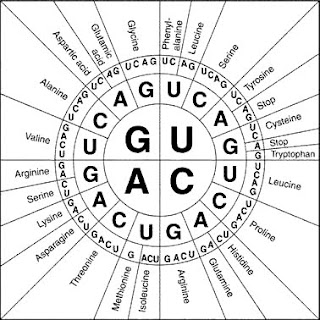
In essays on the subject of centricity, I've most often used the image of a geometrical circle, which, as I explained here,  owes someth...

Friday, October 10, 2025

AMAZON ATROPHY

 Yesterday I decided to do a deep dive into a section of the shallow pool known as "Robert Kanigher's WONDER WOMAN." I didn't want to try reading everything that he might have written since he (almost exclusively) took over writing the DC feature following the passing of William Marston in 1947. But since I think Kanigher was a guy who had real talent, I wanted to get as much info as possible about why he didn't seem to show any of that creative ability during the decade of the sixties. He was doing some good scripts in that decade for BATMAN, METAL MEN, and the war books, but as far as WONDER WOMAN was concerned, a Kanigher script from the 1960s reads just like anything he did in the 1950s. I don't fault him so much for being dull in the 1950s, because the majority of the stories from DC Comics were dull then, as the company sought to keep its squeaky-clean image amid industry controversies. But why couldn't he seem to craft a decent story for the Amazing Amazon?

In this essay I suggested one reason:  

"[Kanigher's] use of myth-ideas was both derivative and desultory, giving one the impression that he could barely summon any enthusiasm for the series, even when dealing with characters he himself created, or at least substantially re-worked, like the idea of “Wonder Woman as a girl.” Another reason may have related to his insider knowledge that DC wanted to keep control of the franchise in those days, before the company bought the character from the Marston estate outright. His knowing that the company wanted to keep their hold on the character, and that they didn't seem to have any concept of what to do with the Amazon except to emulate Marston (but without as much bondage), probably contributed to Kanigher's sense that he could do anything he wanted, as long as he kept turning in scripts on time.   

I started collecting superhero comics after the debut of the Batman teleseries, so Kanigher's WONDER WOMAN was my first experience with the heroine. I remember thinking at some point that I didn't initially like the Andru-Esposito art or the romantic aspect of the Amazon's ongoing romance with Steve Trevor. Was any of that just the usual antipathy of a pre-teen toward matters of sex? Possibly, but if so, the phase didn't last, as I welcomed the change to "Mod Wonder Woman" with the new editorship of Mike Sekowsky, and even bought those issues off the stands new-- and there was a fair amount of romance appeared in those stories.


I didn't confine my study only to issues in the 1960s but rather extended it from issue 105 (April 1959) through issue #176 (May-June 1968). I did so because #105 introduced the aforementioned "Wonder Woman as a girl." Since these stories usually took place before the juvenile Wonder Woman became a superhero, a lot of them took place in the fantasy-domain of Paradise Island and various vague fantasy-domains. But here, as described, Kanigher just tossed out his concepts willy-nilly, with no attempt to ground them in any knowledge-system, as one could find in titles of the time like FLASH and SUPERMAN. Thus even though Wonder Girl might have been introduced to give the title "teen appeal," both her character and her adventures were superficial. As time went on, Kanigher devised ways for all three members of the Wonder Family -- Wonder Girl, her adult self, and Wonder Tot, a baby-wonder-- to appear in the same adventures. But this merely made Kanigher's attempt to imitate the "Superman Family" of the more popular SUPERMAN titles more forced and therefore pathetic. In both sets of stories, the authors were attempting to get readers invested in the recursive nature of the SUPERMAN and WONDER WOMAN worlds; worlds in which repetition of motifs was intended to be reassuring. But though there were a lot of dull 1950s SUPERMAN stories too, there were also tales that sustained a sense of juvenile charm, particularly in the late 1950s, when editor Mort Weisinger became somewhat more venturesome in his choice of story-subjects.    


The Marston feminist message was given no more than lip service during the sixties decade, even in the brief period when Kanigher and his artists emulated the general look of Golden Age WONDER WOMAN. However, there was an aspect of the Superman books that both Marston and Kanigher imitated: the hero's use of incredible powers to perform unique feats. Kanigher's concoctions of bizarre tasks were no better or worse than those of Marston, but generally speaking Marston usually provided some rationale for the menaces WW faced. In the above excerpt from WW #154, Kanigher wastes no energy figuring out why a giant flaming humanoid happens to be dwelling right under Paradise Island. Is the Boiling Man a member of a subterranean race? An ancient Greek Titan confined to the underworld by the Olympians? 
It's astounding that Kanigher worked in comic books for so long but had so little insight into what his audience wanted. Yes, the flashy super-feats might be the primary concern of kid-audiences. But Marston sold well in part because he challenged his audience, while Kanigher seemed to have had a low opinion of kids' capacities.


Yet there was one type of super-feat Kanigher avoided in the six years of my survey: the hand-to-hand fight-scene. Marston's Amazon was a jock; she liked not only entering athletic contests but challenging opponents, particularly conceited males, to fights. Kanigher didn't show any reluctance to show his Golden Age creation Black Canary duking it out with male crooks, so he wasn't personally repelled by "tough females." Even his female robot Tina of the contemporaneous METAL MEN was a spitfire. So it's possible that the low incidence of fight-scenes in the five-plus years from #105 to #155 (July 1965) was a dictate from DC editorial not to make the heroine seem too masculine, since that had been a major complaint about the character from the fanatic Frederic Wertham, the man whose fulminations made the 1955 Comics Code necessary for the comics-industry. However, evidently by 1965 sales on WW had declined enough for Kanigher to attempt impressing readers with his Marston-imitation, beginning in issue #156. Sales probably did not appreciably improve, but this new direction resulted in much more physical violence between the Amazon and her opponents for the remaining three-or-so years of Kanigher's tenure. Here are a few examples from that period:


This development certainly allowed artists Andru and Esposito to make the art more dynamic. Another possible factor is that even though the Marston-emulation took place before the debut of BATMAN in January 1966, by 1965 many DC superheroes began getting more "punchy," possibly in recognition that Marvel Comics was cutting into DC's action with the hyperkinetic fight-scenes of Kirby, Ditko and others. But apparently, even once the Marston-schtick ran its course in about eight issues, Wonder Woman's sales did not improve despite more fight-scenes either. This resulted in the aforementioned phase of "Mod Wonder Woman," which seemed to do a little better for the first year before its sales also declined.

Of all the stories I studied, only one merited the designation of a myth-comic, and I'll devote a separate essay to Kanigher's only exceptional WW story of the 1960s.   

Sunday, October 5, 2025

QUICK NUM NOTES

 Without disavowing my previous statements on the NUM formula, I continue trying to come up a simpler way to express it for the purposes of the theoretical book project. I posted this today on CHFB.

________


While I don't disagree with the stuff I wrote all those years ago, I have to admit that, if one depends on the "affective argument"-- that terrors like Jaws and Quasimodo are meant to carry the sense of being supernatural even though they aren't-- that argument becomes dubious just because not every reader responds to the same set of signals the same way. One reader may feel that Jaws is meant to carry a supernatural vibe, another will say he didn't get that vibe at all. 


It's the same thing with the "rational Gothic" stories I brought up recently in another thread. Even their authors thought that they were disavowing the supernatural by coming up with gimmicks like phosphorescent hounds to explain away the suggestion of ghostly apparitions. But my current line of thought is more like, "how much crap did an author have to come up with to put across this involved a deception?" And does that level of crap exceed what real swindlers do to gain their filthy lucre? 


Real criminals usually try to keep things simple. if Al Capone wants to kill a rebellious underling, he shoots him, or (more famously) beats him to death with a baseball bat. He doesn't put him in an electric chair, the way Blofeld executes his subordinate in THUNDERBALL the book. Real torturers are direct in the ways they compel confessions, with unsubtle devices like the rack and the strappado; they don't engineer a whole "Pit and Pendulum" setup. Real dreams aren't as elaborate and structured as Alice's dream of Wonderland.


The opposition I'm currently playing with is that we're used to thinking of "marvelous things" are total inventions while "uncanny things" are supposed to be in line with the way the natural universe works. But the latter are arguably just as much inventions as the former. if you can't observe a real Pit and Pendulum in human history, or a real crime in which someone pretends to be a ghost to get rid of all the heirs to a fortune, then the phenomenon described is still a creation of the imagination-- just not one that requires as much imaginative effort as something overtly marvelous. (See Stephen King's DANSE MACABRE remarks on his preference for Batman over Superman.) 


Thursday, October 2, 2025

CURIOSITIES: KID COLT OUTLAW #1 (1948)

 If you were a "Marvelite" of a certain age, and you even dipped for a little while into Marvel's line of westerns, you probably encountered the origin of Kid Colt, one of the company's oldest frontier heroes. And what you probably encountered was a four-page condensation of the origin, probably produced at a period when most of the character's adventures were of a similar length.


The "original origin," though no great classic even for the genre, has considerably more meat on its bones. On the first page, we meet Blaine Colt as he takes on a crooked deputy whipping one of the hands who works the ranch of Blaine's father. Blaine too gets whipped, in part because he wears no guns.


Slightly later, Blaine explains his reluctance to wear guns to the ranch-hand: he fears that his quick temper will cause him to take a life. But this attempt to enjoy a peaceful existence ends when Blaine is framed for the murder of his own father. The culprit is the crooked sheriff, whereas I believe the father's killer in the condensed version is just some owlhoot.


Blaine shoots it out with the crooked sheriff, and for good measure turns the whip of the crooked deputy on the malefactor, declaring that it's the end of crooked law in the town. However, though the origin probably doesn't explicitly come up again, Blaine's shooting of a lawman, however crooked, goes a long way toward explaining why he becomes Kid Colt, a fugitive wanted over numerous states (though this was never a consistent restriction). I'm not sure when the familiar condensed version was produced, but it seems likely that the idea of corrupt lawmen was elided to make the story more generic. Said "original origin," BTW, is credited to artist Bill Walsh and writer Ernie Hart. Hart was also a collaborator on the first ANT-MAN story to feature The Wasp, as I discussed in this post.    


Tuesday, September 30, 2025

CURIOSITIES: HAIRBREADTH HARRY (1906-1940)

 In official histories of the comic strip, it's almost de riguer to observe that for about the first 30 years of the medium, almost every kind of strip focused largely on the appeal of "the gag." Not until 1929, which launched characters like Buck Rogers and Tarzan in their own newspaper features, did comic strips begin a love affair with combative adventure-stories. Still, I decided to do some quick research of the early comic strip era, to see if I could find exceptions to the general rule. This consisted of my going through a Wikipedia list of all the prominent strips of the 1900s decade. Sure enough, I saw nothing that suggested the call of adventure-- except one strip, whose description I'll borrow from the late Don Markstein's TOONOPEDIA:

Harry was introduced on October 21, 1906, in a Philadelphia Press Sunday page titled Our Hero's Hairbreath Escapes. The following January the spelling of the word "hairbreadth" was corrected, and the title became Hairbreadth Harry, the Boy Hero. At first, Harry (whose full name was Harold Hollingsworth, by the way) was, as suggested by the title, a mere lad. But he anticipated Gasoline Alley's Skeezix by growing up. Unlike Skeezix, however, Harry stopped aging soon as he'd become big enough to function as an adult.

Harry got his incentive to grow on September 21, 1907, with the introduction of Belinda Blinks, beautiful boilermaker, an adult rescue object (who thoughtfully put off aging while he caught up). Belinda completed the cast, as Relentless Rudolph Ruddigore Rassendale, relentless rogue (whose name was a reference to the works of Anthony Hope and Gilbert & Sullivan), had been on the scene since March 3. Together, the three went through endlessly funny and inventive spoofs of the old music hall melodramas of the 18th and 19th centuries, complete with mortgages, sawmills and railroad tracks.

A problem with evaluating HARRY's combative status arises, though, in the fact that copies of the earliest strips are almost totally unavailable for review. One would think that a strip spoofing the old "mellerdrammers" in which a stalwart hero rescued a damsel from a black-hearted villain would have to involve sustained scenes of combat. But was that the case?

The only online sources for HARRY reprints are reproductions of original comic strip art for sale, or, much more rarely, reprints on sites like this one.     


These two Sunday strips from 1913 are the earliest ones I found, and they don't involve combat as such; just gags. Slightly more promising is this reprint from 1925:


  So this strip at least ends with villain Rudolph getting punched out a window by Harry. But these are the only legible items I found from the strip's creator, C.W. Kahles. He died in 1931, and the strip was continued for the rest of its run by one F.O. Alexander. There are numerous reprints of Alexander's work in Eastern Color's FAMOUS FUNNIES, often styled as the first real "comic book." But of course, by then other strips were getting into adventure in a big way. Here's a smattering of Alexander Sunday strips from FUNNIES. I would judge this version of the ongoing strip as combative, since most of the scenarios end with Rudolph being clobbered or thwarted somehow, usually by Harry. Some verbal testimony suggests that Kahles had been doing the same thing, and it certainly makes sense that Alexander would stick with what had already been working for his predecessor.

The first is interesting in showing Rudolph having access to a one-shot "super-power," that of invisibility.        


Later Rudolph has access to a "diathermic ray." 


Most amusing of these 1934 strips, though, is one in which Rudolph chases heroine Belinda into a women's spa. Harry and the cops can't chase the villain in there, because they're gentlemen, but Harry still triumphs by tossing (through a window) a bar of soap, on which Rudolph slips and knocks himself out. I suspect that the conclusion, in which a dialogue-balloon suggests that Belinda's going to get even by working over the unconscious villain with an Indian club, was a pretty rare instance of her getting some of her own back.


Monday, September 29, 2025

MYTHCOMICS: "NOAH'S ARK" (MIGHTY SAMSON #27, 1975)


In my kidhood, I was aware of the Gold Key title MIGHTY SAMSON, but I don't even remember looking at it. I probably was busy emptying my pockets for much of the output of the other companies, so something had to be overlooked. In retrospect, though, MS does have some points of interest. It was probably the most successful Gold Key franchise not owned by some company other than Gold Key and was created by the celebrated Otto Binder in 1964. Binder wrote the first twenty issues, after which other writers pinch-hit on an irregular basis until the series ended in 1975. 

Though Binder had authored a healthy quantity of mythcomics, his main idea with MS seems to have been, "Kids like monsters, so I'll give them lots of monsters." To this end he devised a post-apocalyptic world recovering from long exposure to the radioactive fallout of devastating wars, which had leveled cities and bred all sorts of weird mutations. In fact, the main hero was a mutant as well, born with immense strength, not unlike many of the strongmen Binder had written for other comic books. Samson, accompanied by the scientist Mindor and his hot daughter Sharmaine (implicitly but never literally Samson's main squeeze), wandered the ruined world, seeking to rediscover the lost principles of science for the betterment of all humans. This quest brought the protagonists into conflict with numerous petty tyrants, religious fanatics, and of course, monsters. Binder seemed to take some pleasure in concocting all sorts of freaky combinations of actual animals, with such names as "The Kangorilla" and "The Horned Rhinophant," most of whom Samson slew with his fantastic strength. To be sure, the Biblical Samson wasn't that notable as a beast-killer, being credited only with the slaying of one lion, while his Greek counterpart Heracles racked up many more monsters, including a lion said to be invulnerable to spears. Binder did toss in one element derived from the Biblical strongman, that of blindness. But Archaic Samson was blinded by his captors the Philistines, while in the comic, Mighty Samson loses an eye in his first major creature-battle, with a monster combining aspects of a lion and a bear, a "Liobear."     

 But none of the mighty one's adventures had the density of myth, except this one, written by one Al Moniz, who apparently worked in comics only during the middle seventies, and then mostly for Western/Gold Key. "Noah's Ark" in issue #27 is not precisely the first time in the series any writer evoked the "original apocalypse" of The Deluge, but it's the first time any writer did so with conviction.       


For instance, the opening intro specifies that the mutated "plants and animals now match the monstrosity of man's self-destructiveness in size and horror." Moniz then alludes to Mighty Samson as a heroic counter to the monsters and then wonders if "Noah" may be just as significant.

Naturally the Noah of this story is no more related to his Biblical counterpart than Mighty Samson is to the Nazirite, and Moniz gives his character a significant surname, that of "Caine." In the Bible Cain is the first murderer and so is often viewed as the ancestor of all wickedness-- not least the wickedness that dominates humankind when God sends the flood to wipe out almost all life on Earth. So Moniz eventually answers his own question in the negative.
Samson, Sharmaine and Mindor stumble across a rarity: a fawn, a creature from the era before the great wars. The fawn leads the trio to a devastated zoo, only to discover a laboratory, where Doctor Noah Caine dwells.  


Caine explains that he was a zookeeper before the atomic war, and that he anticipated the coming destruction. Though other humans did not take Caine's project seriously, Caine built an ark, stocked it with the animals he loved, and placed them, and himself, into hibernation. Caine arose from his coma and made it to shore. However, he could not free the entire ark from its subsea location thanks to some big mutant critter impeding it, so he asks for Samson's help at monster-dislodging.


Once the colossal critter is vanquished, Caine is able to release the purebred beasts of the pre-apocalyptic age upon that of the mutated world. However, Sharmaine is able to learn, from some long-preserved library, that Noah Caine deliberately banned humans from his ark out of his near-worship of animals. He also hoped that the beasts of his time would "inherit the earth," but it soon becomes evident that the "normie" animals begin transforming into freaks as soon as they breathe the polluted atmosphere.


Caine is even more crazed than before when he realizes that humans alone have (apparently) built up an immunity to mutating radiation, unlike his precious pre-lapsarian animals. He announces plans to unleash his mutated creatures on humans and sets his mutant-fawn Bimbi upon Samson. The strongman himself doesn't win the battle, but the very nature of the fawn's deranged nature works against the animal-master. Bimbi hallucinates that Caine is identical with one of the native mutants of the post-apoc world, and attacks Caine's bully pulpit. Caine perishes, and Mindor decides to send all the "normie" animals back into their ark-hibernation, in the hope that someday the earth will be capable of sustaining their lives again. There's a certain irony in "Ark," since ordinarily one thinks of Biblical Noah as a great preserver of life, while a monster-killer like Biblical Samson is only good insofar as he protects his tribe from predators. But even though Caine is correct in assigning blame for the world's ruination to humans, his unconditional love for the lower beasts makes him just as destructive as any other human-- though his good intentions, at least, will be venerated in some future era, when the earth's actually ready for rebirth.              

Sunday, September 28, 2025

MYTHCOMICS: "NAWANDO'S LAST VISION" (RED ARROW #1, 1951)


I came across this mythcomic thanks to my having continued to survey Native American comics-characters on my OUROBOROS DREAMS blog. Three issues of a western comic, RED ARROW, were released in 1951 by one of America's smallest comics-publishers, P.L. Publishing. I have not yet read any of the company's other magazines but everything in the RED ARROW series is absolutely ordinary. GCD attributes the art to one Richard Case, of whom I know nothing, except that he was working before another Richard Case, one made famous for working with Grant Morrison, was even born. Since there's no writer credited, I will proceed as I often have before, using the artist's name as if I knew he were the sole author. Whether it was Case or not, someone involved with this forgotten tale brought to it a mythic density that demonstrates the desire to research what was then known of Native American medicine-men rituals.


   Although the story's action is set in 1876, it might have just as easily set in the pre-colonial days of the continent, for there are no indications of the influence of European colonists upon the shaman Nawando or any of the Native Americans. The opening caption claims that only Nawando can speak to animals, yet many pre-colonial tales show animals freely conversing with all human beings, to say nothing of intermarrying with them. Here, Nawando feels a great vision approaching, so he isolates himself from his tribespeople. The mountain he seeks is guarded by a serpent who claims that the domain belongs to the dead, but one of Nawando's allies casts the serpent aside. 

Nawando's vision allows him (and the readers) to peer in on the life of a discontented young fellow named White Bull, who lives in a pueblo "far across the desert." The distance may not have been all that great, given that the Southwestern lands of the Navajo, the Pueblos, and their neighbors the Apaches bordered one another. But the main focus of the vision is not to show where White Bull is, but what he does, and what he does is to predict that he will never settle down and become a commonplace householder. Two pretty maidens think White Bull is too conceited, removing himself from the tribe to sit out in the wilderness at night, so they set a trap, a hole for the young brave to fall into so that he'll be duly humiliated.

Though some readers might expect this contrivance to end with some romantic hookup, this idea is ended when Case has the two mischievous maidens captured by marauding Apaches, "never to return to their people." White Bull for his part takes his ordeal in stride, simply meditating in the pit despite hunger and circling vultures. He seems to understand now that he's on the cusp of becoming a medicine man himself, though he doesn't know he's now being watched by a full-fledged spirit-guide. Nawando's vision ends and he prepares to go to the aid of "a son in deadly danger."

Nawando and his animal friends cross the desert, but again they meet malign creatures who apparently just don't like foreign shamans trespassing on their territory. But all of the inimical forces are circumvented thanks to the medicine-man's allies.


  Then a storm comes up, as if signaling the opposition of the heavens as well. However, Nawando decides to simply face the tempest, assuming an attitude of acceptance much like that of White Bull, saying "I go to meet the Great Spirit." But by chance or design the tornado-like turbulence drops Nawando and his allies right near the pit of White Bull, so that they are able to rescue him. And in the arguably rushed conclusion, White Bull receives his new status as the future "seer of visions" (though without stating which tribe he'll be seeing visions for, and without going through years of metaphysical training). Nawando announces that he's happy to let his figurative son succeed him, for he's ready to retire to his cave in the mountains. He doesn't say he anticipates death, though the serpent does claim that the mountains-- at least the only ones we've seen-- are the domain of death.

And so Richard Case rendered to his few readers a quixotic take on how visionary seers propagate their line by reaching out to similarly gifted individuals who also stand outside the normal travails of birth, marriage and death. It's also worth mentioning that although White Bull doesn't intentionally become isolated inside the pit made by the malfeasant maidens, some shamans in various cultures have been known to seek enlightenment within such declivities-- whether it's to get away from people, to get closer to the earth, and any number of similar reasons. Also, in terms of imagery a pit would be gendered as feminine, and from page 3 on it's evident that the aspiring shaman plans to reject that path for the sake of the illumination of "higher" visions.   


UNCANNY AND MARVELOUS UNDER OTHER NAMES

 Some years back I wrote out some chapters of a hypothetical book outlining aspects of the combative mode and the Num Formula in much simpler, less prolix terms that what I employ here. Then I back-burnered the project. Recently I revisited certain sections, and I found that this one, in which I tried to show how "the uncanny"-- here called "The Lesser Metamundane"-- manifested even in narratives devoted to such famous Greek heroes as Heracles and Theseus, known largely for their adventures in the realm of the marvelous, i.e. "The Greater Metamundane." But I decided that most general readers would not be interested in the varied careers of these archaic Greek legends. So I cut Heracles and Theseus and reworked other aspects of the argument. By the way, what I call the metamundane is the same as what I call "metaphenomenal" on this blog, but with two less syllables and maybe less chance of chasing off receptive readers. But I decided to preserve this excerpt here in case it proves useful down the road.              

In the first section of this chapter, I was careful to cite examples of the metamundane that ranged from phenomena that were just barely beyond the mundane, as with my implied mention of The Lone Ranger, to phenomena that took over the entire narrative. From now on I will distinguish between the two extremes as “The Lesser Metamundane” and “The Greater Metamundane.” 

The cultures of the ancient world—Egypt, Sumeria, and Classical Greece—are replete with many stories of gods transforming mortals into plants and animals, or of monster-killing heroes gifted with super-strength or invulnerability. To pursue a parallel with modern comic-book heroes, such extravagant stories might be called the “Superman type” of narrative. However, in the extant culture of the Greeks we also see the rise of a “Batman type” of narrative. In such stories, the audience is still dealing with metamundane subject matter, but with less recourse to monsters or magical powers.

Heracles, for instance, is regarded as the Greek hero par excellence. He possesses unbelievable strength and lives in a world of out-and-out marvels. During his famed Twelve Labors he defeats the invulnerable Nemean lion and the immortal Hydra; he journeys to the edge of the world to gather the Apples of the Hesperides and descends to Death’s realm to capture the Hound of Hades. All of these adventures contain elements that contravene everyday reality so strongly that they belong to a category I’ll call the “Greater Metamundane.”  However, one tale, that of the Ninth Labor, is not quite so extravagant.

In the Ninth Labor, Heracles is charged with the task of acquiring the Girdle of Hippolyta, queen of the Amazons. He journeys to the Amazons’ domain, and tries to negotiate with the queen. The peaceful negotiations are interrupted by troublemaking Hera, who spreads the rumor among the other Amazons that the Greek hero intends to kidnap the queen. The Amazons attack Heracles, and he kills several of the warrior-women before retreating with a valuable capture, the queen’s daughter. Later Heracles ransoms the princess for the girdle, and so accomplishes his mission.

In my view the Amazons belong to the domain of the metamundane subject matter just as much as Cerberus and the Hydra. Yet it’s obvious that these mortal warrior-women aren’t nearly as overtly fantastic as Heracles’ usual opponents. The hero doesn’t perform any super-feats to defeat them, and any competent Greek warrior could have simply taken a hostage to gain an advantage. There is no archaeological evidence that the Amazons ever existed. Yet the idea of a matriarchal cult of warrior-women, while far from the continuum of everyday experience, resonates as “something that might happen” under the right circumstances. The Amazons choose to diverge from the norms of Greek society—meaning patriarchal rule—and so they became, for the Greeks, “monsters” in a purely figurative manner. This figurative, less extravagant manifestation of the metamundane I term “the Lesser Metamundane.”

Theseus is generally deemed Athens’ belated attempt to design a Heracles of their own. Modern readers usually know the Athenian hero for his one monster-killing feat, slaying the Minotaur of Crete. Prior to the Cretan adventure, though, Theseus has some episodic adventures that are closer in spirit to the Lesser Metamundane.

The hero is raised in the Greek city of Troezen, his mother’s city. Upon reaching manhood he travels overland to meet with his father, the ruler of Athens. On the way the hero—who, despite being the son of the sea-god Poseidon, has no special powers—encounters a bunch of mortal brigands, most of whom seem like the archaic ancestors of Norman Bates and Hannibal Lecter. The bandit Cerycon has a thing for waylaying travelers, challenging them to wrestle, and then killing them. Theseus accepts the bandit’s  challenge and breaks Cerycon’s neck. Then Theseus meets Sciron, who has the habit of kicking travelers off a neighboring cliff. Appropriately, the hero introduces this brigand to the wrong end of the same cliff. Finally, the hero encounters an innkeeper worthy of Edgar Allan Poe. When Procrustes allows guests to sleep in one of the beds at his inn, he insists on making the guest fit the bed, either trying to lengthen the guest’s limbs on a rack-like device, or cutting off body parts that are just too darn long. Theseus forces the innkeeper to sample his own hospitality, putting him to bed and chopping off the evildoer’s head with Procrustes’ own axe.

These tales have a simpler ring to them than many Heracles stories, following the folkloric pattern of “the biter bit.” One can find this simple pattern in stories like the Aesop’s Fable “The Cock, the Fox, and the Dog,” which depicts how a predatory fox, seeking to prey upon a rooster, gets lured into the jaws of the rooster’s buddy, a fox-killing hound. Like the Amazons, and like Theseus himself, the three brigands have no special powers. What makes them metamundane is that they diverge from the practical ways of real robbers. Each criminal has an almost fetish-like preoccupation with executing victims in some particular way. Given their impractical preoccupations, the brigands of Theseus loosely anticipate Batman’s fetish-oriented fiends, who pattern their crimes after birds (The Penguin) or cats (The Catwoman) in a perverse assertion of their quirky identities.

Roughly contemporaneous with the culture of Classical Greece is that of ancient Israel. The stories of the Hebrew Bible are generally regarded as belonging to religious mythology, and so there are many narratives of God and his angels. Yet the Lesser Metamundane also appears here, as seen in the narrative of David and Goliath. Goliath is called a “giant,” but standing a mere nine feet by current reckoning, he’s a long way from the behemoths that stormed Mount Olympus. As with the story of Heracles and the Amazons, if one disregards the deities hanging on the periphery of each story, the physical contest is very close to a mundane battle. Yet Goliath, like the Amazons, belongs to the Lesser Metamundane in being a lesser transgression of the expectations of everyday experience.

During the Christian eras that followed, non-Christian mythological tales became verboten, though some of the material of mythology was recorded in the form of stories of olden days. Some storytellers, like the composer of Beowulf, attempted to fuse the charms of a Celtic warrior-ethos with the moral meaning of Christianity (Grendel is called “the son of Cain.”) Other writers, usually monkish scholars, recorded the myths of their ancestors with some degree of fidelity, as seen in such compilations as the Elder Edda and the Book of Kells. However, only in the 13th century did Christian Europe develop a purely literary mythology: that of the courtly epic. The original Arthur appeared in a chronicle from the sixth century, where he was simply a skilled warrior. Yet over the centuries he became not only a king but also a lodestone drawing other heroes into his field of influence, so that in time names like Lancelot, Gawain and Tristan began to sustain their own legends. Aside from Arthur, who wielded a magical sword, most of the knights were ordinary skilled men wielding ordinary weapons. Yet the element of knights’ armor was sometimes used for a metamundane effect of the Lesser kind. When Malory gives readers a Black Knight, or Spenser uses a Red Knight, both authors are emphasizing the metamundane aspects of the knights’ appearance, in a way that would eventually be mirrored in the costumes of 20th-century superheroes.