Featured Post

SIX KEYS TO A LITERARY GENETIC CODE

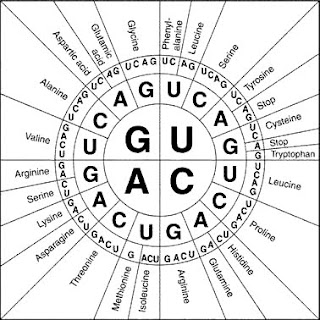
In essays on the subject of centricity, I've most often used the image of a geometrical circle, which, as I explained here,  owes someth...

Monday, December 18, 2017

AUTHORITIES, PLEROTIC AND KENOTIC PART 2

In Part 1 I said, "I'd been giving more thought to the categorization of different types of presences, focal or non-focal, that appear in fiction." To be more specific, while most of my writings here about persona-types have concerned focal presences-- i.e., the stars of whatever stories I'm discussing-- the idea of personas applies just as much to any support-characters. I've touched on these classifications on occasion, though it's occurred to me that it might be enlightening to explore a particular type of supporting-character: the authority-figure who either empowers or initiates the central protagonist (what Vladimir Propp might call the *donor.*)

I did touch on an example of a powerful figure who was not the star of his show in PALE KINGS AND DEMIHEROES:


Gaiman's work in THE SANDMAN generally rejects the heroism expoused by earlier DC characters who shared the "Sandman" name. Nor is Morpheus alone in being a great ruler who exists largely to police his domain: this principle also applies to the character Lord Emma in LOVE IN HELL, though admittedly he (she?) is a support-character to the starring demiheroes of the series.

As I said in my review of the manga-collection, the two stars of the series are Rintaro, a minor sinner consigned after his death to a lesser form of Hell, and Koyori, the female demon assigned to levy punishment on him. However, Hell itself is a "character" in the story, for most of the narrative deals with Rintaro learning the ropes of an afterlife that looks suspiciously like the life of a living wage-slave. Both Hell and its usually-unseen ruler mirror the quality I've termed elsewhere "positive persistence," and so they, like the protagonists, are also demiheroic.


"Negative persistence," however, dominates the persona of the monster. The monster desires the ordinary life which the demihero usually obtains as a matter of course, but for whatever reason the monster cannot fit into that matrix, and usually either parodies its nature (the vampire, who seeks a new aristocracy of the undead ruling the living) or tears the matrix to pieces in fits of unreasoning rage (Godzilla, the Frankenstein Monster). The persona of the monster can even be attached to entire races of sentient beings who function as monsters to human protagonists: the Martians of H.G. Wells' WAR OF THE WORLDS are a familiar type, and in the same line are Buck Rogers' nonhuman adversaries, The Tiger Men of Mars.


Villains, however, have a quality of "negative glory" that makes them more pro-active than monsters. I touched on two authority-type villains, both of whom were coterminous with their environments, in ENVIRONMENTAL CONCERNS PT. 2:


In the SON OF SATAN story "Dance with the Devil, My Red-Eyed Son," the soul of Daimon Hellstrom is apparently drawn down into Hell, with whose denizens he must battle. Only by story's end does the reader learn that this particular version of Hell is not one that exists independently of its satanic master, for it's actually Satan's own dream.
In a less direct manner, some environments can be seen as being more metaphorical expressions of a character's good or evil: thus in Kirby's NEW GODS saga, New Genesis embodies the creative empathy of its patriarch Highfather and Apokolips is the expression of the corruption of its master Darkseid-- though admittedly both worlds already show those predilections, long before either of the respective "New Gods" comes into existence.

As for heroes, it's fairly easy to see the heroic virtue of "positive glory" in support-characters like Odin, Lord of Asgard, or Doctor Strange's perceptor The Ancient One. It's perhaps a little harder to conger the mantle of heroism on donor-figures who merely gets the ball rolling, such as the mysterious "Voice" that gives powers to the Hawk and the Dove, or the goddess Rama Kushna in the original DEADMAN story. Still, even if these presences don't do anything more than place the heroes on the path of heroism, they too align with the plerotic value of positive glory.


The same formula applies with respect to donor-figures who initiate heroes but are not sources of numinous authority. This would include types like Mr. Miracle's teacher from the story "Himon," who seems relatively human even though technically he, like the aforementioned Highfather, is a "good New God." Another parallel example is the character of Io from the 2010 film CLASH OF THE TITANS. A new creation with no parallel in the original 1981 film. Io doesn't precisely set Perseus on his heroic path, but she does watch over him from his childhood onward, and she gives him a certain modicum of martial training that aligns her with the figure of the authoritative donor.


AUTHORITIES, PLEROTIC AND KENOTIC PART 1

The reason I wrote this sequel to the 2014 essay OBJECTS GIVEN LUSTER was not because that particular subject had been occupying my mind on-and-off for the past three years. Rather, I returned to that obscure topic because I'd been giving more thought to the categorization of different types of presences, focal or non-focal, that appear in fiction, as seen in September's PALE KINGS AND DEMIHEROES. These meditations got me thinking not only about following up on the implications of the 2014 essay, but also about the application of my persona-classification system to non-focal figures.

A quick recapitulation of the roots of said system: first, though I said this at the beginning of the PALE KINGS essay:

The strongest influence on my theory of the four persona-types has been the work of Schopenhauer, but I'll confess that Northrop Frye's writings on literary dynamis had an impact on the theory...
This was an oversimplication on my part. It's true that Frye's ANATOMY influenced only the concept of the four mythoi, and that his theories contributed little if anything to my concept of literary personas. However, Frye's work led me to a deeper consideration of one of his influences, Theodor Gaster, and my conceptualization of persona-types coalesced from my attempt to bring Gaster's concepts of "plerosis and kenosis" into line with Schopenhauer's concepts of will, as I expounded in Part 1 and Part 2 of WHEN TITANS GET CROSS-COMPARED. A short summing-up of the Gaster concepts appears in this essay, where I cross-compared Gaster's categories with Frye's four mythoi:


,,plerosis is best conceived as the life-force engendered by the contest of hero-and-villain, taken seriously for the adventure and humorously for the comedy, while life is purged or otherwise compromised in the black-comic irony and in the drama.

One of my major differences with Frye is that I don't think he paid enough attention to persona-types in the ANATOMY. Here's his meditation on figures of aristocratic authority, who inhabit what he calls the "high mimetic mode:"


 If superior in degree to other men but not to his natural environment, the hero is a leader. He has authority, passions, and powers of expression far greater than ours, but what he does is subject both to social criticism and to the order of nature. This is the hero of the high mimetic mode, of most epic and tragedy, and is primarily the kind of hero that Aristotle had in mind.


This formula overlooks certain distinctions between different types of rulers. Some of these protagonists are genuinely heroic in all senses of the word, such as Homer's Achilles. But others, despite their level of authority, are closer to being what I term "demiheroes," which means that they align more with the idea of the sacrificial victim than of the hero. Indeed, Shakespeare's most famous protagonists-- Hamlet, Lear, Macbeth-- are closer to being victims than to being heroes. Frye passed away in 1991, but I imagine that if he had somehow lived long enough to become acquainted with the two examples I contrasted in PALE KINGS AND DEMIHEROES-- Neil Gaiman's Morpheus and Nozomu Tamaki's Mina Tepes-- then I hazard that he would have seen in both of them the pattern of the high mimetic mode. Despite the fact that both characters possess supernormal powers that make them somewhat superior to their natural environment, Frye might have perceived that they were both rulers of fantasy-realms and were thus forced to deal with limitations upon their powers. I think the fact that both characters possess temporal authority is less important than what they do with it. Both Morpheus and Mina seek to consolidate their kingdoms, but the former seems concerned mostly with maintaining a status quo-- which in my mind associates him with a very high rank of demihero-- while Mina Tepes is more heroic in nature, forging her kingdom against a horde of opposing forces.

It would seem axiomatic that such authority-figures can also take on the persona-roles of either "monsters" or of "villains," but I'll deal with those eventualities in Part 2.

Saturday, December 16, 2017

OBJECTS GIVEN LUSTER PT. 2

In OBJECTS GIVEN LUSTER from December 2014, I toyed with the conceit that all of my persona-types could be applied to non-sentient focal presences, addressing a science-fiction tale published by DC Comics story in 1959:

[The story's] focus is the spectacle of an entire world resounding with titanic "tick-tock" sounds, by which planetary doom is averted. This trope loosely aligns the "Tick-Tock World" with the agon of the heroic figure, though I would hesitate to classify this particular focal presence as a "hero."

I'm glad that I added the word "loosely," for the more thought I gave to the matter, the more I came to the conclusion that it was impossible, even in fiction, for a non-sentient presence to be either a hero or a villain. One of my earliest comments on the subject of the persona-types was to the effect that the types I call "heroes" and "villains" were, in Milton's words, "sufficient to stand"-- or to fall, if they so choose. In contrast, the other two types, "monsters" and "demiheroes" are governed by what I've called "existential will," in that they cannot transcend their existence. Further, my association of the "Tick-Tock World's" protective function failed to take into account that the world does not choose to do anything, protective or otherwise; the fact that its physical nature staves off "planetary doom" is merely part of the planet's exotic nature. Therefore, it is as much of a "demihero" as "the Destroyed Earth," the other passive environment discussed in the 2014 essay; the former planet is simply one that manages, even passively, to erect a defense that the other world cannot, much as I've frequently shown sentient demiheroes like Jonathan Harker managing to defend themselves against monsters like Dracula.


And what of the other persona, the monster? Well, I briefly touched on Rene Clair's silent film THE CRAZY RAY for purpose of contrast, saying that, unlike the Destroyed Earth, the focal presence of the Crazy Ray really was the source of "chaos on a global scale," and that in itself would argue a similitude with the persona of the monster. This also applies to other non-sentient phenomena that get out of control, whether they are objects created by man (the mystic statue of the Chimera, seen in this TOMB OF DRACULA story) or have come into being through geologic processes, like the natural wind-tunnel from the serial PERILS OF NYOKA, discussed here. If they possess what I've termed "negative persistence" in excess of their potential for "positive persistence," then they are concepts analogous to monsters; if the converse, they are concepts analogous to demiheroes. Further, most of the "worlds gone wrong" that inhabit science fiction are analogous to monsters, in part because they breed monsters. The Morlocks of Wells' TIME MACHINE and the Mutates born in the film WORLD WITHOUT END-- both discussed here-- would qualify for this persona, as would the Cursed Earth with which Judge Dredd contends in this myth-comics story.

Wednesday, December 13, 2017

MYTHCOMICS: THE MAGICIAN'S WIFE (1986)


"Nothing ever happens without Dolores."-- offhand dialogue from minor character.

Since the name Dolores means "sorrows" or "sadness," writer Jerome Charyn may have meant to convey that sadness was an inevitable aspect of the human condition or some such. It's a reasonable assumption, but I have to admit that one can't make that good a case for such a theme in the American author's collaboration with French artist Francois Boucq. THE MAGICIAN'S WIFE won the Fauve d'Or prize at Angouleme in 1986, and the stand-alone album, after being out of print for many years, has recently resurfaced from Dover Publications, though I'm reviewing here the 1987 edition published by Catalan.

Though Boucq's highly detailed art is beyond reproach, Charyn's script is never as clever as he seems to think it is. I've not read any of Charyn's fiction, but in his introduction to the Catalan edition, the author makes clear that he idolizes the French approach to "bandes desinees." This may be a reason why, although WIFE does qualify as a genuine mythcomic, the writer shows, like many French comics-practitioners, a cavalier attitude toward the little details that add to a strong symbolic discourse.


Still, WIFE shows an admirable psychological structure. Within the first few pages of the album, the reader is introduced to a group of characters living in a house in 1956 Saratoga. Rita, a girl of perhaps ten, is being raised by her mother, a widow following the death of her husband in Korea. The unnamed mother works as a maid in the house of a reasonably well-to-do family. However, all the reader knows about the lady of the house is that she gardens all the time, while the lady's husband never seems to come down off the roof he's repairing. The couple's one child, an adult named Edmund, plans to become a professional magician, and the action remains at the house only long enough to establish the relationship between the chimerical Edmund, little Rita, and Rita's mother.

Modern politically correct readers would no doubt be disturbed by Edmund's teasing of Rita, claiming that he plans to marry her someday. It's obvious, though, that Edmund is not a follower of Humbert Humbert, for he never makes any inappropriate approaches to Rita when she's a child. Rita doesn't fully trust Edmund or his predictions of their future relationship, but she's even less than pleased when she happens to spy on Edmund making love to Rita's mother.


Edmund gets his way: not only does he become a successful magician, he talks Rita's mother into coming along, whereupon both mother and daughter become part of the act. In contrast to real stage magic, Edmund does seem to possess some sort of supernatural pipeline, but only when working with Rita, who becomes the star of his show. Predictably, as Rita comes into the bloom of adolescence, her mother's looks wither and eventually Edmund wants to send the older woman away. Rita alternates between being captivated by Edmund's charms and remaining loyal to her mother, but as Edmund predicted in her childhood, the sense of erotic interest wins to some extent. However, not long after Edmund marries Rita, Rita's mother passes away. Rita, racked by guilt, flees Edmund and his magic act, taking a job as a waitress in a New York coffeehouse.


Nevertheless, Rita is unable to forget her "demon lover," and begins imagining him in place of other men she encounters. Complicating things further is that during one of the magical performances, Edmund apparently unleashed a "werewolf spirit" in Rita-- and now, far from his control, mysterious bloody murders begin transpiring in New York. Though there is a relatively mundane solution to the murder-mystery- a solution provided by a French detective who seems to know more than he should about Rita's history with Edmund-- Rita finally decides that she has to find out what's happened to her husband. Oddly, amid all the suggestions of violence and perversity, the two are reunited in a relatively upbeat conclusion, though nevertheless I tend to view MAGICIAN'S WIFE as belonging to the Fryean mythos of the irony.


The fact that the name "Dolores" is sprinkled throughout the story indicates that Charyn wanted it to signify something, though it may have been no more than a private in-joke. It's first used as the name of a Saratoga jockey's horse, but it seems to have some special meaning to Little Rita. Charyn also attributes the name to an unseen maid who finds the body of Rita's deceased mother, and to a strange sorceress who holds Edmund in thrall. Still, this motif is undeveloped, as is Charyn and Boucq's view of magic. Since they remain non-committal on the subject of whether Edmund and Rita's magic is real or illusion, WIFE doesn't sustain any metaphysical myths. However, the psychological relationship between Rita and Edmund does achieve a mythic status, and so MAGICIAN'S WIFE succeeds in that department.

Saturday, December 9, 2017

BEAT COMMENT #33 1/3

Responding to THIS item:


If, as the essay says, it's true that Marvel's Valkyrie and Grandmaster characters are even temporarily popular, it has nothing to do with how good they are, as characters. I for one think they're godawful. I like how the script skirts the fact that Imitation Valkyrie has evidently been capturing people to die in Grandmaster's games for some good little time, But hey, she can't be implicated in slavery and murder, because she represents GIRL POWER!

No, they're popular because Marvel knows how to sell even a crappy script with loads and loads of humor. People remember enjoying the laughs in RAGNAROK and so everything is ennobled thereby. This is the mainstreaming advantage of the MCU that the DCEU didn't quite get, Joss Whedon's belated employment notwithstanding.

Frankly, I think Geoff Johns is probably part of that problem, but that's me.

Thursday, December 7, 2017

MYTHCOMICS: "SHE TRIED HER OWN ON" (DOMINA NO DO PART 35, 2008?)

Though I've devoted a number of mythcomics to the topic of sexuality, none of the comics I've addressed deal with the act of sex itself, but with sexuality as it occurs within culture, usually in such genres as adventure and romantic drama. Sex itself-- which I talk about under the blog-label "sex" rather than 'sexuality"-- is, within the literary continuum, primarily a cosmological phenomenon, in that it deals with bodily functions. Sex can also have, in literary works, psychological, sociological and metaphysical connotations, but most of these are manifested within the corpus of "sexuality."

What people commonly call pornography is literature that focuses primarily upon some aspect of the sex act. The acts depicted may be "hardcore" or "softcore." In my estimation the more specific the work is about the specificity of the sex act, the less it is about the symbolic discourse surrounding the plot and characters involved. However, I have found at least one exception, thanks to a writeup on TV Tropes.


So far as I can tell, DOMINA NO DO is an original manga work, written by one "Zappa Go" and illustrated by Sankichi Meguro. It's a comedy-romance in the "hentai" style. Most of the material in its 41 chapters is softcore, along the line of LOVE HINA, but there are a few scenes are close to hardcore, though in Japan there are still various restrictions on what is shown. Part 35 displays these restrictions, for even though it's a comic take on the differences between male and female sex organs, a lot of the imagery is adumbrated through devices such as dream-imagery.

Some quick backstory: average high-school youth Takeshi is abducted and taken to a private estate owned by an insanely rich family, the Dominas. He learns that the oldest daughter, Hikari, is a previous acquaintance, with whom he enjoyed a brief friendship back in grade school. However, teenaged Hikari has recently been encouraged by her parents-- a practicing sadist/masochist couple-- to make a marriage of convenience. Desperate to avoid an arranged marriage, Hikari convinces her parents that she still holds a deep romantic longing for her childhood friend. Since her parents are both rich and insane, they more or less buy Takeshi from his worthless middle-class parents-- who almost completely disappear from the narrative-- and make him their permanent "guest' in their capacious mansion.

Most of the stories in DOMINA are, despite their hentai aspects, pretty typical comedy-romance. Obviously, once Hikari is forced to remain in close propinquity to Takeshi, she begins to relate to him as a human being more than as a possession. And in Chapter 35, this is exploited for comic effect with regard to one of Freud's favorite tropes: what he termed "penis envy."


Because the Dominas are super-rich, they have access to all sorts of mystical resources. Hikari, despite having seen Takeshi's penis and having deemed it less than impressive, has dreams in which an incredibly well-hung Takeshi advances on her. She wakes up before anything happens in her dream, and she theorizes that it's because in a previous adventure she seemed to witness Takeshi making love to another girl. Adding to her distress is the fact that she sees Takeshi socializing with Hikari's twin sister Kageri, which threatens her potential relationship with the young man. 


Hikari's youngest sister Akari and one of the estate's many maids observe Hikari sulking around, and for some reason decide she needs a lesson in male sexuality. Then, when that doesn't seem to soothe Hikari's adolescent sensibility, her grandmother decides to let her walk a mile with male equipment. Not only does this mean that she has to adjust to new bathroom habits, she even gets to find out what it feels like for a male to get busted in the balls. Since she did that very thing to Takeshi in the previous adventure, this causes her to experience a degree of guilt, and for the first time, she tenders an apology to Takeshi, who can barely understand the change in Hikari's attitude. The grandmother then takes off the spell, and everything goes back to normal-- except that Hikari has one more comic dream. I won't describe the dream, which almost seems like a direct refutation of Freud.


Wednesday, December 6, 2017

NOBODY EXPECTED THE SEXUAL INQUISITION

I just posted this short diatribe on CBR Community:

What a tool John Oliver is:
“Because it is reflective of who you [Dustin Hoffman) were, if it happened, and you’ve given no evidence to show that it didn’t happen, then there was a period in time, for a while, when you were creepier around women. So it feels like a cop-out to say, well, this isn’t me. Do you understand how that feels like a dismissal?”
I like how the media whores are focusing on a single clip from the panel that makes it sound like Oliver won the argument, when in fact, Hoffman made a very cogent defense of his position; that he was willing to apologize for possible offense but that he didn't appreciate being judged simply because somewhat made an allegation. It's pretty obvious that there was no "evidence" that Hoffman could have given that would have pleased this rabid witch-hunter.
I'm so glad I never thought he was funny in his Daily Show appearances.

As yet I haven't seen a complete transcript of the remarks Hoffman and Oliver made to each other at a function given by the Tribeca Film Institute, but here's one of the partial breakdowns. Youtube has a few films of the event, but either they're incomplete or the sound gets bad at some point.

I haven't had the occasion to rail against the abuses of ultraliberals on the subject of sexuality since July's HOW TO HANDLE A TOXIC MALE. Thus I've had no occasion to address what's now being called the Weinstein Effect, which came about following the investigation into Harvey Weinstein's alleged sexual abuses in October 2017.

While the investigation of Weinstein has been so well documented that it's clearly justified, one can't say the same of most of the "Me Too" brigade. Another of Oliver's idiocies is his claim that Hoffman's accuser "has no reason to lie." This shows an absurd ignorance of the way human beings operate in the real world. The ultraliberal narrative would have people believe that every single person-- whether male or female, hetero or homo-- is crying "Me Too" because they couldn't speak at the time due to fear of recriminations. Oliver apparently cannot even countenance the idea that people might lie, or at least exaggerate, in order to feel validated. Just as soldiers have lied about their martial exploits in order to be seen as heroes, Franken's accusers have by this time been exposed to dozens upon dozens of celebrations of the "courage" of the women who came forward, no matter how belatedly. I don't doubt that Al Franken may indeed have smooched or groped a woman without her consent at least once in his life. But is that really "sexual abuse," and does it justify the senator's resignation-- which, it has been alleged, may transpire soon?

Leeann Tweeden, the radio host who made the first allegation against Franken, got an apology-- though not a confession-- from Franken in response. Her response was to read it on an episode of THE VIEW on November 17, and thus she joined the ranks of women who had suffered in silence, but who would now display their immense courage by giving testimony against powerful men who could no longer hurt them. In the course of the interview, Tweeden claimed that she was not calling for Franken's resignation. She claimed that what she was attacking was not comparable in any way to lesser sexual approaches, claiming, "I don't want men to be afraid to talk to women at a bar."  Another VIEW lady chimed in by saying something about how men had to learn how to seduce a woman, and though Tweeden isn't responsible for that remark, I think she and the women of THE VIEW are on the same page in having unrealistic expectations about men.

Make no mistake: actual rape is a crime. But the things Tweeden described Franken doing, while also illegal, were not in the realm of forced sexual assault. Based on Tweeden's descriptions, they amount to little more than attempts by a male to get a female in the mood. They are, to be sure, supremely stupid ways for men to romance women, and they almost always fail, since women don't as a rule "get in the mood" in this fashion. I'm not defending these lame attempts at seduction, but they simply should not be considered to be as invasive as rape. They are crimes at the time they occur, but are they crimes over a decade later?

Clearly the moral logic of a "statute of limitations" does not affect the court of public opinion, and now a senator, one who seems to have promoted good works in his governmental career, must be judged guilty over acts he MAY have committed years ago.

And that's how the Sexual Inquisition works.