Featured Post

SIX KEYS TO A LITERARY GENETIC CODE

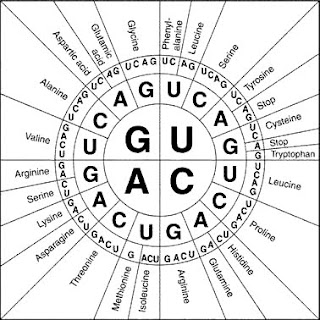
In essays on the subject of centricity, I've most often used the image of a geometrical circle, which, as I explained here,  owes someth...

Thursday, September 13, 2018

NULL-MYTHS: KINGSMAN: THE SECRET SERVICE (2012)

Hmm, it's been almost a full year since I did a "null-myth" entry. I can't believe that I've been reading only good comics since then, so it must just be that I' haven't found any that were worth writing about.


I had to debate whether or not KINGSMAN (originally called just SECRET SERVICE) had enough mythic content to fall into the "near myth" group. It was an okay read, compared to earlier Mark Millar works like WANTED and OLD MAN LOGAN, two brain-dead exercises in superhero ultraviolence. Millar has written a lot of superhero works I have not read, so it's quite possible he's written something better than these two bore-fests. Yet I get the impression that, whereas many British writers sought to expand what superhero comics could do by bringing in aspects of the real world, Millar merely used realism as a method of degrading iconic characters, whether he used the actual characters (Wolverine in LOGAN) or approximations (various DC Comics villains in WANTED). KINGSMAN is no exception, since the project began as a pitch to Marvel Comics, in which eternal superspy Nick Fury took a young spy under his wing.

KINGSMAN is definitely improved by not taking place in the Marvel Universe, and by being centered in Millar's own country, which also happens to be the birthplace of Ian Flemijng's quintessential superspy. Millar, working alongside artist (and fellow Brit) Dave Gibbons, certainly brings a vraisemblance to this James Bond pastiche. The "older man" figure, Jack London, is a former working-class Brit who's been a covert superspy for decades. His sister still lives on welfare with her grown son and a succession of bad bed-mates, so one day London decides that he'll become a tutelary figure to young wastrel-in-training Gary "Eggsy" Unwin. The dramatic exchanges between the knowing elder and the impulsive youth are at least competent, and occasionally Millar and Gibbons touch on sociological themes about British society, though none of these get as much development as Fleming put into his least interesting Fleming novels.

To be sure, KINGSMAN isn't trying to emulate the Bond books, only the Bond movies. Fleming gave his villains assorted exotic gimmicks, but only in the films did Bond have access to similar doodads. In the TPB collection I read, an interview with Gibbons includes a passage wherein the artist scoffs at the "invisible car" seen in one of the Pierce Brosnan flicks. But KINGSMAN is lousy with crazy devices, such as the "laser penknife" with which Gary wins his climactic battle with a villain-henchman named Gazelle because-- well, he has two metal legs that look like those of a gazelle.

But if there's one thing that renders any potential meaning in KINGSMAN inert and inconsummate, it's Millar's handling of his villain. Even many of the Bond-villains invented for the movies prove fit to stand alongside the classic Fleming-fiends. But what does Millar come up with? Well, it's none other than-- James Arnold, Super-Fanboy. Arnold-- who's given one of the blandest villain-names of all time-- is a nerdy genius who decides to play God (or maybe Thanos) by eliminating most of the world's populace. However, because he's a nerd, he gives away his plans in part by trying to kidnap a lot of the celebrities from SF-films, such as Mark Hamill and Ridley Scott. Perhaps Millar and Gibbons thought they were putting across some devastating satire of fan-culture. Frankly, it seems more like a desperate attempt to keep away from the political content found in many of the Bond films, simplified though this content was in comparison to the Fleming books.

There are two sequels I've not read, but I'm not getting my hopes up, based on the mild pleasures of SECRET SERVICE.


ADDENDUM: I did read KINGSMAN THE RED DIAMOND and found it no better than the previous GN, though it's not written by creator Millar and so isn't nearly as bloodthirsty. This one's sole virtue is pitting Eggsy against Kwaito, a tough intelligence-agent from Africa, who is fairly charming despite the great improbability that any current country in Africa could come up with a world-class intelligence organization.


Wednesday, September 12, 2018

MYTHCOMICS: THE THREE SUNS OF VINA (1989)


"[The ship is] two=and-a-half million years old, like me"-- Kani in THREE SUNS OF VINA ("Vinea" in the original Belgian publication).

The above quote displays a concern with the exigencies of time, a concern rarely seen in science fiction comics. Indeed, the bulk of space-faring science fiction stories tend to ignore the aspect of time in space travel, so that franchises as distinct as DUNE and STAR TREK often seem to take place in an "eternal present," made possible by the blessing of light-speed.

As THREE SUNS is my first exposure to the world of Belgian artist Roger Leloup and his best known creation Yoko Tsuno, I can't say if Leloup's attention to the temporal aspect of SF is typical of the entire series. But it's pronounced enough here to sustain a strong cosmological myth in itself.


Though the Yoko franchise is said to be aimed at juveniles, Leloup shows as much regard for scientific detail as any work aimed at mature readers. Only the protagonists-- Yoko, a Japanese girl living in Belgium, and her pals Vic and Paul-- are technically juvenile in age, though they generally show an adult's level of good sense and probity. (Paul, being the comic relief of the threesome, is allowed to be rather more impulsive and childish.) THREE SUNS, the sixth album released, also picks up with the trio re-encountering aliens called "Vinans" once more. The story does not dwell on why the Vinans originally came to Earth, except to assert that they were escaping a solar catastrophe that required them to voyage through space for a couple of millions years, in hibernation. Now, their leader Kani (also, like Yoko, a daredevil young female) informs Yoko that they plan to journey back to Vina, to see if anyone survived the catastrophe. I didn't precisely follow why the trip back wasn't going to take another two million years. However, since this time out it;s only going to take a few months to leave and return to Earth, the three teens agree to join the expedition.

I'll pass over a lot of the well-reasoned SF-tech to get to the main story, the return to Kani's home. The planet Vina has two natural suns, one of which has died. The other sun has somehow been restored to normality, though some of the gravity-changes seem to have altered Vina into a Mercury-like sphere: always showing just one face to the sun, while the other remains in darkness. There's a "third sun" in the form of an orbital solar generator, but it's currently non-functional.


Yoko's two buddies barely get anything to do, as Yoko and Kani descend to Vina to investigate.
The young women encounter that well worn but still viable trope; the decayed computer that has become a god to a tribal people. The modern Vinans barely remember their highly technological ancestors, but they direct Yoko and Kani to a tower guarded by robots and cruisers, the dwelling place of the long unseen "Supreme Leader."

Not surprisingly, the girls manage to dispel the tyranny of a super-computer that's been dominating an entire planet for two million years. They do get some help from one of the many robots, for this robot still possessed the downloaded memories of one of the early Vinan scientists-- and he/it has a special reason for helping Vina, since the original owner of the memories was one Sadar, Vina's father. But in case the tearful reunion with a robot wasn't enough for Yoko's readers, the quest continues to the dark side of the planet, where Yoko and Vina find another survivor who's been in hibernation for two million years-- Vina's mother Synda, who when revived appears to be the same age as her daughter. And to top things off, Yoko's group also fires up the artificial sun, thus fulfilling the title of the album.

If anything about THREE SUNS' plot smacks of the juvenile, it's the fact that sex plays no role in the story, aside from its role in siring all of the participants. Yet Leloup's uses of time for dual purposes-- both to lend verisimilitude and to provide the "sense of wonder" of seeing a young woman and her mother share the same somatic age-- transcend the usual "gotcha" aesthetic of the time-paradox.


Wednesday, September 5, 2018

MYTHCOMICS: "GUYS," 208-210 (1996)

Dave Sim will likely never read any of my analyses, unless I choose to snail-mail them to him. But though he would likely have no good opinion of my mythcomics project-- based on statements he made to me in the long-gone CEREBUS letter-column--  he ought to feel slightly complimented that I felt CEREBUS important enough to classify according to my CATEGORIES OF STRUCTURAL LENGTH.

OK, probably not, as Sim was not exactly a big fan of critics anyway. But in my literary universe, CEREBUS is not a "novel" in the accepted sense of the word, given that it's not unified enough. However, it conforms well enough to the general schema of what I term "the episodic novel," which would put Sim in good company with MOBY DICK and TOM JONES.

Despite the appearance of various unifying tropes and themes, I would never view the entire "episodic novel" of CEREBUS to be a mythcomic. But it's entirely possible to devote essays to its constituent parts, such as "short stories," "long arcs," and the subject of this essay, a short-arc-within-a-long-arc.


I view the long arc of GUYS. initially appearing in CEREBUS #201-219 (1995-97), as Sim's attempt to define masculinity in all its disparate elements. In this he was vocally opposed to the increasingly popular ideological construction of "patriarchy," as conceived by feminists of the Second and Third Waves. I'm only dealing with one "short arc" within the long arc, but it should be said that the long arc takes place in a society where a fascist feminism has become dominant. Men are barely able to speak a surly word within the controlling matriarchy, and their only refuge is the local bar, where women do not usually trespass, and where most of the story's action takes place.


The short arc with which I'm concerned largely defines the friendship of former fellow-soldiers Cerebus and Bear. Issue #208 starts with an episodic bit of business, in which Cerebus honks off Bear by saying uncomplimentary things about his mother, but when the main plot commences, Bear seems to have shrugged it off and engages Cerebus in a one-on-one game of "five-bar gate." Their exchanges of insults and badinage are interrupted by one "Dandy Don"-- based on comics-pro Donald Simpson-- who's hawking a form of comic books called "reads."


Bear could care less about this form of literature. But Cerebus takes one look at the adventures of a Spider-Man like hero-- given the satiric name of "The Wanker"-- and the hardened aardvark warrior suddenly becomes a drooling fanboy. Further, he becomes an evangelical fanboy, trying to convert his fellow barflies to the pleasures of "graphic reads."


In many comics-stories previous to this, comics-fans themselves might be seen as nerds, but they were usually "nice-guy" nerds, or even "smartest-guy-in-the-room" nerds. Sim, by merging the image of the obnoxious fan with that of his perpetually bad-tempered aardvark, scored a deeper satirical blow against fans than any of the clumsy attempts of alleged "artistes" like Daniel Clowes. In the light of clear day-- that is, of appropriately masculine men-- the fantasies of superheroes come off as both juvenile and loaded with unconscious sexual symbolism. Cerebus is filled with a sulking rage when the barflies don't validate his tastes. Bear, weary of his companion's over-emotionalism, tears the aardvark a new butthole with the ultimate insult to a guy:

"It's like yer part CHICK 'r somethin'!"

This is a slight in-joke for CEREBUS fans, since an earlier issue asserted that the aardvark was born a hermaphrodite without ever having been aware of the fact, though there are scarcely any moments in the series wherein Cerebus gets in touch with his "feminine side." Nevertheless, despite Bear's critique of the shortcomings of Cerebus-- as well, indirectly, of the self-importance of evangelical comics-fans-- things are somewhat mended not by the feminine method of endless discussion, but by simply returning to the ball-game they were playing. The two guys compete ruthlessly, continuing to insult one another at every opportunity. Yet, Sim also shows that the guys are capable of relating to one another in terms of honor and empathy that are presumably foreign to the "fair sex."


Some critics undoubtedly would not respect Sim's masculinist (as I would term them) views. To be sure, neither the long arc of GUYS nor the short arc I examine here are capable of saying everything about "what it means to be a guy." There's also rich irony in the fact that by the long arc's end, Bear, despite sometimes being seen as hyper-masculine, is conquered by the "love-bug," spread by a particularly two-faced shrew, which event in turn leads to the dissolution of the bar-group.

Nevertheless, Sim's uncompromising satire of two of the "sacred cows" of comics-fandom-- of the importance of "graphic literature" and of the fans who read it-- shows far more sagacity than the witless elitists who continue to support mediocrity in the service of political correctness.

ADDENDUM: I should clarify that the major discourses in this sequence are focused on the potentialities of the dramatic (i.e., the interpersonal relations of Bear and Cerebus) and of the didactic (i.e., Sim's criticism of feminism). However, I consider that Sim, in promoting a satiric version of Spider-Man to make his points about creeping emotionalism, is propounding a myth of "the superhero as masturbatory crap." It's usually a symbolic trope employed by liberal critics, but here the superhero's pernicious influence is a threat to Sim's conservative ethos, and so must be thrown off by the masculine spirit (even though superheroes were always marketed with male audiences in mind). Mythically, this usage is at least more complex than his modestly entertaining but simpler superhero-spoofs: "Moon Roach," "Punisheroach," and so on.

CATEGORIES OF STRUCTURAL LENGTH

I devoted some time to the factor of what I now term 'structural length" in the essay-series THE LONG AND SHORT OF MYTH, but only today decided to coin a term for the concept.

There are various accepted categories that pertain to the structures narratives take on when their authors work within certain length-specifications, and I accept the terms "vignette" and "short story" pretty much as they are regularly used. However, my study of comics convinces me to put forth my own comics-centric list of terms, to wit:

VIGNETTE-- a narrative so short that it usually consists of just set-up and resolution, of beginning and end with barely the suggestion of a "middle." THE ORIGIN OF BATMAN may be the most famous such sequence.

SHORT ARC-- this form of narrative usually does have a bit more progression, but it's clearly meant to function as part of a greater continuity, and may function as a "subplot," though it does not necessarily have to take that function. In this essay on the manga FREEZING, I mistakenly termed the two stories discussed therein as "vignettes," but I've decided that "short arc" is the better description. Just as the traditional subplot can morph into a central plotline, the short arc can develop into a longer arc.

SHORT STORY-- this is the short form best known for the traditional beginning, middle, and end. It usually has a compact structure, and can be read without reference to other stories, though such stories often appear in continuing features simply to illustrate particular situations or characters. The reader can presumably think of many stand-alone stories that conform to the paradigm, and for an example of a short-story-within-a-continuity, I'll cite SECRET OF THE MYSTERIOUS GIRL from the LOVE HINA continuity.

LONG ARC-- the long arc also takes place within a larger continuity, but like the short arc doesn't entirely stand on its own. The American "soap opera" did not originate the long arc, but it's the genre best known for particular plot-lines that could be extended for weeks, if not longer.  By length alone, the long arc may be compared to the novella, though no arc can be independent of its parent continuity, as a novella can. The LOVE HINA sequence SISTER SYNDROME is my exemplar.

NOVELLA-- The novella is more expansive than the short story, but resembles the latter in being more focused than a long novel can be on a clear "beginning, middle, and end." The example here is the recent SIN CITY six-part story, THAT YELLOW BASTARD.

COMPACT NOVEL-- The compact form of the novel allows for a wider variety of plot-lines than a novella, but it is always structured to dovetail all significant plot-lines toward a satisfying resolution. This is what most people think of as a "novel," though I extend it also to serial concepts that have a similar coherence, as with Kohta Hirano's HELLSING.

EPISODIC NOVEL-- This form includes a vast number of sub-forms, such as "the romance" and "the picaresque novel." Though there's usually a unifying theme, the episodic novel does not emphasize, as the compact novel does, distinct plot-threads, but instead focuses on episodes that may or may not bear heavily upon the main plot's resolution. Melville's MOBY DICK may be the most famous example of a modern-day "literary romance," but I extend it also to serials which have thematic, albeit not  narrative, unity. Jack Kirby's NEW GODS series qualifies here, and I would view it as sharing the basic structure of the episodic novel even if its creator had not been able to provide a resolution of sorts, years after the original continuity was interrupted by cancellation. Steve Gerber's uncompleted VOID INDIGO series furnishes an example of a continuity that was patently intended to function as an episodic novel, but that was doomed by overheated fan-reaction.

ADDENDUM: Just to be clear, most serial endeavors are really just assemblages of ongoing episodes with no structuring principle, usually combining short stories and long arcs. Akamatsu's LOVE HINA is not a novel, episodic or otherwise, just because the author has in mind a summary wrap-up story.

PICTURE-LESS WORDS AT AN EXHIBITION

In this essay I cited FRANK'S REAL PA as an example of a mythcomic that communicated its mythic content purely through wordless images. This begs the question: can one have any kind of comic comprised of words without images?

Patently the answer is no: comics are communicated first through sensory tropes and second through narrative tropes. Still, a more interesting corollary query would be: what's the least amount of images that a comics-work can utilize, while still remaining a comic?

And the answer would be: one, as shown by this randomly chosen page of the sequence "Jaka's story" in Dave Sim's CEREBUS.


If the entirety of CEREBUS were structured in this manner, though, it's questionable whether it would be deemed a work in the medium of comics. In recent years some critics have extended the rubric of comics to include illustrated books, which are either exclusively or dominantly devoted to single-page illustrations with long text. I don't favor this definition myself, though I can see why some comics-fans, endlessly seeking mainstream validation, want to induct popular authors like Maurice Sendak and Doctor Seuss into their ranks.

Were I going to review a sequence of CEREBUS that was all in the "illustrated book" format, though, I would have no problems deeming said sequence to be within the medium of "comics," because most of the entire CEREBUS project involves a more traditional combination of words and images.

Still, the one exception to this "rule" would be "pure-text" pages, such as the "Viktor Davis" text-pieces in the sequence "Mothers and Daughters," for these would not be subsumed by the aesthetic of comics. Though the text-pieces may be seen as loosely intersecting with the CEREBUS concept, if only for the use of the term "reads"-- a faux-coining for "comics"-- they are essentially slightly fictionalized essays on Sim's philosophy, largely indistinguishable from essays written in his authorial voice. Even the fact that the Davis essays are interpolated amidst the ongoing "regular comics" continuity of the title character does not confer on the text-pieces the status of "comics."

Thus, though I could have a lot to say about the mythic discourse that I find within Sim's philosophical essays-- regardless of the fact that Sim would not validate such a definition of his philosophy-- I could not count such an analysis as one of my "mythcomics."

But I have been considering ways to approach the structural anomalies of the "regular CEREBUS comic," and will hold forth on same in the week's actual mythcomic.

QUICK POST ON CRAPPY JOURNALISM

Decided to post this on a new forum re: Donald Trump and the news media.

________

I don't mind actual op-eds clearly marked as such within news broadcasts. However, the media pundits have found a lot of ways to slant the "facts" to suit an agenda.

Case in point: Trump's remarks in August 2017 following the Charlottesville violence. Following his remarks in which he disparaged the goals of white supremacy:

[QUOTE]...we condemn in the strongest possible terms this egregious display of hatred, bigotry and violence[/QUOTE]

He made the famous "both sides" statement:

[QUOTE]I will tell you something. I watched those very closely, much more closely than you people watched it. And you have -- you had a group on one side that was bad, and you had a group on the other side that was also very violent, and nobody wants to say that, but I'll say it right now. You had a group -- you had a group on the other side that came charging in without a permit, and they were very, very violent.[/QUOTE]

A journalist then came up with a gem which the rest of the media then recycled for months:

[QUOTE]Do you think that the -- what you call the alt-left is the same as neo-Nazis?[/QUOTE]

And after that, that was the only thing the news media could say about the exchange was that Trump had supposedly placed the alt-left on the same plane as Neo-Nazis.

Naive person that I am, I thought that the news media would seek to disprove Trump's claim that the "alt-left" (aka Antifa) had initiated acts of violence. Journalists were certainly bullish on demonstrating important factoids like the attendance at Trump's inauguration. Yet, though I listened to the cable news intently for several days afterward, I didn't encounter any pundits hauling out facts to disprove Trump's statement. And the reason was that they could not, but they had an agenda to serve, and they didn't care to examine any truth-value in Trump's assertion unless the examination served the agenda.

None of this is to state that Trump is a teller of even small truths. He lies on a regular basis, but openly, unlike most politicians, who lie covertly. But I'd like to think that the Fourth Estate as being more capable of truth-telling than any politician.

Tuesday, September 4, 2018

AN UNCANNY DIGRESSION

In my review of Jack Zipes's THE ENCHANTED SCREEN, I left out one oddball detail that didn't seem pertinent to the main review. I mentioned that Zipes was trying to co-opt the tropes of fantasy for his own concerns:

Much in the same vein as a similar Marxist work, Rosemary Jackson's FANTASY: THE LITERATURE OF SUBVERSION, Zipes' survey celebrates fantasy for purely utilitarian purposes, in line with the Marxist project of restructuring corrupt society. 

But the strange thing is that Zipes tries to enlist Sigmund Freud's category, "the uncanny," to validate his end-- yet only uses the term on three pages in the whole book. Freud himself only gets cited on four pages, so Zipes certainly wasn't trying to bring ENCHANTED SCREEN into line with Freudian concepts. If anything, it's the opposite. Freud came up with his term "the uncanny" in order to distinguish the questionable nature of a story like Hoffman's "The Sandman" from, say, the world of fairy tales, in which Freud says that "the world of reality is left behind" by a constant stream of marvelous things and beings.

I suspect that the only reason Zipes "comes to bury Freud, not to praise him," is that he Zipes wants above all to convince his readers that the marvelous fantasies of fairy tales are not irrelevant to "the world of reality." In this, of course, his principal references are the usual Marxist suspects, and so Zipes doesn't really attempt to grapple with what Freud was trying to say to his contemporaries, least of all with Freud's belief that the marvelous content of the fairy tales could be traced to "animistic" societies.

Rather than trying to reclaim "the uncanny" for his explicitly Marxist uses, Zipes would have done better to follow the example of Rosemary Jackson, who at least was clear on the point that fantasy could be used equally well for a conservative ethos (Tolkien) or some more liberating one (Carroll).

However, Zipes's bad usage of the term "uncanny" did move me to research the genesis of Freud's concept a bit more, and will probably give rise to an essay on the topic here in near future.