Featured Post

SIX KEYS TO A LITERARY GENETIC CODE

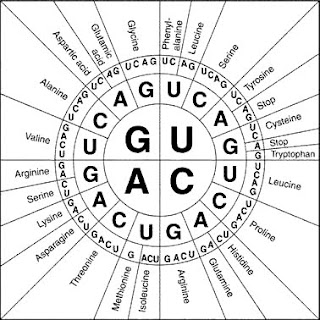
In essays on the subject of centricity, I've most often used the image of a geometrical circle, which, as I explained here,  owes someth...

Monday, June 10, 2019

MYTHCOMICS: "THE EARTHBOUND" (AXA, 1979?)

In my incomplete reading of the British comic strip AXA (1978-86), I've generally found the feature to be a tolerable but unexceptional "future apocalypse" saga, in which a doughty hero navigates a wildly transformed terrain full of mutant monsters and bizarre societies. AXA's main distinction in comics history is that its hero was a buxom heroine, given to frequent unveilings of her upper chest, though Axa was not any less heroic for her tendency to unveil. Indeed, all of the plots are generated by Axa's mission, which stems from a loose mandate, given her by the city in which she was raised, to explore the ways in which humankind's past mistakes have changed the world.


The strip was created by writer Donne Averell and drawn by Enrique Badia Romero, the latter having made comics-history with a previous femme formidable, Modesty Blaise. Whereas Modesty had a regular partner in her follower Willie Garvin, Axa wandered her future-Earth with a variety of male lovers, including a devoted robot (with whom, so far as I know, Axa did not have sexual relations, unlike the heroine's French predecessor Barbarella). "The Earthbound," however, shows Averell and Romero giving a deeper mythic resonance to the apocalypse-adventure subgenre-- in large part by drawing upon the Biblical scenario that is directly opposed to the scenario of the End of Days: that of the Garden of Eden.

As "The Earthbound" commences, Axa is accompanied by two of her devoted followers from other cities she's visited in past adventures: her human lover Dirk, an ex-gladiator, and Mark, a robot with human feelings who bears an impossible love for the busty heroine. Dirk is Axa's only current lover, but he's a jealous devotee, disliking it whenever Mark comes galumphing around.


Axa comes across a forestland which appears, to her eyes, to have avoided the contamination of past human wars. However, the more cynical Dirk observes that the forest is mostly dead after all.


Nevertheless, Axa continues to explore the forest, dragging Dirk and Mark along with her. A full page before there's any mention of Edenic metaphors, this "Adam and Eve" are attacked by a living tree-creature, albeit with no mention of whether it's a Tree of Life or one of Good-and-Evil. After the couple's robotic servitor drives the monster off with its laser, Axa realizes that Dirk's been wounded and needs care. An extended search leads her to a secluded house which has an uncontaminated garden of food-plants growing within it (though later the reader learns that this area was a particular site for government military experimentation in the pre-apocalyptic era). Within the house Axa meets the house's sole occupant, a blind old woman with the name "Joy Eden." (It's surely no coincidence that "Eden" is sometimes translated as signifying "pleasure," "rapture," or "joy.")


Author Averell was apparently not satisfied with Edenic metaphors alone, for though Joy does tell Axa that her long-vanished family did call their house "Garden of Eden" due to the family's evocative surname, she also calls her domicile "Seventh Heaven." She cites a mundane explanation for this name, though it seems likely that Averell was referencing the most common use of the metaphor: that one's being in "seventh heaven" is also a state of rapture. At the same time, the "seventh heaven" would be the one most removed from Earth, and thus probably as hard of access as the mythical Garden.

Blind Joy has one shadow marring her solitude: the fact that she will die one day, and, with her family gone, she has no one to inherit her domain and her wisdom. Joy's invitation that Axa stay in Seventh Heaven implicitly resonates with the young heroine, given how much she wanted to believe in an untainted paradise. Dirk remains the skeptic, wanting to move on and distrustful of Joy's sanctum.


Dirk's suspicions prove justified. Axa witnesses the blind woman calling out to "spirits of the earth, of fire, of water," and moments later, another bizarre monster, a humanoid made of slime and water, attacks Dirk. Again the robot's laser drives off the creature. Joy claims to know nothing about either of the monsters but suggests that they may be wandering mutants that have been "squatting" in the abandoned laboratory, where human scientists unleashed "the Great Contamination." Mark argues that "mutants don't leave traces" like bits of mud and water, but Axa determines that she will investigation the old lab. There she, Dirk and Mark are attacked by a third monster, a man made of straw, and though the straw-man is driven away, the monster gives Mark an acid-bath. Axa's compassion for the damaged robot is expressed when she cries, "I'm not just rescuing Mark because he's useful! I love him!" Dirk could care less about his potential competition and still wants to leave the forest. A little later Mark becomes one with the horrors of the Garden, for his damage causes him to attack Axa, though the possibility of jealousy frying his circuits is mentioned. Axa repels her former protector with his own laser-gun, after which Mark staggers away into the mists, disappearing from Axa's world, at least for a time.


Moments after Mark leaves, Axa is drawn back to Seventh Heaven by Joy Eden, and when Dirk tries to stop Axa, she lays him out with a deft karate-chop. However, Axa comes back to herself once she confronts Joy, and she finally realizes that the attacking creatures aren't mutants, but supernatural forces conjured up by the old woman. Joy Eden has become demented by her long solitude, being unable to see that the "old gods" she's summoned up bear nothing but resentment for all humans, judging all to be equally guilty of having ruined the cycles of nature.


Joy Eden can't bear the notion that the old gods now hate all of humanity, including her, and the very idea causes her heart to fail. The vengeful spirits fade away once their summoner is dead, so Axa and Dirk leave the old woman in her burning domicile-- "the pagan shrine her funeral pyre." Despite this doleful conclusion to the adventure, Axa closes the story with a protestation of her own hopes: "perhaps there's another Seventh Heaven-- another Garden of Eden-- pure and unspoilt, beyond the horizon."

(Note: the whole story can be read here.)

Though other SF-flavored mythcomics have referenced the Garden of Eden as a metaphor for humanity's "fall" away from a paradise-world-- notably 1955's "The Inferiors" and 1980's "Planet Story"--  "The Earthbound" is the first I've found that concentrates upon the Garden-myth with respect to its feminine characters, with Axa roughly standing in for the "great mother" Eve while Joy Eden bears more similarity to Lilith, Eve's sorcerous predecessor (in the Talmud at least). Joy wants Axa to inherit her maintenance of an already corrupted garden, but this "Eve" escapes the enclosure not by eating an apple but by causing the blind old woman to 'see" her own folly.

Tuesday, June 4, 2019

MYTHCOMICS: "WOLFTIMES" (JOURNEY #22, 1985)

This is another mythcomic that hasn't seen a lot of scans online, perhaps because it was largely published by two of the "independent" publishers of the 1980s: Aardvark-Vanaheim and Fantagraphics. In addition, the series, titled JOURNEY: THE ADVENTURES OF WOLVERINE MCALLISTER, concerned subject matter not overly popular in fan-circles, as the title character is a trapper/backwoodsman living in Revolutionary-Era America. Most of the time the subject matter was largely naturalistic, though the series sometimes involved marvelous elements, as does the short arc "Wolftimes," which boasts a ghost in the midst of its B-story.


This short arc takes place in the midst of an extended and somewhat rambling long arc, and largely concerns what the title character calls a "feud" between himself and a marauding grey wolf. McAllister, as stated, is a backwoodsman who usually stays clear of civilized territories, but for complicated reasons he ends up seeking out a frontier-town, New Hope. Traveling alongside the woodsman is a citified Easterner, Elmer Alyn Craft, who provides a lot of the serial's humor as well as being a combination spoof of both Edgar Allan Poe and H.P. Lovecraft. Since I find no scans of internal pages from JOURNEY, here's a cover showing McAllister and Craft together.


Not long after McAllister and Craft arrives in New Hope, a wolf begins raiding the community's stock of turkeys. Writer-artist Bill Messner-Loebs begins the story in the wolf's POV, having the creature ruminate in a fashion comparable to Jack London in CALL OF THE WILD:

Blood calls to blood... you can smell it on the wind... it's warm...living... your life... dwelling in another's flesh... it is time to take it back.
Two pages later, as the wolf corners one of the turkeys in its coop, the wolf thinks:

The feathered meat fears and yet hopes... for at the level of the cells, where nerve and muscle meet... soul is but electricity yearning for discharge... Death is joy... and blood calls to blood...

Though McAllister does not see the wolf make its kill, he senses that it's his old enemy, and volunteers to go along with Mandrell, the foremost hunter of the New Hope community. Why the citified Craft goes along with the two men is a point Messner-Loebs does not address, though it's probably just so he could make the comments that any other non-woodsman might make:

I can't see how you fellows can even see to track in this snow.

This gives Mandrell the change to state his credo of the woodsman:

It's livin' wild, Craft. My bones lead me t' that wolf!
Later, Mandrell even re-states the lupine's gospel of identity with the prey in his own terms:

...well, when you slay, it oughtta be like [sex]... takin' and givin' at once.. runnin' through you like lightning... killer an' killed get mixed...
 Mandrell, however, is not fated to meet the wolf at all. McAllister slips away from the other two, sensing another presence in the snowy wasteland. It turns out to be a lone Native American who's not even aware of the hunting-party. The Indian links to a later plotline, but here his own purpose for being in the story is to distract McAllister long enough for the woodsman's old enemy the wolf to attack. For four pages the hunted fights the hunter, until they plunge over a cliff and get buried in the snow-- their survival depending on who gets free first.

Before the cliffhanger conclusion of the story, Messner-Loebs also devotes considerable space to the aforementioned B-story, in which three previously introduced characters-- two brothers and "Jemmy Acorn" (a spoof of Johnny Appleseed)-- run into a French necromancer named "Pere Winter." This turns out well for the trio, because they're being haunted by the spirit of the brothers' deceased sibling. Winter, after listening patiently to the ramblings of the three goofs, simply banishes the ghost by saying:
'Ey, Cochon! Wake up! You're dead!
Though this encounter with the world of the deceased is played for laughs, it provides a counterpoint to the serious life-and-death battle of the hero and his nemesis. For any readers who don't have JOURNEY #23 handy, the conflict is concluded to McAllister's advantage therein, though not exactly in the approved "Dan'l Boone killed him a bar when he was three" manner. To get into that plotline would be to examine the longer arc of the ongoing "New Hope" story-- and what makes "Wolftimes" mythic is its attempt to connect the psychology of the hunter with the biological urges of the predator, and even with that of sexual congress.


Saturday, June 1, 2019

MYTHCOMICS: "A CURE FOR THE WORLD" (ALL-STAR COMICS #22, 1944)

Just as I've occasionally expressed disappointment that Jerry Siegel's earliest SUPERMAN stories were underwhelming even for pulp-action fodder, I'm usually just as underwhelmed with Gardner Fox's stories for the Justice Society, even though by 1944 Fox had already produced a fair quantity of mythically interesting Batman and Hawkman stories.


"A Cure for the World" appeared on stands about a year before the end of World War Two, but does not, unlike a lot of wartime stories, concentrate on anti-Axis propaganda. It is a "message" story, though it provides a fascinating example of a story in which its subconscious *underthought* is somewhat out of sync with its conscious *overthought.* The latter, the overt message of the story, is the quest for understanding between individuals and groups of different backgrounds. However, the former, the underthought, emphasizes a slightly different theme: that understanding comes about better when the apparent alien offers some good or service useful to the greater culture.

The adventure begins as Doctor Mid-Nite sees a young boy being whaled on by two other boys. When the hero breaks things up, he's told that the one kid doesn't attend the same church as the other two, and they wanted to assert that their allegiance to their church made them better. (No difference between the creeds is mentioned: such explicitness would probably have been against DC company policy at the time.) Mid-Nite reminds the bullies what their country is supposed to be fighting for.


However, Mid-Nite is troubled enough by the incident to take the unnamed victim to visit the other members of the Justice Society. He seems to want his fellow heroes to explain-- to him as well as to the kid-- how persecution, a "crime of humanity," can still exist today. The other heroes don't seem to have any answers, and Starman particularly finds the conundrum "hopeless."


Then an ethereal winged woman, looking much like the Blue Fairy in 1940's PINOCCHIO, appears in the group's meeting-room. She offers the heroes the chance to travel back to critical points in history, so that they can see how, as Johnny Thunder puts it, "folks would learn to like each other." The winged woman agrees with this overt statement of the story's purpose, though the actual experiences of the heroes doesn't exactly bear this moral out. The woman tells the heroes that although they will keep all their costumes and powers, they will forget who they were in the 20th century, so that they'll have to dope out the problems of tolerance as if they were real inhabitants of these past worlds.

So with this setup in mind, a reader would be justified in expecting some bromide in which all of the heroes would encounter alienated people who would just want to live ordinary lives like everyone else, if only people would "like" them. However, that's not precisely what the various segments of the story illustrate.


Hawkman rather fittingly finds himself in the "early Stone Age, when man was a hunter and a fighter, and looked on anything different from himself as something to kill immediately, lest it kill him first." Compared to other bromide-stories of the period, this is a pretty bold formulation, to assert that xenophobia is rooted in the centuries-old desire to protect oneself from "nature red in tooth and claw." Hawkman believes himself to be a caveman named Ga, and after fighting off some unruly Stone Agers, he's invited to their community. There "Ga" meets "Tow," the prototype of all future nerds, and of comic-artists as well. Because Tow is "thin and weak," he tends to stay home with "the women and children" while the bigger men are out hunting. As a result he uses his leisure time to become the world's first artist, painting the image of a mastodon he's seen on a cave-wall. However, since the other members of his tribe have never seen a mastodon as Tow has, they think he's made some real monster that can kill them. Hawkman saves the youth and flies him away, at which point they observe that a real throng of mastodons is about to stampede over the cave-community. Tow and Hawkman return to warn the people, and once again, Hawkman has to punch out a bigoted caveman to make everyone listen. The cavepeople clear out and avoid the stampede, after which the group begins valuing the proto-artist's ability to capture nature in his images, and Hawkman's visit ends.

Note: the "Tow" adventure is an example of an individual being persecuted for being different, not for his membership in an alien group. This trope will show up again.


Part Two focuses upon Starman, who finds himself incarnated in the body of Theodoratus, a noble slave-owner/military commander in Athens in the opening years of the Persian War. Although in real life Athens used slaves more than any other Hellenic nation-state, Starman's modern consciousness apparently impinges upon the Athenian commander, for he instantly tries to convince his fellows that "slaves are men, even as you and I." (Note: all of the slaves depicted are white despite supposedly coming from "Africa," which presumably means that they are captives from Greek-dominated areas of North Africa.) When the first assaults of the Persians cause the Greeks to retreat, Starman and his trained slaves usurp the position of Leonidas at Thermopylae. True, at one point Starman is able to repel the invaders with his gravity rod:


But the hero's real weapon is shame: the noble actions of the slave-soldiers, whom Athenians deem animals, force the Spartan king Leonidas to return and assume his historical (and doomed) role at Thermopylae. Starman vanishes, having insured that Greece, the cradle of democracy, will begin emancipating its slaves, now that they're proven their manliness and worth to the greater culture.

The next segment also deals with the liberation of an underclass, as comedy-relief hero Johnny Thunder visits medieval England. Unlike Starman, who gets to become an aristocrat, Johnny joins the mass of English serfs whom the local lords tyrannize. Plucky Johnny seeks out the local lord and wins him over by becoming his jester (albeit with a lot of help from Johnny's magical Thunderbolt-genie). Having found an "in," Johnny claims that serfs can defend the country as well as knights can, and he proves his point with a lance, albeit very comically (and with more help from Thunderbolt).


The Atom actually may meld with his own ancestor in 17th-century America, since "Nathaniel Pratt" bears the same surname as the hero. This time it's another individual who's being persecuted, an old woman unfairly accused of being a witch in the town of Salem. Perhaps because of Salem's notoriety, this is the only story in which the hero doesn't manage to convince anyone of the individual's rightness, that she's only an old woman who knows some home-grown medical tricks. But he does get to beat up a lot of Puritans.


Doctor Mid-Nite journeys to an even more tempestuous crucible of future democracy, Revolutionary France. becoming another theoretical ancestor, a "Doctor DeNider." Although Mid-Nite agrees with the basic principles of the Revolution and its overthrow of crowned heads, he succors a French noble who rendered aid to the rebels but has now been stigmatized for his aristocratic birth.


The Spectre, for his part, appears in the last story, in which he appears in 19th-century America at the time of Robert Fulton's invention of the steamboat. The hero-- who, unlike most of the others, doesn't attempt to cover up his bizarre appearance-- comes to the aid of a fictional inventor, Stephen Hare, against thugs who think he's either (as Spectre says below) crazy or a threat to the status quo.


This one ends on a peculiar anti-climax, in that after the hero beats off the hoods, he introduces Hare to Robert Fulton, though apparently for no reason but to give Hare the courage to persist.

Oddly, during this final story Spectre thinks to himself as to "how futile force is," because he can't make the people of this time accept Hare, any more than Atom can make the witch-haters accept the old woman. But the real purpose of the heroes' temporal battles with intolerance, successful or not, is to make readers invest themselves in the heroes's symbolic struggles. The story ends as they affirm the American principles of tolerance to a crowd of "boys and girls" who are patently their target audience.

The fairy-woman, incidentally, reveals that she is "the Conscience of Man," and it's of slight interest that said conscience is supposed to be female, given that all of the other heroes are men (except Wonder Woman, exiled to the status of secretary thanks to ongoing battles between her creator and the DC editors). Still, all of the villains are men as well, so that's something.

The common thread of all of the time-voyages is that the objects of persecution, whether individuals or groups, are outsiders who can show their greater-than-average worth to those who discriminate against them. This illustrates a point I extrapolated from Frank Fukuyama in this essay:

In "megalothymia" one worships a superior force which extends its power vertically downward.  In "isothymia" one worships a commonality of interlinked and interdependent forces.
So what is the "cure for the world?" Oddly, it seems to be the recognition not simply of the "commonality" of people who all want to be "liked," but of the ability of special persons or groups to excel in some way, to come up with inventions that no one else has, or to perform well in battle. I doubt that Fox conceived this theme consciously, but it may be that, since the story appeared during wartime, it's possible that someone didn't care for the implicit criticism of failings in America and some of its current allies. Two issues later, in ALL-STAR #24, the Conscience of Man appears for the second and last time, so that the heroes of that story can illustrate the evils of Germany's martial spirit. Perhaps Fox himself thought he might be misunderstood, and wanted to make clear that whatever sins the incipient democracies had committed, those of Germany were far, far worse.

Friday, May 24, 2019

CLANSGRESSION COUNTDOWN: 50 BAD DATES

In the second part of AND THE HALF-TRUTH SHALL SET YOU FREE, I referenced two particular works-- one by Gardner Fox, the other by Dave Sim-- each of which demonstrated the dominance of one of the four potentialities.

I've already devoted my movie-blog largely to sussing out the way the mythopoeic potentiality manifests in films and television shows, as well as having devoted countless words to the topic here. Thus it's a given that I'll almost certainly never devote that much attention to the other three potentialities work out. Myth is my main subject, because I believe that the "myth-criticism" outlook provides the groundwork for a pluralist criticism.

Still, once I get an idea in my head-- like what it would look like, to rate particular works on their respective potentials for the kinetic, the dramatic, the didactic or the mythopoeic-- I usually erect at least a template for how such a critical project might work.

Now, I'd been planning to address the topic of clansgression again, with respect to its place in my system. I first formulated this term here, as a catch-all for "the literal transgression of incest" and "every incest-like form of transgression." Like any other trope through which creators communicate to audiences, the clansgressive trope can be used very well or very badly. And in the various reviews I've done here on three of my four blogs, I've often called attention to potentialities of the kinetic, the dramatic, and the didactic, though never emphasizing them as much as the mythopoeic.

This essay's "fifty bad dates" are, in short, the 50 best usages of clansgression that I've reviewed so far. After each individual citation, I'll highlight which potentiality I believe to be dominant in that work, but with no further justification, beyond what's in the hotlinked review. Most of the cited reviews refer to works in which clansgression plays a strong role in the narrative, though there may be a few works where the trope is simply used with a noteworthy intensity.

If nothing else, it may be interesting to see what does or doesn't move my occasional viewers to click on.


AIRBOY MEETS VALKYRIE-- kinetic

APOLLO'S SONG-- didactic

BERENICE-- kinetic

BLACK CAT (1934)-- mythopoeic

BLOOD AND LACE-- mythopoeic

BRIDE OF FRANKENSTEIN-- dramatic

BRIDES OF DRACULA-- dramatic

CLASH OF THE TITANS (2010)-- dramatic

DANCE IN THE VAMPIRE BUND-- mythopoeic

[DEATH OF IRIS]-- dramatic

DOOR THROUGH SPACE-- dramatic

DRACULA (1898)-- mythopoeic

DRACULA (1931)-- dramatic

ENTER THE DEVIL-- kinetic

FALL OF THE HOUSE OF USHER (1839)-- didactic

FEAR AND LOATHING-- didactic

FORBIDDEN PLANET-- mythopoeic

FRANKENSTEIN (1931)-- dramatic

GAME KEEPER, THE-- mythopoeic

HANDS OF A STRANGER-- dramatic

HANDS OF THE RIPPER-- mythopoeic

HELLSING-- mythopoeic

HORROR OF DRACULA-- dramatic

ILLEARTH WAR-- dramatic

INVISIBLE STRANGLER-- kinetic

LOIS LANE'S SUPER-DAUGHTER-- dramatic

MAYO CHIKI-- dramatic

MISTER MONSTER: ORIGINS-- kinetic

MURDERS IN THE RUE MORGUE (1971)-- dramatic

NIGHT OF BLOODY HORROR-- kinetic

NIGHT OF THE SPIDER-- kinetic

ORIGIN OF METAMORPHO-- mythopoeic

PHANTOM OF THE OPERA (1909)-- dramatic

PLANET OF OUTCASTS-- mythopoeic

PSYCHO (1960)-- didactic

PSYCHOPATH, THE-- didactic

SCORPION KING 2, THE-- mythopoeic

SHE (1886)-- mythopoeic

SISTER SYNDROME-- dramatic

SPECTACLES, THE-- didactic

STRAIT-JACKET-- dramatic

SUPERMAN'S RETURN TO KRYPTON-- dramatic

SUPERMAN'S SUPER-COURTSHIP-- dramatic

TEACH ME!-- kinetic

TEARS OF THE SEA-- mythopoeic

TERROR, THE-- dramatic

THAT YELLOW BASTARD-- dramatic

TOWER OF THE SATYR-- mythopoeic

WORLD OF KRYPTON-- didactic

YOUNG FRANKENSTEIN-- dramatic


Tuesday, May 21, 2019

MYTHCOMICS: ["SORCERER FROM THE STARS"], ARION #1/4 (1982)

In this essay I studied three AIRBOY stories that were not concurrently published, explaining that "because they seemed to complement one another, like images in a triptych-painting." This time I'm looking at two separate issues of the DC series ARION LORD OF ATLANTIS. These stories are part of a long and rambling story-line, even less cohesive than McGregor's "Panther's Rage," and their authorship is complicated. The series was launched as a back-up series in THE WARLORD #55, with Paul Kupperburg as writer and Jan Duursema as artist, while both were also billed as co-creators of the series. Both Kupperberg and Duursema stayed on the series during its back-up tun and through the first three issues of the character's own magazine. Then, for reasons unknown to me, Doug Moench took over scripting duties for several issues, including issue #4. Since the ongoing story-line was not radically disrupted by this development, I theorize that Moench received an extensive briefing on the developing backstories of the main character, but this can only be a theory for now
I've chosen to unite the two theme-linked stories under the rubric "Sorcerer from the Stars," which is not a title of any story but rather a thematically suggestive reference to the hero from one of the WARLORD covers.


Arion's adventures belong to the genre one might call "sorcery-and-swords," since here the star is a heroic sorcerer in a bygone era where a lot of warriors fight with swords. I mentioned "developing backstories" because Kupperberg and Duursema start their hero's career in media res. and the emphasis is not so much on his being a "lord of Atlantis" as the savior of the ancient city. Readers soon learn that this Atlantis, though existing long before the rise of recorded DC-history, is not the first one, and that this second Atlantis, despite its mastery of super-science, depends on the mage Arion to protect it from things like invading tribes and a new Ice Age.

The creators' concept of Atlantis looks good but has little depth, and the same holds true of the hero's support-cast-- a lover named Lady Chian, a couple of obligatory sidekicks, and a mentor, Calculha, who starts out looking like the spectre of a deceased mystic but eventually proves to be kinda-sorta alive, like the wizard Shazam in the original CAPTAIN MARVEL. Arion himself isn't a deep character either, but in two issues, the creators do give him some interesting "mommy issues."

The reader knows nothing about Arion's parentage throughout the WARLORD run, though in issue #58 Kupperberg foreshadows the coming origin-story by having Calculha tell Arion that he possesses "a kinship with the cosmos." WARLORD #59 introduces the hero's main villain, Garn Daanuth, who appears to be an albino. The two mages, having read all the issues of Doctor Strange (Arion even says things like "curse me for a novice!"), undertake their first big fight by sending their astral forms out of their bodies. In issues #60-61, they fly all the way to past-Earth's dead moon shooting magic bolts at each other. Though neither mage has any particular reason to seek out this particular battleground, it just so happens that their magicks awaken a "sunsphere"  from beneath the moon's surface. The glowing ball of sunlight blasts the evil Garn away from it, but when Arion sees it, he can't help wanting to touch it, and its energies enfold him "lovingly"-- which is more or less where the back-up WARLORD series ends.

As ARION #1 opens, the sun-sphere has now expanded into a huge goddess made mostly of flame, though strangely she wears a crescent-moon amulet. Now, Arion is struggling to get away from her:


The goddess is never given a name as such, but since one panel calls her "the Sun Woman," I'll do the same. The Sun Woman addresses Arion as her son and has only one agenda: to pull him back into her smothering essence. It's not clear whether or not this would kill the mortal magician, but the story's captions seem convinced that the real peril is propinquity: "She has chosen him to roam for all time the whole of cosmos at her side."


There's not a lot of explanation at this time for the Sun Woman's claim of parentage, though Arion's mentor Calculha shows up to defend his student, and Sun Woman recognizes him, accusing the old wizard of having stolen her child from her.

Meanwhile, the astral spirit of evil Garn descends back to Earth, inhabits Arion's body, and causes his sidekicks some aggravation-- including stealing a kiss from Chian-- before they manage to force him to go back to his own body. This temporary overlap of Garn and Arion becomes important later.

Anyway, Calculha gets wounded in his battle. This infuriates Arion, who whips a big ol' spell and banishes the Sun Woman. Then he feels strangely guilty of having "killed" the goddess, though he doesn't know why.


After two more Kupperberg issues that don't advance the magician's history, ARION #4, by Moench and Duursema, announces a "special origin issue." At the opening, Garn Daanuth has struck again, and once he imprisons Arion, Garn proceeds to relate the history that the two of them share. It turns out that Garn, Arion and Calculha all existed in different forms 100,000 years ago, at the time of the First Atlantis, and that Garn and Arion were brothers. Further, their father was the good magician Calculha, while their mother was the evil magician Dark Majistra, seen for the first time in #4.


There's no attempt to chart the romantic history of Calculha and Majistra; it's merely presented as the backdrop for the two sons, with Garn-- drawn, like Majistra, as a dusky Egyptian type-- following in his mother's footsteps while Arion hews to his father, even though the Caucasian Arion shows little physical resemblance to his crimson-skinned papa.

In the First Atlantis, the Magicians' Council uses a series of crystals to keep reality running right. However, Moench-- possibly drawing upon accounts that claimed that Atlantis was doomed by evil magicians-- puts the blame for the doom of First Atlantis squarely upon Majistra. With the help of Garn, Majistra tries to cast a mammoth spell with the magic crystals, Calculha and Arion arrive on the scene, and the old wizard is forced to ask his good son to perform the supreme sacrifice: to fling himself into the magic-matrix created by his mother. This results in the deaths of both Arion and Majistra. Garn runs off somewhere to meditate for the next 100,000 years, and Calculha does the same-- but only after funneling the essence of Arion up into the heavens. Here readers learn that Calculha creates his son's "kinship with the cosmos" by fusing this essence with the cosmic Sun Woman, where he can gestate for the next few millenia until Calculha can summon him back to Earth.


I'm passing over the dime-a-dozen resolution of how Arion escapes death at his brother's  hands in issue #4, because the most mythic aspects of this diptych is the way the hero's encounter with a faux-mother in issue #1 provides a mirror-image of his experience of his real mother in issue #4-- even though the latter story takes place first in DC-time. Readers never find out exactly why Majistra left Calculha and her "good son," though the love of power is the most general reason-- but what matters here is the fact that she favors one son and not the other. This is reverse-mirrored by the experience of Garn and Arion as they come near the sun-sphere, for the faux-mother accepts Arion and hurls Garn away. Of course, the Sun Woman's idea of motherly closeness is rather extreme, and comes close to verging on the allegedly incestuous model of Egypt's Isis-and-Horus dyad. To be sure, this isn't completely reflected in the closeness of Majistra and Garn, though Garn's main motive for desiring vengeance on Arion is that of matricide.

Within the scope of ARION's remaining run, Kupperberg and Duursema, once more re-teamed, revealed that Majistra did survive her apparent death in the usual mystic dimension. This story-line, "the Magic Odyssey," comes close to turning my diptych into a triptych, for in this sequence the recrudescent Majistra snares Arion, planning to sacrifice him so that she can return to the living world. However, this story-line proves underwhelming in the extreme, even though the creators reveal that Arion had yet another faux-mother, a good-spirited type named Jheryl. This character could have provided an interesting contrast to both Majistra and the Sun Woman, and it's certainly interesting, in a psychological sense, that the only "good" mother is the one who isn't at all implicated in Arion's two births. But the character of Jheryl, like the entire story, is flat and uninspired, with Majistra just going through the motions of a typical comics-villain.

The diptych-stories, though marred by Kupperberg's bad dialogue and the aforementioned tedium of the Atlantis-world, are at the very least engaged with the mythic concept of "the hero with two births," seen in archaic tales with both Dionysis and Cuchullain. Given that ninety percent of ARION is just standard "thud and blunder," I'm moderately impressed that Kupperberg and Duursema at least put some sustained imagination into the supernatural heritage of their main character.

Saturday, May 18, 2019

AND THE HALF-TRUTH SHALL SET YOU FREE PT. 2

Whereas empirical thinking is essentially directed toward establishing an unequivocal relation between specific "causes" and specific effects, mythical thinking, even where it raises the question of origins as such, has a free selection of causes at its disposal... Cassirer, MYTHICAL THINKING, p. 46.
In Part 1, I wrote:

...the term "patterns" aligns better with the process by which all forms of concrescence-- whether belonging to the mythopoeic potentiality or one of the other three-- in that I at least can picture how various motifs coalesce to reinforce one another and thus become a whole greater than the sum of its parts.
As I reconsidered this in greater depth, I feel it necessary to explain that though the kinetic and the dramatic potentialities certainly do draw upon "patterns" derived from sense experience, those two potentialities don't make substantial use of what I've called "epistemological patterns." I suppose I might term the first type of patterns "existential," since these two potentialities are more concerned with translating existence as the fictional characters *seem* to experience it.

The other two potentialities, however, are rooted in a fictional form of epistemology, because the forms they deal with depend on abstract constructions. Once more with feeling:

The DIDACTIC is a potentiality that describes the relationships of abstract ideas.
The MYTHOPOEIC is a potentiality that describes the relationships of symbols.

Ernst Cassirer's passage above is one of many I've cited to clarify how modern "empirical thinking" (or "theoretical thinking" in other passages) develop out of mythical thinking. Both "symbols" and "ideas" are abstract constructions, but symbols offer the artist "a free selection of causes"-- which I have aligned with my concept of "affective freedom"-- while ideas depend more upon establishing a chain of cause and effect, which I have aligned with "cognitive restraint." But both abstract constructions depend upon the use of fictive epistemology.

Now, to repeat my conclusion from Part 1, all epistemology in fiction can only lead the reader to the experience of "half-truths," whereas epistemology in philosophy can lead the reader to the perception of "truth," at least for that particular reader.

In CONVERGING ON CONCRESCENCE PT. 2,  I discussed some of the interpenetrations of the mythopoeic and the didactic potentiality. My example of a work dominated by the mythopoeic potentiality was Gardner Fox's Hawkman origin, but even while establishing that primacy, I also mentioned that the author had utilized "metaphysical tropes that were discursively organized by their pagan proponents." In contrast, the various CEREBUS excerpts I analyzed were all dominated by the didactic potentiality, but I asserted that author Dave Sim was at his best when he created an "expressive underthought to complement the rhetorical overthought."

Nevertheless, even though Fox is of the "affective freedom" party and Sim of the "cognitive restraint" persuasion, both authors construct their narratives around principles of an abstract nature, and so are both purveyors of sacred half-truths.

Friday, May 17, 2019

MYTHCOMICS: "THORNS IN THE FLESH, THORNS IN THE MIND" (JUNGLE ACTION #15, 1975)

As I stated in my review of THE GOD KILLER, Don McGregor's Black  Panther saga "Panther's Rage" was not unified enough to qualify as a mythcomic. However, "The God Killer" was a segment of the sage that possessed a complex unity, and so does the segment that followed two issues later, "Thorns in the Flesh, Thorns in the Mind."


Following the title, the first word in "Thorns" is "insecurity." Much of "Panther's Rage" revolves around the internal struggle of the Black Panther, a.k.a. T'Challa, King of Wakanda. Since the feature was a mainstream Marvel comic, the hero also had an external struggle, as he returns to his native land from an American sojourn and finds Wakanda in chaos, thanks to the activities of the revolutionary Killmonger and his many followers. Stan Lee and Jack Kirby had conveived Wakanda as a technologized jungle, but McGregor placed less emphasis on technology and more upon Wakanda as a patchwork of exotic, hostile terrains-- deserts, snowy wastelands, swamps, a "lost world" full of dinosaurs, and, in this story, a "forest of thorns" dominated by cacti and brambels.


The story could be said to start off with a literal bang. T'Challa pauses in the thorn-forest during his pursuit of Killmonger to quench his thirst, and a Killmonger henchman, Salamander K'ruel, fires an explosive arrow at the hero. Though the main villain sports a number of underlings with super-villain names and even weird powers, K'ruel seems to have a name modeled on the odd cognomens of Ian Fleming, like Auric Goldfinger and Pistols Scaramanga. I have no idea what the apostrophe in the name "K'ruel" is supposed to signify, though as I recall apostrophized names were a big thing in the seventies, possibly due to the influence of Robert E. Howard and H.P. Lovecraft. As for the "Salamander" part of the name, McGregor later provides a loose connotation, if not an explanation.


When the Panther engages in combat with K'ruel-- who looks like an ordinary native, albeit with strange welts all over his body-- the hero finds that K'ruel is a seeming incarnation of the forest itself. The welts contains thorns, and by grappling with K'ruel, the Panther is stricken unconscious by overwhelming pain.


When he awakens, all of the thorns that had covered his costumed body are gone, and since it's not likely that the villain removed them, one may hazard that they simply dissolved on their own. K'ruel, like innumerable villains before him, chooses not to slay his unconscious adversary, but puts the Panther in a death-trap, the better to make the hero suffer. For once, the villain has a good reason to leave the premises, since the death-trap consists of tying T'Challa to a pair of cacti and allowing one of the local pterodactyls the chance to have a panther-dinner. It's in K'ruel's farewell speech that he draws a loose comparison to himself and the real salamanders of the forest, saying that by the time he returns, "the salamanders... will have swarmed over your body." This doesn't seem like much a threat compared to that of the pterodactyl, though once T'Challa is alone, the hero does find that even a swarm of one proves daunting to his sense of self-worth and security.


In this one-page sequence, one single salamander, of the newt species, starts clambering over the Wakandan king's bound form, and McGregor's prose, however purple, is never better than in his exposition of the utter strangeness of this experience.

The salamander goes its way, and then the Panther is obliged to face a more immediate physical threat as a living pterodactyl comes for its dinner. T'Challa is caught between the flying devil and the deadly thorn-forest below him, but he manages to clamber onto the reptile's back, banishing "self-doubt" as he somehow steers the creature in pursuit of his enemy-- resulting in a most satisfying comeuppance for Salamander K'ruel.


I should note that McGregor interrupts this struggle between the jungle-hero and a living incarnation of the jungle's mysteries with three segues into the lives of the feature's supporting characters. Though all three sequences also deal with "insecurity," none of them are especially mythopoeic. McGregor ends the story not by entirely banishing all insecurity from the hero, but by having him realize that "purpose and self-doubt hover over him as if gamblers waiting for the outcome." Arguably this part of the sage foregrounds the hero's only partial triumph at the end of "Panther's Rage," in which T'Challa makes his last stand against Killmonger, though he is not solely responsible for the evildoer's defeat.