Featured Post

SIX KEYS TO A LITERARY GENETIC CODE

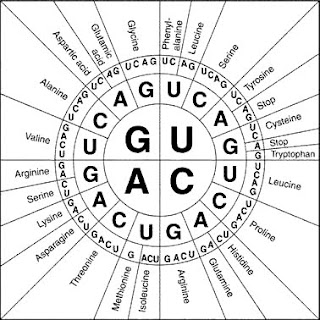
In essays on the subject of centricity, I've most often used the image of a geometrical circle, which, as I explained here,  owes someth...

Sunday, February 5, 2023

INDIVIDUAL AND COLLECTIVE STATURE

 In A CROSSOVER MISCELLANY PT. 5 I formulated three types of ensemble features. One is the Exclusive Ensemble, in which all members of the team are original with the feature, which means that this type by itself does not sustain any qualities of a crossover-narrative. The other two, however, will display such qualities. albeit in differing configurations. 


The Inclusive Ensemble is one in which the members of the team all originate in other features, and thus all of the starring characters have some degree of stature when they appear in the team feature, a stature independent of the ensemble feature. DC Comics' Justice Society of America in its original run was devoted entirely to characters who all had their own features independent of the team. Because the Inclusive Ensemble is meant to cross over all these independent characters on a regular basis, all episodes of such features are crossover-stories.


The Semi-Inclusive Ensemble must include at least one icon that earned either stature or charisma in another feature before joining the team, while all the rest of the ensemble's members may be new icons. Marvel's feature The Avengers started out using the Inclusive template, in that the charter members-- Thor, Iron Man, the Hulk, Giant-Man, and the Wasp-- had all enjoyed the stature of featured heroes, and so all of these Avengers-stories are crossover-tales, as are those which added Captain America to the mix. However, AVENGERS #16 changed the template to that of the Semi-Inclusive when the new lineup consisted of one Prime with strong stature, Captain America, and three that had only been charismatic Subs within the universes of other featured heroes. Since Hawkeye, Quicksilver and the Scarlet Witch only accrued stature once they'd been in one AVENGERS story, the first appearance *alone* was a charisma-crossover. From then on, they all possessed "collective stature" due to their continued membership in the team, and the more they appeared in the team, by the principle of escalation they progressed from being Charisma Dominant Primes to Stature Dominant Primes. Captain America remained a Stature Dominant Prime with the individual form of stature, and so stories which included him and the three former Charisma-Dominant types remained crossovers, but once the star-spangled sentinel departed, there was no crossover-mojo arising merely from the association of the three who possessed the collective form of stature.


Slightly later, Giant-Man (renamed Goliath) and The Wasp rejoined the feature. However, they no longer had their own feature, as did Thor, Iron Man and Captain America, and so, even though they came to AVENGERS with separate stature, over time the stature they had as Avengers team-members excelled the stature they'd earned from their own (essentially failed) series. As with the team-debuts of Hawkeye et al, the first story in which Goliath and Wasp rejoined would count as a crossover, but not others, because from then on those two heroes would be on roughly the same level as the neophytes who never had their own features. 


However, any time that such a team-- with only one or two members possessed of high stature-- harbored a temporary guest-star, such as Thor or Iron Man, this too would be a crossover of the "guest star" variety.

More to come. 

DEPARTMENT OF COMICS CURIOSITIES #13

 Fans of Bronze Age comics will be readily familiar with the time when Green Arrow chose to impersonate an Indian in the 1970s.


However, that was actually the second time he did so. In WORLD'S FINEST #104 (1959), he poses as a legendary Native American archer in order to defeat a malicious "medicine man." A case of using superstition to defeat superstition, I suppose.


Sunday, January 29, 2023

THE READING RHEUM: THE RETURN OF THE KING (1955)

 When I began blogging about LORD OF THE RINGS, I specified that, for space reasons, I wanted to concentrate on the most mythic aspects of each of the three parts. And thanks to taking that angle, I found it fascinating that the last section, RETURN OF THE KING, feels like the least mythic book.


I don't mean that there's anything in RETURN that precisely compromises the amazing vision of Tolkien's world, which was, as he mentioned, a "subcreation," an attempt to create a world like our own but according to its own internally consistent rules. But one of the rules that Tolkien sets down is that the Age of Middle-Earth is fated to come to an end, and to be succeeded by the Age of Men. The latter is more or less our own profane world, bereft of such extraordinary entities as ents, elves, dwarves and hobbits, though also missing the orcs and trolls. Tolkien clearly believed that the real world was under the aegis of Judeo-Christian authority, but this had or has nothing to do with the fantastic mythology of gods and demons given full expression in THE SILMARILLION, sort of the Middle-Earth Bible.

However, the first two parts of the trilogy are the ones in which the author lavishes loving detail upon all of his fictional entities. RETURN, instead, must be devoted to wrapping up all the multifarious plot-threads, so there's not a lot of subcreation going on there. Instead, though Tolkien means to have good win out over evil, he was absolutely determined not to show the victory as having no cost for the representatives of good. While RINGS is not an allegory for the reasons the author himself discussed, there's little question that for RETURN he drew upon his own experiences in World War One, particularly the harrowing Battle of the Somme. War is endless misery even for the noble-hearted. That said, since I never identified with Frodo's buddies Merry and Pippin-- who have parallel experiences in the field, one with King Theoden and the other with Faramir-- these sections were a slog for me. Even Gandalf in his new whiter-than-white embodiment is rather boring. About the only genuinely mythic moment in these sections is the "Macbeth" like encounter between Eowyn and the Lord of the Nazgul, where the evildoer learns that the prediction of his invulnerability to mortal men does him no good against a woman of courage. (That said, Tolkien very nearly saps Eowyn of all her symbolic depth by forging a very decorous romantic link between her and Faramir.) 

In contrast, Frodo and Sam, obliged to carry the fatal Ring of Power to be destroyed in the fires of Mount Doom, are as mythic as in all their other appearances. And yet, I missed Frodo's "shadow-self" Gollum. I realize that the duo was not about to keep traveling with Gollum once he betrayed them to Shelob, and in any case Gollum had only one more plot-action to perform in the story. Tolkien needed to present readers with yet more barriers to the heroes reaching their goal, so that their success, however compromised, would not seem too easy. But the Orcs who menace the heroes are just penny-ante thugs with nothing memorable about them, certainly not their symbolic qualities.

Of course, the destruction of the Ring is one of literature's most renowned turnabouts. The heroes succeed in bringing the Ring to Mount Doom, but even a hobbit's unambitious nature cannot prevent Frodo from being seduced by the Ring's insidious power. But as Gandalf says several chapters back, Gollum has a special role to play, and his raging lust to be reunited with his "precious" both destroys the Ring and breaks the power of Sauron for good measure. 

The extended coda, in which Frodo and friends return to  the Shire and find it corrupted by the evil of Saruman, also takes some inspiration from Tolkien's war experiences. He was determined to show that even innocent back-country locales could be aversely affected by the tumult of armed conflict. This resolve is perfectly in tune with the verdict reached by Frodo and Sam toward the end of TWO TOWERS, where they realize that a lot of heroic stories give the heroes too easy a time rather than emphasizing what their ordeals cost them. Indeed, even after Saruman is vanquished, Frodo never really rests on his laurels, but instead passes out of Middle-Earth along with the Elves. Life goes on for the hobbits and the rest of the world, though implicitly they too will pass in their time. Yet this downbeat ending does not cancel out the mythopoeic complexity of Middle-Earth, and what readers remember best is not that world's end, but the way it was "born," coming to life as no other fantasy-world ever had before.

NEAR-MYTHS: ["VILLAGE OF THE DOOMED"], PEP COMICS #4 (1940)


(NOTE: the title is an arbitrary one assigned by Grand Comics Database.)

"Village" is a rarity in several ways. One is that unlike the vast majority of Golden Age comics-stories, this one is part of an ongoing storyline, for as the copy explains, in the last issue villains hypnotized the hero into committing numerous crimes. The Comet threw off the spell and killed his manipulators, which didn't prove to be the best idea since that deprived Comet of anyone who could testify as to his fundamental innocence. It's also a rarity in that it's a "social problem" type of story. Jack Cole, who wrote and drew the early COMET tales, didn't attempt this type of story often, but this one's much better than the ones offered by Siegel and Shuster in SUPERMAN.


The Comet, tired of running, turns himself in. However, he gets a fine taste of lynch-justice and has to flee once again.


The wounded hero flies out to some rural area and collapses, but a kindly old man takes him in and believes his story. The old guy then shows Comet how the local mining-community is being exploited by cruel businessmen who refuse to provide safety measures. (Note the gut-punch when Comet can't destroy a boulder pressing down on a miner and has to amputate the man's limb to get him free-- which isn't the most logical course of action, but is surely meant to make readers hate the corrupt owners.) The mine owners claim that the safety measures would bankrupt them, but Comet proves that to be a lie, and in fighting the corrupt main guy Comet's "bouyancy" enables him to bounce off walls "like a rubber ball." (Plastic Man was about a year down the road for Cole.)


The bad guy tries to rub out Comet with poison gas, but again the hero escapes and ends up "unintentionally" executing the evildoer. Comet makes sure that the next guy in line makes the safety alterations, and he's off to the next adventure, despite still being hunted by the law (another element that Cole, reputedly a stickler for law and order, seemed to work into many of his stories).


Saturday, January 28, 2023

THE SEXUAL DIMORPHISM BLUES

There was a time when the majority of liberal thinkers distanced their political and philosophical statements from anything falling under the rubric of "myth." For much of the twentieth century, myth meant "untruth," and neither Lefties nor Righties wanted their thoughts to be associated with the fantasies of archaic tribesmen. Marxist Roland Barthes was particularly insistent about distinguishing his ideology from the "mythology" that he claimed pervaded his society, as I showed in this 2010 essay.

But the lure of money titillates a lot of authors, even ideologues. Even anti-Jungian Richard Noll, toward the end of THE JUNG CULT, admitted that Jungianism had gained ground over other psychological systems thanks to the "New Age" subculture. Jung was gone by that era, but Joseph Campbell rose to prominence in the sixties, and many of his books have remained in print for the past sixty years. I think it's likely that Campbell's success in the marketplace led to many liberal thinkers putting aside any qualms about myth and trying to draft the allure of mythic discourse to validate political ideologies. I've shown this by demonstrating the anti-mythic agendas both in 1998's DEEP SPACE AND SACRED TIME, which I view as a "proto-woke work," and in 2011's THE ENCHANTED SCREEN, wherein the author tried to prove that fairy tales were all about Marxist dialectic.

Maria Tatar's 2021 HEROINE WITH 1001 FACES is at least partly honest, since her agenda is to break down the masculinist emphasis she claims to find in all of Joseph Campbell's works. (Strangely, toward the end of her book she cites a quote from a 2013 collection of Campbell essays, GODDESSES, but Tatar does not in any way engage with anything Campbell said in that book.) Her main target, as her book's title indicates, is Campbell's 1949 HERO WITH A THOUSAND FACES, in which the author promoted a "monomyth" that unified all the major motifs relating to male heroism, which left female heroes without any say in the matter.

Having a say is extremely important to Tatar, so much so that her volume might have been better titled "1001 VOICES." Tatar never critiques Campbell in depth, either fairly or unfairly. She only attacks those aspects of Campbell that she views as attempts to stymie or silence the voices of women, and she pursues the same strategy with respect to archaic myth and folklore. If the story's about men winning glory in battle, it's bad. If the story's about women exposing male perfidy through speaking out, it's good. It's no coincidence that an early chapter of HEROINE is subtitled "From Myth to #MeToo." At all times, Tatar remains lockstep within the boundaries of that ultra-feminist ideology. Thus, even though she sometimes evinces impressive erudition, everything she writes about is distorted by that determination to make her own monomyth that excludes the supposedly male province of glory and violence.

One amusing thing about HEROINE is that Tatar duplicates one of Campbell's minor vices: that of assuming a commonality of meaning between archaic fables and modern literature. I call it a minor vice because Campbell was a good enough writer that his comparisons were usually interesting if not always logically supportable. But when Tatar windmills from talking about the English folktale "Mister Fox" to modern works by such authors as Philip Pullman and Toni Morrison, she fails to build even a loose chain of associations.

If Tatar had merely claimed that there had been plenty of writings about male heroes and that she was simply going to focus on what she deemed examples of female heroism, she would have been on surer ground. But the #Me Too ideology requires the demon of toxic masculinity. Thus Tatar sprinkles her text with glib indictments of masculine myths. In her first chapter she inextricably associated archaic myths of male heroism which "we no longer lionize but call toxic masculinity" (p. 20). No hero in Tatar's ideology ever protects a woman from rape; men are just in it to force women into servile bondage, keeping them barefoot and pregnant.

I will give Tatar this much: though many of her potential readers will assume that she's going to address the presence of martial heroines in antiquity and in present-day pop culture, Tatar gives this "face of femininity" short shrift. On page 258. she tosses out a short list of "pumped-up, tough-talking women," including Diana Rigg, The Catwoman, Wonder Woman,Lara Croft and the Bionic Woman,"  but then chimerically changes the subject to first GAME OF THRONES and then to Disney heroines. Why? Well, on page 26 she also listed martial heroines of antiquity, but opined that it was a "perversion of the feminine" to show female characters "usurping the power of the heroic." So at least she's consistent in her antipathy to a power she wants to view as strictly male and therefore toxic.

That's not to say she's consistent about anything else. Wonder Woman is the only martial heroine to whom Tatar devotes any extensive attention, but her analysis is wonky, even leaving out the outright error on page 152, when the Amazon is said to be "the first female action figure in the Marvel Universe," but that she owes her live-action cinematic debut to "DC Films." At the start of Chapter 4 she excoriates Frederic Wertham for his hostility toward Wonder Woman because Wertham believed that the Amazon might keep young girls from becoming homemakers. But how is that any different from complaining that such heroines are a "perversion of the feminine?" On page 232 Tatar claims that "the love of justice-- avenging injustices and righting wrongs-- is what makes Wonder Woman so powerful a force in the pantheon of superheroes." Wait-- so aside from Wonder Woman, no other superheroes, even other female heroes, had any interest in avenging injustice or righting wrongs? I should note in passing that Wertham's ideology also could not see fictional violence as being anything but anti-social in its effects.

Her nastiest inconsistency, though, is that after having burned up a lot of hyperbole inveighing against male violence, she unleashes snark against the late Campbell in her first chapter, implying that he promoted his 1949 adulation of heroism as some sort of compensation for his having "sat out the war" (that is, World War II). This armchair psychology takes up about a page and a half, and amounts to nothing more than character assassination. (At least Richard Noll provided a detailed critique against Jung.) But this side-swipe shows Tatar's basic hypocrisy. Is it good to refuse the allure of toxic male violence, or is it not? 

Tatar doesn't care; any dirty trick will serve her ideological agenda, making her a kindred spirit with the #MeToo movement, whose leaders ranted about believing all women but decided to ignore a woman who leveled charges of sexual harassment against Presidential candidate Joe Biden. If one goes into HEROINE knowing that it's a snake pit, one may learn some interesting facts about serpent behavior, but not much more.


Tuesday, January 24, 2023

MYTHCOMICS" "TRALLA LA" (UNCLE SCROOGE #6, 1954)


I'm not an expert on either Carl Barks or his work on Disney Ducks, so I don't know exactly how many Uncle Scrooge adventures Barks had done before the millionaire mallard got his own comic in 1953. UNCLE SCROOGE #1 seems to have set the pace for future adventures, in that its lead story "Only a Poor Old Man" shows how Scrooge McDuck could be alternately admirable, for his great skill in making money, and yet laughable, for being so ineluctably tied down by the task of guarding his riches.


"Tralla La" (a name patently indebted to the famed "Shangri-La" of the 1933 James Hilton novel LOST HORIZON) starts with Scrooge being more desperate about his money than ever. Everyone wants a piece of his vast wealth, and he's become exhausted by the job of maintaining it. The bonkers billionaire even says he hates his money, so Scrooge's subordinates summon his nephew Donald to see what he can do. 


Because Scrooge needs a vacation from his responsibilities, he decides to seek out a remote Himalayan country called "Tralla La," a "place without money." So Scrooge, Donald and Donald's three nephews head for the Himalayas. With their scientific acumen, Huey, Dewey and Louie locate the hidden valley of Tralla La with ridiculous ease, and after some setup about the peculiar conditions of the country's unique geographic situation.


At first Tralla La seems to be everything Scrooge wants in a vacation paradise. No one uses money, so no one bugs McDuck for handouts or expenses. The high muckamuck boasts that "friendship is the thing we value most," and Donald observes that "nobody wants anything that anybody else owns." However, Ugly Duckbergian Scrooge is responsible for bringing a serpent into this Edenic world. Scrooge loses a bottlecap, and as soon as one Tralla-la-an finds it, it becomes valuable precisely because no one else in the land has anything like it. 


I should note at this point that Barks' story greatly resembles the premise of the 1984 movie THE GODS MUST BE CRAZY. wherein a group of African Bushmen quarrel over a Coke bottle, fallen into their domain from a plane. But there's a crucial difference. The Bushmen all want the bottle because it's useful in their daily lives, as a pestle and whatnot. The Tralla La-lans don't care that bottlecaps are trash; to them, they're rare curiosities because they're not common items. It's apparent that the only reason the natives weren't greedy was because everyone owned the same sort of things, so there was no opportunity for conspicuous consumption. The nephews assert that they can eliminate the rarity of bottlecaps if Scrooge hires a plane to bombard Tralla La with more of the rare items, so that they won't be rare any more.


Unfortunately, Donald orders far too many bottlecaps dropped into the valley, so that the alien objects begin to threaten life itself. In a quick wrapup, the nephews petition the ruler to release them, so that they can reach the outer world and cancel further deliveries. Since it is a kid's comic, Barks couldn't very well portray the Tralla-la-lans as having had their economy wrecked by modern-day outsiders, so the artist just loosely suggests that the natives will muddle through somehow (admittedly, through their own folly). The story ends with Scrooge briefly imagining that all the excitement has immunized him against the mere fear of being asked for money. But then the kids ask for their promised pay, and Scrooge is no better off than he was before-- though I imagine that his specific phobia, having served its comic purpose, simply doesn't show up again.


MYTHCOMICS: "ON THE HORNS OF PASSION" (URUSEI YATSURA, 1980)


There was a time when I would have deemed Rumiko Takahashi's URUSEI YATSURA "mythic" just because the creator was so skilled at creating bizarre characters. But over time I've realized that only in a handful of cases did Takahashi use those characters for what I deem a "symbolic discourse." 

The first adventure, given the English title "A Good Catch" in translation, was rife with such discourse about adolescent sexuality and the ways of Japanese "oni" demons (albeit reworked into science-fiction aliens). Ataru Moroboshi, the typical horny youth who wants every pretty woman he sees, is selected to save Earth fron an invasion of these alien oni, but only if he can defeat the aliens' representative, the vivacious babe Lum, in a game of "tag." Despite false starts, Ataru attempts to be a good guy and win the contest, in part so that his girlfriend Shinobu will marry him. By somewhat crooked means, the young fellow "tags" the elusive Lum, but he makes the mistake of yelling something about marriage. This causes Lum to think he's proposed to her, and the story ends with Ataru due to be frog-marched off to Lum's planet and put through a ray-gun wedding.

The second URUSEI story doesn't mention Lum at all, but by the third, the creative/editorial decision had been made that she was to be added to the cast. Lum comes back to marry her "darling," but he denies that he ever proposed to her. Legalities mean nothing to the lovestruck alien, and for assorted reasons she talks her way into staying at the Moroboshi house, decorously occupying Ataru's closet. No matter how many times Ataru proclaims that they're not married, Lum maintains that they are so bonded-- though over time she makes a point of trying to drag him to the altar, to make it official. 

"On the Horns of Passion," the twenty-fifth story in the manga, is the closest Lum ever comes to trying to wring a "secondary promise" out of her love-mate. At the time of this story, Shinobu-- who for half a year tried to get between Ataru and Lum whenever possible-- finally gives up on her inconstant Romeo. Not long before "Horns," Takahashi introduced to Ataru's class rich-boy Shutaro Mendou, who's just as girl-happy as Ataru but has both wealth and good looks with which to enchant high school girls. Shinobu is one of those who admire Mendou, though they're not yet dating in this story, and Mendou seems more interested in laying claim to Lum.


Lum, who has not yet enrolled in Japanese high school, flies to Ataru's classroom looking for her "darling." Informed that he was last seen in the company of Shinobu, the jealous alien goes looking for the couple. As she departs from a high window of the school, Mendou just happens to be in the process of showing his great wealth by parachuting onto the school grounds. The two of them get entangled and fall.


It just so happens that on the ground beneath, Ataru has been trying to talk Shinobu into forgetting Mendou and coming back to him, slamming Mendou for the upper class refinements that separate his kind from ordinary people. Shinobu buys the argument, but then the tangled bundle containing Lum and Mendou falls atop Shinobu and Ataru. Mendou in particular lies prone upon Shinobu, and though he doesn't make a pass at her like he does with Lum, Shinobu seethes with juvenile passion for the handsome millionaire and runs away. Ataru, deprived of his conquest, storms off, linking Lum and Mendou together in his mind as people far beyond the workaday world. Mendou tries to further the rift by telling Lum that she and he are "above the mundane world." However, for all her faults Lum isn't conceited, and she thinks of herself as an "ordinary girl" who just wants love and marriage. 


It's hard to credence that Lum's never noticed how often Ataru is turned off by all the weirdness she brings into his life, but as far as this story is concerned, this is the first time the thought occurs to her. So the affable alien dons a school uniform and uses a chemical to make her horns retract into her skull. She shows up at class next day, and no one recognizes her, so that all of the boys, particularly Ataru and Mendou, are mesmerized by the "new girl." Shinobu apparently thinks she still has a claim on Ataru despite having refused him earlier, so she gets furious at him, and then at Mendou, even though, as mentioned before, Mendou hasn't even asked Shinobu out yet.


Lum keeps the deception going a little longer, but Mendou, again seeking to undercut Ataru, mentions the fact that to date this new girl (whose name no one even mentions) would be "cheating" on current girlfriend Lum. Ataru, who can only focus on one hot girl at a time, offers to let Mendou take custody of Lum. 


Even though Lum's tigerskin bikini is concealed, it doesn't take much effort to see the "tiger" struggling to burst forth from beneath the facade of the "ordinary girl." There can only be one compensation for having heard her love-mate offer to callously trade her to another man like a baseball card. She must get him to willingly "swear to be faithful unto death," and Ataru, still besotted with passion, does so without a second thought.


Ataru pays for his lustful nature when Lum reveals her true nature, her normally tiny horns elongating three times their normal length, just to signal how mad she is. Yet she doesn't shock him or even punch him, but only pins him to the floor, repeating the promise he's now made to her, "Unto death, darling! Unto death!" The similarity to the English phrase "until death do us part" may not be in the original Japanese. But her act of pinning him down suggests that this time he's bound himself to her, as if she were a demon who had to be invited to take possession of her victim. And she's triumphed over Shinobu as well. At the start of the story, Shinobu may not be actively trying to win Ataru any more, but Lum sees that the Earthgirl has an advantage in being what an Earthman considers "ordinary." Lum's masquerade screens out all the extraterrestrial aspects that "alienate" the boy she's chosen for her own, and this proves that Lum can beat Shinobu in a contest of purely ordinary feminine charms. 

On a semi-related note, the last panel also sets up future "eternal quadrangle" action, in which Lum pursues Ataru, Ataru pursues Shinobu, Shinobu pursues Mendou and Mendou pursues both women, but Lum more than Shinobu.

In all likelihood, had I the ability to read Japanese, I strongly doubt that I would find a single later reference to this story anywhere in the rest of the URUSEI corpus. Takahashi has continuing characters noodle over past actions in her more soap-operatic MAISON IKKOKU, but not here. Still, though HORNS makes absolutely no reference to Ataru's non-proposal in the first tale, the overarching history of the characters makes HORNS more mythic than the average "current girl pretends to be new girl" folderol. I won't say that Takahashi felt the need to "justify" Lum's almost unshakable devotion to, and obsession with, her Earthbound choice. But I think it suited Takahashi's perverse sense of humor to put Ataru in the position where he has an immediate response, almost on an instinctual level, to Lum's insuperable glamour, once all of the associated weirdness is put out of the way. The very fact that Lum  affects Ataru so deeply may be part of the reason he keeps chasing women who can never mean as much to him.