Featured Post

SIX KEYS TO A LITERARY GENETIC CODE

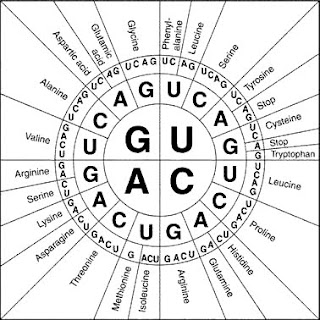
In essays on the subject of centricity, I've most often used the image of a geometrical circle, which, as I explained here,  owes someth...

Showing posts with label carl barks. Show all posts

Tuesday, April 29, 2025

AN AESTHETIC OF NONSENSE PT. 3

 If, in my previous writings on the rationales for metaphenomenal fantasy, I've given the impression that nonsense-fantasy was a new creation, I should correct that by mentioning that a fair number of archaic tales invoke the rationale of "just because." In fact, in Chapter 7 of Susanne Langer's PHILOSOPHY IN A NEW KEY (which I referenced in yesterday's post), Langer begins her generally unflattering description of simple folktales with some examples from Melanesian lore. Her first example, for instance, involves a buffalo and a crocodile having a dispute, whereon they ask various other animals, or even inanimate objects like a mortar and a floor-mat, to judge the quarrel. The idea of attributing life even to clearly nonliving things seems to me more extreme than that of talking animals who behave like people, though both are examples of nonsense-fantasy. Another example of non-living things being given life appears in the (presumably much later) Japanese conception of tsukumogami.                                                       

The Aesop's fables offer a lesser range of nonsense-fantasy. Sometimes the animals therein are shown only doing regular animal activities, as in "The Dog and the Bone," with the exception that the animal may be given some degree of human intelligence. Other stories show such creatures like the Fox and the Stork dining together and using human utensils.                                                              
In the annals of literature, the example of Lewis Carroll's Alice-verse stands as one of the most sustained examples of pure nonsense-fantasy. However, L. Frank Baum's later Oz books might be termed "impure nonsense-fantasies." Sometimes Baum's world follows rough rules about what its system of magic can accomplish, with its witches and flying monkeys and prophetic hats. Other times, though, the world stretches to include a number of entities I'd consider "just because" fantasies, like the Hammerheads and the porcelain-people of China Country. I'd have to read more of the Oz books to judge whether the logic of magic or that of "just because" holds greater sway overall.                                                                               
As impressive as some of the nonsense-fantasies of both oral and written stories might be, those that appeared in early American cartoons might outdo them both by sheer preponderance. Felix the Cat, rated as the first major continuing character of those early short cartoons, might be exemplary here. I don't know if he's the first character in all fantasy who could break off a part of himself-- almost always his tail-- and just will it to become some other object, like a fishhook or a question-mark. But thanks to the popularity of Felix, animated cartoons became increasingly associated with the ability to transform themselves, or aspects of their universe, into anything they pleased.           
That acceptance of the "anything goes" propensity of cartoons of course didn't keep some animators from following the more circumscribed pathways of Aesop. Donald Duck debuts in the 1934 cartoon "The Wise Little Hen," which like its source material simply depicts its anthropomorphic creatures dressing like humans and doing human things.                                                                                   

 I tend to believe that the majority of Disney's stories about anthropomorphic creatures follow the Aesopian pattern, in which clothes-wearing ducks and mice and dogs go around doing all sorts of human things, not least the mouse named Mickey owning a non-anthropomorphic dog. Carl Barks is justly celebrated for creating scores of stories about Donald Duck and Uncle Scrooge having adventures indistinguishable from what humans might do in similar circumstances, with the protagonists' ducky nature being the only "nonsense" element. Once in a while, though, Barks did apprise himself of random nonsense elements, such as "Lost in the Andes," wherein Donald and his nephews encounter square chickens that lay corresponding square eggs. Some of Barks' stories might be considered another breed of "impure nonsense," in that they combine the base nonsense-fantasy of human-like animals with either scientific or magical rationales. Here's what I wrote about Barks' use of a particular type of magic in his story "Oddball Odyssey:"                                                                                                                                                                                                                       '
For her part, Magica provides exposition for the reader about her great new powers, about having "scrounged secrets" from old temples and caves that have given her control over the elements. Most interestingly, Magica advances a fairly sophisticated theory for the origin of the Greek pantheon: "those gods were more likely live sorcerers than figments of ancient dreams." This theory allowed Barks to have his cake and eat it too: he doesn't have to show his witchy villain garnering power from either old gods or, for that matter, Satanic sources. Instead, it's implied that ordinary mortals can generate magic powers from study of the universe's secrets, which is certainly an odd thing to find in a Disney comic book of the period.'                                                                                                                                                                                                                                                                                                           Thus endeth my short history lesson, though I expect to reference some of these observations in related essays,

Thursday, April 10, 2025

MYTHCOMICS: THE LIFE AND TIMES OF SCROOGE MCDUCK (1994-96)

 There's a certain irony that for many decades the Disney Corporation invested heavily in promulgating its version of "Americana" to the American public, through adaptations of historical events like "Davy Crockett at the Alamo" and theme-park attractions like "Frontierland." Yet, when their widespread commercial interests resulted in producing their own genuine Americana-- something with arguably deeper roots than Mickey Mouse and Donald Duck-- the corporate gatekeepers treated both the creator of the work, and the creator's most ardent disciple, with something less than approbation.                                           


 I confess that though I read most of the important Carl Barks "duck books" when they were just comics that cost a dime or so, I recognized their special quality. Yet I did not become passionately devoted to the duck-world as did my rough contemporary Don Rosa. He started out simply doing fannish pastiches of Barks, but over time Rosa graduated to submitting his own art and scripts to publishers-- not to Disney, which didn't allow artists to keep original art, but to the European publisher Egmont, who kept the Disney funny-animal brand circulating overseas even when such "kids' comics" were fading from American comics shops. And his grand project, "The Life and Times of Scrooge McDuck," was Rosa's ultimate homage to Barks. Barks had taken the originally rough character of Scrooge, in large part the epitome of the Skinflint Scot, and made him into a paean to the American success story. Rosa took the next logical step: to assemble all the data that Barks had conveyed about Scrooge in a panoply of largely discontinuous stories-- and make it into a biography that was a more organized portrait of American capitalistic triumph.                                                    
All twelve of the stories in LIFE are stand-alone stories, beginning with Scrooge's childhood in late 1800s Scotland. During these formative years, the boy becomes obsessed with making his fortune, and he keeps the first dime he ever made-- his "lucky dime," as some Barks stories called it-- as a marker of his intention to amass wealth rather than spending it.                                                                                            


One thing that distinguishes Rosa's project from simple continuity-building is that once Scrooges makes his inevitable journey to the United States to seek his fortune, Rosa exerted himself to research each historical situation in search of unique factoids, like the perils of navigating steamboats on the Great Mississippi, or a unique law about laying claims to mining property.                                                   
   

 Just like Barks, Rosa also points out both the dramatic and comedic consequences of making money, as when Young Man Scrooge finds his fair-weather friends turning away from him once he's become a man of means.                                                                                               
 
Like many fortune-hunters, Scrooge's primary relationship to the many exotic lands he visits is that of hunting for precious metals in the earth. However, on occasion the young adventurer encounters some of the metaphysical mysteries of older cultures in spite of himself, as with this Close Encounter of the Dreamtime Kind.                              
Now, in general Scrooge deals fairly with those who deal fairly with him and wreaks vengeance on those who seek to rob or swindle him. He's not the typical capitalist exploiter of the land and native cultures-- except once, when it's funny.                                                        
Rosa continues his trope of "money makes no one friends" when Scrooge returns to his native Scotland, now a millionaire. He's unquestionably arrogant about his success, but the humbler denizens of Scrooge's burg are something less than charitable. And though the above exchange was written in the early 1990s, it sounds very contemporary, with one Scot insulting the rich duck, getting insulted in turn by Scrooge, and then complaining that Scrooge is "repressin'" him.                                                                                                         
Scrooge soon returns to his adventuring ways, with his two sisters in tow (since none of his future wage-slaves, nephew Donald and Donald's own nephews, have been born yet). This time the arrogant billionaire, still focused on making more money but only through his own personal efforts, runs up against a fearsome native who's fully aware of how Scrooge means to exploit him.                                                  
This tale is also Rosa's partial rewrite of a famous Barks story, "Voodoo Hoodoo," in which the billionaire duck cheats the above-shown native chief Foola Zoola. In the Barks story, Scrooge shows no regret for his actions, but Rosa attempts to make his deviation from honest if hard-dealing labor to be a lapse in judgment-- one that Scrooge briefly regrets, only to conveniently forget about making things right.                                                                                                       

 In the final story Rosa retells the story in which the elderly, reclusive billionaire at last meets his nephew Donald and his three grandnephews, with whom he will go on to a new series of world-spanning adventures. In his notes for this story, Rosa attributes to Barks the central idea: that Scrooge's real reason for holding on to all his self-earned wealth is that every dollar, every coin is a memento of the uncompromising life he's lived. I leave it to Duckworld scholars to determine if Rosa is being overly modest on the subject. I think it's possible that Rosa is more deeply in historiography than Barks was, not least because Barks's editors may have encouraged him to avoid any topics not appropriate to children's comics-- though, because Barks was a genius, such topics made their way into the mix anyway. Incidentally, Rosa's passion for real-world history leads to the only crossover aspect of the work, apart from the final-story appearance of Donald and the nephews. As I said, all of the stories in the volume are fundamentally stand-alones, so that none of the Scottish mallard's famous foes-- Flintheart Glomgold, Soapy Slick, and the Beagle Boys-- "cross over" with one another in a given story. However, in one story Scrooge has a brief encounter with none other than the legendary Wyatt Earp. True, it's Wyatt Earp depicted as a funny animal-- but it's a charisma-type crossover all the same.      

Monday, April 24, 2023

MYTHCOMICS: "LAND OF THE TOTEM POLES" (FOUR COLOR #263, 1950)


In my somewhat scattered re-reads of the two Disney titles wherein Carl Barks created his most distinctive work, UNCLE SCROOGE and DONALD DUCK, the latter series has usually seemed to show less potential for myth-mining. The Donald of the comics did become much more articulate than his animated forebear. But even when Donald went on wild adventures without his money-hungry uncle, those exploits didn't seem to spark Barks' imagination quite as much, as when the artist cooked up such bizarre entities as Magica DeSpell. The Larkies, and the inhabitants of Tralla La.


To be sure, with the selected story "Land of the Totem Poles," the main opponents faced by Donald and his resourceful trio of nephews aren't that distinctive. In fact, many modern readers would probably consider Barks' depiction of a primitive tribe of Indians in British Columbia to be condescending. But Barks' main theme in "Totem" revolves around his comic validation of American entrepreneurship, and so the Indians-- I'll name them after the punny river in their terrain, "the Kickmiquik"-- exist primarily to become his ambivalent customers.


Though in this story Donald Duck does show a great deal of determination in his pursuit of a hefty sales commission, though not that much common sense. Not only does he not research the area he's assigned to sell his goods in, he barely seems to have looked at the item he's supposed to sell. He tells his nephews that he thinks it's "some sort of pressure cooker," when the item he's supposed to sell to primitive tribes is a giant steam calliope. In contrast, the three kids bring along their own set of commission-goods, but those goods-- mostly makeup items-- are both sensible and easy to transport. After Donald fails to sell anything to his first prospect, while the kids succeed, he orders them to switch with him. Of course, the second customer, a remarkably hairy hermit, does buy what the kids are selling, so that Donald fails again. This trope, in which the kids frequently outpace their uncle in some way, was one Barks surely used to appeal to his kid-audience. 


However, just so the Ducks don't have an easier row to how, the kids take the hermit's order but don't leave him their "sample case," being just as motivated as Donald to make a big score even in unlikely circumstances. However, just as the river comes to an end, the Ducks see smoke signals. Donald in his blind chauvinism assumes that primitive Indians will go gaga over his sample case of makeup items. Barks takes a slight jab at this assumption, since the Kickmiquicks have heard that all palefaces are "bad medicine" and try to avoid the intrusive salesman. 


Donald does manage to rope in several tribe-persons with a demonstration of the makeup, but they start using the junk before he can make any explanations, and they turn on him. 


By good fortune, the nephews luck onto a method by which they can drive the calliope to the Kickmiquik village, all unaware of Donald's flight from dissatisfied customers. 


When the kids find out what's what, they try to rush to the rescue, but in so doing, they destroy the calliope. However, with typical Junior Woodchuck cleverness, they transfer some of the calliope's mechanisms to the natives' totem poles. And thus they again trump their uncle, for though at first the Kickmiquiks are terrified of their totems making horrendous sounds, they rapidly change their minds and become customers for a product that the salesmen never actually intended to market. You can't get a much better validation of entrepreneurship than that, even allowing for the many comic reversals in the story.

In closing I should add that Barks didn't just draw a bunch of stock Native Americans, as a lot of artists of the period would have in his shoes. Since Barks' story hinged upon the visual pun equating calliopes and totem poles, he clearly researched the attire and artwork of the Indians most associated with totem poles, those of the Pacific Northwest. So, even if the artist's treatment of the primitive tribe might not seem virtuous to many readers today, Barks certainly exerted himself to ground his story in the actual art seen in the real-life "lands of the totem poles."


Tuesday, January 24, 2023

MYTHCOMICS" "TRALLA LA" (UNCLE SCROOGE #6, 1954)


I'm not an expert on either Carl Barks or his work on Disney Ducks, so I don't know exactly how many Uncle Scrooge adventures Barks had done before the millionaire mallard got his own comic in 1953. UNCLE SCROOGE #1 seems to have set the pace for future adventures, in that its lead story "Only a Poor Old Man" shows how Scrooge McDuck could be alternately admirable, for his great skill in making money, and yet laughable, for being so ineluctably tied down by the task of guarding his riches.


"Tralla La" (a name patently indebted to the famed "Shangri-La" of the 1933 James Hilton novel LOST HORIZON) starts with Scrooge being more desperate about his money than ever. Everyone wants a piece of his vast wealth, and he's become exhausted by the job of maintaining it. The bonkers billionaire even says he hates his money, so Scrooge's subordinates summon his nephew Donald to see what he can do. 


Because Scrooge needs a vacation from his responsibilities, he decides to seek out a remote Himalayan country called "Tralla La," a "place without money." So Scrooge, Donald and Donald's three nephews head for the Himalayas. With their scientific acumen, Huey, Dewey and Louie locate the hidden valley of Tralla La with ridiculous ease, and after some setup about the peculiar conditions of the country's unique geographic situation.


At first Tralla La seems to be everything Scrooge wants in a vacation paradise. No one uses money, so no one bugs McDuck for handouts or expenses. The high muckamuck boasts that "friendship is the thing we value most," and Donald observes that "nobody wants anything that anybody else owns." However, Ugly Duckbergian Scrooge is responsible for bringing a serpent into this Edenic world. Scrooge loses a bottlecap, and as soon as one Tralla-la-an finds it, it becomes valuable precisely because no one else in the land has anything like it. 


I should note at this point that Barks' story greatly resembles the premise of the 1984 movie THE GODS MUST BE CRAZY. wherein a group of African Bushmen quarrel over a Coke bottle, fallen into their domain from a plane. But there's a crucial difference. The Bushmen all want the bottle because it's useful in their daily lives, as a pestle and whatnot. The Tralla La-lans don't care that bottlecaps are trash; to them, they're rare curiosities because they're not common items. It's apparent that the only reason the natives weren't greedy was because everyone owned the same sort of things, so there was no opportunity for conspicuous consumption. The nephews assert that they can eliminate the rarity of bottlecaps if Scrooge hires a plane to bombard Tralla La with more of the rare items, so that they won't be rare any more.


Unfortunately, Donald orders far too many bottlecaps dropped into the valley, so that the alien objects begin to threaten life itself. In a quick wrapup, the nephews petition the ruler to release them, so that they can reach the outer world and cancel further deliveries. Since it is a kid's comic, Barks couldn't very well portray the Tralla-la-lans as having had their economy wrecked by modern-day outsiders, so the artist just loosely suggests that the natives will muddle through somehow (admittedly, through their own folly). The story ends with Scrooge briefly imagining that all the excitement has immunized him against the mere fear of being asked for money. But then the kids ask for their promised pay, and Scrooge is no better off than he was before-- though I imagine that his specific phobia, having served its comic purpose, simply doesn't show up again.


Wednesday, November 10, 2021

KNOWING THE IDEA FROM THE CONCEPT

I am as guilty as anyone of having used the two terms almost interchangeably-- and by "anyone," I mean a number of philosophers, ranging from Hume to Cassirer, who use either one or both terms inconsistently. Yet, the root associations for each word still continue in demotic usage. The archaic Greek etymology stresses that an "idea" is something one sees, and in demotic use this is reflected by the proverbial trope of a "light bulb" blinking on when one gets a new idea. Indeed, comics-creator Carl Barks played with this common visual trope by giving his genius-inventor character Gyro Gearloose a little robot "helper" who had a light-bulb for a head.


In contrast, though there's no standard sensory trope associated with "concept," said word does trace its lineage back to Latin, where the word connoted the physical conception of every human being within the womb. And for human beings, the birth of a new living thing is by no means as quick a thing as the act of seeing, so I tend to think of "ideas" as simple notions that may or may not prove useful, while "concepts" are ideas that have been worked out more thoroughly in terms of real-world applications. I would not be surprised to find that this or that philosopher has used these two terms in ways opposed to the way I choose to use them, but that's my choice nonetheless. At least part of my preference stems from my readings of Cassirer. particularly the frequently raised topic of how "theoretical thought" descends from the earlier and more expressive form of "mythical thought." The Stanford Encyclopedia of Philosophy provides this handy summation:

Characteristic of the philosophy of symbolic forms is a concern for the more “primitive” forms of world-presentation underlying the “higher” and more sophisticated cultural forms – a concern for the ordinary perceptual awareness of the world expressed primarily in natural language, and, above all, for the mythical view of the world lying at the most primitive level of all. For Cassirer, these more primitive manifestations of “symbolic meaning” now have an independent status and foundational role that is quite incompatible with both Marburg neo-Kantianism and Kant’s original philosophical conception. In particular, they lie at a deeper, autonomous level of spiritual life which then gives rise to the more sophisticated forms by a dialectical developmental process. From mythical thought, religion and art develop; from natural language, theoretical science develops. It is precisely here that Cassirer appeals to “romantic” philosophical tendencies lying outside the Kantian and neo-Kantian tradition, deploys an historical dialectic self-consciously derived from Hegel, and comes to terms with the contemporary Lebensphilosophie of Wilhelm Dilthey, Henri Bergson, Max Scheler, and Georg Simmel – as well as with the closely related philosophy of Martin Heidegger.

As an example of my own imperfect use of at least the term "idea," in one April 2021 essay I attempted to identify the different types of tropes underlying the two abstractive potentialities:

In literature as in other cultural forms, all potentialities express themselves through processes of discourse. The discourses of “lateral meanings” deal with concrete subject matter—that of what sensations the subject experiences, and of the subject’s emotional reactions to those sensations. In contrast, the discourses of “vertical meanings” concern themselves with abstractions, with the didactic making use of “ideas” while the mythopoeic makes use of “symbols.” For the sake of argument, I will treat both ideas and symbols as if they existed as discrete monads, which is not the way either are experienced. Both ideas and symbols are best expressed in the form of typical story-tropes. Levi-Strauss was pleased to term these tropes “mythemes,” conveniently ignoring how such monadic forms were dispersed throughout all forms of human communication, not just myth.

Whenever I thought about the matter, I wasn't entirely comfortable with my opposition between mythopoeic "symbols" and didactic "ideas," particularly when I'd specified that neither of them were experienced as any sort of monadic entities. I'm now specifying that any "idea," as I use the term, is primarily a symbolic construct, given that it functions to describe a base relation between one or more symbols. In contrast, a "concept" is primarily a didactic construct, since the one who conceives it is attempting to give it a more developed form, with one's own mind providing the analogue to fetal development within the womb. So in future, whenever I refer to the types of tropes favored by either the mythopoeic or the didactic potentiality, I will speak of the former as "idea-tropes" and the latter as "concept-tropes."

I can't over-stress the importance of "the idea" as a mental construct that is first and foremost expressive rather than rigorously logical. Some ideas, as noted above, form the basis of developed conceptual systems, a familiar example being the mutation of the Judeo-Christian "idea" of "the believing elect" into a more didactic form, such as the socialist "concept" of the rise of the proletariat, which is, at least in theory, more responsive to real-world considerations.

I will conclude with an example of the sort of impractical symbol-play one encounters with pure ideas taken from my recent review of SUPERMAN IV: THE QUEST FOR PEACE. I wrote:


As poor as the script is, I can see some potential in the basic imagery here, which is the only reason I gave QUEST a "fair" mythicity rating. Superman attempts to get rid of Earth's nuclear weapons by tossing them into the sun. In rude poetic terms, the weapons "get even" by spawning their own champion who journeys to Earth and almost kills the hero. 

I assumed that I should credit writers Konnor and Rosenthal for the final form of the script, and that Chris Reeve was only responsible for the base idea of tossing nuclear weapons into the sun. Reeve's initial notion would be a fragmentary idea-trope by itself, probably derived from the opinion that a hero from a destroyed world might be proactive about preventing the destruction of his adopted world. Konnor and Rosenthal may have been given the basic idea of providing a framework for an "imperfect duplicate" of Superman by someone else, but I speculate that they would have elaborated Reeve's one-note idea into a slightly more elaborate framework of idea-tropes. It's not a didactic concept, given that at no point do the writers claim that the weapons are "angry" at Superman for "killing" them, and since they cannot act, the villain Luthor must be responsible for spawning Nuclear Man. Another didactic development of the idea-framework might have also intimated that the sun was pissed off at the hero from dumping all of these weapons in its maw, and thus the solar body is also complicit in spawning Superman's nemesis-- though once again, Luthor has to provide all the heavy lifting for any inanimate objects. Even Luthor's mode of creating Nuclear Man, that of using a hair from the hero's head to make the duplicate, embodies a symbolic idea, though as I recall Konnor and Rosenthal don't even attempt to invoke the still-nascent science of cloning to make the genesis of Nuclear Man more "logical." Frankly, the original comics-method by which Luthor birthed Bizarro was more forthright. But I can't claim that the method itself displayed any mythic idea-tropes, even though Bizarro himself did, as discussed here.

I will probably explore the process of concept-formation, as opposed to idea-formation, in a future post.

ADDENDUM 1-28-2022: Roughly six years prior to this essay I addressed some similar developmental formulations in A PAUSE FOR POTENTIALITIES, where I said:

Now, I agree with Jung's comment that "ideas" are developed out of what might as well be called "images" (Kant called these lesser elements "notions.") 


Monday, February 24, 2020

MYTHCOMICS: "ODDBALL ODYSSEY" (UNCLE SCROOGE #40, 1963), "FOR OLD DIME'S SAKE" (UNCLE SCROOGE #43, 1963)

One of the more interesting characters introduced in Carl Barks's UNCLE SCROOGE stories was the sorceress Magica De Spell.

In this essay Don Rosa opined that "Barks... seemed to really disdain the use of a character with occult powers." I agree that this seems to be the way the villainess started out. In her first appearance (UNCLE SCROOGE #36, 1961), Magica appears at Scrooge's door, billing herself as a "sorceress" and asking to buy one of his dimes for a dollar. Scrooge, though laughing up his sleeve at the idea of a modern-day sorceress, takes her up on the offer, but mistakenly lets her take his "Number One Dime," the first dime he ever earned, and thus the foundation of his fortune. (Barks gets good comic mileage out of the rich duck's scorn for folkloric beliefs, only to reveal his own superstitions.)


For the rest of the story, Scrooge and his perpetual allies, nephew Donald and his three nephews, strive to get back the dime before Magica-- who is, interestingly enough, an Italian duck-witch, loosely patterned on Gina Lollobrigida-- plunges the Number One Dime into Mount Vesuvius, all to make the talisman into a "super amulet." In this tale and in Magica's next two appearances, the witch-lady shows no special powers, and can only defend herself with sleep-gas bombs. However, in the character's fourth appearance, Magica gains control of the wand of the ancient witch Circe, and from then on, Magica assumed the persona of a mystical powerhouse. Though Barks did not write/draw many Magica stories, it was this version of the villain that became enshrined in later comics and cartoons-- and, contrary to Rosa, I believe that Barks re-worked her to make her more "occult" so that she would prove a more formidable opponent.

"Oddball Odyssey" opens with Scrooge seeking out Donald and his three nephews to invite them to join him in seeking the treasure "that Ulysses took with him from the ruins of Troy." Scrooge's source of information is a letter written by a supposed descendant of the enchantress Circe, who claims that Ulysses left the treasure on her island. The three nephews observe that Scrooge seems enthralled by the idea of finding this mythical treasure, and that their uncle Donald, as soon as he catches the perfume on the letter, also becomes captivated with this grand quest. Once the nephews hear that the mysterious benefactor wants Scrooge to bring along his Number One Dime, they're sure that it's all a scheme of Magica De Spell. Unable to dissuade Scrooge and Donald from this exploit, the nephews go along on their one-sail boat all the way to some Mediterranean island.


The nephews' guess is confirmed when a disguised Magica tries to make Scrooge give up his dime in exchange for phony treasure. However, though the nephews rescue Scrooge, Magica's low-level con leads her to new heights. In her frustration, she kicks through a wall in the old temple where she's run the con, and breaks into a hidden room. There she finds the wand of Circe, and uses it to force the ducks to remain on the isle, just as the original enchantress did with Ulysses.


Magica also forces Scrooge to choose between his beloved dime and his beloved relations. Reluctantly, Scrooge accedes to the will of the sorceress.


Scrooge escapes being turned into an animal, but his relatives then carry the fight to Magica, using their various skills as animals-- Donald as "slow but steady" turtle, the nephews as pigs-- to thwart Magica's plan to melt down Number One.


Scrooge then shows up and manages to break the wand, thus returning his relations to normal. The ducks don't get detained on the island as long as Ulysses did, but their leavetaking is less dignified, since as they flee Magica tries to bean them with her phony treasure-trinkets.

Three issues later, though, Magica's back with a restored wand, and she evinces almost godlike powers. Scrooge's money bin is repeatedly assailed by lightning bolts and cyclone winds, and Scrooge explains to his relatives that Magica's still trying to acquire Old Number One.


For her part, Magica provides exposition for the reader about her great new powers, about having "scrounged secrets" from old temples and caves that have given her control over the elements. Most interestingly, Magica advances a fairly sophisticated theory for the origin of the Greek pantheon: "those gods were more likely live sorcerers than figments of ancient dreams." This theory allowed Barks to have his cake and eat it too: he doesn't have to show his witchy villain garnering power from either old gods or, for that matter, Satanic sources. Instead, it's implied that ordinary mortals can generate magic powers from study of the universe's secrets, which is certainly an odd thing to find in a Disney comic book of the period.


Magica journeys to Duckburg and makes more direct assaults on the money bin, but Scrooge counters her efforts with advanced technology. On top of this, one of Magica's assaults even makes Scrooge richer, thanks to the luck given him  by the dime.


At last Magica uses her wand's shape-changing power on herself, capturing Scrooge and becoming his double in order to gain access to the bin.


However, once again those smart little nephews suss out the deception. Scrooge intervenes as well, stealing back his dime from her, only to get a few painful "souvenirs" of his tilt with the witch.


Barks didn't use the character much longer, but these prove his best stories with Magica, in that they show a clever opposition between the days of modern-day science and the eras of ancient mysteries.


Tuesday, May 3, 2016

MYTHCOMICS: "A MEXICAN ODYSSEY" (FREAK BROTHERS #4, 1975)

Since I commented here that I didn't think that "the influence of confessional dramas" had been salutary for the development of artcomics, it behooves me now to state that I have sometimes wished that Gilbert Shelton had been more influential on the underground than Robert Crumb.

Back in some 1990s CEREBUS letters-page I commented that I deemed Shelton the "comic book version of Mark Twain," or words to that effect. Effusive though this might be, I still believe that Shelton's freewheeling mastery of both comic and ironic modes far exceeds that of his more ideologically minded contemporaries, such as Crumb, Jaxon, Skip Williamson, and, of course, the hyper-confessional Justin Green. Some of these artists attempted to work with the character-type called the "American naif," as represented by self-portraits like Binky Brown or fictional types like Flakey Foont and Snappy Sammy Smoot, but on the whole I found their attempts on this score superficial and phony.

The non-siblings known as the "Fabulous Furry Freak Brothers"-- intellectual Phineas, practical Franklin and chronic chowhound Fat Freddy-- were not deep characters, nor were they intended to be so. They had nearly no desires to do anything in life except to stay high on one set of drugs or another, but precisely because they were almost all "id," they became perfect mirrors to the many ways in which the "straight" members of  American society told lies to themselves, whether they were cops, revolutionaries, politicians or other "freaks" and fellow members of the "hippie" community.

Over the years I've seen a fair number of references to Carl Barks in the FREAK BROTHERS oeuvre. Without oversimplifying the matter of influences, I'm tempted to believe that Shelton simply inverted the pattern of Barks' duck-adventures, wherein Barks, like Twain before him, sent naive Americans out into a weird and mysterious world-- though, to be sure, neither Twain nor Shelton creates a regular character comparable to Uncle Scrooge, that daring yet comical imperialist.


Except-- sort of-- in 1975's "Mexican Odyssey," credited to Gilbert Shelton and Dave Sheridan. In one of the Freaks' usual no-brainer inspirations, the three goofballs decide to emigrate to Mexico to avoid their landlady, Franklin knows the way already, though he makes a weird Verne-ian reference at the start of the jaunt, telling Phineas and Freddy that they're driving "directly above the center of the Earth."

In contrast to some of the Freaks' adventures that follow the format of comic books, "Odyssey" is constructed like a series of Sunday comic-strip pages, even with the addition of a separate one-tier feature about  "Fat Freddy's Cat." This means that the story is set up as a series of joke-setups, many of which concern the three gringos encountering such south-of-the-border menaces as corrupt cops, Montezuma's revenge, and "the dreaded Mexican bus." That said, their main enemy is home-grown: a transplanted U.S. military man, Douglas D. Zaster, who initially pursues the threesome simply because he hates hippies. Later, it's revealed that Zaster is busily engaged in growing a crop of poppies for the opium market, and that he's working hand in glove with the American government in the heroin trade.

However, the three Americanos are befriended by the closest Shelton ever comes to an Uncle Scrooge figure: a mysterious shaman named Don Longjuan:


There's no question that the name is a spoof of the shaman Don Juan from the contemporaneous Carlos Castaneda books, but for once, the character is more than just a MAD-style play on words (though I confess that I did find myself wondering if Shelton was thinking of either Long John Silver or the "longjohns" worn by superheroes).  While most comics-farces would simply make Longjuan some sort of contemporary charlatan-- say, having him trying to sell the Freaks his books on shamanic enlightenment-- Shelton's magician remains an "enigma wrapped in a mystery." His penchant for helping the Freaks out of trouble and then leaving them to get into more is played for humor, as when he enchants Freddy to think that he's a pig.


And yet, the humor is not unleavened with mystery. During one sequence, when the Freaks have been unjustly condemned to the hell of Mexico's jails, Longjuan frees the hippies by taking them into vast subterranean caverns far beneath the modern city, making references to past civilizations of "giants" and "small people." Much like the better adventures of Barks' duck-heroes, Shelton achieves a maximum degree of mythic suggestion via minimal suggestion.

The entire "Odyssey" consists of just one splash page and 23 story-pages, not counting the minimally related accompanying strip about Fat Freddy's Cat. I would guess that the pages were meant to be serialized in underground newspapers before they were collected into comic-book format. But the sequence is much tighter than anything one finds in most of the commercial newspaper-strips of the "Classic Era." This is another aspect of Shelton's work that I could wish artcomics had assimilated to better effect-- the ability to tell linear stories, no matter how far afield they might choose to go thereafter. Perhaps linear stories reminded most of the underground cartoonists of the "sellouts" of mainstream comics, and so they tended to focus less on art and more upon the effects of "the arty."


Friday, March 18, 2016

MYTHCOMICS: "THE GOLDEN FLEECING" (UNCLE SCROOGE #12, 1955)


In my essay GRAND ALLUSIONS I set down some of my criteria as to why mythicity was not related to an artist's penchant for simply loading various references to archaic myth within the story. I gave a definition of "null-myth" that no longer applies in my more current essays: "an empty allusion to something that the author thinks will grab the reader's attention." The earlier isn't entirely without relevance to the definition founded in the concept of consummation, but it doesn't take in all those forms of "null-myths" that may make no actual allusions but still manage to drain any symbolic potential from the narrative via confused or inadequate depiction.

In the earlier essay I came down on Jack Kirby's ETERNALS for simply making empty allusions. Yet it's quite possible to "empty" a given myth-concept of its original content and yet "fill" it with a new content. (Kenosis and plerosis, all in one operation.)

Carl Barks' 1955 retelling of the "Golden Fleece" narrative manages to perform this operation. Because "The Golden Fleecing" is a humorous comic-book story aimed at young readers, it's a given that Barks had to leave out huge chunks of the best-known version of the story, the ARGONAUTICA of Apollonius Rhodius. Barks does include copious references to characters like Jason, Medea, and some of the Argonauts who sailed with Jason. But it's a given that the artist can't possibly allude to the more adult aspects of the Jason-tale. The principal elements Barks borrows are the Fleece itself (which may or may not have been woven from the wool of a golden ram), a sleepless dragon who guards the Fleece, and a gang of half-woman, half-bird "harpies."

Indeed, the very name of the harpies carried an unexpected adult connotation: according to the commentary in Fantagraphics' reprint of this story, some Disney editor forbade Barks from using the classical name of the bird-monster, because the word was slang for "prostitute" in some cultures. Barks was forced to change the name of his bird-women to "Larkies." But in classical myth, the harpies had an even more dire significance: they seem to have been death-spirits that "snatched" up people (their name is often translated as "snatchers")  or, alternately, stole food from mortals and caused them to starve to death. In the ARGONAUTICA the harpies are not directly concerned with the Fleece: Jason and his men seek out the soothsayer Phineas for his counsel, but they can only get his aid if they dispel the harpies, who keep Phineas in a state of near-starvation by befouling whatever food he tries to eat.


Uncle Scrooge's motives for seeking out the legendary Golden Fleece are necessarily not as noble as those of Jason. He's sitting around his vault one day, when he takes it into his head that he ought to have a new "loafer coat" like those worn by "other rich men." But because Scrooge is the incarnation of Scottish stinginess, he doesn't just indulge in the usual rich man's pursuit of "conspicuous consumption." Rather than buying an expensive coat at a retail store, Scrooge decides that he wants a coat of gold, made from one of his many golden bars. His tailor informs him that a coat made from metallic gold would not be practical, but he puts into Scrooge's head the classical idea of the Golden Fleece.

Scrooge regards the legends of Jason as quaint old stories. Fortuitously enough, a mysterious Arab named Ali waylays him, telling him that he Ali can lead Scrooge to the Golden Fleece itself, and as proof, Ali displays a small hunk of golden wool. Donald and his nephews are suspicious of Ali and his burnoose-cloaked brethren, but Scrooge is caught up in the fantasy of becoming a "modern Jason," and agrees to go with the Arabs all the way to fabled Colchis in their ship, explicitly modeled upon the example of the antique Argo. As the ship embarks, one of the Arabs catches Donald spying and snatches him up. Once the ship is under way, the Arabs cast off their burnooses and reveal to both Donald and Scrooge their true natures: they are not brothers but sisters, and they are all the half-bird, half-woman beings called "Larkies." At the same time, Donald's nephews give chase with their own resources, aided in part by the Junior Woodchucks' Guidebook, a "reservoir of inexhaustible knowledge" (the 1950s answer to the modern Internet tablet).

In no narrative time at all, the ship reaches "the Valley of the Mists" in Colchis, where the Larkies make their home, not far from the ancient temple where the sleepless dragon guards the Fleece. Donald and Scrooge are imprisoned in a bird's nest atop a tall pinnacle, and only then do they find out why the Larkies wanted Scrooge. He was meant to serve as a "taster" in a cooking-contest designed to determine which of the Larkies will become the new queen, and now that Donald has been brought along for good measure, he too must perform the same task.

One of the Larkies makes a secret deal with the Ducks: if they will give her dish the thumbs-up, she'll give them the knowledge they need to capture the Fleece (in effect, she serves the function of Phineas the seer in the epic of Apollonius). However, once the Ducks are gone, the Larkie gets the idea that her sisters won't like the tasters having escaped, so she overtakes the Ducks and gives them some bad info that will lead to their re-capture. The Larkies overtake the Ducks before they can enter the temple of the Fleece, but fortunately, the nephews also show up and drive away the bird-women.  The five Ducks are then able to enter the temple, and though they still have the sleepless dragon to deal with, the nephews cleverly manage to use the Fleece itself to lull the dragon to sleep.


In the end, the Ducks all manage to return to Duckburg, and Scrooge has the Golden Fleece woven into the coat he so desired. But it proves useless to him, because the new coat is "the coldest contraption" he's ever worn. To make a very bad pun, "All that glitters proves to be cold."

I've skipped over a lot of Barks' characteristic details, which add far more verisimilitude to the Ducks' adventures that one usually found in children's comics-tales. But there are a couple of psychological myths here of deeper import.

One is the myth of the folly of desire. Scrooge's desire for easy profit is, as in many Barks stories, the motor that makes the story run, as he drags Donald and the nephews into perilous adventures. I'll forego the ultraliberal cant about Scrooge being the epitome of capitalism and imperialism. The Larkies are just as driven as he by foolish egotism, and one can hardly call them either capitalists or imperialists. In fact, while Scrooge does play treasure-seeker in foreign lands many times, which at first glance might *seem* to conform to the outline of the demonic imperialist, it's worth noting that this time the foreigners come looking for Scrooge. who just happened to be "the first sucker to fall for our Golden Fleece story." In other words, they use the allure of their ancient legends to play the modern capitalist for a fool, and while Barks clearly means for us to laugh at Scrooge's stinginess and rashness, the Larkies are certainly not innocent victims of modernity.

The other myth concerns the association of the Larkies, and their Greek progenitors, with ordure and foulness. The humor behind the "tasting-contest" rests on the absurdity that all the Larkies can make are nauseating foods that the Ducks can hardly stand to eat. The original Harpies had nothing to do with bad cooking, of course, but Barks has very cleverly taken from the epic poem the bird-women's association with bad food. Whereas in the poem Phineas' food is made bad because the Harpies (presumably) shit on it, the Larkies are monsters of feminine pride, taking pride in their awful cooking and demanding that helpless males choke it down to stroke the Larkies' egos. Significantly, Barks also wrings humor out of their defeat. The nephews try to divert the Larkies with fireworks, and then, rather than actually shoot rockets at "ladies," the nephews scare the Larkies away with-- mice, carried into the air by balloons. I've raised objections on other occasions to the old "ladies are all scared of mice" schtick, but it's hard to see the routing of the Larkies as any sort of assault against feminine courage.

In closing I'll note that a few of Barks' efforts to provide verisimilitude come close to being "cosmological myths" in their own right, though they're nothing I care to analyze at this time.