Featured Post

SIX KEYS TO A LITERARY GENETIC CODE

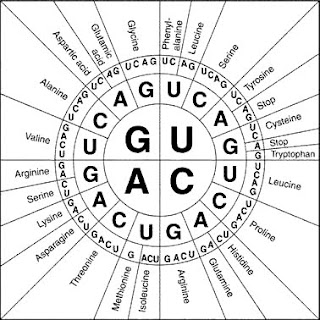
In essays on the subject of centricity, I've most often used the image of a geometrical circle, which, as I explained here,  owes someth...

Showing posts with label synchronicity. Show all posts

Thursday, August 30, 2018

R.I.P. MARIE SEVERIN AND GARY FRIEDRICH

Synchronicity strikes thrice. On August 30 of this year, two comics professionals, best known for  their Silver and Bronze Age works, passed away. Both had endured lingering health problems (a stroke for Marie Severin, Parkinson's for Gary Friedrich).

An additional odd "meaningful coincidence:" Severin and Friedrich had briefly collaborated, principally (if not exclusively) on Marvel's INCREDIBLE HULK feature right around the time that it shifted from the "split-book" TALES TO ASTONISH to its own title, which has continued in one form or another since then.

A third coincidence meaningful only to me: just yesterday, an anonymous commenter on my blog called my attention to an error in this essay, wherein I'd written about a run of SUB-MARINER comics (#9-13, not long after Subby departed the title he'd formerly shared with the Green Goliath). The commenter pointed out that I'd credited John Buscema with the pencil-art on that sequence of stories, when said art was actually produced for two issues by Gene Colan and three by-- Marie Severin.

And finally, though it's in no way a coincidence, my personal acquaintance with the Hulk in his own feature started with that period in which Severin and Friedrich briefly collaborated.

Technically, the last issue of TALES TO ASTONISH, before it was re-titled THE INCREDIBLE HULK, was a collaboration by Severin-- who had already done assorted earlier stories-- and Stan Lee. TALES TO ASTONISH #101 was the first part of a two-part story, and the first part was scribed by Stan Lee, who hurled the bellicose behemoth into the fantasy-otherworld of Thor's Asgard.

So this was my first exposure to the Hulk in his own series, beginning with a killer scene wherein the monster-hero thrashes Heimdall, guardian of Asgard's Rainbow Bridge.


Gary Friedrich picked up scripting-duties for the second part of the mini-epic, which, among other things, involved Bruce Banner being saved from death by two of Marvel's dastardly demigods, the Enchantress and the Executioner.


The Enchantress actually strikes the Hulk dead in this issue, but Odin conveniently brings the monster back to life and sends him home. The sorceress meets the Hulk in numerous stories later on, but she never seems to remember that handy instant-death spell. But I digress.

In HULK #104, Friedrich and Severin collaborated on a kickass battle between Old Jade-Jaws and Spider-Man's foe, the Rhino. The story ends with the villain's apparent death, which I found very impressive at the time. Naturally, the Rhino got better as soon as some writer needed him.


Finally, Severin bid farewell to the feature. at least for several years, in TALES TO ASTONISH #107-108.  This two-part tale pitted Old Greenskin against Iron Man's villain, the Mandarin. Friedrich again wrote, though Severin contributed only layouts for a penciller who would soon become dominantly associated with the Hulk: Herb Trimpe. Here's a panel in which the monster saves Nick Fury from the villain, not so much out of a desire to benefit Fury as to thwart Mandarin.


Today I can't say the Friedrich-Severin HULK stories are any sort of pinnacle in the history of the character. Still, even aside from these issues being my quasi-introduction to the character, I still think they're better-than-average formula entertainment. I'm not even claiming they're the only times the two professionals crossed paths, but these stories were probably the most meaningful to me.

Wednesday, June 5, 2013

AFFECTIVITY, MEET EFFICACY

In this essay I compared the spectrum of affectivities that appear within all three phenomenalities of literary narrative to Ernst Cassirer's concept of "efficacy." Since I support a pluralistic phenomenology-- that is, one in which each literary phenomenality has its own valuable modus operandi-- I relate this to Cassirer's appreciation for "the world of subjective emotions" and their ability to form "a sensuous, objective existence." Cassirer compares his concept of objective affectivity with that of "magical efficacy" as he conceives it from anthropological reports on primitive concepts of magic and "mana," or "spiritual energy."

It should go without saying, though, that Cassirer's comparison was purely metaphorical. He wanted to demonstrate that archaic primitives had an appreciation for the sensous, objective side of emotions, as against the tendency of the empircists and positivists to regard emotional states as epiphenomenal.  He was not drawing a comparison between "the world of subjective emotions" and the literal belief in magic, even the sort of passive magic associated, say, with the notion that sacred kings of old could not touch the ground with their feet in order to prevent the loss of kingly "mana."

Of course, there may be no point in making such nice distinctions, since I have also advocated Jung's archetypes as a valid way of analyzing the many permutations of the intersubjective world of shared, often highly structured emotions.  Comics-fans of my acquaintance have often proven astoundingly ignorant of Jung's phenomenology, choosing to believe that if he approached religious subjets with anything but a hard-nosed empirical bias, he could be nothing more than a dreamy-eyed mystic.  Presumably the same ignorant reaction would pertain with regard to Cassirer.

Jung did, to be sure, theorize about synchronicity as an "acausal" principle, and I summarized some aspects of his argument here. Interestingly, Jung does draw upon the psychic experiments of J.B. Rhine to suggest that "under certain conditions space and time can be reduced almost to zero, causality disappears along with them, because causality is bound up with the existence of space and time and physical changes, and consists essentially in the succession of cause and effect."  Thus Jung did suggest the possibility-- though not an outright conviction-- that the mind's possible capacity for psychic phenomena could be connected to the acausal principle of synchronicity, in which the human mind more or less "synchonized" its affectivity with whatever elements mirrored its nature.  Jung's famous story of the scarab is axiomatic:

A young woman I was treating had, at a critical moment, a dream in which she was given a golden scarab. While she was telling me this dream, I sat with my back to the closed window. Suddenly I heard a noise behind me, like a gentle tapping. I turned round and saw a flying insect knocking against the window-pane from the outside. I opened the window and caught the creature in the air as it flew in. It was the nearest analogy to a golden scarab one finds in our latitudes, a scarabaeid beetle, the common rose-chafer (Cetonia aurata), which, contrary to its usual habits had evidently felt the urge to get into a dark room at this particular moment. I must admit that nothing like it ever happened to me before or since.

I would not rule out a possible correlation between psychic phenomenon and the objective phenomenology of emotional unity. But one does not necessarily depend upon the other. 

Tuesday, January 10, 2012

SIMCHRONICITY

I wouldn’t be surprised if there was some


competitive theater going on there; it makes a lot of psychological sense.

You also have this theme of betrayal, a fairy tale heroine, Snow White, who

became a victim of conspiracy by the evil queen. Or you’ve got the

“Portrait of a Lady” story — innocent young girl as victim of a shadowy

older woman in league with a male and so on. So our hearts went out to her

because we felt she was utterly out of her depth in trying to maneuver

against these two old-guard constellation of enemies — the House of

Windsor and this malign woman from Charles’ past.-- Camille Paglia, Salon.com


A few weeks ago I picked up a comic-shop copy of Dave Sim's GLAMOURPUSS #22.  I hadn't looked at the title for some time, though I had probably sampled six or seven before I decided that Sim's main subjects therein didn't move me that much.  I had some interest in his interpretation of the photorealist tradition in comic strips and books, but the purchase-killer was the book's parodies of fashion (or "glamour") magazines and the models that sell them.  If there is such a thing as "bad good girl art," Sim's parodies were "bad dumb girl art."  (To be sure, the art-part was fine; the writing sucked.)

There is, to be sure, nothing wrong (save to the politically correct) about humor built around the central concept of dumb-- and usually pretty-- girls.  I've liked a lot of it, ranging from Bill Ward's seminal TORCHY to the Bridwell/Oksner ANGEL AND THE APE.  (And fie, triple fie, upon Phil Foglio for the miniseries in which he "smartened up" Angel O'Day!)  But I didn't think much of Sim's "DGA" was funny, so I let my attention to GLAMOUPUSS lapse.

The lead feature of GLAMOURPUSS #22-- "Secret Origin of Zootanapuss"-- did nothing to dispel my negative feelings toward Sim and DGA.  However, I found that the photo-realistic section of the book had swerved from straightforward history into something Sim himself, in an intro, labels as "Based on a True Story."  Much of what Sim relates and theorizes upon does, as I mentioned in A SYNCHRONICITY SAMPLING, strongly resemble the Jungian concept of synchronicity.

I hasten to state that Dave Sim doesn't endorse Jungian concepts anywhere in GP #22, and that for all I know, he may never have done so.  To my recollection the only direct allusion to Jung in the late issues of CEREBUS was a negative one, so I don't have any reason to believe that Sim would be receptive to Jung's concept of a "psychoid archetype."

During the section seen in GP #22, Sim ruminates on certain obscure aspects in the life of artist Stan (HEART OF JULIET JONES) Drake-- what caused Drake and his family to relocate from New York to Connecticut, Drake's earlier nervous breakdown, and the fateful 1956 car-crash that injured Drake and killed his passenger, Alex (FLASH GORDON, RIP KIRBY) Raymond.  Sim has evidently been writing on these matters since issue #14, so I'm coming late to the party.

But what a synchronicitous party it is!  Sim correctly presents his speculations as essentially fictional in nature, yet he manages to weave together a tapestry of corresponding incidents and resonances between not only the worlds of Drake and Raymond but also those of Al Capp (whose brother wrote JULIET JONES), and Margaret Mitchell (whose name was used to launch the strip).  Others, more distantly removed in time and space though not in theme, include Princess Diana and Dodi Feyed, Grace Kelly and Prince Rainier, and (making a "crossover" appearance from their CEREBUS incarnations) F. Scott and Zelda Fitzgerald.

"There's a strange quality," asserts Sim on page 14, "to Stan Drake's life that seems to ... interweave... itself with reality and various forms of fiction."  I relate this to the Paglia quote above, where the author sees the death of Diana as something more than straightforward reality, finding that the real event shares themes with two fictional creations, one folkloric and one high-literary.  In contrast to Paglia, though, Sim focuses on a wealth of intriguing little details.  It's like reading Samuel Rosenberg's NAKED IS THE BEST DISGUISE, where the intensive investigation is applied to real people.

Of course, in the empiricist worldview shared by most comics-critics-- whether as passionate conviction or default-- there can be no "interweaving" between fact and fiction.  The knee-jerk reaction of many critics would be to assert that Sim was simply projecting on reality images that he personally wished to behold in them.  This charge of "projection" comes even easier when a given writer endorses unpopular opinions, as Sim has been known to with regard to feminism.

I used to argue somewhat against Sim's anti-feminist positions in the lettercols of CEREBUS, but though I found him a stubborn and sometimes intransigent opponent, I would never do what many critics and forum-posters have done: to consider him "crazy" because his view verges far from my own.  It's true that there are "crazy people" who look too hard through a particular emotionally-tinted lens and lose the ability to see anything else, but that's clearly not the case with Dave Sim.

However, in one sense Dave Sim and his critics are on the same page, insofar as they subscribe to the Platonic notion that emotion is epiphenomenal while reason, essentially its opposite in common parlance, is one's sole source of insight into the workings of the universe.

On page 23, in conversation with a supporter named Eddie Khanna, Sim says:

"'The Wedding of the Century' billing always seems to incite emotion-based psychosis in our society about what almost invarably prove to be ill-starred and short-lived unions... [list of four such marriages, including Diana and Charles]...And it seems obvious that you have to put the female names first in these 'marriages.'"
Sim's distate for mere emotion was made explicit long before this, as in this provocative quotation: 

"Emotion, whatever the Female Void would have you believe, is not a more Exalted State than is Thought. In point of fact, I think Emotion is animalistic, serpent-brain stuff. Animals do not Think, but I am reasonably certain that they have Emotions. 'Eating this makes me Happy.' 'When my fur is all wet and I am cold, it makes me Sad." "Ooo! Puppies!'   'It makes me Excited to Chase the Ball!' Reason, as any husband can tell you, doesn't stand a chance in an argument with Emotion... this was the fundamental reason, I believe, that women were denied the vote for so long."


Of course Sim's critics would simply turn the reason/emotion argument against him in response, seeking to prove that his judgments were flawed by his emotional responses and that they were using a truer species of reason than he.

Where the matter of synchronicity/interweaving is concerned, however, there can be no final appeal to a hypothetical reason.  Just as individuals think that a supposed "psychic experience" is valid or invalid on the basis of personal experience, one's view of synchronicity is no less personally determined.

In agreement with Jung, I don't think that emotion is epiphenomenal.  I don't know if psychic energy is a quantifiable influence upon real events, but such influence might be a reason-- if not the only reason--why discrete events in history seem to form parallels to one another.  The lazy empiricist merely asserts that there can be no such influence or resonances, based on the materialist proposition that mind cannot affect matter.  Said empiricist might rebut Sim's "interweavings" by asserting that Sim is seeing what he wants to see: ill-starred unions, in which women are more prominent than they should be, coming to bad endings.

Contrary to both Sim and the materialists, I believe that emotion, at the very least, provides a lens through which everything, including rational cogitation, is colored.

Sim looks at four disastrous marriages, one being that of Princess Diana, and sees a meaningful theme of "the haughty woman brought low," if I am not interpreting him too freely.

Paglia looks at the death of Diana and sees another meaningful theme, that of the maiden persecuted by society and the influence of an older and hostile female relative.

As I stated at the end of THE INTERSUBJECTIVITY SOLUTION, neither interpretation is wrong.  Both are "true" in the sense that these are valid resonances that the historical events evoke, even though the respective themes are tangentially opposed.

In my view this is the crucial nature of Jung's archetype theory.  It can't be channeled to reflect only ideas that a certain societal stratum considers good or proper or rational.  It reflects everything, warts and all.  Men trying to pretend that all women are dumb; women trying to pretend that all men are stupid.  The collective unconscious preserves it all-- and if Jung's theory of psychic energy holds water, then it could be a reason why so many persons repeatedly attempt to follow the pattern of myths, even against their own rational best interest.

In conclusion, I can only say that I'll be checking out back issues of GLAMOURPUSS, intensely interested in the Stan Drake Universe, but maybe passing over the Dave Sim version of the "DGA" archetype.


Saturday, January 7, 2012

SYNCHRONICITY SIDEBAR

Before moving on to more theoretical matters re: synchronicity, I thought it might be appropriate to relate a couple of instances of my own quizzicial encounters with same.

One of them I mentioned on a 6-2-2003 post on the Forum that Deserves Not Mention:

...there aren't any appreciators of Jungian synchronicity here to my knowledge, but the way I found the above link is synchronicitous. Looking for a definition of "New Age," I typed in "definition of New Age," and the above link was about the second or third one I explored. As it happened, it's by Massimo Introvigne, whom I didn't know from Adam-12 before last week or so, when I read his article at the online SLAYAGE site. Since said article had a comics-connection, I posted a link to it here under "Vampires, superheroes and the Frankfurt School." And now a week later, I'm linking to something else Introvigne wrote on a wholly-different subject.

I just hope the Synchronicity Switchboard is just throwing this development my way to help convince you poor rationalist doubters, and not trying to tell me to quit my job and become a publicist for Massimo Introvigne. I have enough trouble trying to hype my own stuff.

Like most of my synchronous experiences, this was something less than a vision on the Road to Damascus (i.e., I probably never read anything else by Introvigne).  But I thought then, and still think, that it's a little odd to stumble across two disparate works by the same (not especially famous) author within the course of a week or so.  Others' mileage will vary on whether this example deserves to be filed under "more than coincidence."

Incidentally, eight years later the link to Introvigne's short historical writeup on the early hisory of the Frankfurt School is still good, and the essay's still recommended:

http://slayageonline.com/essays/slayage7/Introvigne.htm

An even less vision-worthy incident occured over the Xmas holidays.  My 13-year-old nephew has become a fan of certain kinds of "so bad it's good" cinema, as well as being a big STAR WARS fan.  Thus I took it upon myself to introduce him to the questionable joys of the 1980 FLASH GORDON, which I'd planned to watch anyway in order to review it here

The movie was a big success with my nephew, though others in the household weren't nearly as enthusiastic.  However, later that day my brother chose to bring up a favorite episode of SEINFELD on Netflix Streaming: "The Bubble Boy," which first aired on 10-7-92.  The plot revolves around Jerry and his posse getting roped into visiting a "bubble boy," with the black-comic outcome that George gets into an argument with the kid and nearly causes his death.  In a B-story, Jerry and Elaine get lost on the way and end up in a diner, where a waitress importunes Jerry to put his celebrity photo on the wall.  And there on the diner-wall with various other celebrities (whom I did not note down) is none other than...

...Sam J. Jones, sporting his classically-bad FLASH GORDON haircut.

"What is Sam Jones to me, or me to Sam Jones?"  Probably the real question should be who in the SEINFELD crew thought of sticking a photo of the not-terribly-successful actor on the diner-wall.  Could it have been Seinfeld himself, known for peppering the show's sets with Superman trinkets?  Or maybe it was just the luck of the draw; someone selecting stock photos at random, but only of actors who had no great reputation, to show that Jerry wasn't going to be joining any immortals on the wall.

I'm not sure if two Sam Joneses in one day trumps two Massimo Introvignes in the space of seven days.  I wouldn't say that I was "guided" to those particular experiences in the rather egotistical "the universe revolves around me" manner of certain types of Christians.  But I do think that whenever you encounter some particularly improbable set of apparent coincidences, it's worthwhile to do a little thinking about the nature of what we label "coincidence."

Thursday, January 5, 2012

A SYNCHRONICITY SAMPLING

"Natura non facit saltum" (nature does not make jumps) -- Latin proverb

As it happens, not long before I came across Denny O'Neil's reference to the "Net of Indra" metaphor, which stresses the connectedness of all things, I found a similar reference in an issue of Dave Sim's GLAMOURPUSS.  I'll examine that reference in greater detail in another essay, but in essence, it started me thinking more about the concept of synchronicity.

Synchronicity is usually tagged with the definition "meaningful coincidence," as opposed to the many coincidences one encounters around which no discernible meaning accrues.  In addition, Jung stresses in some writings that synchronicities take place due to an "acausal connecting principle."

Now, no matter how one tries to imagine such a principle, one can't help but do so with a mind conditioned by the actions and reactions of a cause-and-effect world.  With that in mind, though, can one deduce by what properties such a connecting principle might operate?

The usual empiricist position toward such theorizing essentially takes the same attitude as the Latin proverb above: nature allows no jumps, no sidesteps, no free rides.  But in a universe now informed by theories of quantum mechanics, does this position of naive realism hold water?

In "Synchronicity: an Acausal Connecting Principle," Jung wrote:

...since experience [i.e., Rhine's experimental work] has shown that under certain conditions space and time can be reduced almost to zero, causality disappears along with them, because causality is bound up with the existence of space and time and physical changes, and consists essentially in the succession of cause and effect. For this reason synchronistic phenomena cannot in principle be associated with any conceptions of causality. Hence the interconnection of meaningfully coincident factors must necessarily be thought of as acausal.

Joseph Cambray in his SYNCHRONICITY: NATURE AND PSYCHE IN AN INTERCONNECTED UNIVERSE, responds thusly:

...the collapse of space and time together with the disappearance of the principle of causality is remarkably congruent with the best theories in physics for the origins of the universe... It is as if at the deepest level [Jung] is finding a place for the psyche at the origins of the universe through the psychoid archetype."
Cambray is careful to emphasize that this does not connote the embrace of theism:

This is not an intelligent design argument but an indication that the universe is as permeated with psyche as it is with space, time, and matter; that synchronicities provide traces of an original undifferentiated state. 
Now, in past essays I've always insisted that human culture does not obey the same logic that nature does: that it is more than a little possible for culture to "make jumps."  It would be interesting, though, if the same principles that would seem to show a given culture working its way toward a given cultural archetype-- be it a positive or negative one-- were reflected in the world of physics.

After all, if as Stephen Hawking has argued, time did not exist within the universe's singularity-state, then it may not be correct to assume that time operates at all times on the physical principles valorized by empiricist thought.

Thus, if Dave Sim sees one set of meaningful coincidences in a given scenario, while Denny O'Neil sees another set elsewhere, one need not assume that either are connected through any linkage characteristic of time or space, but that they are rather connected through a medium of psychic intensity.

This in turn would have interesting ramifications for my notions of pluralism as expressed here.  It would mean not just that a pluralistic credo of intersubjectivity was moral, but also natural.

For now, I'll wrap up by repeating the summary from the aforesaid essay:

Both interpretations would fit what I would call "the rule of intersubjective significance," which phrase I derive almost completely from Jonathan Culler in his 1975 STRUCTURALIST POETICS, except for my interpolation of "intersubjective." Both positions could be enjoyably argued although to little effect, for the comparison of the two stories, despite some similar features, would still hinge on each critic finding an intersubjective meaning that the other did not have-- which returns to the well-seasoned argument about "apples and oranges."
Nevertheless, the exercise remains worth the candle within a pluralist conception of literary hermeneutics. Each story resonates with some though not all readers precisely because each evokes a "significance" in those readers; a significance founded in the conventions of storytelling and in the expectations of readers looking to have those conventions both confirmed and denied.