Featured Post

SIX KEYS TO A LITERARY GENETIC CODE

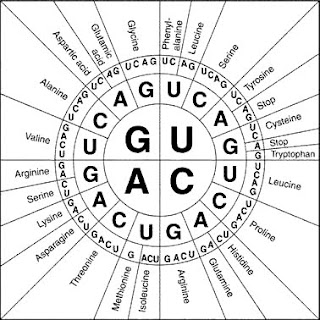
In essays on the subject of centricity, I've most often used the image of a geometrical circle, which, as I explained here,  owes someth...

Monday, May 1, 2017

PASSIVELY AGGRESSIVE


I've now completed my survey of the 1965-68 teleseries LOST IN SPACE, in order to determine whether or not this clearly marvelous-metaphenomenal series should be judged as belonging to the combative mode, and therefore as belonging to the category of "the superhero idiom." I've addressed this topic in various essays but the essay most relevant to this investigation is 2012's CHALLENGE OF THE SUPER-IDIOM LIST.  Though this piece concentrated primarily on how to make determinations as to a given work's "Fryean mythos," it was in this essay that I put forth the "51 percent rule,"which I'd formulated earlier in order to suss out what serial works belonged to the superhero idiom by virtue of being dominantly both metaphenomenal and combative. Here's what I wrote about the rule in CHALLENGE:

I term my solution to this problem the "51 Per Cent Solution."  In business dealings we're accustomed to hearing that a stockholder with 51% of a company's stocks has the greatest advantage, though not an unqualified dominion.  Thus, if one wished to determine the dominant mythos of the Briefer work, one would count up the total number of stories and determine which mythos-type was statistically dominant.  Only an unqualified 50/50 split between mythoi would make such a determination useless, but the paucity of these exceptions proves the rule: most creators start with a given mythos, make only token shifts to other mythoi, usually proving "loyal" to a particular emotional *dynamis.*
In 2015 I decided that the 51 percent rule, modeled on my perceptions of economic patterns, needed to be supplemented by a corollary principle, described in ACTIVE SHARE, PASSIVE SHARE:

Yet as I played around with the rule in the provisional "super-idiom list" that I mentioned in the first "51 percent" essay, I realized that even some characters who didn't satisfy the "51 percent rule" seemed important to the list... [so] I could and did do a statistical survey on another Old West hero: the Rawhide Kid of Marvel Comics, the company descended from the publisher who did "Ringo Kid" in the 1950s. When I counted the number of Rawhide's purely isophenomenal adventures, and compared them with those in which he'd enjoyed encounters with metaphenomenal entities, the latter worked out to about eight percent of the total stories. So, by the "51 percent rule," Rawhide could not belong to "the superhero idiom" any more than could the Ringo Kid. And yet, it's evident that for a time, the Kid's creators Lee and Kirby were making a significant attempt to place their combative cowpoke into superhero situations.


Thanks to a little more research, I evolved my corollary principle:

...from the strict view of the "51 percent rule," both Ringo and Rawhide are "minority shareholders" in the realm of the metaphenomenal. However, to extend the above distinction into the realm of literature, Ringo Kid's adventures display only a "minority passive interest" in matters metaphenomenal, while Rawhide Kid's display a "minority active interest"-- that is, Rawhide's encounters with metaphenomenal presences remain a vital part of his mythos, even if they're not numerically superior to all the naturalistic exploits.
So the "Marvel" serial character The Ringo Kid does not belong to the category of the superhero idiom because he satisfies the combative qualification but does not satisfy the qualification of the necessary phenomenality. LOST IN SPACE was my first attempt to evaluate a serial work in terms that was clearly metaphenomenal but was more "ambivalent" in terms of its combative elements. I posed the question thusly in the first LIS-survey essay:

...on what occasions is it possible for a given series to achieve the combative mode, less because of an emphasis on the continual encounter of megadynamic forces than because of an emphasis upon the outward *form* of such an encounter?...By way of exploring this "outward form" possibility further, I'm going to devote a series of posts to a television series whose status with regard to the combative mode has always been dubious to me.

"Outward form" was a clumsy way of saying that the work under investigation reproduced the form of some pattern that had been articulated frequently enough to become a literary archetype. My example in that essay, the Spectre of the Golden Age, conforms to the archetype of the "metaphenomenal combative" even though he spends an awful lot of time taking on enemies who can't really fight him, and only occasionally vying against entities of comparable power. So the Spectre would be an example of an "active share" type of character-- not in terms of his pheomenality, which is clearly marvelous-- but in terms of the rarity of his truly megadynamic encounters. Mundane gangsters are thus a lower manifestation of the general evil that the Spectre fights.


Now, I've defined the LOST IN SPACE characters as demiheroes in this essay, but characters belonging to that persona can belong to the category of the superhero idiom as easily as the other three personas of hero, villain, and monster. It's easy to determine a demihero's status with respect to the combative mode when he gets into fights all the time, like the one examined here.

From 1965 to 1968 LOST IN SPACE portrayed an ensemble of eight regular spacefaring characters: John Robinson and his wife Maureen, their children Will, Judy, and Penny, ship's navigator Don West, the cowardly stowaway Doctor Smith, and the ship's robot, known only as "the Robot." Doctor Smith had no combative abilities whatever, and Maureen and her three kids sometimes wielded guns but were never seen doing much of anything. As for Don West, he acted like a tough guy and could clearly handle a gun, but he was always played as "the sidekick who gets knocked out to make the main character look good." Ship's captain John Robinson-- played by the same actor who had played Zorro in a 1957-59 teleseries-- was the only human character who showed megadynamic power in his battle with aliens and androids. However, the Robot became something of an "ace in the hole" for the space travelers, and often used his superior technological arsenal against enemies too tough to be taken down by a human wielding a ray-gun (or a sword). Since the Robot soon evolved from a simple resource into a full-fledged (if cornball) character, I have no problem in judging him to be part of the ensemble, and thus the automaton and the ship's captain are the only "megadynamic" presences who starred in the series.

Since 19 episodes out of the total of 83 were combative, this means that 23% of the show's episodes featured megadynamic forces in contention. In my analysis of Marvel's RAWHIDE KID stories from 1960 to 1973, I found that only about seven percent of that character's stories were metaphenomenal, but I still judged that the *WAY* they were employed gave Rawhide a "minority active interest" in that phenomenality.


However, once one is below the 50th percentile, the quantity does not matter with respect to judging either phenomenal or combative elements. I judged that the Rawhide Kid saga showed a repeated intent to associate the hero with metaphenomenal elements, and that these became a vital part of his mythos. John Robinson and the Robot sometimes accomplish superhero-like feats-- Robinson sword-demifighting his way through an army of androids in "Space Destructors," or the Robot defeating a universe-conquering "robotoid" in "The War of the Robots"-- but these seem to be anomalies in the "mythos" of this series. (NOTE: in this and in ACTIVE SHARE PASSIVE SHARE, I'm using the word "mythos" in a general, non-Fryean sense.)


Some stories are resolved by overt peacemaking between factions who just need to know each other better, as in "The Sky is Falling." There are also enemies who display megadynamic powers and use those powers to menace the Robinson party, as in "Kidnapped in Space," wherein the group is attacked by androids serving a super-computer. However, in that story a combative conclusion is put aside in favor of another negotiation. Sometimes enemies are persuaded to abandon their hostile intentions, as with the Junkman of "Junkyard of Space," and sometimes villains who are utterly intransigent are destroyed by chance rather than pitched combat, as when Doctor Smith accidentally blows up the nasty alien in "The Golden Man." And as I covered in the survey, there are many stories in which some functional violence occurs at a narrative's end, but none of the spectacle one needs to create megadynamic conflict.

Thus I conclude that despite the presence of a few "superhero-like" adventures within the mythos of LOST IN SPACE, the dominant ethos is directed away from combative resolutions, in contrast to the serial's contemporary competitor STAR TREK, which talked a lot about peace and understanding but took a lot of pleasure in the spectacle of fight-scenes. For this reason LOST IN SPACE possesses only a "minority passive share" in the category of the combative, and so does not belong to the larger category of the superhero idiom.

Saturday, April 29, 2017

LOST IN SPACEFIGHTS PT. 4

Concluding my survey of the LOST IN SPACE series with season 3:

"Condemned of Space"-- the Robinson party lands on a penal asteroid, where the convicts have been held past their release-date. After some tense encounters, John manages to negotiate the convicts' release. (SC)

"Visit to a Hostile Planet"-- the Jupiter returns to Earth, but in a period where their own people deem them invading aliens. The ship escapes w/o serious incident. (SC)

"Kidnapped in Space"-- the Robinsons have some violent encounters with androids armed with guns and grenades (even a few female combatants), but the Robot manages to make peace. (SC)

"Hunter's Moon"-- alien hunter Megazor forces John Robinson to be the quarry in a most dangerous game. The professor beats the hunter in a pitched battle and Megazor returns home. (C)


"The Space Primevals" the group is menaced by cavemen, who are under the sway of an ancient computer. The Robot duels the computer, both unleashing considerable powers, but the Robot loses and the computer must be defeated by other means. (SC)

"Space Destructors"-- Smith falls under the control of a war-computer, programmed to produce an army of universe-conquering androids, all with Doctor Smith's face. Not only does actor Guy Williams (Professor Robinson) get to cut down dozens of androids with his Zorro sword-skills, he also gets to "kill" androids who wear the face of the actor who constantly upstaged him. (C)

"Haunted Lighthouse"-- the group meets an old man running a space-lighthouse. A primitive boy makes a lot of trouble for all involved. (SC)

"Flight into the Future"-- the Robinsons are subjected to intense illusions by an evil computer. In the end the Robot destroys the computer with electrical force. (C)

"Collision of Planets"-- space-hippies are charged with destroying the planet on which the Robinsons reside, and they won't wait till the Jupter is ready to take off. Smith gains Samson-like strength but in his only "fight" he's trounced by the hippie-leader. The professor solves the problem by wrecking the hippies' motorcycles, thus giving the Jupter time to lift off. (SC)

"The Space Creature"-- the Robinsons are put through the mill by a creation of Will's "Id" persona; the creature is defeated but not in a combative manner. (SC)

"Deadliest of the Species" -- the Robot falls in love with a malignant female robot, out to conquer the universe. Using an electrical device created by John Robinson, the Robot puts aside his feelings and lures her to a spectacular death. (C)


"A Day at the Zoo"-- Smith takes over as ringmaster of a space-circus, and cages West and Judy.  West gets free but must save the real ringmaster from a giant dragon. However, he simply uses his ray gun to drive the beast off. (SC)

"Two Weeks in Space"-- Smith invites aliens to stay at his "hotel," the Jupiter-2. They're actually thieves with murderous intent, but John Robinson defeats the two males in pitched combat. (C)

"Castles in Space"-- the travelers give refuge to a fleeing princess, hiding her from bounty hunter Chavo. The skillful hunter defeats West in a fight, but Chavo in turn is vanquished by the superior power of "El Toro," alias the Robot. (C)


"The Anti-Matter Man"-- John Robinson finds his role usurped his double from the anti-matter universe. The two of them battle in an anti-matter void and the impostor plunges to his death. (C)

"Target Earth"-- lookalike aliens try to assume the Robinsons' identity to infiltrate Earth-society, but Will foils their plans. (SC)

"Princess of Space"-- Penny is forced to pose as a princess, but the Robinsons liberate the real one just in time to thwart a robot revolt with very little violence. (SC)

"Time Merchant"-- Chronos, an alien with control of time, gets aggrieved at Will, and John Robinson must bargain for the boy's life. Smith complicates things by using Chronos' time-machine. John ends the struggle in a fight with Chronos and his henchman. (C)


"The Promised Planet"-- a race of juvenile who never grow old try to brainwash the crew. (SC)

"Fugitives in Space"-- West and Smith are condemned to a prison planet. They break out with the help of an alien criminal. However, when the alien is destroyed trying to get his treasure, the police let West and Smith go. (SC)

"Space Beauty"-- Judy wins a space-beauty contest, but the prize is to be married to an alien fire-being. Before the alien can reach Judy, the Robinsons' weather-machine-- activated before the aliens' advent-- causes the area to be blanketed in snow, putting out the alien's fiery ardor. (SC)

"The Flaming Planet"-- an alien warlord, last of his race, wants someone from the Jupter to stay on his world and fight him to the death. The Robinsons manage to distract him by introducing him to a bevy of plant-monsters, with whom he can fight to his heart's content. (SC)

"The Great Vegetable Rebellion"-- when an alien carrot-man tries to turn everyone in the crew into plants, Robinson and West sabotage the stystem that keeps the plant-man's plants alive, and he's forced to capitulate. (SC)


"Junkyard in Space"-- the ruler of a junk-planet wants to take over the Jupiter, but Will manages to appeal to his better nature. (SC)


Friday, April 28, 2017

UNANSWERED POLITICAL QUERY

From a forum on political stuff--

_________

So tonight ABC will air a documentary about all the events that led up to the 1992 LA riots, with special emphasis on the heavy hand of Daryl Gates. The doc is given the somewhat inflammatory title of "Let It Fall."

I don't know how accurate or balanced the doc will be; it may indeed be a superb work of non-fictional filmmaking. As a liberal, I believe that everyone should have access to all aspects of our history, however uncomfortable.

What I find myself wondering, however, is whether or not the doc-- assuming it is, as said, indicting the Gates regime-- will have any beneficial effects as such.

I can imagine that when a filmmaker tackles this sort of topic, his basic moral message is akin to, "Never again." In other words. he wants to shame the Caucasian population so that future generations will never again think about enforcing a new Jim Crow.

But does a document that makes an "anniversary" of a riot 25 years ago have the desired effect? Does it make white people more penitent?

Or does it have the opposite effect, making many of them-- those who are NOT card-carrying members of white racist organizations-- sick and tired of hearing about grievances that date back that far?

I know the Santayana rationale that's always trotted out in these situations. But in terms of pure effectiveness-- will a doc like LET IT FALL appeal to anyone but the already converted?

ADDENDUM: I later commented-- 

Having watched the doc now, I still can't say if it will have any beneficial effects, but I'm impressed with Ridley's work here. I found it even-handed in structure, in that none of the L.A. populations-- white, black, or Korean-- came off looking sinless. 

If any documentary can prove persuasive across ingroups, I think the more even-handed ones have the better chance.

Not that the doc won't have its detractors, of course.

Thursday, April 27, 2017

MYTHCOMICS: FABLE OF VENICE (1977)


It's long been observed that American genre-comics tend to travel a more straightforward, plot-determined path to get to their destinations, while similar works in Europe tend to wander about in peripatetic fashion. I don't make this observation for the reasons of elitist critics-- to tout the innate superiority of the European approach-- but to apply the distinction to this week's mythcomic.

Milton Caniff's comic strip TERRY AND THE PIRATES cast a long shadow over the world of comics long after Caniff departed the strip in 1946. The Italian Hugo Pratt was one of many artists who to some extent emulated Caniff's bag of visual tricks. For a comics-critic confined to the English language, it's difficult to assess Pratt's overall work. Almost the only works translated are Pratt's stories of Corto Maltese, and these stories caught the attention of American fans largely thanks to Frank Miller talked up Pratt's work during the height of Miller's popularity.  

The titular hero bears a loose resemblance to the tough adventurer Pat Ryan of Caniff's TERRY, but Pratt's Corto Maltese is much more laid-back and eccentric, and where Ryan is confined mostly to China, Corto wanders many parts of the world during the early 20th century. His creator knew some of these locals from personal experience. According to a preface in NBM's 1990 translation of FABLE OF VENICE, Pratt based this 1977 album-novel on his own experiences growing up in Venice. 

Given the protagonist's name, I find it logical that a particular influence on FABLE must have been Dashiell's Hammett's 1929 novel THE MALTESE FALCON and/or its film-adaptations. The novel is named for a fabulously valuable statue of a falcon, over which the novel's hero and his antagonists contend. The novel, much like Caniff's strip, is usually concerned purely with worldly concerns of profit.

But Pratt, who claims to have experienced uncanny phenomena in his encounters with the variegated cultures of Venice, takes the same idea of a character seeking a fabulous treasure but uses the idea to illustrate the arcane traditions of the Mediterranean cultures. FABLE starts with Corto falling through the ceiling of a room in which a group of Venetian Masons are convening. But where this might lead to some wild brawl in a Caniff storyline, the Masons simply escort the unfortunate sailor out of their sanctum. But the scene gives Pratt a chance to establish Corto's philosophical status with the reader. He shows that he knows something about the esoteric tradition, and yet tells the Masonic leader that "I'm just a free sailor-- at least, I  hope I am!" 

From then on, Corto wanders the streets of Venice, encountering both old acquaintances from past visits and new people, most of whom are directly or indirectly associated with esoteric matters. He has a few dust-ups with the authorities, just like Caniff's hero:


But on the whole, the wandering plot is mostly about the mysteries of Venice, where Corto observes that anything can happen. The treasure he seeks is a supposedly magical emerald, but he quests after this prize not for personal gain, but because a late associate, Baron Corvo, challenged the sailor to find the emerald. The emerald has a storied history like that of the Maltese Falcon, but the gem goes much further back, supposedly passing through the hands of myth-figures like Cain and Lilith and into the slightly more historical-seeming figures of Simon Peter and Simon Magus.

While trying to track down the elusive jewel, Corto meets various people associated with occultism, particularly Hipazia, who believes herself to be the reincarnation of Hypatia, the renowned Neoplatonic scholar who lived in Egypt during the 4th century A.D.  Hypazia projects the sense of being almost other-worldly, though Corto tells a friend "that girl can only love what she can't have."


FABLE puts forth a cornucopia of arcane references from the Greco-Roman world, the Bible, Islam, and even Nordic mythology. I don't think any of them add up to much individually, but these references, like the characters I discussed in this essay, "take on mythic status through their association." No literal magic is seen, so the novel registers an uncanny phenomenality through the trope of "weird societies." In addition, Corto has a bizarre dream in which he has a long conversation with a genie who looks like one of his old adversaries. And though he awakens from this dream, after the treasure-hunt (and murder-mystery) is solved, it turns out that the novel itself is something of a dream. FABLE ends with Corto bringing all of the characters "on stage"-- even those who have died-- to take their bows, and then leaves to appear in his next story. In my experience, this is one of the few times that a "delirious dream" took place WITHIN the context of a "fallacious figment."

Wednesday, April 26, 2017

GOOD WILL QUANTUMS PT. 4

Though I don't repudiate anything I wrote in Part 3, it does occur to me that an attempt to describe the virtue of simplicity ought to embrace that virtue, at least for that particular essay. And since last week I was dealing with some of the complexities of the Lee-Ditko SPIDER-MAN, I may as well take an example of valuable simplicity from that source.

In my essay on THE ENFORCERS, I took pains to demonstrate a level of mythopoeic complexity in the relationship between Peter Parker and J. Jonah Jameson. I mentioned the character of Betty Brant only in a negative sense: that she did not fulfill the role of "daughter" to Jameson's "heavy father," and that she became connected to Spider-Man's war on crime because she had taken a loan from the Big Man, who, in the tradition of loan sharks everywhere, called in the note with heavy interest. I also noted in a previous analysis that she didn't line up with the usual Oedipal figure of the "mother-substitute:"

So a doctrinaire Freudian reading does not apply, particularly since Parker's sexual needs are still turned outward, toward women more or less his own age. One might make something of the fact that the character's first major girlfriend is a little older than he is: Betty Brant is a working woman, roughly of college-age, when she starts dating the high-schooler. Few stories treat the Betty character as significantly older than Parker, though. So despite the occasional reference to her age-- in one story, her rival Liz Allan makes Betty feel "a hundred years old" simply by addressing Betty as "Miss Brant"-- she doesn't work as a mother-substitute any better than does Aunt May.

So does Betty Brant possess any "density?" Not within the mythopoeic domain, certainly. Whatever storytelling virtue she has would seem to apply only to the dramatic potentiality, which deals with affects. Here's one of the better examples of Stan Lee's skillful dialogue melding with the energetic visuals of Steve Ditko:


Even so, one never knows as much about Betty Brant as one knows about an Ibsen character. Aside from the eventual revelation that her brother Bennett became involved in the criminal life,  she comes from nowhere and doesn't really have a meaningful arc of her own. She is simply-- note my use of the word-- Peter Parker's first love.

But in contrast to the "denser" concerns that make the Lee-Ditko SPIDER-MAN compelling, simple characters like Betty-- and Ned Leeds, Anna Watson, and others-- have a valuable function. They don't ask the reader to understand them in any depth. Their simplicity is like a breath of fresh air next to all the breast-beating and hairshirt-tearing.

And that is probably the simplest I can get about the aesthetic of simplicity.

Monday, April 24, 2017

GOOD WILL QUANTUMS PT. 3

In GOOD WILL QUANTUMS PT. 2 I said:

But although "density/complexity" is the primary criterion of fictional excellence in any potentiality, there is a role for Raymond Durgnat's "aesthetic of simplicity." Simplicity is the mode or modes through which an author seeks to communicate complexity in a pleasing manner, so that the reader absorbs the complexity without the sense of having it forced down his throat. More on this point later.

I invoked the base idea of simplicity-- though not as an "aesthetic"-- in a February 2008 essay, MOVING FURNITURE, TRADINGS SYMBOLIC SPACES.  

To repeat what I said in “Myths Without Fantasy,” any kind of story may attain to the complexity of myth, and any element of narrative storytelling—a plot-event, a setting, a piece of dialogue, or a turn of characterization—can have the potential to go from a simple variable to a complex one. At the simple level, such elements are manipulated by the author to serve the ends of the story, which (as per this article’s title) I consider to be akin to the simple act of moving one’s furniture from one place to another. However, where one encounters the author bringing in extra levels of associational complexity, often not necessary as such for the story’s smooth functioning, one is dealing with another level of symbolic discourse, where the simple is “traded” for the complex, rather than simply being moved from one spot to another.

 I didn't mention Frye in this essay, but he was credited for the "complex variable" insight in a related essay, DON'T FEAR THE FURNITURE, where I further built upon the simple/complex dichotomy.


Back in this essay I spoke of functions without any great associative complexity as "simple variables," akin to narrative "furniture" that an author had to move about. Somewhat later I used "null-myth" as a term of evaluating such simple variables in terms of their lack of mythicity. "Function" is meant to be more inclusive. Say that I consider Sherlock Holmes mythic while I deem August Derleth's imitation-Holmes "Solar Pons" to be null-mythic. That does not mean that I might not be amused in some way by a Solar Pons tale, depending on how well the author presents his material on the purely kinetic level. But I would not expect the level of associative complexity that makes the Sherlock stories generally more appealing.
Both Holmes and Pons stories share functions that their respective authors did not "invent." The Holmes stories, because of their added associative qualities, may be said to be "super-functional" in that author Doyle forges more felicitous associative connections within the literary elements of his tales than Derleth does. But Doyle doesn't escape the need for narrative functionality.
"Narrative functionality" means that whether a story is symbolically simple or complex, it has to satisfy certain some audience's narrative expectations, even if that audience might be limited to the author's idealized image of "the perfect audience." This is easy to descry with genre-stories: once Conan Doyle establishes (but does not invent) the trope that every detective-story concludes with the detective solving some mystery, then most other stories in that genre will follow the same pattern, in order to be "pleasing" to the reader. And though many literary elitists like to think that artistic fiction is immune to this sort of narrative expectations, I've noted the same distinction between complex and simple forms of art-fiction on assorted occasions, as per my unfavorable comparison of Daniel Clowes to Harvey Kurtzman here.

In the second part of DON'T FEAR THE FURNITURE, I also associated the simply functional elements of literature with the linguistic concept of the *denotative:* 

Even I, a pluralist, would rather read works that strike me as "super-functional" rather than only functional. But that which is purely functional informs every narrative ever conceived, if only insofar as all narratives need the denotative as a buttress for the connotative. So fearing and/or hating the functional is, in the final analysis, not much more profound than the activity of moving around one's old furniture.

Nowadays, I would not associate my idea of the "null-myth" with this base denotative functionality: over time it's come to mean a work that had "super-functional" potential coded into the narrative but which became denatured by authorial confusion or misjudgment. I note that in these older essays I only referenced the potentialities of "the kinetic" and "the mythopoeic." However, I've given other examples in recent essays as to how the other two potentialities are also embraced by the concepts of narrative complexity and simplicity.

To return to the last two examples cited above, the better work of Harvey Kurtzman has a desirable level of complexity, but it is presented in such a way that the author does not "force [the complexity] down the audience's throat." In contrast, though I do not consider Daniel Clowes' to be very complex in terms of any potentiality-- though I suppose it's strongest in the domain of "the didactic"-- it also sins in regard to the aesthetic of simplicity, by conveying his intellectual take on life in a poorly executed emulation of Alfred Hitchcock's storytelling practices.

Friday, April 21, 2017

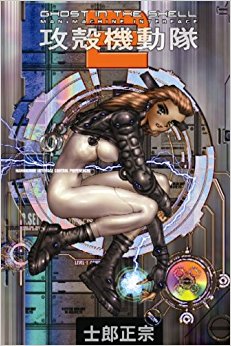
NEAR MYTHS: GITS: MAN-MACHINE INTERFACE (2001)


I remember liking the anime film adaptations of Masamune Shirow's GHOST IN THE SHELL franchise, though I've not re-screened them in years, and would prefer to see them again only if I should get the chance to read the original 1989 manga-stories on which they were based. Though I didn't have easy access to the 1989 work, I did check out this 2001 "graphic novel." The events of MAN-MACHINE INTERFACE take place about four months after the events of the first continuity but one source claimed that the works are not interdependent.

Unfortunately, I didn't get much out of interfacing with INTERFACE, for much the same reason I didn't enjoy Shirow's earlier success APPLESEED: Shirow just can't shut up about the wondrousness of his cyber-world long enough to tell a coherent story. Most of the story deals with the main hero, android Motoko Aramaki, showing off her ability to download herself into a variety of android bodies while investigating-- well, something. Frankly, I couldn't follow the rudiments of Motoko's mission, though it did involve submarine pirates and pigs being used to grow substitute organs. In fact, Shirow's margin-notes, in which he explains the various aspects of his sci-fi cosmos, are more interesting than the main story.

To his credit, Shirow knows how to give readers both action (one of Motoko's android bodies gets into a big firefight) and fanservice (Motoko often shows off a lot of leg and butt, even while resenting anyone who enjoys the view). Some elements of Japanese mythology are crammed into the helter-skelter narrative, and I'm sure that Shirow has the talent to produce a symbolic discourse by scenes such as this one.


However, the main content is much like that of a 1930s "space engineering" story, where the authors' main interest is always focused upon singing of the wonders of science. In terms of organization MAN-MACHINE INTERFACE also resembles the 1940 origin of Hawkman by Gardner Fox. The mythic content is indubitably present, but it's something of a potpourri.

I didn't have a lot of love for the GHOST IN THE SHELL teleseries, but at least its storytelling proved coherent. Some day in future I may try to reread Shirow's 1986 DOMINION as translated by Dark Horse, since that too offered more organized stories.