Featured Post

SIX KEYS TO A LITERARY GENETIC CODE

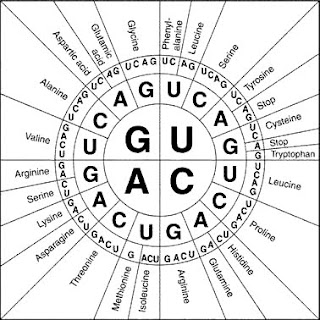
In essays on the subject of centricity, I've most often used the image of a geometrical circle, which, as I explained here,  owes someth...

Saturday, January 31, 2026

LEGACY REALIGNMENT

 While glancing through issues of Eclipse's 1980s AIRBOY comics-- all of which I reviewed in 2019-- I realized that I'd never seen anywhere a case of such "super-cosmic re-alignment." That is, in articles like this one, I've usually been addressing only minor re-alignments, where Character X is introduced in Cosmos Y but then gets transferred to Cosmos Z, or even becomes a "free agent," bouncing around into any cosmos where some raconteur wants to place him or her.

"Large pastiche" concepts are somewhat more ambitious. The original run of MASTER OF KUNG FU centered upon the new character of Shang-Chi, whose exploits drew upon the hero's acrimonious relationship with his father Fu Manchu, an established and familiar fictional icon. In the course of the series, the writers worked into their cosmic continuity about a half dozen other Sax Rohmer characters. But there was no idea of a total re-alignment of all Rohmer's "Fu-concepts" into the cosmos of Shang-Chi.


What Eclipse did with the "cosmos" of Hillman Comics was rather different. Though Hillman ceased publication in 1953, a handful of reprints had established a very loose continuity for a few of their features. In three stories I examined as a quasi-triptych, first one AIRBOY story introduced a new villain, Misery. Two issues later, the titular hero encountered a new opponent, Valkyrie. But though she started off fighting the Allies as a native of Germany, in the same story she was converted to the cause of good by Airboy's charms and is turned against the Axis. Then, three years later-- during which time Valkyrie had again appeared alongside Airboy as an ally a couple of times-- the two of them took up arms against the recrudescent Misery, in what might be considered an "informal crossover." After Misery's defeat, I don't believe he appeared again in the Golden Age, though Valkyrie did, even not all raconteurs were consistent with her character.


Another type of "informal crossover" appeared in AIR FIGHTERS #3 (1942), in the feature SKY WOLF. This titular hero and his squadron, in the midst of battling evil Nazis, had to take time out to destroy a weird muck-monster named The Heap. It seems unlikely that the creators of the story meant for the Heap to be anything but a one-off menace. However, it's been claimed that readers wrote to Hillman wanting to see more of the once-human monstrosity. This the Heap got his own backup feature, which only fit into AIR FIGHTERS because the creature had been a WWI German pilot before getting transformed into a swamp-thing. Further, though I don't believe Golden Age Airboy ever met the Heap, Airboy had at least one crossover with Sky Wolf. However, most Hillman featured characters-- the Black Angel, the Iron Ace, etc-- never encountered any other characters in the "Hillman Universe."


 Rather ambitiously, Eclipse sought to forge the idea of a fully shared universe, built around a legacy version of the original Airboy. The original hero, now some thirty years older in 1986 since his feature's demise in 1953, appears only in the first issue long enough to be killed by the forces of his old foe Misery. Davy Nelson III, the dead hero's grown son, takes over his father's mantle, and by so doing becomes the new Prime to whom Misery is a Sub. In addition, the original Valkyrie is restored to life without having aged, and she too becomes a regular Sub in the new AIRBOY series. Other characters from the Hillman-verse, whether they had their own features or not, get drawn into either the Airboy cosmos or that of his backup strip, the revived Sky Wolf. Such characters ranged from the aforementioned Heap and Iron Ace to a couple of new iterations of old icons, like a Black "Black Angel." Some new characters were created as well for the AIRBOY and SKY WOLF cosmoses, but the focus was clearly on having them host all the characters that Eclipse had acquired.

After a year or so, Eclipse also promoted Valkyrie to Prime status with two mini-serials and two solo outings of her combined with an all-female group of stalwarts, "The Airmaidens." The stories were always decent if unremarkable formula-work, even in the one-shot "maybe-a-dream-crossover" AIRBOY/MR MONSTER SPECIAL. But though I can name off a lot of large pastiches in which current authors pulled from the creations of many authors, the "Air Fighters Universe" at present does seem to be the only example of a "legacy realignment," totally attributing every possible crossover-icon from one cosmos to another.                

Wednesday, January 28, 2026

THE GREAT SUBLIMITY SHIFT

 The PRELUDE to this essay should explain why the concept of "the sublime" is so important to the history of metaphenomenal literature. What now follows is more in the nature of my reworking some of the categories in my personal literary theory.  

Following some of the concepts laid forth by both Carl Jung and Northrop Frye, it's become a rock-solid assertion of my theory that all literary works are comprised of a lateral meaning (this concerns what things happen in the text) and a virtual meaning (this concerns how things happen in the text). Both can be as simple, or as complex, as the author of a work desires these meanings to be. Over the years I have sought to bring the lateral/vertical concepts into a perceived harmony with other categories, particularly in the 2023 essay MIGHT AND MYTH and in the 2025 essay CORRELATING COGITATIONS.  Both essays are largely still valid, but there are some problems with my coordinations between the two modes of sublimity that I deduced from my reading of Kant's CRITIQUE OF JUDGMENT. I no longer believe this passage from MIGHT AND MYTH:

the quanta I now call "excitations" align well with what I've called "the dynamic-sublime," while the quanta I call "correlations" align well with the "the combinatory-sublime."

Nor these two from CORRELATING COGITATIONS:

That the ontocosm of a literary work includes "All modalities of THE DYNAMIC-SUBLIME, also synonymous with MIGHT."

That the epicosm of a literary work includes "All modalities of THE COMBINATORY-SUBLIME, also synonymous with MYTH."

The respective terms ontocosm and epicosm still incorporate all lateral meanings and all vertical meanings, respectively. But I was incorrect to correlate the ontocosm with the dynamic-sublime, and the epicosm only with the combinatory-sublime. 

I might not have made this error, had I more fully concentrated upon another duality of equal relevance, one I did mention in the 2023 essay but not in the 2025 one. Here's the mention from 2023, which immediately follows the 2023 quote from above:

Both potentialities are also more strongly associated with the non-utile activities of "play," while the "secunda" potentialities are primarily about helping the subject survive and prosper through the hard work of discrimination. 

What I failed to do was to re-assess was the extent to which the four potentialities as a whole aligned with the two very different modes of the sublime. I've now decided that, whatever Kant meant with his modes of the sublime, mine apply to the different ways in which human beings approach the "non-directed thinking" of play and the "directed thinking" of work.

The combinatory-sublime is first and foremost applies to the subject's experience of plenitude of forms, which in my system takes the place of Kant's "mathematical-sublime." Thus I now find that this form of the sublime takes in the least "directed" modes of play, which would be (1) the excitations of the kinetic potentiality, and (2) the correlations of the mythopoeic potentiality. Conversely, the most directed modes of play apply to (3) the emotions of the dramatic potentiality, and (4) the cogitations of the didactic potentiality.

I may explore these matters more thoroughly later, but my new categorical alignments go as follows:

KINETIC-- aligned with the ontocosmic combinatory mode

DRAMATIC-- aligned with the ontocosmic dynamicity mode

MYTHOPOEIC-- aligned with the epicosmic combinatory mode

DIDACTIC-- aligned with the epicosmic dynamicity mode           


PRELUDE TO THE GREAT SUBLIMITY SHIFT

“We all live in the sublime. Where else can we live? That is the only place of life.”

― Maurice Maeterlinck, The Treasure of the Humble 

I'll be writing more about the impending "shift" in some of my literary categories in the next post. This post provides a history of the concept of "the sublime," supplementing much of what I've already written here about the concept's appearance in the works of such 18th-century critics as Burke and Kant.

I confess that, though I've read more about the sublime than many people, for overall history I'm as dependent on online sources as anyone. But as a first-time experiment, I decided to consult not just the dominant source Wikipedia, but also Grokipedia, Elon Musk's AI-generated competition for the allegedly over-liberal online encyclopedia. What I found has nothing to do with the political sympathies of either encyclopedia's compilers, whether direct (Wikipedia) or indirect (the programmers behind the Grokipedia AI). The Grokipedia entry is much stronger than the competing entry on the elaboration of the sublimity concept, and cognate concepts, in ancient Greece. But it then cites, as did other sources I relied upon in past, Edmund Burke's 1757 writings as the first important post-Renaissance meditations on the sublimity concept. The Wikipedia entry says little about the Classic Greek developments but includes more data about the 17th and 18th centuries. Since I'm more interested in the post-Renaissance developments, from now on I'll build on Wiki's historical observations, like this one.

In Britain, the development of the concept of the sublime as an aesthetic quality in nature distinct from beauty was brought into prominence in the 18th century in the writings of Anthony Ashley-Cooper, 3rd Earl of Shaftesbury and John Dennis. These authors expressed an appreciation of the fearful and irregular forms of external nature, and Joseph Addison's synthesis of concepts of the sublime in his The Spectator, and later the Pleasures of the Imagination. All three Englishmen had, within the span of several years, made the journey across the Alps and commented in their writings of the horrors and harmony of the experience, expressing a contrast of aesthetic qualities.[3]

I find it fascinating that the three authors cited in the passage cited the Longinian idea of "the sublime" in relation to their sightseeing tours of the Alps. The article discusses, as I will not, some of the differences in their interpretations of their separate experiences, and I will take Wiki at its word since I've read nothing of Addison, Dennis, or Ashley-Cooper (the last of whom-- fun fact-- got a shout-out in the teleseries LOST). I suspect that all three invoked the sublime in reaction to some anterior observation about the concept, possibly from one of those persons who translated Longinus into English in either the late 17th or early 18th century. Is it possible that all three authors journeyed to the Alps with the advance suspicion that the Alpine sights would give them the elevated experience Longinus wrote about? Impossible to know, but it has been said (by sources I forget) that pre-Renaissance Europeans of sufficient means simply did not mess about in the mountains for any such gratifications.

So Longinus was one of many Classical authors, including Aristotle, whose original works became available to Europeans, for the first time in centuries, during the Renaissance. The first distinct era of the post-Renaissance is usually dubbed "The Age of Enlightenment," and I observed here that it was particularly marked by an embrace of heavily rationalized philosophy and literature.

Following the Renaissance, the literary lights rejected, particularly by embracing the naturalistic novel, all or most of those "improbable and marvelous" elements that culminated in the late 1500s with Spenser's FAERIE QUEENE. Wikipedia pegs the beginnings of the Enlightenment with Descartes, but I prefer 1603, the publication-year of the first book of DON QUIXOTE, which essentially ended the chivalric romance for the next two centuries.  

In an essay I've not placed on The Archive, I similarly observed that critics of the period began using Aristotle's term "mimesis" (imitation) to connote the reproduction of observed reality with absolute fidelity-- though that was not the way Aristotle had used the term. 

So the Age of Enlightenment began, at least in part, by an act of rejecting fantasy. But since human beings as a whole are as much attracted to the limitless as to the limited, fantasy literature came back in a relatively short time. The 1600s concluded with the rise of the literary fairy tale, closely followed by the recording of popular oral folktales. The first European translation of the ARABIAN NIGHTS appeared in 1704, and despite the concurrent rise of naturalistic literature, European literature began a perhaps illicit love affair with genies and elephant-stealing birds. The late 1700s birthed both the first Gothic novel (1765) and the first important magical-era fantasy novel (1785's VATHEK) of the post-Renaissance period. For good measure, the year 1785 also hosts the last pure manifestation of the pre-Renaissance genre of "the fantastic travelers' tales," embodied by Raspe's BARON MUNCHAUSEN. These works and others laid the groundwork for the various works in the Gothic and Romantic movements throughout the 19th century, not least Walter Scott's sadly neglected LAY OF THE LAST MINSTREL, the first important post-Renaissance fantasy in the combative mode. I am not saying that any contemporary readers of any of these works necessarily called them "sublime." But I am saying that even as various European countries got themselves engaged to the rational, they kept getting drawn back to the charms of the non-rational, which some called "the sublime" while others would come to call it "the sense of wonder." In this essay I endorsed an equivalence of the two affective terms, summed up adeptly by this passage.

The affinities of science fiction and Gothic literature also reveal a common quest for those varieties of pleasing terror induced by awe-inspiring events or settings that Edmund Burke and other eighteenth-century critics call the sublime. A looming problem for writers in the nineteenth century was how to achieve sublimity without recourse to the supernatural. ... The supernatural marvels that had been a staple of epic and lesser forms from Homeric times would no longer do as the best sources of sublimity. ... writers sought new forms that could better accommodate the impact of science.-- Paul K. Alkon, SCIENCE FICTION BEFORE 1900.
                          

Sunday, January 25, 2026

MYTHCOMICS: DOCTOR OCTOPUS--NEGATIVE EXPOSURE (2003-04)


In DUELING DUALITIES PT 3 I suggested one reason for the lack of strong mythicity in the SPIDER-MAN feature was its investment in soap-opera narrative from its very beginnings. This set a pattern in which both the original creators and every raconteur who followed tended to concentrate upon the dramatic potentiality more than the other three. The example set by Lee and Ditko has never to my knowledge been equaled, but even the later creators' best efforts excel in terms of emotional drama. But it's always been possible to meld the dramatic and mythopoeic potentialities, and indeed both Lee and Ditko often did so-- just not often in collaboration with one another.

A number of Spider-Man villains boast cool designs-- the Lizard, Electro-- but seem rather monotonous in terms of both potentialities. Yet I've always thought Doctor Octopus possessed untapped possibilities, though even Frank Miller defaulted to casting Octopus as yet another mad scientist. Until recently, as far as I knew, the 2004 movie SPIDER MAN 2 was the only work that substantially built up the character of Otto Octavius. However, slightly before that movie debuted in theatres, artist Staz Johnson and writer Brian K Vaughan (of Y THE LAST MAN fame) collaborated on a more nuanced version of the eight-limbed evildoer. To be sure, despite the new angle on the villain, this is still a SPIDER-MAN tale. However, unlike most such stories, Vaughan's story is narrated by a new character: BUGLE staff photographer Jeffrey Haight (whose name, Vaughan informs us, is pronounced like "hate.")
Even though Peter Parker as of this 2003 tale is still in college (as he has been for the previous forty years), few SPIDER-MAN writers have paid any attention to the hero's avocation of photography. Vaughan seems to be the first to note that the discipline has its own aesthetic history, and the character of Haight is deeply enmeshed in that history. He's invested in becoming known as an artist, though at the same time he wants a key validation from the commercial newspaper he works for: the honor of the front page. Haight is deeply offended that a college-boy stringer like Parker so often earns that honor, even though Parker has no knowledge of, or interest in, photographic art. Haight's desire for validation becomes the hub of his Faustian hubris.

But, in order for Haight to be tempted, his tempter must become an aesthete who talks Haight's language. I doubt if any depiction of Doctor Octopus before this showed him having a deep appreciation of the arts. Yet, to make the story work, Vaughan's multi-armed menace starts out the story by raiding a museum with a Da Vinci, including a painting in which a human subject is represented as having "eight limbs" like the Doctor. Parker in his superhero guise shows up to battle Ock, but so does Haight, who thinks he's got a scoop, being the only photographer on the scene. But after Spidey takes down the villain and sends him back to prison, Haight's aspirations for front-page glory are dashed. Once more, Peter Parker's photos win the day. 


  But though Haight "but slenderly knows himself," Vaughan's aesthetically minded super-villain recognizes Haight as an "artist manque," and realizes that he can manipulate such a man. So Octopus invites Haight to his prison cell, pretending to be a fan of the photographer's unjustly neglected work-- though in truth Ock knows enough about photography to consider Haight's photos "vile."


   Haight's also a perfect patsy because he's got a cop-girlfriend who can get the photographer a look at Octopus's mechanical arms, held in a vault shielded from the criminal's mental influence. Haight, after getting scooped in two more Spider-adventures (each involving one of the classic Ditko villains, Vulture and Mysterio), is foolish enough to set free the arms, and the price of Haight's cooperation is that he wants a chance to film an ultimate battle between Ock and Spidey at a mutually agreed-upon site. (Haight frequently expresses an indifference to Spider-Man's being killed, presumably because he suspects the hero of helping Parker get the best photos.) And so Haight sells his soul for a mess of photographic pottage, and he's just barely capable of comprehending that his act of betrayal puts his girlfriend in peril.      


However, once Haight's ego-dream is about to come true, he finally begins to sense that he's allied himself to a murderer who can justify any action on the basis of his superiority to common humanity. And so, after Octopus exposes Haight's villainy to the wall-crawler, the photographer finally gives the mad scientist "negative exposure." 


Haight's eleventh-hour conversion gives the web-slinger the chance to defeat Ock once again. Yet even here, Haight still wants to make a bargain, this time with the man who saved his life. He promises to confess his crime to the authorities, if Spidey will deliver his photos to the Bugle. And then there's one last irony before the closing curtain-- or maybe two ironies, from two jailbirds. Or three, if I should find it ironic that it took forty years for the comics-version of Spidey's best villain to rise to the level of epistemological myth.   


Friday, January 23, 2026

THE READING RHEUM: ELRIC OF MELNIBONE (1972)


Apparently Michael Moorcock so liked the title for his first Elric tale, one of novelette length, that he re-used it for the first full Elric novel, the first one written for the paperback market rather than for magazines. Later printings were re-dubbed ELRIC OF MELNIBONE to minimize confusion between the novel and the novelette. I'm reprinting the original Lancer paperback cover, partly because Charles Moll's illustration is the best of the pack, to say nothing of how Moll captures the surrealistic spirit of the 1970s.

My other reason for at least for referencing the original title here is that, though I will henceforth call the novel MELNIBONE for short, "Dreaming City" is much more appropriate for this prequel work than it was for the introductory novelette. From the first story, one barely gets a sense of what the city Melnibone is like, and how it influenced the formation of the doleful champion Elric. MELNIBONE was entirely devoted to providing a substantial background for Moorcock's increasingly popular hero.

As I mentioned in my review of Moorcock' s STEALER OF SOULS collection, the denizens of the decadent city Melnibone are humanoids, but despite having the same constitutions as humans, they're somehow distinct in terms of their origins. In the distant past, Melniboneans ruled a vast empire, and human beings were a young race kept under their dominion. But for whatever reasons, the empire has now contracted to one well-defended metropolis, Imryyr the Dreaming City. Moorcock never provides an explicit reason for the empire's decline, but he implies that the Melniboneans became preoccupied with abstruse aesthetic pursuits-- including the art of torture-- and so they lost their drive to conquest, much like decadent Rome.


As the novel opens, Elric is the hereditary emperor of his people, though he's set apart from them in having been born an albino. This means that in order to bolster his strength to normal levels he must take special drugs even to lift his sword. But with the drugs he's a good fighter, and it's not the color of his skin but the content of Elric's character that makes his people despise him. In short, Elric possesses a conscience, something most Melniboneans lack. He's capable of taking expedient actions, to be sure. When the city is threatened by spies from human armies planning an attack, the albino ruler does not have a problem allowing a court torturer to wring information from the captured agents.

However, Elric won't eliminate potential enemies gratuitously, and tolerates the disrespect of his cousin Yyrkoon, who clearly covets Elric's throne. Yyrkoon's sister Cymoril, the lover of Elric, advises him to do away with her brother, but noble Elric forfends. Possibly, because he was born so physically different from his people, Elric became alienated from their ways, though Moorcock doesn't say so. In any case, Yyrkoon rewards his cousin's generosity by trying to drown him at sea. For good measure, Yyrkoon mocks his sister's anger by telling her that once he sits the throne, he plans to revive the old custom of consanguineous marriages-- though there's no indication that Yyrkoon would do so out of real desire for anything but to further torment his sister.  

Only a beneficent sea-god allows the albino to return to Imryrr, where Elric condemns Yyrkoon to death. However, the villain escapes, taking his sister prisoner and using sorcery to conceal his whereabouts. Elric makes a devil's bargain with Arioch, Lord of Chaos, and thereby learns Yyrkoon's whereabouts. In the company of a faithful retainer, Elric journeys to the evildoer's sanctum, and finds that Yyrkoon has an almost impenetrable defensive weapon. Elric finally manages to liberate Cymoril-- though she's been drugged into a coma. 

Yyrkoon flees to another dimension, and once more Elric might put himself in debt to Arioch to follow his enemy. In the otherworld, Elric meets an exiled human warrior, Rackhir the Archer, and the two men team up. In a sacred cavern Elric catches up with his cousin, and they both behold two magical swords. The enemies each take one of the blades-- Elric taking one called Stormbringer, Yyrkoon possessing Mournblade-- and they fight. Elric wins, and Yyrkoon loses his sword, while Elric calls again upon his chaotic patron to get back to Imryrr, along with his new ally and his prisoner. However, instead of sentencing his captive to death, Elric seems to think that he's cowed Yyrkoon into submission, and he decides to depart Imryrr to explore the younger domains of the humans. Elric also decides to allow Yyrkoon to be his regent, which only makes sense in terms of solving a narrative problem for Moorcock, because he has to find some way of putting Yyrkoon into power again as he is in "The Dreaming City."

This dodgy conclusion, though, is MELNIBONE's only major flaw. Moorcock is not usually what I'd call a "poetic" writer. However, in his soaring descriptions of Imryrr and the doomed love of Elric and Cymoril, the author taps into a lyrical power I've rarely seen elsewhere in his other works, one that compares with the best "poetic prose" of Tanith Lee and Clark Ashton Smith. The next and last of Moorcock's works for Lancer, THE SLEEPING SORCERESS, is according to one online source less of a unified novel and more an assemblage of three separate novelettes.       


Wednesday, January 21, 2026

IMMIGRATION ENABLERS

I may or may not find time in near future to discuss the many current problems of illegal and quasi-legal US immigration. However, I did find this interesting nugget from May 2023, supporting claims that some very interesting people are allied to the plots to increase America's immigrant ranks by hook or by crook. The article comes courtesy of Patch Media, a newsorg which coordinates news items from various venues across the country. At this point I have not seen evidence that the org is politically aligned though the article itself is highly critical of George Soros.

A portion of the report:

As troubling as Biden’s and Mayorkas’ contempt for immigration law is, a recent news story may be more worrisome. The story revealed that a nongovernmental organization (NGO), Welcome.US, is expanding its scope. Originally created in partnership with American Express Global Business Travel (AEGBT), the NGO helped relocate Afghans to the U.S. during 2021 and 2022. Now working in tandem with Miles4Migrants while retaining its association with AEGBT, the NGO is committed to funding flights into the U.S. interior for migrants, likely unvetted, from Cuba, Haiti, Venezuela, Ukraine and Nicaragua.

The Afghan endeavor, with ties to billionaire George Soros, also had corporate backing from Walmart, Airbnb, The New York Times, the Business Roundtable, the U.S. Chamber of Commerce, Starbucks, The Washington Post, Goldman Sachs, Goodwill Industries, Microsoft and Chobani. Soros’ Open Society Foundations has placed several of its members on the Welcome.US “National Welcome Council.”

The Welcome.US website identifies as Honorary Co-Chairs Jimmy and Rosalynn Carter, Hillary and Bill Clinton, Laura and George Bush, and Michelle and Barack Obama. These influential first families are the most elite among the elite. They have the power of persuasion and vast wealth. The Carters, net worth about $10 million, are the group’s paupers. Then come the Bushes – Laura and George W., with a net worth of $120 million; the Obamas, $135 million; and the Clintons, $250 million. During their terms, the four ex-presidents encouraged, with some success, more immigration.

Carter signed the Refugee Act of 1980. Bush pushed hard for amnesty from Day One of his administration, and two years ago, he wrote a book extolling the benefits of immigration. In 1998, Clinton signed the American Competitiveness and Workforce Improvement Act that increased the cap on H-1B visas from the then-current 65,000 level to 115,000 for FY 1999, 115,000 in FY 2000 and 107,500 in FY 2001. Obama issued several pro-immigration executive orders.

______

What I find interesting is that Obama, Bush Jr and Clinton all claimed to be tough on open borders when they were in office, but now that they're out of office, they believe it ethical to encourage illegal and quasi-legal immigration when it's a problem for a Republican government.    

Note: one source used by the reporter is Breitbart, which is conservative in alignment. 

Monday, January 19, 2026

MYTHCOMICS: ["KIKYO'S LIGHTS"] INU-YASHA (200?)

 This analysis of this long arc (18 chapters) is thematically tied to the one I arbitrarily titled KAGOME'S HEART, so reading that essay before this one is recommended. Chapter 17 of this arc is entitled "The Lights," and since none of the individual titles summed up what I wanted for an umbrella-designation, I'm using the overall title, KIKYO'S LIGHTS. Although the manga ran for roughly another two years, it's in this arc that Rumiko Takahashi brought to a close the romantic triangle between the undead priestess Kikyo, the living mortal girl Kagome, and the half-demon who loves them both.

In HEART, Naraku the demon-human hybrid launches a complicated plan to both eliminate his own human side's reluctance to kill Kikyo-- whom he once loved, and who has the power to exorcise him-- and to utilize Kagome's hostility to the priestess as a psychic (and psychological) weapon. Naraku's failure to do so in HEART merely moves him to a new elaboration of the same gambit. Takahashi also introduces, previous to LIGHTS, a subplot in which the heroic monk Miroku is poisoned in such a way that, though his life is saved (by Kikyo), he's in danger of imminent death whenever he utilizes his wind-tunnel power-- so naturally, throughout the arc he keeps being put in a corner, usually in defense of his beloved fighting-mate Sango. Also, the wolf-demon Koga, Inu-Yasha's rival for Kagome's affections, joins the demon-fighting team.


\


As the arc begins, Naraku possesses most of the shard of the Shikon Jewel. However, Kikyo has the power to banish the evil influence of the jewel, which would exorcise Naraku's evil as well. To compromise the undead priestess' power, he entraps her in near-invisible webs of mystic silk, webs that will also reach out to enfold Kagome and Inu-Yasha.
Kikyo attempts to get Kagome to purify her of Naraku's corruption by shooting the priestess with her own magic bow. Unfortunately, Kagome still holds a deep resentment of Kikyo's involvement with Inu-Yasha, and the mortal girl's divided heart causes the bow to break, so that it's useless. Kagome, Koga, Shippo, Sango and Miroku travel to a shrine atop Mount Azusa, where they can seek a new bow for the purification ritual. Inu-Yasha guards Kikyo, and in a separate subplot, Kohaku, brother of Sango, flees the agents of Naraku, seeking to capture him for the Shikon shards in his body.


  However, Kagome is separated from her freinds and taken into the shrine, which tests her to see if she's truly capable of the ritual. An illusion of Kikyo appears to Kagome while she hangs off a cliff, bearing the magic bow, though it seems incredibly heavy in her hand. The spirit taunts Kagome for her human failings. However, Kagome defeats the spirit's logic with her own: asserting her absolute conviction in the reality of the love between her and Inu-Yasha, which even his old love for Kikyo cannot sunder. As a result of Kagome's defiance, she gains control of the bow and is expelled from the shrine. Significantly, Inu-Yasha arrives on the scene in time to succor her.


 However, Kikyo is present at Azusa as well, and Naraku appears to sweep her up, taunting her with the nearness of her extirpation. Koga, who like Kohaku possesses Shikon shards in his body, assails Naraku, and Kikyo hopes she can use Koga's shards to purify the evildoer. Inu-Yasha and Kagome arrive, and while the half-demon battles Naraku, Kagome starts to purify Kikyo's wounds. But Kikyo tells her to hold off, and Kagome sees a vision of the Jewel inside Naraku's body. however, the Jewel then disappears, so that when Koga assaults Naraku again, he has no hope of exorcising the demon. 

   Kagome then realizes that Naraku transported the Jewel into Kikyo's body. The intrepid girl is able to shoot Kikyo and give her enough power to exorcise the Jewel, but Naraku withdraws the gem before the ritual can be completed, and he flies off, the Jewel still partly corrupted.


But Kikyo, who already died once before, has reached the end of her second life. She and Inu-Yasha say their farewells to one another, while the other heroes think about what she's meant to them. Her artificial body dissolves into a congeries of lights. allowing her the ability to say farewell to all of her noble allies.


In the final chapter of the arc, Koga has been stripped of the shards that gave him special powers, so he resolves to leave the group and return to his people. He shows his respect for his rival by irritating the hell out of the mourning Inu-Yasha, the better to snap him out of his funk, and he even loosely approves of Kagome's romantic choice. The chapter then winds up with the beginning of a new arc concerning Inu-Yasha's half-brother Sesshomaru. He, like Kohaku, has been kept out of the main action, and he accidentally-on-purpose becomes Kohaku's new protector in the wake of Kikyo's passing. I have not yet finished the entirety of the opus. Still, I'm guessing from this narrative's tone that for Takahashi this was the definitive end of Kikyo's story, which should make for a more complete arc for both Kagome and Inu-Yasha at the epic's final conclusion.   


Sunday, January 18, 2026

ACTIVITY REPORT PT 2

 In Part 1, I advanced my new concept that iconicity, the nature of fictional icons, stemmed from two factors: activity, what the icons do, and resonance, what the icons represent. By extension this means that whatever icon or icons are superordinate to the other icons are so judged in terms of "eminent activity," "eminent resonance," or a combination of the two. In Part 1, I gave the example of Melville's short story BARTLEBY, whose eminent icon is defined only by the quality he represents-- that of an inexplicable inertia that prevents Bartleby from taking any action whatever, even to maintain his own life.

In order to describe "eminent activity," I've chosen to survey a subgenre within various media rather than just one literary work: the subgenre called "the old dark house" story. The subgenre has its roots in what some critics have called the "rational Gothic" of the 18th and 19th centuries, but I'll stick to the 20th century manifestations since (a) that's when the "old dark house" expression started, and (b) I've already written various essays on the cinema's versions of the subgenre.

The earliest prose manifestation that comes to mind is Mary Roberts Rinehart's THE CIRCULAR STAIRCASE (1908), which I have not read except in summary. The story takes place at a country house and includes someone posing as a ghost who commits one or more murders, and it received a 1915 film adaptation. Two years later, Rinehart began working on a theatrical version of STAIRCASE, which became the popular play THE BAT in 1920. This iteration may have jumpstarted many of the later suspense-plays of the decade, as well as spawning two silent film versions, both of which are still well-remembered today by enthusiasts. The costumed villain "The Bat" evidently takes the place of the criminal pretending to be a ghost in STAIRCASE, though any claims the master-thief might have to being the first costumed villain, even in cinema, are pre-empted by The Clutching Hand in the 1914 EXPLOITS OF ELAINE serial. Of passing interest too is Gaston Leroux's PHANTOM OF THE OPERA, which was first serialized in a 1909 magazine, though I for one consider his persona to be that of a "monster" rather than that of a "villain."  

Whatever characters would have been eminent icons of Rinehart's novel, there can be no doubt that in the BAT play and its movie versions, the Bat became eminent due to his peerless activities as a master thief, with little if any specific resonance otherwise. The same is true of Paul Leni's 1927 THE CAT AND THE CANARY, where "the Cat" is the menace that unites all the nugatory subordinate characters. However, the same story was reworked for a 1939 iteration, and then the eminence shifted from activity to resonance, for the 1939 CANARY had been retooled to focus upon Bob Hope's persona of the "scaredycat-ladies' man."

Less well known is the 1956 Mexican horror-comedy, PHANTOM OF THE RED HOUSE. This is another ODH movie in which one of the "good guys" (who are often little more than clay pigeons) is more resonant than either the mystery killer or a detective stalking the malefactor. In HOUSE I judged that the narrative was built around the comedic persona of "Mercedes Benz de Carrera," as essayed by the actress Alma Rosa Aguirre.

The very simplicity of the ODH subgenre makes it fairly easy to isolate whether the superordinate icons are eminent only through their activity or only through their emotional resonance. I haven't come across a PURE example of an ODH work in which I thought both activity and resonance were eminent. Still, I have mentioned Leroux's PHANTOM OF THE OPERA as being "subgenre-adjacent," even though it takes place not in a standard "house" but in a "haunted opera house." But in my view, there's no question that Leroux's prose Phantom is eminent in terms of both his activity, that of being a "demon music teacher" to the ingenue Christine, and in terms of his fascinating character as a deformed man seeking some surcease from sorrow. I can't say that such combinatory types are always the most popular eminent icons, but I tend to think that most authors strive to create characters who are resonant in terms of both their personalities and the actions they take in the narrative.           

Monday, January 12, 2026

ACTIVITY REPORT PT 1

 In this essay from last May, I preserved this nugget from Whitehead's book SYMBOLISM:

Here [Whitehead] states that his concept of reality is that "every actual thing is something by reason of its activity; whereby its nature consists in its relevance to other things, and its individuality consists in its synthesis of other things so far as they are relevant to it." I would imagine statements like this caused Whitehead to be labeled a de facto advocate of "panpsychism." But I find it interesting that he uses a form of activity as his baseline, in contrast to Aristotle's law of identity, which was predicated on a self-evident identity of being, the celebrated "A is A." 

For whatever reason I reread that section recently and later found myself comparing it to what I remembered writing about my definition of icons in the first essay where I coined the term, I THINK ICON I THINK ICON. Had I said something about defining icons in terms of action? Turns out the answer is, "a little bit yes, a little bit no."

The base rule for an icon to be "strongly definable" is that the icon must either be given a name in the story or must have some characteristic or perform some action for which the icon can be named.  

I also noted that while one could formally term any entity within a fictional story to be an icon, in practice we only pay attention to the icons that either perform some action or represent some principle within the narrative, while those entities that don't meet those criteria (as I'm now refining things) 'don't merit iconic titles, so that no one bothered to label "that cop who shot at Spider-Man in that one Romita story" or "the 553rd lion killed by Tarzan."'

Whitehead, of course, is speaking of entities within the real world, so his baseline of "activity" is logical. In fictional narratives, all of the icons exist as propositions, so they are not always defined by "kinetic activity," by actually doing things in the story, but also by representing an abstract quality, or qualities-- which is what I take from my words "some characteristic"-- that are important to the story. A pertinent example of an inactive character whose significance stems wholly of his enigmatic characteristics is the title character of Herman Melville's BARTLEBY THE SCRIVENER. As the Wiki summary indicates, the title character is a young 19th-century clerk who goes to work for a legal firm, and then, for no evident reason, simply ceases to work, yet will not actually leave the premises of the firm. Even when taken to prison for his intransigence, Bartleby simply declines to take any action at all, even that of eating, and so expires. In my 2013 essay THE BASE LEVEL OF CONFLICT, I said that Ray Bradbury's story "The Last Night of the World" might possess the absolute least amount of conflict that I'd ever encountered. But BARTLEBY is at least the equal of "Last Night" in that respect.

So fictional icons are not definable only by what Whitehead calls "activity." What should one call the form of authorial will that manifests not in actions, but in simply "embodying" what I called a "characteristic?" I think I finally found a use for my earlier term "resonance," which back in May 2023 I considered as a metaphor for centricity, only to discard that theory in favor of eminence last July. It now seems to me that those icons that are not active, like Bartleby, still impinge upon readers because whatever abstractions they embody have a resonance between the universality of fictional depictions and the particularity of actual reader-experience. 

More to come.

Saturday, January 10, 2026

HORMONE TROUBLE

 I'm trying to frame this as a response to a post claiming that in the 1980s "comics became a medium for young guys who didn't want to grow up, and who wanted the signifiers of adult themes without the complexity and ambiguity that could be found in novels and cinema." _________________

C.S. Lewis once said something along the lines of, "It's unfair to assume that fairy tales are for children, for many adults like them, and many children do not."   

I feel the same way about the general assertion that adventure stories, in the comics or anywhere else, were aimed at kids and/teens. Don't some adults like the genre all their lives, while some children turn their nose up at superheroes and barbarians when very young?

It's true that adolescents may pursue a genre or form of storytelling avidly for some years and then lose interest. Getting older MAY be a factor why those persons move on to other things. However, the best seller lists suggest that the greater numbers move on not to Nabokov but to "beach books."

Other adolescents, like the majority of comics nerds under discussion, can't be said to simply "not want to grow up." If they like a genre deeply enough, they'll pursue it. Maybe they'll embrace trash as readily as diamonds; maybe they won't. But since the "adult world" supports quite a lot of trash too, getting older doesn't seem to have anything to do with one's tastes.  


Sunday, January 4, 2026

TAKING STOCK OF 2025

 While this blog is never at the best of times a hub of excitement, for me the most compelling event was my identification of the first post-Renaissance exemplars of the superhero idiom: the two Scottish knights of Sir Walter Scott's 1805 THE LAY OF THE LAST MINSTREL. I confess that in my original analysis of the poem, and of Scott's relevance to the idiom (a three-part essay-series starting here), I thought that one of the knights, William of Deloraine, was the eminent icon. But on reconsideration, I decided that the heroic action of the narrative was split between Deloraine and his "friendly enemy" Henry of Cranston, and I recently amended the essay to that effect. My increased interest in Scott also led me to read and review his BRIDE OF LAMMEMOOR, with less than positive results.

I reviewed all of the Burroughs "Earth's Core" books, though the only ones I really liked were the last two: LAND OF TERROR and SAVAGE PELLUCIDAR.  

In this post I firmed up the connection between tropes and icons.

I framed an aesthetic of nonsense, which came in handy for an analysis of a Bob Burden FLAMING CARROT story.

I trifled with sexual dimorphism and told a tale of two cosms.  

I attempted a definition of literary modes (using only magical-era fantasies as one example) according to the scale of the pivotal characters involved. 

Both Peter David and Jim Shooter passed this year, and I gave them props for standout stories. 

I defined the new term "eminence," which at least sounds better than "centric." 

I reworked my concept of "magical-era stories," and formulated the terms "thymotic" and "epithymotic." 

I completed a five-part review of Von Harbou's METROPOLIS and a three-part essay on the ethics of "keeping and giving," which ran in altered form on BLEEDING FOOL.

And for my year-end finisher, I got two posts out of the SPIRIT story "Li' l Adam" and one in which I FINALLY found an "Archie-Typal Mythcomic."


Favorite reviews on THE NUM BLOG: 

2001: A SPACE ODYSSEY 

ASTRO BOY

THE TITANS

JUSTICE LEAGUE Seasons One and Two

THE INVINCIBLE BROTHERS MACISTE

All the episodes of BUFFY and ANGEL.

THE COLOSSUS OF NEW YORK

OLIVIA

"THE NIGHT OF THE UNDEAD," WILD WILD WEST

QUATERMASS AND THE PIT

TO KILL WITH INTRIGUE 

BLONDE IN BLACK LEATHER (in memoriam Claudia Cardinale)

SWEET SWEET RACHEL

BEETLEJUICE

THE HYPNOTIC EYE

THE INVINCIBLE IRON MAN


THE LEGEND OF FRENCHIE KING (in memoriam Brigitte Bardot)


---------------------

Thanks to all who checked in or even lurked!