Featured Post

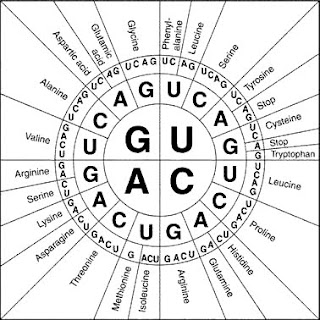
SIX KEYS TO A LITERARY GENETIC CODE

In essays on the subject of centricity, I've most often used the image of a geometrical circle, which, as I explained here,  owes someth...

Showing posts with label thor. Show all posts

Tuesday, August 20, 2024

CROSSING GODS PT. 2

 Like the earlier CROSSING GODS, this essay will focus mostly upon how different forms of literary works, whether nominative or innominate (as explained here), utilize deific icons.

As noted in the cited essay, innominate texts are those whose "history is hard to determine." So even the earliest texts available to us testifying as to the history of Zeus or Enki or Thor are not necessarily the first appearances of those deities, in the way that we can be totally certain that the first appearance of Marvel Comics' Thor was JOURNEY INTO MYSTERY #83. So the Thor of the Prose Edda is an innominate figure, even if the author tries to claim that he was just a human being descended from Priam of Troy, while Marvel's Thor is nominative, "able to accurately named."

Now, a nominative icon may emulate many of the tropes associated with an innominate original. In archaic texts, Thor isn't always the star of every story in which he appears, but he is for all of the Thor stories appearing in the MIGHTY THOR feature. And just as Thor is a nominative character based upon an innominate one, the same holds true for all the support-cast icons who derive from archaic stories. Further, these Subs are aligned with Prime icon Thor as much as his rogues' gallery of villains.


However, icons who do not derive from the Norse mythos of the archaic Thor cannot be fully subsumed by his cosmos. I've already referenced some of the differing ways the character of Hercules was brought into the Marvel Universe-- first as a one-off character in an AVENGERS issue, and then as a more long-lived iteration that was probably planned to be launched as a Prime at some future time. 

But Thor crossing over with another deific "cosmos" stands as a crossover even if the new icon never appears again. For instance, in THOR #301 Marvel premiered its version of the Hindu god Shiva, who naturally was given some reason to go toe-to-toe with the Thunder God. I think it's safe to speculate that none of the people associated with that story planned to use Shiva again. Had there been any such intention, that plan would have been squelched by reader-protests to the effect that it was inappropriate to feature a fictional version of a still-worshipped deity alongside a fictionalized Norse god. FWIW, Marvel editors did a retcon claiming that the entity who had fought Thor in that issue was actually "Indra," a Vedic divinity whose worship seems well and truly dead.

I touched on this type of crossover at the end of CROSSING GODS PART 1, discussing a paperback fantasy-series, "The Iron Druid Chronicles." The Prime icon of this series was a modern-day druid who was still in contact with all the ancient religious entities of Celtic myth and legend, and so I judged that all of those Celtic entities were Subs to that hero's Prime, just as Odin and Heimdall and Loki are all Subs to Thor. But just as Shiva was a "crossover god" the first time he appeared in Thor, because of his innominate history, the same would be the case for every time the druid-guy encountered a myth-figure from outside the Celtic cosmos.

This form of crossover I will term an "external alignment" crossover, in that one icon with archaic myth-associations appears in a cosmos with which that icon is not aligned.

And where there's an "external alignment," can there fail to be an "internal" one? Stay tuned.


Sunday, May 19, 2024

SELLING THE SUPERHERO WOMEN


I started to respond to Tom Brevoort's post on Marvel's 1977 reprint collection THE SUPERHERO WOMEN, and to its attendant comments on that blog. But I decided I would do so here first, and reprint my remarks there afterward. 

______

First, I agree with Tom that the selection from SPIDER-MAN #62 doesn't really make the character of Medusa look all that great. Of course, there was no inherent sexism in this guest-starring story, because Stan Lee had written other Spidey stories in which male guest-stars like Quicksilver or The Iceman acted stupidly in order to make the story work. A better selection would have been Medusa's solo story from MARVEL SUPER HEROES, published around the same time as the Spidey story, which in turn may've been designed to get casual readers interested in the long-locked lass.

The RED SONJA story is an okay selection, and the FANTASTIC FOUR entry is well chosen. This story depicted Sue Storm gaining her force field powers, thus responding, after roughly three years, to fans' complaints about her lack of overall power. 

I have the impression that the MS MARVEL selection arose from the company's ongoing agenda to protect the "Marvel" name in any character. Certainly that agenda underlay the creation of the "Marvel Captain Marvel" in the first place, and since a CBR article mentions that the company was taking pitches for various "Ms. Marvel" concepts as early as 1972-- two years after UNCANNY X-MEN and Marvel Girl were off the stands-- that applied to the final, approved version as well. (I couldn't locate an online recapitulation of the story that Jean Grey herself was considered as a possible "Ms. Marvel.")

The selection of the two-part THOR story featuring Hela was a strange one. Since she wasn't purely villainous, she wasn't all that consequential to THOR in particular or to Marvel as a whole. Why not the first Enchantress story, since she was at least important to the universe, and since the tale was a good stand-alone? Maybe Stan just wanted to spotlight some of his post-Kirby work with the God of Thunder, which work was actually pretty good. I'm not surprised there was no Sif-centric story, because I can't think of any at all up to 1977.


A better choice IMO would have been issues X-MEN #62-63. Granted, Marvel Girl was usually a pretty weak sister for most of the feature's run, but this was one of the few times, if not the only time, she was allowed to shine and save the day. And until re-reading the issue, I'd forgot that it included Magneto hitting on Jean Grey big-time, in the old "reign at my side" context. So, Mags, checking out the Young Talent? Sort of like that story where Magneto has the mentally enslaved Scarlet Witch do a hootchie-koo dance for him, years before she was retconned into his pride and joy.

The "Femizons" story was meh, and I suppose the CAT and SHANNA stories were attempts by Stan to repeat his "Well, we tried" defense. The Black Widow story from SPIDER-MAN is another story where the guest star acts stupidly to make the story work, but it holds some historical interest for debuting the bitchin' catsuit-costume. 


That leaves only the Wasp's debut story in the ANT-MAN feature from 1963, which is IMO the best story in the collection. Though Stan's only credited with the plot for "The Creature from Kosmos," I'd theorize that he gave scripter Ernie Hart a pretty thorough breakdown of the whole story, since Stan was after all doing his best to build his then-small universe. For an early Silver Age adventure, it's pretty layered. Ant-Man starts having existential doubts about who will carry on for him while simultaneously grieving for his lost wife Maria. When he considers the possibility of a partner, 1963 readers might have expected (if not for the cover and splash page) the introduction of a kid sidekick-- "Pismire, the Ant Wonder!" Instead Henry Pym gets a meet-cute with Jan Van Dyne, a young woman who slightly resembles Maria, and thought balloons establish that both are instantly attracted to one another. Despite Pym's defensive reaction to the effect that Jan is just "a child," I think it's obvious that she's close to 20, and probably a bit older, given that there's no question of her inheriting the Van Dyne fortune when her pop gets killed. None of that Magneto-type trolling for Old Henry!


I also don't think there's a good argument for Jan, before or after she becomes The Wasp, being an "airhead." Her determination to avenge her dad is what leads Pym to play "Batman" to her "Robin," and to give her the chance not just for vengeance, but to take up the life of a superhero. But she accepts the duty partly because she knows that he's attracted to her, and not as a kid. So all of her subsequent expressions of stereotypical femininity-- drooling over other men, or her frequent references to shopping-- are part of her plan to stay close to Henry and keep reminding him that she's a woman, not a sidekick. And of course, she may actually LIKE shopping. I have it on good authority that some women really do!


Tuesday, December 7, 2021

A CONVOCATION OF CROSSOVERS PT. 5

 Last and sort of least is the LOW CHARISMA crossover. 


I've already mentioned one example of this category in Part 3, that of Wolverine in his first interaction with the X-Men. Having been only a Sub, he had no stature, but he did have a degree of charisma simply from his having fought the Hulk in one story, With the exception of Cyclops, who possessed both stature and charisma by virtue of his long career with the hero-team, all of the other characters were new and only accrued charisma as the original story progressed. Some of the other established X-people appear in the tale as well, but their status is that of "guest stars" rather than functional members of the team-- a point underscored in the next installment, where all the old X's are given their walking papers for the time being. (To be sure, Jean "Marvel Girl"  Grey does get invited back rather quickly,)

NOTE: just after I wrote this, I remembered that Sunfire and Banshee, who were also in the New X-Men, had pretty much the same Sub-status as Wolverine, though the two of them had enjoyed perhaps three or four Sub-appearances apiece. Rather than rewrite the paragraph, take it as a given that what goes for new member Wolverine also goes for new members Sunfire and Banshee-- though Sunfire was quickly disposed of, ending his brush with Prime status almost as quickly as it began.

The same principle applies to the first crossover of the Joker and the Catwoman in BATMAN #2: neither had accrued much charisma at the time of that story, though obviously the writers meant to build up both characters as consequential to the Bat-mythos.


The subject of Subs being nurtured within a particular mythos is relevant to another species of crossover: the old-villain-meets-new-opponent crossover. As I also noted in Part 3, the tag-team villains Mister Hyde and the Cobra had been regular foes of Thor for a short period, and in DAREDEVIL #30, Stan Lee evidently felt that they would be a better fit for Daredevil. In the process of making the transfer, their villain-charisma had to start interacting with the very different charisma of Daredevil.

I should include a parallel to the discussion from Part 4 as to how former Primes might become Subs in another work, but could still enjoy high charisma, as with Dracula's appearance in a Billy the Kid movie. In cases of low charisma, one may have either new or established characters cross over with former Primes for the sake of brief bits of business rather than for major plot-functions. Examples include:

WHO FRAMED ROGER RABBIT? (in which the main characters are Roger and Eddie Valliant)


THE BOOKS OF MAGIC (in which the main character is Tim Hunter, and the vast panoply of the DC Universe exists as background to his decision)


A CONVOCATION OF CROSSOVERS PT. 3

The second crossover-category corresponds to the basic pattern of the first one, except that at least one of the stature-bearing characters has been compromised in some manner, making at least one of the characters of LOW STATURE. The most frequent manifestations of the low-stature crossover are usually termed "guest starring roles" or "cameos."

"Guest stars" are often considered to be the same as regular crossovers, but not infrequently guest stars appear in some ancillary role. I mentioned the example of the Golden Age Human Torch-Sub-Mariner crossovers. These took the shape of one of the two heroes appearing in an issue of the other hero's magazine, but the narrative emphasis is clearly on their interaction.


In contrast, the appearance that I'm calling the "guest star" is only moderately important to the plot. One of my favorites of this type appears in the Silver Age DAREDEVIL #30. For some reason, the titular hero decides that he wants to take on Thor's sometime foes Mister Hyde and the Cobra-- which is the main plotline of the narrative. But author Stan Lee, wanting to play the idea to its most absurd lengths, first has DD masquerade as the Thunder God to lure the villains out-- to which deception the real Thor takes exception. What follows is a sublimely silly encounter between the two heroes, which is not strictly necessary to the plot, though it's certainly a lot of fun.


Cameos are even more "throwaway" in nature, usually lasting only a few diegetic "moments." One of the dippiest I've recently encountered was in a 1944 issue of Quality's FEATURE COMICS, in which the almost forgotten comical character "Blimpy" became reduced in (physical) stature and so rang up another Quality character, Doll Man, in order to get some advice about getting small. 

Turning to another manifestation of the low-stature category, I didn't discuss in the previous post the concept of "rotating team" franchises, though I established in this 2019 post my estimation that the characters in each of these temporary teams shared equal stature (although, just to be totally confusing, at that time I was using the term "charisma" in place of what I now call "stature.") However, I made a few exceptions, saying of Batman's co-stars in THE BRAVE AND THE BOLD:

Most of the time, the co-stars either had their own franchises, or had enjoyed such regular berths at some point in DC's history. However, on a few occasions the Bat teamed up with one of his famed enemies, and I would consider all of these to be subordinate rather than coordinate figures, because the villains had not previously enjoyed their own franchises.


Even then, I had to further admit that although this was true of two such co-stars, the Riddler and Ra's Al Ghul, but that one other co-star, the Joker, actually had enjoyed a series of nine issues, wherein he usually contended with other Bat-villains. I made the comment that the Joker's series had not done anything to dispel his dominant image as a subordinate character, or Sub, but now I would rephrase that to say that nine issues were not enough to endow the Clown Prince of Crime with the stature one should perceive in a Prime. 


Similarly, a featured hero who only enjoyed a piddling few Prime stories, either as a solo protagonist or as part of an ensemble, would also possess only a very low level of stature. Prior to the Blue Diamond's appearance in MARVEL TWO-IN-ONE alongside the Thing, the Diamond could only boast a couple of Golden Age appearances and a couple in Roy Thomas's retcon team-title "The Liberty Legion"-- and so his Prime status is dubious. In fact, TWO-IN-ONE became something of a dumping-ground for short-lived Prime characters such as the Golem, the Living Mummy and Skull the Slayer, none of whom went on to rekindled fame after their TWO-IN-ONE outings. The same applies to the Sub character Jocasta, who got a brief shot at Prime status before returning to intermittent obscurity.


Some obscure characters, however, went on to respectable fame once they'd been inducted into regular teams. Magik had made a few minor Sub appearances before getting a four-issue mini-series. This series made the character a Prime, but had she never been inducted into a group-- be it the one she did join, the New Mutants, or some other team-- she probably would have returned to Sub status. An even more noteworthy example of a lowly Sub rising to superstar Prime status is Wolverine. At the time of the taloned terror's induction into the 1970s X-Men, he had only appeared in one adventure, as an opponent for the Hulk. Not only did Wolverine become a stellar member of the X-Men, he went on to enjoy a wide number of solo adventures. So Magik has only a little stature when she joins the New Mutants, and thus only her first alliance with that team can be called a Low-Stature Crossover at all. Wolverine's induction into the New X-Men does not qualify as a stature crossover, but would possibly qualify for a Low-Charisma type.


Thursday, December 12, 2019

ON MASTERING SELF-MASTERY

I've recently hunted through past posts and added the tag "self-mastery" to any post where I used the Nietzschean term "self-overcoming." I find Nietzsche's term a little too obscure for my own use, but "self-mastery" serves to express the ways in which fictional combative characters illustrate humankind's ability to do more with their "might" than to dominate others. I wrote in 2015's NIETZSCHE VS. THE NEOPURITAN NANNIES:

Nietzsche is interested in war and violence only as forces within humankind that must be overcome by the overman-- not indulged in, like the Nazis to whom Frederic Wertham compared the philosopher. The overman was Nietzsche's solution to the vagaries of rule by the mob or by the tyrant:

Now, in fiction combative characters embody a plethora of philosophical attitudes, and Nietzsche's idea of self-mastery diverges even from that of, say, Frank Miller. (Interesting side-note: in ZARATHUSTRA Nietzsche castigates a "Spirit of Gravity," which is a value Miller and his co-writer Azzarello champion in THE DARK KNIGHT MASTER RACE. ) But I would still argue that the semantic manner in which both the philosopher and the comics-writers express the idea of self-mastery is essentially the same.

Now, in COMBAT PLAY PT. 4, I  used the ideal of "fair play" as an example of what I then called "self-limitation" and considered essentially identical with "self-overcoming:"

In my own lit-critic cosmos, the ideal of "fair play" assumes the role of "self-limitation" that is, in Nietzsche's philosophy, occupied by "self-overcoming."

And yet, I find that I've used it not in terms of limiting oneself but also in terms of exceeding limits. In WEAKLINGS WITH WEAPONS PT. 1, I compared two protagonists whose dynamicity was certainly not at the highest level, but who both utilized particular weapons to overcome obstacles. I argued in part that although Richard Mayhew of NEVERWHERE gained possession of a super-sword and used it to kill a monster, he lacked the quality of "self-mastery," since the weapon's power did all the work. In contrast, Jack Burton of BIG TROUBLE IN LITTLE CHINA didn't command a lot of power with his one weapon, a simple throwing-knife, but like Aristotle's hedgehog he mastered one good trick. Thus his triumph over the villain Lo-Pan is entirely the result of Burton's self-mastery.

In my philosophical cosmos, the acquisition of a skill or power comes about through a process of self-monitoring, a subject's attempt to understand his or her natural limits at a given time, after which the subject seeks to exceed said limits, to gain greater self-mastery. The appeal of fair play is affective rather than cognitive; the subject believes, for instance, that he shouldn't use a weapon if his opponent does not have one. Thus, in THOR #152, the thunder-god "sheathes" his hammer after destroying his foe's mace.


However, this "noblesse oblige" gesture can have an objective effect, in that it forces a given character to "dig deeper" in order to defeat a worthy opponent. Of course, one doesn't need the gesture, since combative narratives are replete with dozens of situations wherein combatants seek out worthy opponents purely to improve themselves. DRAGONBALL frequently uses this scenario, in that the Seiyans Goku and Vegeta repeatedly challenge one another, even when on relatively friendly terms:


Having dovetailed these two related concepts, my next consideration is: what are the most familiar story-tropes through which fictional characters may demonstrate self-mastery?

Both of the two previous examples fall into the most elementary category, that of the hand-to-hand battle. This is also the easiest trope with which an author can express self-mastery.

The trope of weapons-use, however, becomes more complicated, as seen in the WEAKLINGS WITH WEAPONS analysis, wherein I found that Mayhew did not display self-mastery even though he had a bigger, badder weapon than did Jack Burton. An even greater complication is that any form of "super-power" not intimately tied to the human body becomes similarly problematic. If Nightcrawler's ability to teleport demonstrates self-mastery, can one necessarily say the same of a comical type of teleporter like Ambush Bug?

The third major trope of self-mastery is that of the indirect commander: a figure whose main role is often to order others into battle. In this essay I said that I discounted the "Adama" character of BATTLESTAR GALACTICA in terms of "combative status" because he functioned largely as a figurehead. Yet there are millions of villains who are basically "master planner" types who get henchmen to do their fighting for them. However, the difference between Adama and, say, Fu Manchu is that the latter's genius for evil infuses every errand his servants perform in his name.


More on these matters later, perhaps.

Friday, December 29, 2017

LOWBROW, BUT HIGHLY SERIOUS

He Chaucer lacks the high seriousness of the great classics, and therewith an important part of their virtue.-- Matthew Arnold.

I seem to be one of the few people in the country who didn't like THOR: RAGNAROK, and found its over-dependence on jokes to be an indicator of how little the show-runners "got" the character.  However, the more I think about it, the failings of RAGNAROK may indicate even more about the problems of the Marvel Cinematic Universe, as put forth by the fellow most associated with its success, studio chief Kevin Feige.

I say this with the full knowledge that Feige's version of "the Marvel Universe" is not likely to be surpassed within my lifetime. Feige clearly gets some of the key elements that made 1960s Marvel a success. Had there been no Marvel, it seems unlikely that (1) fans would have been motivated enough to create the direct market, and thus (2) mainstream comic books probably would not have survived their distributor problems of the 1970s.

Feige has reportedly called himself a "fanboy," and almost all of his cinematic credits support this assertion. Prior to 2008's IRON MAN, Feige worked in a production capacity on fourteen films, all based on superhero characters. In time he may be seen as being every bit as influential as Jim Shooter in promoting Marvel as a "superhero-first" company. And in some ways, Feige "got' Marvel better than Shooter. Feige understands three major aspects of Marvel's "Silver-Age" success;

(1) The Continuity Thing.

Stan Lee, as editor of the Marvel Line, probably had no aim beyond cross-promotion whenever he had Spider-Man try to join the Fantastic Four and the like. However, as time went on, he apparently found that continuity was not only popular with readers, it was a useful tool for a writer. For instance, in 1964's AVENGERS #4, he and Kirby whipped up a villain, Baron Zemo, who used a super-glue against two of the heroes, Giant-Man and Captain America.


How to get out of it? Well, you have the Avengers consult another expert on glue, the Human Torch's foe Paste-Pot Pete (whose face Kirby apparently forgot, making him look rather like his sometime partner the Wizard).


More importantly for the MCU, Lee also found a lot of material simply in having heroes from different milieus, and with different speech-patterns. Here's Daredevil trying to prove his "mad skills" to a certain thunder-god.


Whereas a lot of writers would have written the two characters indistinguishably, Lee understood that a thunder-god wasn't going to talk the same as a modern superhero. This discovery also led to another aspect of Lee's approach:


(2) Heroes with Problems.

For Stan Lee, this was clearly another device to draw readers into the fictional worlds of the Marvel characters, so that they would buy each and every issue of a given series, rather than just picking up random issues according to chance. But there's every indication that Lee himself became invested in the characters, as when he decided that he wanted to lay near-exclusive claim to chronicling the adventures of the Silver Surfer when the character graduated to his own series. I can't be positive that there might not have been some hard-boiled business decision behind Lee's claim, since he'd publicly admitted that Jack Kirby alone created the character. However, Lee definitely attempted some things he never attempted in other Marvel features, such as making his main character a Christ-figure.


(3) The Prevalence of Humor.

Of these three aspects of Marvel's success, this is clearly the one that Kevin Feige most emulates. Long before the rise of Marvel Comics, Lee's writing demonstrated an ability for "snappy patter" in humor comics like TESSIE THE TYPIST and MY FRIEND IRMA, and in many ways he simply translated that talent to the 1960s superhero books. However, he also made much of the humor flow from character, which had generally not been the rule for the superhero genre. Most of the Marvel features of the Silver Age were replete with a jazzy sense of humor, and even the more "serious" titles, like the aforementioned THOR, allowed for moments of whimsy, as seen with characters like "Volstagg the Magnificent."


Ironically, SILVER SURFER was possibly the only Lee-written title that boasted no humor of consequence, which may have contributed to the feature's early demise.


I believe that no fans familiar with Silver Age Marvel would dispute these three aspects as major factors in the Marvel success,but I think there's a fourth one that usually goes unacknowledged, and that is Lee's flirtations with what Arnold, in the quote above, called "high seriousness."

What Arnold meant by the phrase doesn't matter to me here, since the phrase has taken on a life of its own. In general it connotes a sense of gravitas, and is almost always applied to works of literary merit. At the time Lee made his first breakthroughs with Marvel, it's a given that the forty-something editor had no illusions about the status of comic books, no matter what he may have said later in his "bullpen bulletins." He knew that they were deemed lowbrow entertainment, and that any efforts he made to "elevate the form"-- like SILVER SURFER-- were aimed to impress fan-readers who wanted something a little different with their superhero action.

But even though Lee probably knew that he'd never be "taken seriously," he showed a talent for scenes of faux high seriousness, even within a lowbrow context. For instance, here's Thor facing the death-goddess Hela from the Mangog saga I analyzed here.

Granted, Jack Kirby staged the visuals that contribute at least fifty percent of the page's serious tone. Still, it's easy to imagine a modern writer-- say, Peter David-- trying to dialogue the same page, and missing the boat entirely. Lee's amateur experience in the theater, however limited, seems to have contributed to his sense of how to show characters both in their "light" and "heavy" moods.

My personal interpretation of Feige is that he's someone who may have read Marvel Comics like a demon, but who was into Marvel, like many readers, mainly for the jokes. The rapid-fire quips of Downey's Tony Stark read a lot more like the snappy patter of the Stan Lee persona than they do like the relatively sober-sided Stark of the comics. Feige even showed some facility with characters with a basically serious outlook, like the Evans version of Captain America, finding ways to exploit humor in other characters without hamming up the main hero.

In the first two THOR films, one can see Fighe and his collaborators trying to do something similar, keeping Thor basically serious while allowing support-characters-- in particular Kat Dennings' "Darcy"-- to provide the humor. That said, Fighe's Thor films don't really make any organized attempts at "high seriousness." The wars of the gods and the giants have no more mythic resonance than the opposing parties of a videogame, and thus it's not surprising that the figure of Hela the Death-Goddess becomes similarly over-simplified in RAGNAROK.

The only other time that Feige attempted another Marvel feature grounded in Lee's lowbrow version of high seriousness was the 2016 DOCTOR STRANGE. I've not yet been able to force myself to re-watch this artless adaptation for purposes of review. But the mere fact that it had to import some dumbed-down humor into the straight-laced STRANGE mythos in the form of the master magician's CAPE speaks volumes about the producers' inability to do anything without the support of jokes, no matter how inane. Thus I shouldn't have been surprised when THOR RAGNAROK stuck a bunch of pratfalls into the encounter of two of Stan Lee's more poker-faced characters, the thunder-god and the master of the mystic arts.


Before seeing RAGNAROK, I had numerous warnings as to how much comedy to expect, but I like to think that I kept an open mind, hoping for something no better or worse than the two GUARDIANS OF THE GALAXY films. But when the film started out with Thor, chained in Muspelheim and teasing info out of evil Surtur--


-- and I realized that it was just a steal from a similar scene in 2012's AVENGERS, with a bound Black Widow interrogating her captors--


-- it became clear to me that Feige's MCU is beginning to cannibalize itself, and with less interesting results that when Marvel Comics began repeating themselves so badly in the 1970s.


Saturday, December 9, 2017

BEAT COMMENT #33 1/3

Responding to THIS item:


If, as the essay says, it's true that Marvel's Valkyrie and Grandmaster characters are even temporarily popular, it has nothing to do with how good they are, as characters. I for one think they're godawful. I like how the script skirts the fact that Imitation Valkyrie has evidently been capturing people to die in Grandmaster's games for some good little time, But hey, she can't be implicated in slavery and murder, because she represents GIRL POWER!

No, they're popular because Marvel knows how to sell even a crappy script with loads and loads of humor. People remember enjoying the laughs in RAGNAROK and so everything is ennobled thereby. This is the mainstreaming advantage of the MCU that the DCEU didn't quite get, Joss Whedon's belated employment notwithstanding.

Frankly, I think Geoff Johns is probably part of that problem, but that's me.

Tuesday, November 21, 2017

MYTHCOMICS: "INTO THE VALLEY OF DEATH" (THOR #360-362, 1985)

To get the crappy taste of the mediocre THOR: RAGNAROK out of my mouth, I went back to some of the original comics. I chose to seek out stories from Walt Simonson's 1980s tenure, since Simonson's work got a distinct "shout-out" in RAGNAROK's credits.


One of the movie's more clumsy contrivances was its revision of a longtime THOR antagonist. Skurge the Executioner. In RAGNAROK he's nothing but a polyglot of poorly conceived tropes, for he starts out as an incompetent comic relief, graduates to being the cowardly stooge to the central villain (though by chance he's saved from performing the act of execution for which he's named), and then does a turnabout near the conclusion to die a sacrificial death. Only the turnabout is indebted to Simonson's treatment of the character, though the Marvel artist did so with infinitely greater care than the movie's scripters.

In this essay, I examined the 1964 Lee-Kirby story that gave birth to the Executioner and his most frequent partner-in-evil, the Enchantress, as well as some of their exploits both together, separately. and in tandem with mortal super-villains. The Executioner's primary image in his first appearance is that of a man enthralled by a beautiful and fickle woman, though not without some independent thought (he betrays the Enchantress's plans because he covets Thor's hammer). He betrays her in a more insulting manner in AVENGERS #83, choosing to leave the Enchantress for another woman because his inamorata frequently flaunted her romances with other men in his face. The two characters continued to scheme together for the most part up until 1985, when Walt Simonson apparently decided that the Executioner-- on whom he bestowed the proper name "Skurge"-- ought to get a truly Viking sendoff.

The THOR issues cited above-- subsumed under the Tennyson-derived title of the first issue, "Into the Valley of Death"-- followed a long epic storyline involving the fire-demon Surtur and the evil elf-lord Malekith, the latter of whom was adapted in 2013's THOR THE DARK WORLD. But after the conclusion of that epic, the titular thunder-god had a new problem. As a result of Malekith's mischief, a handful of mortal souls-- all unconscious, so that they would not affect the narrative-- were unjustly stranded in the Nordic death-realm Hel, ruled by the goddess Hela. In contrast to the hyper-violent and largely unmotivated villainess of RAGNAROK, Marvel's Hela was all about her realm: both protecting anything within her compass and trying to lure heroes like noble Thor into her grasp. As a death-goddess, both the archaic goddess of the Scandinavians and Marvel's version of her incarnated a negative image of femininity, the "womb=tomb" that would inevitably devour even the most puissant male warriors.


Simonson's strong emphasis on female characters in Thor's Asgardian world, whether beneficent or maleficent, was uncharacteristic during its formative Lee-Kirby period, when the Enchantress and Thor's girlfriend Sif were the only female characters to make regular appearances. Female characters were so rarely seen in the "Thor Boys' Club" that in the 1970s scripter Roy Thomas even devised a continuity-based explanation as to why the Asgardian women were hardly ever seen in the magazine. Lee and Kirby's comic-book adventures were not inappropriate for an adaptation of Nordic myth, which tended to emphasize masculine martial achievements. Simonson, however, chose to give equal emphasis to the feminine side of the Nordic god-home, to the extent that, even prior to "Valley," one saw a great deal of "the war between men and women."


Comics-authors have not often depicted this "biological warfare" with a very even hand, as witness the polar opposites of Dave Sim and the Brothers Hernandez. Prior to "Valley," though, Simonson approached his faux-Viking world with a strong dramatic sense of the pain that both men and women could inflict upon one another. Long faithful Sif, for instance, is to some extent distracted from her love for Thor by an alien who falls in love with her, Beta Ray Bill. Thor remains faithful in spirit but he's enthralled by a love-spell, placing him under the romantic control of Lorelei, the sister of the Enchantress, though technically Lorelei's real lover Loki is pulling the strings. During Thor's enchantment, Lorelei causes him to strike Sif down, and only the most literal-minded reader could resist the temptation that he's striking her because of her potential betrayal. In a parallel development, the Enchantress-- now gifted with the proper name "Amora"-- throws Skurge over for another lover.


Thor has been freed of his enchantment when he decides to pursue the mortal souls sent to Hela's realm, but not of his troubles with Sif. Thor's excursion includes several male Vikings and Thor's best friend Balder, but Skurge, Thor's long-time sparring partner, volunteers to go along as well.

Far more than the surviving Nordic myths, Simonson's version of Hel is dominantly feminine. There are various male revenants who battle the Asgardian heroes, and a huge dog, Garm, who stands as sentinel outside the death-realm. But Hel is not only ruled by a goddess, it's constantly represented by female presences. Angerboda, a "mother of monsters," gives Thor directions to the death-domain, and then tries to kill him as well. When the male warriors enter Hel, they're beguiled by what seem to be living women: Balder by the deceased Nanna, Thor by Sif and Skurge by Amora. But all of these blandishments are cast aside, and Thor is obliged to battle Hela herself-- whose touch can destroy the living with old age-- in order to return the lost souls back to the living world. Significantly, both male and female are humiliated during the conflict. Thor removes Hela's cloak, showing her to be a half-dead old hag. However, Hela claws Thor's handsome face so badly that he's obliged to cover it with a cloth for the rest of the story.


Though Hela gives the Asgardians safe passage, she tries to undermine their brotherhood by making Skurge look as if he betrayed them. This backfires on her when Skurge replies with major masculine violence, using his executioner's axe to destroy Hela's ship Naglfar. The Asgardian expedition is forced to retreat from the endless hordes of Hel, but the enemy is in danger of overwhelming them before they can cross the bridge over the river Gjoll. Thor plans to hold the bridge while his allies escape. Skurge, who has become his "brother in pain," rabbit-punches Thor and takes his place.


While the Asgardians escape with their prize, Skurge holds the bridge against incredible odds, until finally being overwhelmed and becoming one of the spirits in Hel. (A later story frees Skurge from Hel, admitting him into Valhalla, the domain of the honored dead.) Back in Asgard, Thor sends the souls back to their mortal bodies, after which Thor and Balder swear to drink to Skurge's memory.


It would be easy to see this opposition between the masculine world of force and the feminine world of manipulation as unflattering to the latter. I don't think that this was Simonson's intention. Hela is a goddess of immense stature, Sif is conflicted in her romantic inclinations but never less than honest, and even the Enchantress comes off as empowered in her determination not to be tied down to one lover. (In a later issue, though, she's torn between mourning the Executioner and feeling outrage that he's left her in this typically display of male courage.) Further, near the end of the arc, Balder reflects that "the sword is an evil gift to the living." This isn't just indicative of Balder's particular character, but also of the greater theme about the "male and female war." Positive and negative images of both genders twine their way through "Valley," and though Thor's facial wounds are eventually healed, the travails endured by him and and his spiritual double Skurge represent the inevitability of the "war of the sexes," as well as the deeper nature of the wounds inflicted.


Friday, February 3, 2017

THE LINE BETWEEN '"FAIR' AND "GOOD" PART II

In Part 1 I proposed that the narrative element that most made the difference between works of "fair mythicity" and "good mythicity" was that the latter sustained more of a "unity of action," so for Part 2, I decided to provide some examples based largely upon the work of one artist, Jack Kirby, either by himself or in collaborations.

To this date one of my preferred examples for an inconsummate null-myth is the debut tale of the Jack Kirby/Dave Wood collaboration, "The Sorcerer's Box" from 1957's SHOWCASE #6. I won't repeat the arguments presented here as to why the Kirby/Wood story proved inconsummate, but here's the closest I found to a "theme statement" for the story, which in turn would have provided it with any unity of action:

....the "villain" of the story, whose name so obviously references "Merlin," is a rather half-assed version of the Faustian over-reacher.  I noted earlier that the story does touch upon the nature of masculinity, and it does, in the sense of evoking pleasure in the heroic acts of the Challengers.  But the story doesn't work well as far as positing Morelian as the obverse of the heroes, simply because he pays them to do a dangerous job.  Is Morelian in some sense "anti-masculine" for having done so?  This is a possibility, but Kirby's story (and Dave Wood's dialogue) offer little to explain why the heroes suddenly take a dislike to Morelian at the end.  


Boiled down, the potential underthought-- for Kirby and Wood probably would never have become didactic enough to produce a complementary overthought-- might read something like, "The ways of manly daredevils are better than the ways of unmanly mystics." The story doesn't succeed in evoking even that simple a theme statement, though as I pointed out in the essay, Kirby had probably completed more unitary works prior to his CHALLENGERS outings.

Now, I did not label this THOR story a "near-myth" when I examined it in COMBAT PLAY PT. 2, but it does attain a clearer theme statement than the CHALLENGERS story, even though the Lee/Kirby collaboration is no more truly didactic in its main purpose.

What does keep #152 from being just another big battle-tale, though, is that Thor and Ulik are arranged to represent philosophical postures. Thor, son of Odin and scion of Asgard, is heir to a philosophy of noblesse oblige, while Ulik describes himself as "lowly-born-- with naught to lose-- and a world to gain."


Though the sociological myth here is much clearer and more deeply resonant, though, it's still just what I've called a "myth-kernel" in the midst of a "very rambling arc" that involved, not just Thor and Ulik, but also Balder, the Norn Queen, Loki, and various other Asgardian personnel, all with arcs that don't complement one another. So it's a near-myth possessed of only "fair" mythicity. It's sort of like a disorganized essay with a strong theme statement, while the CHALLENGERS story is disorganized all the way through.

Sociological myth once more takes the fore in another Lee/Kirby collaboration, this one from a few years previous to the Thor tale. The FANTASTIC FOUR tale titled "The Red Ghost" is included as one of my mythcomics,which should suggest to readers that I give it at least some level of good mythicity. My current line of thought about the necessity of a "unity of action" within the story, which in turn supports the creators' symbolic discourse, is borne out by my observations about the balance between what could have been flat elements in a purely didactic argument:

...in contrast to other, less complex allegories-- whether from Marvel Comics or elsewhere-- Lee and Kirby devote an inordinate amount of effort to contrast the exemplary behavior of the four American heroes versus the selfish and controlling behavior of Ivan Kragoff.  This elevates the argument beyond merely "good democracy vs. evil Communism," for it speaks to what is good in humankind generally as well as to what is evil in humankind generally.  I note, just for one possible example, a scene in which Reed announces his plan to fly to the moon alone.  His comrades set him straight with a little horseplay, which nevertheless underscores that though Reed Richards leads the group, he does so with "the consent of the governed."


At the same time, I'm moved to ask whether or not this "unity of action" can also apply to longer works. I find that one of Kirby's solo achievements, the original NEW GODS epic, resonates with Aristotle's pronouncement that Homer had managed to provide unity to THE ILIAD by focusing upon "the anger of Achilles," no matter how many other separate war-related plot-lines might have spun off from that.


Kirby's abbreviated epic, reviewed here, garnered some complaints for having gone in too many directions at once, but despite some admitted flaws, the artist does always keep a unity of action in the NEW GODS comic proper. Whatever particular plot Kirby might have followed in a given issue, the concern of the title was always about the relationship of heroic Orion to his devious father Darkseid-- a relationship that Orion only suspects at the start, and which reaches a thematic culmination in the 1984 graphic novel THE HUNGER DOGS.

I concluded Part 1 with this hypothesis:

I may use this line of thought to a lead-in to another question, regarding whether it's most beneficial to have a "unity" of idea between a work's overthought and underthought, or whether the two exist on essentially separate but intersecting mental planes, not unlike the interdependence of harmony and melody in music.

I think at least the two examples of "good" mythicity in this essay demonstrate that the mythopoeic underthought does intersect with the more didactic overthought: that the former supports the latter but that neither is defined by the other.

Saturday, May 21, 2016

ENVIRONMENTAL CONCERNS PT. 2

This is not so much a follow-up to the first ENVIRONMENTAL CONCERNS essay as to my recent myth-analysis of LOVE IN HELL-- reason being that this is the first mythcomic I've examined in which one might argue that the locale is just as important to the story as the two principal characters.

Environment varies in its amplitude throughout the mythcomics, just as that of any presence, even a focal character. In one of my earliest essays on focal presences, I mentioned that in Arthur Conan Doyle's original novel THE LOST WORLD, Doyle's heroes were the focal presences, but that the Lost World itself became the focus in the 1925 film.

There's great precedence for this sort of "man vs. nature" opposition, but this formula has never been nearly as popular as "man vs. man." It's not uncommon, even in the most strongly mythic narratives, for the environment to fade into the background, even if that environment is sometimes a major generator of mythic content. Thus, even though many THOR stories describe the power of the Lee-Kirby Asgard to generate all manner of Nordic strangeness, in "The Mangog Saga" Asgard might as well be the Pyrenees for all the impact that the locale has upon the struggle between main character Thor, his various allies, and the seemingly invulnerable Mangog.

In some situations, the environment retains its mythic nature within a given narrative, but its myth-power stems from a particular character. In the SON OF SATAN story "Dance with the Devil, My Red-Eyed Son," the soul of Daimon Hellstrom is apparently drawn down into Hell, with whose denizens he must battle. Only by story's end does the reader learn that this particular version of Hell is not one that exists independently of its satanic master, for it's actually Satan's own dream.

In a less direct manner, some environments can be seen as being more metaphorical expressions of a character's good or evil: thus in Kirby's NEW GODS saga, New Genesis embodies the creative empathy of its patriarch Highfather and Apokolips is the expression of the corruption of its master Darkseid-- though admittedly both worlds already show those predilections, long before either of the respective "New Gods" comes into existence.

 There's also a sort of ambiguous middle ground. as seen with"the Palace of Ice," In this extended dream, Nemo experiences what I termed "a child's version of the metaphysics of ice and snow, taking in from juvenile pleasures like toboggan-riding and snowball-fights as well as the more profound wonders of the Northern Lights and the mysterious North Pole." McCay probably does not mean to assert that either Jack Frost or his realm possess any reality independent of Little Nemo's imagination. Nevertheless, this ice-world possesses far more amplitude than most real dreams.

In contrast, the Hell of LOVE IN HELL does not seem to be an expression of any character's imagination or personality. Hell does have its ruler, Japan's traditional hell-lord King Enma (who according to some references is actually female), but Enma only makes one appearance in the narrative, and then only toward the very end, where the ruler's gigantic foot intrudes upon the inferno to mete out justice. Rintaro, the "new fish-soul" in Hell, is not especially mythic in himself, any more than any other "everyman" character, given that most such characters are meant to heighten the significance of other characters by their ordinariness. The demoness Koyori serves to explain the ways of Hell to Rintaro, but she's new to the job of being a soul-torturing demon, so she's not a pure representative of Hell, in the same way Darkseid is a pure representative of the ethos of Apokolips.

All this said, though much of LOVE IN HELL's narrative is devoted to describing the infernal domain, I would not go so far as to say that Hell is the"main character" of the story, in the manner that I've said that Wonderland is the "main character" of Carroll's Alice books. In this essay I said that the Alice books were *exothelic,* meaning that 'the narrative is focused upon the will of "the other," something outside the interests of the viewpoint character, though not necessarily opposed to them.' LOVE IN HELL comes very close to this, but in the final analysis it's still more focused upon the evolving relationship of Rintaro and Koyori as they interact both with each other and the strange requirements of their domain-- so that LOVE IN HELL is as *endothelic,* wherein "the narrative is focused upon the will of the viewpoint character or of someone or something that shares that character's interests."


Note: since writing the above I've changed my mind: Rintaro and his sins comprise the series' focal presence, with Koyori qualifying only as a support character.

Thursday, September 17, 2015

NULL-MYTHS: "THE EGO-PRIME SAGA" (THOR #201-203)

Since I just wrote a really long exegesis on the Mangog saga in THOR #154-157, I'm not going to spend a helluva lot of time on this null-myth selection, one of the many craptacular pseudo-epics that appeared in the pages of THOR after both Jack Kirby and Stan Lee departed the feature.


In keeping with my criteria for null-myths, though, my only reason for pointing to the mostly forgotten "Ego Prime saga" is to show how a good idea can go wrong in terms of its symbolic content.

The tale of Ego-Prime technically begins before #201, for it's a "B-story" that starts in issue #198 as  a counterpoint to the main tale--one of many unimaginative takes on Ragnarok that followed the first, and arguably best, version by Lee and Kirby. In the B-story, Odin sends two Asgardian goddesses-- Hildegarde and Thor's gal-pal Sif-- to a planet called Blackworld. He doesn't exactly tell them what they're supposed to be looking for there, but eventually Sif and Hildegarde find out that the whole world is going through a rapid course of evolution from one phase of Earth-history to another. That is to say, one minute the goddesses are seeing a culture of knights in armor, and in the next, it becomes the culture of America in the 1920s. Though writer Gerry Conway had published some prose SF and supposedly knew the genre well, this is the sort of "magical SF" that makes juvenile Superman-stories of the Golden Age seem like Isaac Asimov by comparison.

Eventually the goddesses find out that the person responsible for the weird accelerated progress is an old friend: Tana Nile, one of the aliens called "Colonizers" who had appeared during the Lee-Kirby tenure. Tana Nile, under orders to find more habitable planets for her people, got the idea to travel to the surface of another Lee-Kirby creation, "Ego the Living Planet." Sans any scientific data or investigation, Tana slices off a chunk of Ego's "skin," takes it to Blackworld, and implants it in the planet's soil. Though the word "terraforming" is never used, apparently this was Tana Nile's intention. Because Conway didn't care to make her actions internally consistent, the alien does absolutely nothing to curb the effects of the planetary chunk, which takes on its own intelligence and a gigantic form that she dubs "Ego-Prime."

Then, just as Thor has returned to Earth, the creature for some reason teleports itself, the goddesses and their allies to the real Earth, since Ego-Prime plans to create a sentient "bioverse" and for some reason can't do it from Blackworld. There follows a lot of standard Marvel fight-scenes while Ego-Prime unleashes various menaces (mutated humans, giant ants) on the Asgardians.

So far, all of this is merely routine bad comics, taking innovative concepts introduced by better creators and dumbing them down. But while all the chaos is going on, the new A-story now gets a B-story, as Odin sends other agents to Earth to seek out mortals who share some mysterious common factor that Conway never bothers to expain. Then, just as Ego-Prime is about to destroy the world, Odin reaches down from Asgard and somehow transforms the giant into energy that he infuses into the three humans-- who then become three young gods. Odin sends the young gods off into some remote heaven to serve some obscure purpose that does not come to fruition for many years, when Roy Thomas enlisted Conway's "God Squad" (as some clever fan dubbed them) to play a role in his multi-issue "Eternals" plotline.

Lee and Kirby's "Mangog saga" is rife with dozens of inconsistencies and authorial manipulations, true. But as I hope I demonstrated, there's a genuine creative urge underlying all the faults of the Lee-Kirby epic-- while Conway's faux-epic is just a junk-pile composed of used furniture.

MYTHCOMICS: THOR #154-157 ("THE MANGOG SAGA," 1968)

In contrast to Lee and Kirby's FANTASTIC FOUR, which enjoyed a number of mythopoeically strong issues from its inception, the duo's MIGHTY THOR got off to a rockier start. I've cited the first "Enchantress and  Executioner" story  as one of the few Thor-tales of the early 1960s that displayed some symbolic complexity. But there were an awful lot of ho-hum tales that pitted the Asgardian powerhouse against the Cobra, Mister Hyde, the Super-Skrull, and so on. In contrast to the "straight superhero" treatment of Thor in the featured tales, many fans preferred the backup strip "Tales of Asgard," which offered simplified versions of old Norse myth-tales.

For whatever reason, Asgard began playing a more substantial role in Thor's adventures in the year 1965. One might speculate that Lee allowed Kirby to build up the Asgardian cast-- Sif, Balder, the Warriors Three-- because epic fantasy had just turned into a bestselling genre that year, as Ballatine issued the authorized paperback edition of Tolkien's LORD OF THE RINGS. That said, Lee in his capacity as editor apparently made sure that the action never stayed in Asgard for a protracted period. The episodic continuity I mentioned in COMBAT PLAY PT 2 constantly oscillates between adventures in Asgard and on Earth, as if Lee still wasn't too sure about straying too far from the Marvel formula.


Issues #154-157, which some fans have dubbed "the Mangog saga," begins with Thor and his evil brother Loki on Earth, where their battle has just been broken up by Odin. In #153 Odin has some presentiments of approaching danger, but he doesn't confide any of these foreshadowings to either of his sons, nor does he summon them back to Asgard. At the beginning of #154 Loki skulks off and Thor waxes philosophic at Marvel's version of "the silence of God," who is also a literal "God the Father" to the noble but very confused star of the story. Little does Thor suspect that he's about to experience his first real-time encounter with Ragnarok.

Ragnarok had been referenced in the "Tales of Asgard" feature, but the "Mangog saga" doesn't attempt to reproduce the details of the cosmic conflict as we have them from Christian redactors of the Norse mythology. Rather, Lee and Kirby took the essence of the Ragnarok-tale--  that Asgard was imperilled by all the evils that had been kept down for eons-- and the two creators chose to give birth to a single monstrous figure who embodied a less traditional form of evil.


The Mangog-- a huge bulky fellow with a vaguely cow-like face-- is the danger that Odin has foreseen, though apparently not clearly enough to stop his advent. Ulik the Troll, left over from a plotline in the previous continuity, stumbles across the hidden prison where Odin has imprisoned the monster. Hoping to gain an ally against Asgard, the troll breaks down the prison-door (not one of Odin's sturdiest constructs, it seems). The savage almost immediately regrets freeing the Mangog, for not only does the horned wonder refuse to team up with Ulik, he states explicitly that his sole reason for being is to tromp all the way to Asgard, unsheathe the magical artifact known as the Odinsword, and to bring about Ragnarok, the destruction of the known universe. Ulik understandably exits the premises, as well as the story proper.

In the archaic tales of Ragnarok, the agents of the world's demise are a motley crew of malcontents-- giants, trolls, Loki himself-- who have been opposed to Odin's reign since forevcr. But Mangog is a more original take on the embodiment of evil, for he is only one being, though possessed of seemingly limitless strength and invulnerability. His nature is not immediately clear, however, and Lee's dialogue initially gives conflicting pictures:

In #154, when Mangog emerges from his prison, he wants vengeance on Odin, who "crushed the invasion of my race." Ulik affirms that he knows of the story-- and that's all we get on Mangog that issue. These lines convey the impression that Mangog is the last living survivor of a race that attacked Odin and Asgard-- and indeed, in #155, Loki-- who makes his way to Asgard ahead of Thor, refers to Mangog as the "sole survivor of a long-dead race." Possibly when Lee wrote these lines, he wasn't entirely clear on Kirby's concept for the character-- or it may be that he simply didn't want to get into the more involved aspects. For it's also in #155 that Mangog-- relentlessly stomping his way to Asgard, thrashing storm giants and Asgardian outposts-- finally clarifies his origins. Odin destroyed Mangog's race, but Mangog was not precisely an ordinary member of said community. "Before [the invaders[ fell," Mangog yells to anyone listening in the midst of his carnage, "they created mighty Mangog!" A couple of pages later, Mangog finally holds forth on his full origins: "When my race was dying-- they took the limitless strength of all-- the billions whom Odin had doomed-- and they found a way to store that matchless power within one living being!" Thus, Mangog is (or believes himself to be) essentially an artificial construct; a living concaternation of a "billion billion beings."

For his part, though, Odin does not comment on these allegations. Despite his forebodings, at the beginning of #154 the All-Father somewhat arbitrarily decides to enter "the Odinsleep," a deep sleep designed to preserve his immortality-- and one from which no one can disturb him, lest it cost Odin his life. Obviously, since Odin is supposed to be all-powerful, the story's creators had to find some way to keep him out of the action-- though this plot-device may not be purely a device for authorial convenience. More on this later.)


What makes Mangog a radical metaphysical concept is that in essence, the monster is the spirit of a slaughtered people, unified in death as they could not be in life. It's questionable whether or not the original Norse worshippers of Thor would have worried about whether or not they might be haunted by the ghosts of their vanquished enemies. But denizens of the more rational (or maybe rationalized) twentieth century had been subjected to a number of such haunting spectres, Obviously a comic-book cow-monster doesn't have the gravitas of real slaughtered tribes, and Kirby and Lee aren't asking anyone to sympathize with the Mangog. In visual terms Kirby wants readers to fear his presence, since he seems proof against every force that Asgard, Thor, and Thor's companions can hurl against him, and Lee is careful to keep reminding readers that Mangog's people were not innocent victims.
In #156, Thor himself confronts the unstoppable monster, and responds to the charge of murder Mangog makes against his father:


"My father did but end a living cancer" is apparently the view shared not only by denizens of Asgard, like Thor and Loki, but also by Asgard's enemy Ulik. By such remarks it should be clear that we're not dealing with the incarnation of a maltreated people here (though I imagine current ultraliberals could read this passage in no other way). Finally, even Mangog himself admits to his people's ineluctable evil, claiming in #156: "Though none who lived were more truly evil-- more deserving of our fate than we-- since death hath been decreed us-- then let the cosmos perish!" What Lee and Kirby have produced is not some facile justification for racial slaughter, but an insight into the nature of evil. Milton's Satan makes it his mission to mar Creation with the excuse that "misery loves company," but the Mangog, infused with the idea that his "people" died, can desire nothing but to see the rest of the cosmos die, Possibly, then, the Mangog speaks less to the fears of racial holocaust than species-holocaust, as represented by the Shadow of the Bomb.


In the concluding issue, the rough beast slouches all the way through the defenses of Asgard and tries to draw the Odinsword-- which is, in a visual that should delight Freudians, a massive sword far too big for any regular-sized Asgardian to draw it. Though neither the thunder-god nor any of his companions can best the beast by force, Thor manages to defeat the monster by creating a massive storm. This ruckus allows Odin to awaken of his own accord. Why this is less intrusive on the Odinsleep than a simple shake on the shoulder is not explored, but Odin does awake, and then lowers the boom by revealing that everything the Asgardians knew was wrong. Under Odin's power Mangog dissolves into nothingness, and the All-Father reveals that his people neither died nor created Mangog. Instead, the body of Mangog was a "living prison" for all those who had dared invade the Realm Eternal-- and then, in a further show of clemency, Odin separates out all the still-living alien invaders (seen only at a distance, and signified as "alien" by their possession of Spock-ears). Then the All-Father sends them back home, claiming that their "penance" is over.

Now, from the standpoint of dramatic verisimilitude, this solution is a complete mess. This time, I think probably both Lee and Kirby were to blame, for throughout their careers, both creators showed a depressing tendency to indulge in "surprise endings" that they didn't properly set up, I've already mentioned the inconsistency of Odin's actions, in that he gets worried about some coming catastrophe and separates his quarreling sons because he expects them to be available for Asgard's defense. But does he transport them to Asgard to keep them on the lookout for the unknown menace? No, even though this would be a totally logical action, particularly since he suddenly feels the need to descend into the Odinsleep. One would like to think, at least, that he goes to sleep without knowing that Mangog is the source of his misgivings, but one might have expected him to check on the cells of all known malefactors before, so to speak, checking out. Because Odin does not do so, an indeterminate number of Asgardian spear-carriers get killed--  though admittedly, these are the sort of nonentities who get killed whenever the forces of chaos come knocking.

Of course, all these logical actions would have deprived the story of at least some of its suspense. It's a mark of superior artists that, even when they act in expedient fashion, they're still capable of rendering interesting effects, as when Thor wanders around Earth, observing "signs and portents" of a coming apocalypse before he ever hears the name "Mangog."

In addition, it must also be admitted that even though Odin's clemency for Mangog's people doesn't make much sense, it does provide an attractive "eucatastrophe," to use Tolkien's term for a miraculously favorable turn of events. It vindicates Odin as a fount of mercy, rather than as a monarch capable of committing mass slaughter, which is hard to reconcile even under the most vexing circumstances.  And I would not be a good Jungian if I didn't mention the possibility that in a sense Mangog may not be just the avatar of a group of aggressive aliens. He may even be the "shadow" of Odin himself, the part of Odin that is unleashed when his conscious mind goes to sleep, and breeds chaos for the realm he's supposed to shelter. Certainly the "Mangog saga" doesn't represent the first time in the THOR mythos that Odin's power or one of his constructs gets turned to evil purpose-- though never before had Lee and Kirby exerted quite so much effort, to bring to the purchasers of twelve-cent comics a spectacle of Wagnerian proportions.