Featured Post

SIX KEYS TO A LITERARY GENETIC CODE

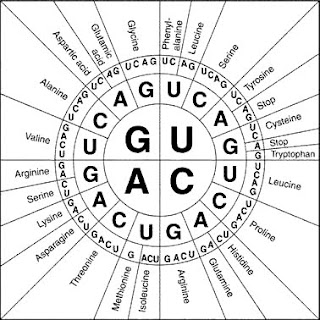
In essays on the subject of centricity, I've most often used the image of a geometrical circle, which, as I explained here,  owes someth...

Showing posts with label george tuska. Show all posts

Tuesday, January 28, 2025

MYTHCOMICS: "SCOURGE OF THE SKELETAL RIDERS" (TEEN TITANS #37, 1972)


As I stated in my previous post, I only revisited the 1966-73 TEEN TITANS comics-run because I wanted to cross-compare one of the stories with one of the TITANS cartoons of the 2000s. I had no expectations of finding a concrescent mythcomic in any of those 43 issues. Even though TEEN TITANS went through three distinct marketing phases, most of the stories were written by longtime DC journeyman Bob Haney, which didn't make for great variety. Like most of the people writing for comics in those days, Haney turned out a huge volume of tales, usually predicated on some wild premise that would theoretically grab the fancies of juvenile readers. Much like Robert Kanigher, Haney's ideas weren't always logical, though he was capable of producing tight plots around them. I considered all of his TITANS tales to do no more than time-killers, and I certainly did not expect to find any mythicity in a story from the title's least impressive phase, what I called "Spooky Titans." During this period, BTW, the heroes-- four costumed crusaders and two non-costumed-- were being sent on assorted assignments by a grey-haired eminence named Mister Jupiter, who I believe largely disappeared from DC continuity after the first TITANS series perished.                                 


To my great surprise, the routinely titled story "Scourge of the Skeletal Riders" started off with the heroes having a close encounter with a mystery that's never entirely solved. On their way to finish an assignment for Mister Jupiter, the Titans crack up their camper, rendering it undriveable. The only sign of civilization is a "weird old shack," where an unnamed blacksmith plies his trade. Though he speaks in an archaic fashion, he accepts the job of fixing the vehicle, but only after he finishes shoeing four lively-looking horses. The blacksmith hints darkly of some danger if he doesn't finish the shoeing on time, but the Titans are focused on their mission. They leave the camper behind and catch a ride to their destination (no roadside assistance back in 1972). Once reaching their home base, the Titans learn that their next assignment is to look for a famous teenaged photographer, Grady Dawes, who went missing in a country torn by civil war. The Titans all claim to have been well acquainted with Grady, though it's axiomatic that the character never appeared before this.                                                                                     


So off go the Titans to war-torn "Ranistan," pledging not to get involved in the conflict while looking for their friend. For a time I thought "Scourge" might be one of the many "anti-war" stories DC was producing in this time-period. However, though the heroes do get involved, they only seek to prevent loss of life on both sides, and the nature of the quarrel is never specified. And their first hint of something unusual is that Kid Flash seeks to warn a troop of soldiers from being attacked. A rider on a red steed overtakes the hero despite his super-speed and stuns him, so that the troop gets slaughtered.                                                                                         
Though the previous incident involved the Titans trying to save soldiers of the current regime, they seek out a rebel stronghold, looking for info on Grady. They try to liberate stores of food for starving rebels, but another weird horseman appears, beats down the heroes, and sets the food on fire. The Titans then continue their journey, with Robin playing skeptic when the psychic Lilith theorizes that they are been opposed by the legendary Four Horsemen of the Apocalypse, the first two riders having been War and Famine.                                                               

    The Teen Wonder is duly converted, though, for their next mission is to deliver a vital serum to mountain tribes. Plague, who naturally wants more suffering from disease, booby-traps the heroes, and though all the good guys survive, the serum is destroyed.                               


Naturally, there's one more Horseman to encounter: Death. The heroes are on the way to the fortress where Grady's being held for ransom, but on the way, they see "a rider on a pale horse" menacing two refugees with a scythe. Kid Flash rescues the refugees and exults in having beaten Death. However, when they get to the fortress, they learn that Death has already been there, and that the pale rider tricked Grady into getting killed. Mister Jupiter tries to assuage the despondent heroes' feelings by saying they won a "small victory" by saving the refugees (without mentioning that the heroes failed at their other three efforts). However, Haney explicitly states that Death only menaced the refugees to delay the Titans before they could reach Grady, so if they hadn't been there, the refugees would not been threatened. So this is one of the few superhero stories of the period in which the heroes have no success whatsoever in their endeavors.                                                                                              
As a capper for this dolorous downturn, the Titans return to America to get their camper. The blacksmith and his smithy have been replaced by a car repairman and his modern-day shop, and he professes not to have done any blacksmithing for decades. There is an old smithy there, but clearly this exists only so that Haney can close out the story with a "what is reality" schtick. Yet the framing narrative of the "fairyland blacksmith" confers some extra mythicity on what could have been just another spook-tale. The Four Horsemen clearly don't set up the encounter, for they have no trouble overcoming the mortal champions at every turn. The blacksmith assumes the role of a prophet of doom, casting a minatory shadow over the heroes, as if to say, "You can win a lot of battles, but against fate, even Titans strive in vain." 

Thursday, April 20, 2023

MYTHCOMICS: "THE MONGROL MAN" (UNCLE SAM QUARTERLY #4, 1942)

 When I went myth-hunting in the pages of Quality's publication UNCLE SAM QUARTERLY-- a short-lived attempt to give the ultra-patriotic hero his own title, lasting just eight issues-- I thought it likely that any mythcomics there would be authored by Sam's creator Will Eisner. But though Eisner's contributions in this series are amusing, the most mythic story here is by an unknown writer and stalwart artist George Tuska. Neither collaborator attempts any of Eisner's well-known tics with respect to lettering or panel composition, but "The Mongrol Man" does evince the sort of bloody-mindedness I associate with Eisner's sometime collaborator Jack Cole. However, so many fans have sought out Cole's work that "Mongrol" probably would have been identified by now if it was one of his works.


The title is an anomaly in two respects. First, there isn't just one "Mongrol Man," there's three of them. Second, the name seems to be punning on the two words "Mongol" and "mongrel," but only the second word actually has any significance in the story. This is surprising because during WWII a favorite trope of American superhero comics was that of a "20th-century Mongol invasion." Strangely, although "Mongolian" was informally used to describe, not just inhabitants of Mongolia, but all Asians roughly east of India, none of the comics I've read actually conflates any of these various recrudescent Mongols with the Japanese. Perhaps even comics-writers, far from concerned with fine points of cultural history, couldn't associate the Japanese opponents, usually pictured as small-statured, with Mongols, who were portrayed as tall hulking brutes.


Nazi eugenicists concerned themselves primarily with creating racial purity by excluding all supposedly inferior races from interbreeding with the Aryan stock of Germany. This story's villain, biologist Jeremiah Korntooth, goes to the other extreme: creating a "perfect brute race" by somehow combining aspects of humans of different climes and possibly animals as well, meaning that he was taking leaves from the books of both Frankenstein and Moreau. Hence, the brutes he invents are actually "mongrels," which sounds like the opposite of the Nazi ideology.

The common ground, however, seems to be that Korntooth has some roughly parallel beliefs about the fetishization of raw power, since he describes the three leaders of the Axis powers as those who "share my ideals." He views the advance of Western technology as a weakening influence upon humankind, and he decides to create a new breed of superhumans to offset human dependence on technology. Having bred just three Mongrol Men, he bestows one apiece on each of the Axis leaders and then vanishes from the story.

Now, Quality's Uncle Sam was supposed to be a heavy-hitter like Superman, able to fling around tanks and proving invulnerable to bullets. Two issue previous, the top-hatted hero had engaged in a grueling battle with a similarly powered opponent, and the cover for USQ #2 described the story as a "14-page powerhouse battle." Actually, the story was 14 pages, and the battle only lasted six, but for a Golden Age story, that was still pretty long. All this to say that a reader in 1942 could have reasonably expected Uncle Sam to take on the exemplars of the "brute race" and beat them in hand-to-hand conflict.


However, the "Mongrol" writer isn't concerned with matching Korntooth's mongrels against the strength of American willpower. Instead, by the way Sam and his ordinary-joe servicemen aides dispose of the creatures, the moral seems to be: use anything you have, technology or trickery, to overcome threats to freedom. So in the encounter with the Mongrol Man serving the Italian army, the sailor "Tex" lassoes the monster from his plane (don't try this at home) and successfully dashes the "invulnerable" Mongrol against a cliff-side.


The second one is defeated more by tricky use of the surrounding environment. When Sam and friends arrive to take on the monster serving the Germans on the Russian front, the second of the two aides, "Bayou Bill," tries to drug the Mongrol by pouring vodka in his drinking water. It's not certain that the Mongrol is weakened by the alcohol, for he comes after the serviceman. Uncle Sam comes to Bill's rescue and after a short battle knocks the creature into a handy quicksand pond, where he asphixiates.


The last of Korntooth's creations joins a couple of Japanese fighter-planes in trying to destroy an Allied vessel. This time Uncle Sam forms no particular strategy; he just dives down into the sea to duke it out with the Mongrol. But the last of the brutes is defeated by another manifestation of the technology hated by Korntooth: when one of the Japanese fighters is downed by Allied fire, the plane crashes on top of the Mongrol, whose invulnerability is something less than Superman-esque. The Axis' use of pure strength is invalidated, though Sam's useless sidekick Buddy sounds a little like Korntooth, complainnng about "sissy stuff." 

On a side-note, I have no idea why the writer named his villain Korntooth. The expression "corntooth" is an old putdown accusing a person of bad dental hygiene, in that he's so neglected brushing that one of his front teeth has turned corn-yellow. It doesn't seem to have any actual relevance to the villain's depiction, so probably the writer just thought "corntooth" would be an amusing name for a pretentious evildoer.