Featured Post

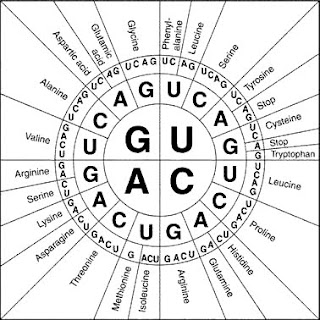
SIX KEYS TO A LITERARY GENETIC CODE

In essays on the subject of centricity, I've most often used the image of a geometrical circle, which, as I explained here,  owes someth...

Thursday, August 29, 2024

NOTES ON NUGATORY FICTION

 I'm not heading these observations under "The Reading Rheum" because the novel in question-- THE DARK FOFEST, second part of a trilogy by Chinese writer Cixin Liu-- was so terrible that I couldn't do more than spot-read it. Based on the reputation of the trilogy-- which begat a current streaming series, THE THREE BODY PROBLEM-- I probably would never have even attempted a read. But I'm in a book group, and other members wanted to read it, so I wanted to become at least moderately conversant with the content. So this is less an analysis than a rant.

I had a similar experience trying to plow through the first book, THREE BODY PROBLEM, which sets up the main conflict. An alien civilization, named "The Trisolarans" by Earthpeople, plots to exterminate the Earth's population. They have sent a fleet to destroy the world, but they also seek to "soften the Earthlings up" with "sophon-particles." With these particles, the aliens can monitor every possible defense the planet can muster. Fortunately for the humans, a brilliant Chinese scientist detects broadcasts by the aliens and begins mounting theoretical strategies. But they have to be careful not to do anything that the Trisolarans can monitor.

So PROBLEM is an empty exercise in which the main conflict doesn't come close to resolution in that novel but is put off for the next two, which take place over ensuing decades. THE DARK FOREST is the second of these overhyped potboilers, and some reviews thought it the best of the trilogy. For me it was just more of the same.

Since the days of science fiction's early development in the early 20th century, the genre has been tasked, not unfairly, for producing narratives in which some scientific concept is explicated at length by an expert in biology, cosmology or whatever to some fascinated audience, in theory the stand-ins for the readers. The century was characterized by a pushback against that image, as writers sought various ways to use either poetic or naturalistic language to overcome the specter of the dreaded "information download."

Yet something changed about a lot of the science fiction of the 21st century, at least from my point of view. Many of the most celebrated SF writers began to use their novels as political podiums. There had been considerable political content in a lot of 20th-century works, but most of them tried to tie the ideology to stories with some genre-content: espionage, war, romance. This ensured that readers could enjoy the stories as genre-exercises even if they disagreed with the ideological content.

FOREST is a book with nothing but ideological content, expoused by characters more paper-thin than anything in Ray Cummings (a 1920s writer, who wasn't good but was still more readable than Cixin Liu). Liu throws in various phony-baloney impostures of character interplay, but he hasn't the slightest ability to create organic fictional figures. Ironically, in an early chapter, two writers discuss how to create good characters like those of "Shakespeare and Balzac and Tolstoy." One writer tells the other that the way they did so was to imagine the characters so strongly that they seemed to be real. This is stupid beyond all words, even if Liu covers his drivel by claiming that this approach runs converse to the movements of "postmodernism" and "deconstruction"-- movements which have their own problems but may not be nearly as dull as Liu.

Since I didn't read the book cover to cover, I can't speak to Liu's ideology, though I don't believe he really renounces Marxism or the Chinese Communist Party. But the true ideological appeal of Liu is probably not Communism per se, but the culture of China in all its historical manifestations. I speculate that this is the main appeal of the trilogy. Most readers of the 21st century have never read Chinese authors, not even the more recent celebrated literary works like Mo Yan's 1987 RED SORGHUM. (I have, and by virtue of brevity alone it's better than anything Liu has written.) So Liu wrote a big long science fiction story in which nothing is resolved in the first two books, and to me it appears the trilogy has no virtue but allowing audiences to see what science fiction would look like from the POV of a Chinese writer.

One minor benefit of the trilogy is that once or twice Liu clownishly works in a few pop-fiction references which are just as superficial as his characters. In one such reference, a character states that next to the Trisolarans, humans are like "the Flintstones." In the same chapter there's a confused dialogue that brings up the movie-version of Superman, and one character thinks it hilarious to think that "Superman" broke his back in a horse-riding incident, even though another person of course makes the correction that it was just the actor who had played the superhero. There may some ideological content here, since three or four times, characters disavow any claim to being "supermen" of any kind. But then there's a weird moment where another character changes himself into a "human bomb"-- that is, securing an explosive to his body so that no one can touch him-- and even references, in his dialogue, the episode of the 1950s SUPERMAN teleseries, "The Human Bomb," for God only knows what reason.  


MYTHCOMICS: DELIRIUS (1972)


Phillippe Druillet's best known character, "Lone Sloane," debuted in 1972 and soon became one of French comics' leading misanthropic protagonists. I've not read the character's very first adventure but recently read the half-dozen stories collected in "Les Six Voyages de Lone Sloane." That title may have been meant to invoke the Seven Voyages of Sinbad, and in fact the last story in this series briefly references the forthcoming events of DELIRIUS, so in that context one could view the longer story as Sloane's seventh voyage.


The six stories are erratically plotted, usually dropping the hero into this or that dire situation, which is usually resolved in some elliptical fashion. Sloane is established as some sort of "rebel" opposed to his own people, the descendants of Earthmen who have colonized the usual endless galaxies. The hero is entirely self-interested, ruthless about dealing with anyone who gives him crap, and looks like an ordinary man, except for having red eyes. The stories are largely just excuses for Druillet to exercise his fabulous design sense, filling pages with titanic spaceships and robots, towering buildings with weird baroque architecture, and a variety of grotesque aliens. I assume that Druillet wrote all the short tales himself, but for the longer DELIRIUS, he teamed up with one Jacques Lob, which gave the resulting story more of a conventional plot.


Sloane and the crew of his ship, the "O Sidharta," have long been in the disfavor of the reigning Galactic Emperor Shaan, but lately they've also been dogged by other ships. Sloane and his second-in-command, a Martian named Yearl, figure out that the newcomers belong to a priesthood named the Red Redemption that dwells on Delirius, the pleasure planet. Delirius began as a barren world that was useless for colonization. (The above panorama shows a large replica of an astronaut's suit on display, and any high ideals that it might have signified have been undercut by the bird poop covering the helmet.) Shaan therefore structured Delirius into a casino-world, whose only purpose is to separate jaded citizens from their money, thus swelling the emperor's coffers. 


The Red Priests confer with Sloane. They want him to help them steal the treasure-trove of Delirius from the clutches of Governor Kadenborg. The priests claim that they want to overthrow both Kadenborg and Sloane's enemy Shaan, but Sloane has heard that they work a protection racket on the businesses of Delirius, so their word isn't worth much. Nevertheless, the payoff tempts Sloane, and he agrees. He and Yearl begin a reconnaissance on the pleasure planet, but they're almost immediately betrayed by the priests and imprisoned.


Almost as quickly, the two thieves are also liberated by an unknown benefactor.  They escape prison in a ship and take refuge in "The Gluon," a dry ocean-bed where Delirius deposits all of its garbage. (I assume the name is an ironic reference to a quantum physics term, coined in 1962, for a type of subatomic particle.) This visit is a brief one, probably just an excuse for Druillet to draw a big trash-heap. Agents of the mysterious benefactor show up to give the duo clothes, but no information on their boss's motives. 


Sloane and Yearl wander around rather aimlessly, which gives Druillet the chance to draw more exotic stuff, like various combatants in arena-games and "mystical masochists," though neither has anything to do with the main story. Another of their peregrinations takes them into a building designed to homage M.C. Escher, where they meet a prostitute named Saarah. 


But this meeting is not coincidental; Saarah works for the Red Redemption. The reader finally gets an explanation for the reason the priests betrayed Sloane and Yearl to the cops: that they knew the duo would be tagged by "the intuitives" (whoever they are) and so the priests stage-managed both the capture and liberation of their partner-pawns. By having the Earthman and the Martian become fugitives, the priests made it possible for them to penetrate Delirius.


Sloane, however, figures out that the Red Priests want to use him and his crew as fall guys, so that they can topple Kadenborg and take his place under the Emperor's aegis, rather than seeking to end the corruption of Delirius. Sloane therefore cooperates with them on heisting the treasure, but chooses his own game plan, bearding the governor in his den. (Kadenborg, incidentally, is drawn to look like a sort of "blob-man," making him a E.T. version of a "fat cat.") 


In the end, though Sloane secures for himself and his crew a large portion of the haul, he also contributes to the downfall of a world devoted only to filthy lucre: by allowing some of the "credos" to fall to the planet's surface, everyone on Delirius starts to fight over "literal free money." (Writer Lob might have mentioned that this is the implicit promise of all of the world's gambling-dens, but maybe he considered it implicit.) As Sloane and his crew escape with the Emperor's money, Sloane distances his pecuniary mission from that of the priests' alleged desire for revolution.

This pseudo-revolution is no benefit to anyone, except those who want to take advantage of the chaos and snatch a bigger piece of the pie.

Lob and Druillet may have patterned DELIRIUS after the still popular spaghetti westerns of the period. In most of these movies, the hero is a badass who similarly resorts to stealing huge sums of money from corrupt regimes, often with the help of cohorts who plan to betray him, thus justifying his cutting them out of the bounty. If he helps the downtrodden, it's usually by dumb luck, since the spaghetti-hero is out for himself alone. Many of these flicks might be deemed "indirect revolutionary propaganda," since they justify striking back at entrenched interests, even if the protagonist's motive is making money. Sloane's final lines suggest that he's more of a disillusioned idealist, since he gained his fame for having rebelled against the emperor, though I doubt he ever caught the idealism-bug in earlier or later adventures.

As a minor point of literary history, it might not be coincidence that the name of Sloane's Martian buddy "Yearl" resembles that of "Yarol," the Venusian accomplice of C.L. Moore's "space western" hero Northwest Smith. The Moore stories were written in the 1930s but reprinted in the early 1950s. Thus it's not impossible that Lob or Druillet read some or all of the Smith stories and, consciously or not, paid homage to an earlier space-badass. 


Saturday, August 24, 2024

THE FIRST TIME I SAW ALFRED (DIE)


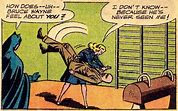
I don't remember where I recently heard someone bring up DC's possible reasons for letting editor Julie Schwartz kill off the faithful butler Alfred in 1964, but it was probably in a podcast like this one. The cited podcast reports, but does not credence, the idea that Schwartz was in any way worried about the alleged problems of having three men live alone in Wayne Manor, which had been raised by Wertham in SEDUCTION OF THE INNOCENT ten years before. Allegedly, the story goes, Schwartz immediately brought in Dick Grayson's Aunt Harriet to occupy the mansion, so that her feminine presence would allay suspicions about any hanky-panky between Bruce and Dick.

This unfounded theory intrigued me enough to blow an hour or so scanning an online pirate site for all the Schwartz issues of BATMAN and DETECTIVE COMICS after the introduction of Aunt Harriet and up until the revival of Alfred, and guess what?

Auntie's hardly in most of the stories. If anything, she was usually just seen serving dinner for a few panels, if that, and she had far less interaction with Bruce and Dick than the character in the BATMAN teleseries did. The comic-book Aunt Harriet didn't know the secret identities of the millionaire and his ward, but if Schwartz had any idea of having Harriet, through intention or accident, endanger the heroes' clandestine activities, he didn't follow through. There's exactly one story wherein Harriet suspects that her charges might be the Dynamic Duo. But when she's proven wrong through the usual shenanigans, the matter is never raised again. After Alfred's brought back to life and returns to Wayne Manor, there's a moment in which Harriet plans to leave, but Bruce and Dick talk her into staying. They needn't have bothered, for though Schwartz remained editor for about fifteen more years, even he didn't bother insisting on her presence, and she just faded into the woodwork.


In addition, Schwartz barely took advantage of an easy way to counter homosexual suspicions: by giving the two heroes heterosexual relationships. Fans will never know if this was the reason for the introduction of various female presences during the Batman-run of editor Jack Schiff-- pesky photographer Vicky Vale in 1948, Batwoman in 1956, and Bat-Girl in 1961. Yet the way Batwoman and Bat-Girl were paired off with Batman and Robin respectively gave some credence to the "Placate Wertham Theory," as did the long exile of Catwoman from DC comics due to Wertham's complaints about her. When Schwartz took over both Bat-books in 1964, he dumped all the rotating Schiff characters-- but that didn't mean he couldn't have come up with one or two token girlfriends to take the place of the Schiff Sirens. 

Schwartz's intention to focus on the "detective" angle of Batman's persona resulted in a lot of stories with almost zero female presence. Occasionally Batman and Robin would help out some poor pitiful damsel whose boyfriend was in peril somewhere, but really-- if there had been homosexual readers who wanted to fantasize a "wish dream" of Batman and Robin together, it would have been easy to ignore Aunt Harriet's nearly nugatory presence to facilitate such fantasies.


There was one early, almost half-hearted attempt to make a romance possible, but for Bruce Wayne rather than Batman. In BATMAN #165 (1964), Batman meets a serious young policewoman, Patricia Powell, who discloses to the masked hero that she has a thing for Bruce Wayne, even though she's only seen the handsome millionaire from afar. This short tale, and a follow-up in the next issue, tease the reader with what may happen when Patricia finally gets the chance to meet her idol face to face. But Schwartz evidently lost interest in the idea, for the second story doesn't even resolve its "what happens when they meet" cliffhanger. 


Not until after 1966, when Alfred was back and Harriet was slowly on her way out, did the two Bat-features begin re-emphasizing female characters. Some became established members of the mythos, like Poison Ivy, the second Batgirl, and a revived Catwoman. Others only appeared only once or twice, like Alfred's niece Daphne Pennyworth, for whom Robin briefly had a thing, but were still more memorable than the Schwartz "damsels" from the first couple of years. (Incidentally, the backstory of Niece Daphne was possibly recycled into that of the Batgirl in the 1997 BATMAN AND ROBIN.) The slow increase in memorable Bat-females after 1966 was probably the reaction of Schwartz, or one of his superiors, to the success of the teleseries that year, that it was a good idea to include a few more charismatic females, as the TV show did. 

So my laborious answer to the "Aunt Harriet" question is that if Schwartz had some hope that her presence would inspire good detective stories, that hope was dashed, because most of the scripts just shunted the old lady off to the side. Schwartz may not have had any strong reason for getting rid of Alfred, who in the past had proved quite useful to Bat-writers seeking to craft detective-stories. But rather than having some arcane fear about "three men living together," Schwartz probably just wanted another means of divorcing his regime from that of his predecessor. The fact that Alfred didn't just get written out like Vicky, Batwoman and Bat-Girl was probably a sop to those fans who would have complained had the faithful butler simply vanished.  

Thursday, August 22, 2024

THE READING RHEUM: THE GIRL IN THE TOWER (2017)


I was stoked enough by Katherine Arden's THE BEAR AND THE NIGHTINGALE to invest time in the second part of the trilogy. Though I've been a member of a couple of book groups for years, giving me exposure to various authors of the current century, it's been extremely rare that I've liked the first novel in any trilogy enough to follow up on its next chapters.

THE GIRL IN THE TOWER follows immediately on the events of NIGHTINGALE, focusing upon the exploits of protagonist Vasya Petrovna, a young woman seeking to chart her own destiny. Vasya is forced to depart from the township she's occupied with her family for her entire life, and to strike out on her own, in part because her talent for seeing the spirits of households and woodlands have caused her people to label her a witch. Of course, having consorted with Morozhko, the spirit of winter and death, also puts Vasya somewhat beyond the pale of ordinary experience. Her adventures implicitly have a modern feminist subtext, in that Vasya does not wish to be confined to the only two dispositions of young women in medieval Russia: lawful marriage or the convent. Yet, in marked contrast to the majority of feminist writers, Arden causes the reader to identify with Vasya's plight on a personal level, rather than using the heroine as a chess-piece to illustrate an ideology.

Unfortunately, other characters in TOWER have less organic substance than Vasya, and many of them exist largely to play limited roles in the "game" of the novel. Possibly I had this reaction because in NIGHTINGALE, Arden conjured forth a rich tapestry of Vasya's home life and her relations with all of her family members, even with the history of the mother who died birthing her. In addition, the woodlands around the township seemed alive with strange spirits, and dominated by an ongoing conflict between the demonic "Bear" of the title and his brother-deity Morozhko. 

In TOWER, though, Arden places her heroine in a position where her supernatural gifts are at a disadvantage. Because medieval Russia exercises Muslim-like restrictions on the freedoms of women-- which is what the metaphor of "the girl in the tower" references, rather than any particular event in the narrative-- Vasya can only seek her destiny by masquerading as a boy. In this guise, circumstances force her to visit Moscow, where she encounters two of her family members, a brother and sister, who have become highly placed in the court of the current Tsar. Though in NIGHTINGALE the brother was strongly sketched even though he only appeared in a few early chapters, this time he has no character-arc beyond reacting to Vasya's predicaments. Additionally, Konstantin, a secondary villain of the first novel, appears in TOWER as well, but his development is also superficial.

I complained in my first review that the principal opponent was not well defined, and this is even more so of TOWER's main villain, who unlike the Bear is fairly well-known in major Russian folktales: the sorcerer Koschei the Deathless. Arden accurately reproduces the primary story-tropes associated with the character, but he never comes alive, least when the author tries to tie him into the mysterious maternal side of Vasya's family. Yet once Arden finally gets all of her chess-pieces in the positions needed for the big climax, she does deliver a killer conclusion, with a "eucatastrophe" perfectly in line with Tolkien's theory about the purpose of fantasy.

At some point I will probably read the third book in the trilogy. I speculate that its strongest myth-trope will be the same as that of the first two books: that of the relationship between involving the impossible relationship of Vasya and the Spirit of Death, inhuman, and yet given a patina of humanity by his contact with the young woman. 


Tuesday, August 20, 2024

CROSSING GODS PT. 3

 Following directly upon my comment at the end of Part 2--

In formulating my definition of an "internal alignment" crossover, I'm again only concerned with the interrelationship between nominative and innominate icons in modern fiction, but I'm not discussing the interaction of different icon-cosmoses, but with substantive alterations of icon-arrangements in a single cosmos.

I've already touched on two examples of such alterations in the essay PHASED AND INTERFUSED PT. 4. In the 1952 movie THE QUEEN OF SHEBA, King Solomon is "deposed" from his Prime position in the Old Testament in favor of a romance between the titular queen and Solomon's handsome young son. In the 2004 NOAH, because the patriarch didn't have a "villain" to drive a film-narrative, the writers imported an icon from another section of the Old Testament, Tubal Cain, to serve in that capacity.


Two other interesting examples are both cinematic versions of CLASH OF THE TITANS. Both movies attempt to emulate a number of familiar tropes from the Perseus legend, but they import figures from other Greek narratives having nothing to do with Perseus. As I discussed in my review of the 1981 movie, that script edged out the character of Hera and built up the character of Thetis, Mother of Achiles. More memorably, since this was a Harryhausen production, Perseus does not fly with the aid of Hermes' magic shoes, but on the back of Pegasus, freely borrowed from the narrative of Bellerophon. 


The 2010 CLASH, reviewed here, arguably delves into even more "cosmic" waters, situating Perseus within a war of gods between Perseus' negligent father Zeus and the malefic Hades, God of the Dead. So both of these films mingle the alignments of differing innominate myth-tales within the widespread cosmos of Greek myth.

Parenthetically, both films used the name "Kraken" for the giant monster Cetus from the original Perseus narrative. But there's no attempt to make the creature homologous with the Norse beastie, so the use of that name does not constitute any sort of "cross-alignment."

CROSSING GODS PT. 2

 Like the earlier CROSSING GODS, this essay will focus mostly upon how different forms of literary works, whether nominative or innominate (as explained here), utilize deific icons.

As noted in the cited essay, innominate texts are those whose "history is hard to determine." So even the earliest texts available to us testifying as to the history of Zeus or Enki or Thor are not necessarily the first appearances of those deities, in the way that we can be totally certain that the first appearance of Marvel Comics' Thor was JOURNEY INTO MYSTERY #83. So the Thor of the Prose Edda is an innominate figure, even if the author tries to claim that he was just a human being descended from Priam of Troy, while Marvel's Thor is nominative, "able to accurately named."

Now, a nominative icon may emulate many of the tropes associated with an innominate original. In archaic texts, Thor isn't always the star of every story in which he appears, but he is for all of the Thor stories appearing in the MIGHTY THOR feature. And just as Thor is a nominative character based upon an innominate one, the same holds true for all the support-cast icons who derive from archaic stories. Further, these Subs are aligned with Prime icon Thor as much as his rogues' gallery of villains.


However, icons who do not derive from the Norse mythos of the archaic Thor cannot be fully subsumed by his cosmos. I've already referenced some of the differing ways the character of Hercules was brought into the Marvel Universe-- first as a one-off character in an AVENGERS issue, and then as a more long-lived iteration that was probably planned to be launched as a Prime at some future time. 

But Thor crossing over with another deific "cosmos" stands as a crossover even if the new icon never appears again. For instance, in THOR #301 Marvel premiered its version of the Hindu god Shiva, who naturally was given some reason to go toe-to-toe with the Thunder God. I think it's safe to speculate that none of the people associated with that story planned to use Shiva again. Had there been any such intention, that plan would have been squelched by reader-protests to the effect that it was inappropriate to feature a fictional version of a still-worshipped deity alongside a fictionalized Norse god. FWIW, Marvel editors did a retcon claiming that the entity who had fought Thor in that issue was actually "Indra," a Vedic divinity whose worship seems well and truly dead.

I touched on this type of crossover at the end of CROSSING GODS PART 1, discussing a paperback fantasy-series, "The Iron Druid Chronicles." The Prime icon of this series was a modern-day druid who was still in contact with all the ancient religious entities of Celtic myth and legend, and so I judged that all of those Celtic entities were Subs to that hero's Prime, just as Odin and Heimdall and Loki are all Subs to Thor. But just as Shiva was a "crossover god" the first time he appeared in Thor, because of his innominate history, the same would be the case for every time the druid-guy encountered a myth-figure from outside the Celtic cosmos.

This form of crossover I will term an "external alignment" crossover, in that one icon with archaic myth-associations appears in a cosmos with which that icon is not aligned.

And where there's an "external alignment," can there fail to be an "internal" one? Stay tuned.


COSMIC ALIGNMENT PT. 5

 For this term-centered post, I'll revise some of the terms I introduced in the COSMIC ALIGNMENT series, starting here, for greater specificity. I'll also limit this post to examples of the cosmoses of nominative serials.

In Part 1, I said:

The first appearance of an antagonist often determines his alignment for the foreseeable future.

This tendency I will now call "default alignment," since serials that maintain a variety of protagonist/antagonist oppositions tend to favor this default. It's a default that exists as soon as a given icon comes into being, though it's only relevant to "crossover-dynamics" when said icon has appeared more than once. 

When, as a result of quantitative or qualitative escalation, the default becomes an entrenched expectation on the part of audiences, I'll term this a "static alignment." The Joker was my example in the cited essay. He may cross swords with Superman or with Batgirl or with Kamandi the Last Boy on Earth, but he will always be thought of as a Batman villain first.

In the same essay, I mentioned two characters who appeared independently as enemies of The Mighty Thor, and then teamed up against the thunder-god: Mister Hyde and The Cobra. I suspect that since that first team-up, editor Stan Lee conceived the notion that even both villains together weren't really a match for the increasingly powerful Thor, so Lee shuttled the felonious duo over to the Daredevil feature. As I discussed in the essay, eventually both characters tended to wander around the Marvel Universe, so that it's debatable if they ended up being aligned with any single icon, or group of icons. In one essay my term for this state of affairs was "floating alignment," but I've abandoned that phrase for "dynamic alignment."

Part 1 also discussed a slightly different situation: that of Jim Starlin's character Thanos. This villain-icon first appeared in an IRON MAN story, and if he had never appeared anywhere else, then the default alignment would have made Thanos an Iron Man antagonist. But from a historical POV, it's evident that Starlin had some plans-- how definite, I do not know-- to use Thanos in some feature he would be able to write and draw continuously. Thus, Thanos became one of the major villains of both Starlin's CAPTAIN MARVEL and WARLOCK serials. This is a somewhat more constricted form of a dynamic alignment, according to my statement that I myself deem Thanos dominantly a Warlock foe these days. Thanos can still float from feature to feature, the same way as does the Hyde-Cobra team, but there's a stronger association with Warlock than with any other feature-- though not strong enough that readers automatically think of Thanos as a "Warlock villain."

Having completed this exercise, I move on to a more complicated rumination on both nominative and innominate icons.