Featured Post

SIX KEYS TO A LITERARY GENETIC CODE

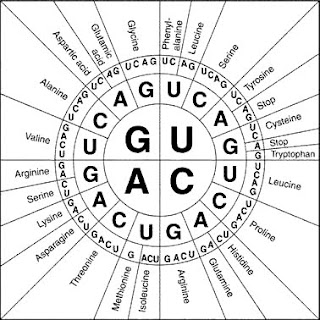
In essays on the subject of centricity, I've most often used the image of a geometrical circle, which, as I explained here,  owes someth...

Showing posts with label eminent heroes. Show all posts

Thursday, August 20, 2026

MYTHCOMICS: ONE MORE DAY (2007)


I quit following any of the SPIDER-MAN books on the 21st century, only occasionally availing myself of the occasional public-library TPB. But I wasn't so isolated that I didn't hear the many complaints about ONE MORE DAY, a storyline which ran in three separate Spider-titles, in which Peter Parker made a deal with The Devil to save Aunt May's life, costing him his happy marriage to the love of his life, Mary Jane.

I also heard that this retcon came about because editor Joe Quesada-- who also furnished the art for DAY-- didn't like the status quo of Peter Parker being married to Mary Jane. Unlike many of DAY's critics, I didn't have strong feelings about the marriage. I found it mildly pleasing that Parker should enjoy a measure of domestic contentment, not least because the post-Silver Age Parker wasn't, in my opinion, ever likely to generate scads of romance-subplots. I doubt the retcon improved the overall quality of Spider-stories based on my spotty readings, and in any case it's rare that any retcons have been instrumental to generating higher story quality. Yet I found that DAY, by itself, found interesting ways of playing with the often-moribund mythology of Spider-Man, particularly in its usage of guilt.


The web-slinger's career begins with his guilt over his accidental complicity in his Uncle Ben's death. Now, because Parker revealed his true ID to the world (something to do with the elephantine "Civil War" plotline, I think), the Kingpin sends a gunman to kill Parker but fatally wounds Aunt May. While the old lady barely clings to life, Parker makes the rounds of Marvel's wonder-workers, looking for some means to stave off the Grim Reaper. He explicitly tells Doctor Strange that while he thinks he could accept his aunt's natural death, he can't accept the calamity being his fault. 

I had low expectations for the "deal with the devil" part of the story, given how cliche the trope has become over the years, and perhaps I was influenced by all the negative press DAY received. However, though I've not liked the few comics-stories I've read by J. Michael Sraczinski, his handling of the "Satanic bargain" was the most mythic aspect of DAY.    


Once Parker's at his lowest ebb, he meets a devil's envoy who seems the incarnation of innocence: a sassy little girl who knows all about his problems, critiques him for his narcissism, and runs away.


Spider-Man loses the girl but comes across a young man in glasses. He discourses on the human need for escapism in a world that doesn't allow for personal heroism. Moments later. an older man drives up in a expensive car and takes Spidey for a little ride. He too related a life-story, a life that sounds a bit like Tony Stark's. (Earlier in the sequence, Spider-Man tells Stark that to Parker Stark was "like a father.")  He ends his story--mostly that of petty revenge against the classmates who tormented him in high school-- by emphasizing how he lost the one woman he loved.


 Parker then meets a woman in an old-fashioned dress. They discuss dreams, which gives Parker the chance to reference one of pop culture's most famous retcons. She then informs Parker of a fact most readers will suspect: the two males he met are alternate-world scenarios for ways that Parker could have turned out: Parker as complete nerd and as ruthless businessman. 


All of these discussions are primers for the subject of reality's mutability, at which point the woman reveals that "she" is Mephisto. He quickly disabuses Parker of the idea that he's offering to save Aunt May in exchange for Parker's soul. He brings Mary Jane into the discussion, revealing that he wants both of them to surrender their marriage, just for the purpose of spreading more misery. Mary Jane furthers the deal, ensuring that Spider-Man's identity will once more become secret. And as the last few moments of the Pert-MJ romance count down, Mephisto sticks in the knife: the little girl Parker met was the daughter he and MJ would have had, had they not chosen to save Aunt May. 

Then reality changes. Aunt May was never shot, and Parker never had a romance with Mary Jane Watson, though she continues to exist in his world. The tale ends with Peter at a party, as the partygoers toast Harry Osborn's recovery from trauma as "A Brand New Day"-- which was used for the name of a 2008 Spider-arc. Said arc does not follow up on any of the Spider-myths from ONE MORE DAY, and though both titles were used for the two most recent SPIDER-MAN, neither film is strongly indebted to either comics-arc. Given that I didn't find BRAND NEW DAY to be more than average, I doubt ONE MORE DAY provided any great inspiration for better Spider-Man stories. But clearly, the feature remains popular even without a "Mrs. Spider-Man," so in that respect, all the protestations of MJ fans did nothing to reverse that trend.

Sunday, July 12, 2026

MYTHCOMICS: "PLAYTHINGS OF PERIL" (SUPERMAN #44, 1947)


I've made no secret of my exasperation with most Golden Age SUPERMAN stories, despite their being under the creative control of the two men who originated the hero and so jump-started the costumed hero craze. After the inspired story of the Man of Steel's beginnings on Krypton, Siegel, Shuster and their various uncredited collaborators treated Superman like just another job, requiring no more effort than simple junk like "Federal Men" or "Slam Bradley." Admittedly, the majority of DC heroes weren't much better. But even though there might not be a ton of concrescent mythcomics at DC or at any other Golden Age company, I can find a lot more "near-myths" in the more popular features-- BATMAN, WONDER WOMAN, JUSTICE SOCIETY-- and a prevalence of near-myths, more than full myths, indicates that the comics-makers were engaged with creating inventive fantasies with which to grab the attention of kid-buyers.

But I finally found a concrescent SUPERMAN myth, albeit one published in the same year that Siegel and Shuster lost their contract with DC Comics, though the creators' names are cited on the first page of "Playthings." Fans identified the true authors as writer Don Cameron (who also co-created the story's villain) and artist Ira Yarbrough (who may have worked from roughs created by Shuster, though there's no record of even that contribution).


The first story-page establishes that "Playthings" will deal in part with economic hardship. To his credit, Jerry Siegel did a fair number of such tales, with the first appearing in ACTION COMICS #3, but those I've read I've found a trifle sappy. Cameron shows a harder edge. When Clark Kent and Lois Lane call upon the public to send help to the indigent of Metropolis, Clark notes that they aren't getting much response from the wealthy, who "sometimes need urging." And for once, Superman's foe the Toyman is on the same wavelength, though he wants to use the stinginess of the rich to enrich himself. Toyman approaches several businessmen with publicity schemes involving his fabulous toys: schemes for which the magnates pay nothing while they get a reputation for philanthropy. Toyman's remark is apposite: "They're all alike, these rich businessmen! Show them how to get something for nothing and they're happy!"


Toyman's game is yet another riff on the Trojan Horse: he hides cameras and microphones in the toys in order to glean info, and he also rigs the toys to malfunction so the rich guys will summon Toyman to repair the mechanisms. During the villain's first heist, the Man of Steel shows up. Since Toyman's weapons couldn't hurt the hero, the crook has to distract Superman with threats to human life, and, more amusingly, a company's tax records (!) 


 Superman foils Toyman's thefts, but when the hero makes a direct appeal to the charitable nature of the assembled businessmen, they turn a deaf ear. The rejoinder "I won't donate a penny to failures" is implicitly an indictment to all of them. Superman, however, promises that they'll soon learn the error of their ways.


   Just as Toyman realized that he could pull off crimes by using the magnates' desire for positive publicity, Superman figures out that he can compel ethical behavior with the threat of negative publicity. Ironically, about thirty years later, this is exactly how Siegel and Shuster were able to get pensions and credit lines out of stingy DC: by threatening to give bad publicity to the upcoming SUPERMAN movie. As for Toyman, the crusader lures him out of hiding by using another effigy to mock the reprobate for being in his "second childhood." Yet Superman doesn't give his foe adequate credit. Without Toyman's greed, the Man of Steel would have had no club to hold over the heads of the rich men, to make them correct a problem that required use of capital rather than super-powers. It's refreshing that at no time does the audience see the businessmen soften their hearts; they end up paying a hefty price for seeking free publicity, but at the end of the story they're still acquisitive greedheads. The end scene, in which the slums of the financially afflicted are consumed in "the greatest bonfire in the history of Metropolis" is particularly effective, giving the dissemination of bounty a touch of ritualism.

Jerry Siegel probably had no creative input into Cameron's story, except in the sense that Siegel first articulated the idea of the Herculean hero playing the role of a trickster, using satire and deception to make foolish mortals do the right thing.       

Sunday, June 14, 2026

MYTHCOMICS: ["A BRILLIANT CAREER"] DICK TRACY (1945-46)


In the 1960s, a familiar support-character in the DICK TRACY strip was Diet Smith, whose wealth and resources shepherded Tracy and his police department into Chester Gould's thoroughly bizarre vision of the Space Age-- a period that many TRACY fans might prefer to forget. But in the late 1940s, the year Smith was introduced, the millionaire magnate was best known for bestowing on Tracy his best-known technological gizmo: the 2-way wrist radio.

Now even in 1945 Gould could have easily made Smith both a captain of industry and a genius inventor, like the later Tony Stark, so that any device he gave to Tracy was his own creation. Or Gould might have modeled Smith after Harold Gray's Daddy Warbucks, whose plants could turn out war-weapons with no reference to the R&D process. Instead, though, the arc I've titled A BRILLIANT CAREER focuses upon the true creator of the wrist-radio, the blind genius named Brilliant, whose short and tumultuous career owed much to Diet Smith, though one of the two never knows their true connection.              


As it happens, the storyline for Smith also re-introduced a character whom Gould seemed to have consigned to a grisly death in October 1945: language-mangling comical hillbilly B.O. Plenty. Gould brought Plenty back into the strip and put him to work on Diet Smith's estate, and though the wild-bearded farmer doesn't play a big dramatic role in CAREER, he would go to become much more of a regular fixture in the 1950s than his employer.

In any case, Smith, whose nickname clearly refers to the mild food he eats, due to ulcers brought on by his hard-driving work-schedule, contacts Tracy. Smith's long-time business partner, whom Smith regarded as a brother (though the dead man never gets a proper name), has perished in an isolated room, strangled to death by an unknown assailant. However, Plenty stumbles across a clue: an experimental wristwatch-radio apparently dropped by the murderer. Smith relates that the dead partner was in charge of the division working on the secret project. Tracy interviews the radio division's research team, and the employee "Miss Irma" claims, perhaps imprudently, to have invented the watch. Tracy suggests her involvement in the crime, prompting this exchange:

SMITH: "Why, Irma's devoted to our company. She's been legally compensated for all discoveries while in our employ. She's quite happy."
TRACY: "Are you SURE she's happy?"


This is the closest that Gould-- who was himself a toiler in the fields owned by a great syndicate-- comes to admitting that such a laborer might feel himself (or herself) short-changed. And Tracy's instincts are correct in that Irma did feel short-changed, which presumably led her to murder Smith's partner for vague reasons. Apparently Irma believed she could remain Smith's employee and brazen things out, but when Tracy implicates her, she gets her husband Herman to spring her free using another of her inventions, "the atom light."

Except Irma and Herman are far bigger thieves than even a robber-baron like Smith. Irma's teenaged son Brilliant-- whom she accidentally blinded in a sort of reverse-Oedipal motif-- created both the atom light and the wrist-radio. (Though Brilliant has no idea that his mother's using one of his inventions for crime, it's somewhat appropriate that even a saintly kid like Brilliant might want to deprive others of sight. if only on a subconscious level.) Irma and Herman, now on the run, then get the not-so-brilliant idea to mass-produce the atom light for sale to foreign powers. Brilliant informs his adoptive father that they can only make more devices with a supply of lithium. Herman, knowing that Smith's factory has such a supply, uses the atom light to try ripping off the shipment. However, Smith's guards kill Herman.

Irma, never a master planner, then goes off the deep end. She infiltrates Smith's estate, and in a scene perhaps more indebted to Agamemnon than to Oedipus, she shoots Smith in his bath and then kills herself.


The Oedipal pattern does come forth, though, for even after Brilliant has been told how his parents used him, he like his mother decides that Smith is responsible for all his sufferings. At the hospital where Smith is recovering from his wounds, Brilliant invades what he thinks is the industrialist's room and attempts to kill his parents' murderer. However, hardboiled Tracy has read Brilliant like a book, and he plays a game of "blind man's bluff," allowing Brilliant to fire into an empty bed. Once Brilliant has purged his demons, he expresses contrition. He accepts Smith's offer to be the chief of research at Smith's facility. In private, the industrialist says that he wants Brilliant to become "my boy," though in this story we don't see the formation of filial bonds. But readers almost surely accepted that Smith could only be an improvement over Irma and her husband with the sound-alike name.


Gould could have left things that way for the run of the strip. For roughly the next two years, Smith and Brilliant presented other inventions to the city police, though none became as iconic as the wrist-radio. However, in 1948 Brilliant incorporated his "atom light" into "a television burglar alarm," and this was deemed such a threat to organized crime that a racketeer, Big Frost, tried to kill Diet Smith and did murder Brilliant.    


And it's at the point where Tracy ramps up the search for Brilliant's killer that Diet Smith drops the Oedipal bomb. Brilliant was his natural son by Irma, to whom Smith was married for a time. Thus the Oedipal slaying of the true father in defense of the false one was averted, though Smith's secretiveness may have cost him some points with readers. Yet even after Brilliant became the epitome of the loyal son, it seems Gould wanted the dramatic payoff, but without any complications to the strip's status quo. So Brilliant becomes one of the TRACY strip's many casualties, and in future I suspect nothing more is said about the creative personnel behind Diet Smith Industries.    


Sunday, May 10, 2026

THE READING RHEUM: THE HOUND OF THE BASKERVILLES (1902)


I've probably read Doyle's HOUND two or three times just for pleasure, but not since starting this blog in 2007. I recall occasionally ascribing high mythicity to the novel in this or that essay, but I never analyzed the book, even though the story is one of the best-known in literature, making it something of a "popular myth." That, however, doesn't count in terms of my charting a narrative's epistemological patterns. I have reviewed at least four cinematic adaptations of HOUND on the movie-blog, and I've never discerned high mythicity even in the two best and most famous films, the 1939 Fox film and the 1959 Hammer outing

Having reread the book now with my myth-stalker's hat on, I find that Doyle was in no way subtle about his primary myth-theme. The author hints at that theme in the first chapter, when Holmes and Watson discuss the pedigree of their client Dr. Mortimer by consulting a medical directory (the Victorian version of the Internet). They find that the doctor has authored articles with titles like "Is Disease a Reversion?" and "Some Freaks of Atavism." This concern with the distant past plays into the case Mortimer had brought to Holmes. The doctor tells Holmes and Watson that he half-believes in the Baskerville curse, that may have killed the former baronet Charles and may yet take the life of the sole heir. Sir Henry.

I've mentioned in one film-review that there's never a possibility, in Holmes' modern London, that there exists a demon-hound that slew the Baskervilles' degenerate ancestor in the 17th century, or one that might take the life of Sir Henry. Holmes duly mocks the very idea, despite taking the case. In the end the existence of a demon-hound matters less than the fact that the world that bred such superstitions still endures. Thus the still-savage land of Dartmoor can cast a spell upon some Victorian men, as attested by Watson when, as Holmes' agent, he first views the wild moorland around Baskerville Hall:

MY DEAR HOLMES: My previous letters and telegrams have kept you pretty well up to date as to all that has occurred in this most God-forsaken corner of the world. The longer one stays here the more does the spirit of the moor sink into one's soul, its vastness, and also its grim charm. When you are once out upon its bosom you have left all traces of modern England behind you, but, on the other hand, you are conscious everywhere of the homes and the work of the prehistoric people. On all sides of you as you walk are the houses of these forgotten folk, with their graves and the huge monoliths which are supposed to have marked their temples. As you look at their gray stone huts against the scarred hillsides you leave your own age behind you, and if you were to see a skin-clad, hairy man crawl out from the low door fitting a flint-tipped arrow on to the string of his bow, you would feel that his presence there was more natural than your own. The strange thing is that they should have lived so thickly on what must always have been most unfruitful soil. I am no antiquarian, but I could imagine that they were some unwarlike and harried race who were forced to accept that which none other would occupy.

The curse of the Baskervilles might not extend back to the days of prehistoric menhirs, but the event that brought about the supposed curse, in which a hot-blooded lord dedicated his soul to Satan for the sexual possession of an innocent maiden, remains no less remote from the experience of Victorian Londoners. 

And yet, England has its share of non-superstitious degeneracy. Selden, the murderer who haunts the moors, is directly compared to a caveman when Watson first sees him. Master plotter Stapleton, the one who arranged his uncle's death and tries to do the same with his cousin Henry, is called a "throwback" when Holmes descries how much a portrait of a 17th-century Baskerville resembles Stapleton. Stapleton's real name is the same as that of his father Rodger Baskerville, and no one knew of Stapleton's existence because he was born abroad, when his father left England under some cloud. In fact, a fair number of modern Britons have similar clouds. Stapleton and his wife Beryl get involved in some vague corruption long before the hound plot, and Laura Lyons, one of Stapleton's pawns, suffers from having made a bad marriage, though Doyle imputes all the wrongdoing to a no-good husband. If, as Mortimer believes, all disease really is a "reversion" to some less exalted state, that would include the disease of crime, which can be cured only by the relentless logic of a master detective.

While the cinema has its own ways of conveying mythicity, so far even the most faithful adaptations of HOUND known to me haven't been able to tune into Doyle's myth-theme. After finishing the novel, I re-watched the 1939 version again. Sure enough, the script only uses the prehistoric settings briefly and doesn't even show the villain meeting the harsh justice of a death in the Grimpen Mire. It's not impossible, though, that there's some HOUND-film I've not seen that taps into the deeper theme, and I look forward to finding it. 

ADDENDUM: I didn't originally apply the "clansgression" label to the 1902 novel, because Doyle downplays the fact that Stapleton is Sir Henry's cousin. And the author certainly does not pass comment on the fact that when Stapleton seeks to pimp out his wife by causing Sir Henry to fall for the glamorous Beryl, he's "sharing" her with a first cousin, even though (1) no sexual congress takes place, (2) Beryl does not become emotionally entwined with Henry as he does with her, and (3) Stapleton/Baskerville becomes jealous of the tete-a-tete even though no transgression has occurred. The novel ends with Stapleton's death and the assertion that Beryl knew nothing of the murder plot, implying that she'll be exonerated of complicity-- though Doyle also devotes little space to the cooling of Henry's passion for his cousin's wife.  


Monday, April 27, 2026

MYTHC0MICS: "CALL OF THE WILD" (CONAN THE KING #28, 1985)


I'm sure it's been at least twenty years since I read an issue of this Marvel magazine, which began in 1980 as KING CONAN and which lasted a healthy nine years, albeit under the altered title CONAN THE KING. It was a relatively high-ticket item, starting at $1.25 and ending at $1.50, and was the last Conan project from Roy Thomas before he left Marvel for DC. I imagine KING was launched for the usual economic reasons, but I'd like to think there was some thought of giving the barbarian a venue more expansive than the regular color comic.

There's a certain irony to Marvel devoting stories to the famed sword-slinger in his mature years, since Young Conan was always the most popular incarnation in prose and in comics. Robert E. Howard devoted one short story and one novel to Mature Conan, but clearly the WEIRD TALES readers liked the hero best when he was a young freebooter ranging from realm to realm. Nevertheless, KING presented Conan at an even later phase of life than Howard ever had. By the time of KING #28-- the last Conan tale for writer Alan Zelenetz-- the barbarian has sired a teenaged daughter and a somewhat younger son by his queen, Zenobia. The text of "Call of the Wild" implies that Conan is sixty years old, though artist Alan Silvestri draws both the barbarian and his red-haired guest-star as if they're merely in their forties.


Despite having ascended to the kingship of Aquilonia, Conan chafes at the confinements of civilized life. He dons a disguise and goes drinking at a lowly tavern. Monarch's business intrudes, so Conan orders everyone to clear the hall. One hooded figure seems minded to defy the King's order but then chooses to leave. 


Back at Conan's palace, his daughter Radegund anticipates her "confirmation" (whatever that means in Hyboria) but her father has conspicuously forgotten the Big Event. He's selfishly mourning the freedom of his younger years, and he departs the castle grounds for the forest. However, his cloaked "friend" from the tavern has apparently followed him-- a good trick, given that she couldn't have known when he'd leave and which way he'd go-- and reveals herself to the startled potentate.    


Unlike Conan, Mature Sonja has remained true to the wanderer's life, never marrying or settling down. She claims to have come to Aquilonia only to fulfill a commission, and to have run into Conan purely by accident-- though she could hardly be ignorant of the barbarian's royal attainments. It's worth remembering that in the first two-part tale of the Marvel Comics Sonja, she tricked Young Conan into doing heavy lifting for her. Mature Conan is delighted to see her and dearly wishes to talk over old times. She scorns his royal ascension, and her refusal to be Conan's nostalgia-buddy very nearly crushes him. But then Sonja switches gears and "allows" Conan to render her aid.


Zelenetz could have had Sonja lead Conan to any number of routine treasure-troves-- a lost tomb, a wizard's castle. Instead, Sonja's quest takes them to "a death barge-- sacred to the darkest gods of the nether realm." Aboard the ship, guarded by fanatics, lies the enshrined body of a necromancer, and Sonja's been hired to steal a gem from the dead wizard's eye. The two thieves have no real compunctions against robbing the dead, though in a symbolic sense the Death Barge might represent the world of Death itself, which will eventually consume all living warriors. In fact, Married, Not So Mature Conan can't quite resist getting grabby with Sonja's forty-something charms. Yet he doesn't resent getting her boot in his face, since his desire for the allure of pure adventure surpasses all else.


While Conan kills a bunch of guards (I'm sure they were all Bad People), Sonja steals the jewel-- but the dead wizard retaliates with a spell of deadly smoke. Conan hits on the idea of flooding the cabin, which interrupts the spell for some reason. Sonja keeps only her stolen eye-jewel while Conan randomly takes a "token" in the form of a necklace. Then they swim back to land, leaving the disposition of the Death Barge up to the reader's imagination.


Conan is all for deserting his throne and returning to his old wild ways, but Sonja tricks him one last time, albeit for his own good. Silvestri does a fine job showing Sonja's stoical acceptance that she's no longer a part of Conan's life, and off she rides, leaving him to his kingship-- and implicitly to his queen and children (though Sonja's only comment on the Cimmerian's marital life is a catty remark about Conan having a "harem.") Conan's poised to pursue her-- and maybe, his lost freedom-- when he hears temple bells and remembers that he's got a daughter waiting for him to perform his paternal duties.


But "all's well" for the King, whose dereliction of his responsibilities put into his hands just the right sort of booty to be a gift to the daughter he completely forgot. Zelenetz and Silvestri came up with a sort of "family melodrama" take on barbarian adventure, and my vague recollection of the whole series is that it often pursued storylines more in the vein of Hal Foster than of Robert E. Howard. To be sure, the KING series never lets an issue pass where Conan isn't mightily smiting enemies with his iron thews, so a lot of his complaints about civilized life ring false. Zelenetz's title is as ironic as his conclusion, for Conan's trajectory is less like that of Buck in London's CALL OF THE WILD-- the dog who embraces the wild life-- and more like that of White Fang, the star of London's other canine outing, the wolf-dog that finally gives up the wilderness in favor of domesticity. As a further irony, it's the she-devil with a sword-- the hero whose gender is best known for "nesting"-- who remains loyal to the allure of wanderlust.

Thursday, April 16, 2026

MYTHCOMICS: "ENDS OF THE EARTH" (ALL-STAR BATMAN #6-9, 2017)

 The stories that endure? The "demons" that win? They're the ones that speak to who we want to be. Not the ones that scare us into being who we don't. They're true because we want them to be badly enough that we MAKE them true. -- Batman to Ra's Al Ghul, ENDS OF THE EARTH FINALE.  

A tagline on the back of the TPB reads, "This is not a Batman story. It's a villain story." It's a reprise of a line Ra's Al Ghul speaks to Batman, albeit in his Bruce Wayne guise, as part of a climactic dialogue between the two enemies. Yet it's not true, and I suspect writer Scott Snyder knew it wasn't true when he wrote the line. For roughly the last fifty years-- the period in which fans became the dominant writers of superhero comics-- an identity between the Dark Knight and his gallery of grotesques and arabesques has been irregularly suggested. The "old pros" of BATMAN's first thirty years probably would have found this imputation of identity too metaphysical, whether one was addressing the creator of Poison Ivy (Robert Kanigher), Mister Freeze (Dave Wood), or the Mad Hatter (Bill Finger). Denny O'Neil, one of the first of the fans to turn pro, possibly understood the identity-dynamic when he created Ra's. Yet Bill Finger seems to be the driving-force behind the dynamic-- Finger, who tapped the power of psychological obsession for heroes and villains to an extent not seen in earlier media like pulps and serials. I commented on this common element in my 2020 essay, THE BAT-BACHELOR THREAD.

Plot-wise, ENDS OF THE EARTH is in many respects a standard Bat-villain team-up. Ra's is trying once again to wipe out much of the Earth's population. He suborns the talents of Mister Freeze and The Mad Hatter. Batman interferes, this time with some assistance from Poison Ivy. Snyder injects some elements that are probably original to his take on the Dark Knight-- an armored adult partner named Duke (whom I found tedious), and some new iteration of the Blackhawks. But Snyder surely knew he was selling his particular take on four of the celebrated rogues, by delving into their obsessions as the hero seeks to take them down.


Mister Freeze is one of Snyder's best conceits, with the writer framing Victor Fries' apocalyptic nihilism as springing from a childhood reading of Robert Frost's "fire and ice" poem-- and thus not purely a consequence of his quest to restore the health of his cryogenically preserved wife. In the service of Ra's Al Ghul, Freeze has perfected world-killing spores in his Arctic sanctum-- and even though Batman knows that a squadron of The New Blackhawks plans to firebomb the frigid fiend's laboratory, the Knight is compelled to get there first. Perhaps Batman feels he must be sure of ending the threat up close and personal. Perhaps he still pities the demented scientist, despite his murderous project. Or--

--Maybe Batman just wants to vanquish the cool, cruel villain with his nemesis, that of "heat." I frankly don't know what the propensity of real bats to generate high levels of body heat has to do with Batman using his own anti-virus to destroy Freeze's spores. But it does give the villain the chance to imagine his apocalyptic world of icy stillness ending in a cataclysm of fire.


The hero's triumph is mitigated in Part Two, in that some of the spores escape destruction, and so Batman must seek the help of another old foe. This time the Princess of Plants is off in some wasteland, conducting her biological experiments for the love of pure science. Knowing that Ivy's feeling for humanity is strained at best, Batman still seeks to prune knowledge from his enemy-- while additionally, for some vague reason, the Blackhawks menace Ivy as well. Ivy does help Batman after a fashion, though she makes him listen to a lecture about a supposed true ancestor to the legendary Tree of Life. If Freeze looked forward to a still, cold world of the future, Ivy is by comparison a being who seeks truth in the imponderable world of life's pre-human origins.


But Ivy's aid only slows the fatal influence of Freeze's spores. Batman uses his detective skills to track down a corporation that helped Freeze in some unspecified way and finds himself in the Carrol-esque domain of The Mad Hatter. Freeze and Ivy might not see themselves as aspects of Batman's own psyche, but the Hatter is an enthusiastic advocate of solipsism. But there's only one fantasy to which Bruce Wayne is beholden to, and that's "the window moment," the moment when he saw a bat come into his window and beheld the metaphor to which he dedicated his life.


And so, the Hatter, despite his love of fantasy, provides the real-world clue that leads Batman to confront Ra's Al Ghul in America's capital. The hero doesn't seem to make much of how he found several of the Blackhawk agents working with Hatter, and for all the reader knows, Batman learned nothing from them. He knows only that their confederates are holding Duke prisoner and planning to execute him at a particular time-- as if the threat of Ra's to exterminate half the world isn't sufficient to motivate the crusader. There's a confusing scene indicating that Batman gets Catwoman to masquerade as Batman to draw the villain's fire, and overall this segment doesn't show Ra's at his best. Still, the dialogue describing their conflicting visions-- one demon-haunted, the other haunted by a vision of perfectibility-- makes the more baffling details less worrisome.         

And so ends ENDS OF THE EARTH. Snyder packed in far too many extraneous details to make ENDS an outstanding Bat-story. (For instance, the last section reveals that the Blackhawks weren't working for Ra's after all-- so why were they working with Hatter?) But I can appreciate that Snyder and his five artist-collaborators went the extra mile to spin a new story of the hero and the villains who define him.    
        

Sunday, March 29, 2026

THE READING RHEUM: THE SLEEPING SORCERESS (1972)


SLEEPING SORCERESS was the second of the Lancer paperbacks to spotlight novel-length adventures of Elric. It's not nearly as well-composed as the first novel and is more transparently a fix-up of separate stories. All the stories here are, like the tale "The Singing Citadel" in the collection of the same name, are prequels to 1962's "The Stealer of Souls," in that they all concern Elric's conflicts with his first major enemy, the sorcerer Theleb K'aarna. The stories written from the 1960s and 1970s set the foundation of Moorcock's multiverse, but as he himself has commented, he was often making up things as he went along.   

Book One of SORCERESS, entitled "The Torment of the Last Lord," is the source of the image of a sleeping enchantress whom, one presumes, the hero will rescue-- though in the whole of the book, this is only true up to a point. Elric and his sidekick Moonglum have just left behind Queen Yishana in "Citadel" in order to pursue Ka'arna, and they encounter a castle inhabited only by the sleeping body of Empress Myshella, an ally of the Powers of Law, just as Elric is aligned to the powers of Chaos. Myshella instantly reminds Elric of his lost love Cymoril, whom he tried to rescue but slew instead, but despite those bad memories, he finds a magical means to revive her. Myshella wakes up just as Theleb K'aarna, allied to an army of Mongol-like warriors, marches on the castle to eliminate its potential threat to Chaos. Myshella summons forces that destroy the horde but K'aarna escapes. Not surprisingly, Myshella is instantly drawn to the brooding albino, and she soon becomes the newest in Elric's "Bond Girl" collection.

Book Two, "To Snare the Pale Prince," is a needlessly confusing sequel to the story "To Rescue Tanelorn" from CITADEL.  "Tanelorn" seems to take place after Elric meets Rackhir the Red Archer in the 1972 ELRIC novel before the latter has visited the mystical city of Tanelorn, while in the short story Rackhir resides in the city and protects it from a Chaos-inspired invasion by an army of beggars from the corrupt realm Nadsokor. Elric is referenced in "Tanelorn" but he does not appear-- and yet, "Prince" tells readers that Elric has visited Tanelorn at some previous time, and thus the albino and his buddy become allies with Rackhir's forces as they defend themselves from a new invasion. This time K'aarna allies himself with Urish, King of Nadsokor, who also has a previous grudge against Elric. The two villains conspire to steal a magic ring from Elric, knowing that he and Moonglum will come to Nadsokor to retrieve it. The evildoers also unleash a new invading force upon Tanelorn, a gaggle of demons who look like women and who therefore prove difficult for Tanelorn's defenders to strike down. Elric summons a troop of male demons, described as "ape-like," who destroy the female creatures and then die as well. ("Beauty and the Beast," anyone?) Elric recovers his ring and there's a rather pointless exchange with the hero's demon patron Arioch. K'aarna gets away again but kills Myshella in the process. His next foray against Tanelorn transpires not much longer afterward.

Book Three, "Three Heroes with a Single Aim," takes place during a period when Rackhir has invited Elric and Moonglum to abide in Tanelorn. The peace of the eternal city does nothing to dispel Elric's anomie, so he rides out into the wilderness, possibly hoping to die. Instead, he stumbles across K'aarna utilizing a mystic device to transport alien reptiles from another cosmos in order to attack Tanelorn. When Elric seeks to destroy the device, it hurls him into another dimension, which is the hero's first real encounter with the Moorcockian multiverse. He meets both Prince Corum of the "Swords trilogy," conceived around the same time, and Erekose, a character whom Moorcock loosely formulated in 1957 and then updated for a stand-alone novel in 1962, and they all realize, in some vague metaphysical manner, that they're all aspects of the same "eternal champion." I wrote up my impressions of "Heroes" in a previous post and my re-reading now does not alter my verdict:

Trouble is, while such heroes are interesting individually, they're not quite as interesting when they meet each other.  In the 1972 "novel" THE SLEEPING SORCERESS-- actually a collection of three separate novellas featuring Moorcock's most popular character, Elric of Melnibone-- the albino-skinned protagonist encounters two other heroes. Both are, like Elric, aspects of the "Eternal Champion," a sort of archetype that remains constant in many multiversal domains.  One is "Prince Corum," who had his own series of adventures around the same time as Elric. The other calls himself "Erekose," though he's not entirely identical with the character from the one-shot 1970 novel THE ETERNAL CHAMPION. For one thing, the Erekose-warrior in this story is explicitly black-skinned. I have not recently reread ETERNAL CHAMPION, but as I recall no reference is made to the race of the original Erekose. I assume Moorcock was having a bit of fun playing around with the racial identities of his heroes in different incarnations.

The crossover-novel brings the three heroes together in the equally eternal city Tanelorn, where they battle the magic of an evil sorcerer. It's a decent enough story but loses some punch given that all three heroes sound and act pretty much the same. Further, this sequence of SLEEPING SORCERESS was originally derived from a similar section in the 1971 Corum novel THE KING OF THE SWORDS. Since they're pretty much the same story, I decided to count the Elric version as "best crossover," simply because it stands upon its own better as a crossover-tale.  Further, it's a good basic representation of Moorcock's "Eternal Champion" concept, though perhaps not its most complex manifestation.

After Elric helps the other two heroes overcome an adversary in the other dimension-- a singularly underwhelming threat-- Elric returns to his own world and uses magic derived from the other dimension to thwart K'aarna's plot. Again, K'aarna gets away, as he must to satisfy the continuity. But the threat of Myshella is arguably greater. She has to perish because, if she's allowed to survive, she might tempt the hero away from his dolorous quest to slay lots of sorcerers and monsters before he dies. In the final analysis, there is enough symbolic discourse in all three chapters to justify my saying that its mythicity is high. But SORCERESS is not even close to being as aesthetically pleasing as ELRIC OF MELNIBONE.    


Tuesday, March 24, 2026

MYTHCOMICS: "BREAK YOUR DESTINY" GHOST SWEEPER MIKAMI (2011?)


"In essence, the domain of eroticism is the domain of violence, of violation"-- Bataille, EROTISM, p. 16.

"...in these comic circumstances, the beating may be deemed a symbolic displacement for the sex-act, since the female is almost always hot for the male."-- SHOOTING THE SHIRT, 2014. 

The title "Break Your Destiny" appears only on this splash page from the second part of the final SWEEPER story. Shiina's story, and those of other mangaka, were published in various magazines and in a 2013 collection, in order to generate revenue to be donated to the benefit of victims of a devastating 2011 Japanese earthquake. 

Any readers of the SWEEPER manga would have known that Tadao Yokoshima's "destiny" was to be the beloved butt-monkey of the phenomenal ghost sweeper Reiko Mikami, so author Takashi Shiina would have been having fun with that preconception by claiming that "this man's desire is going to change Japan's history." But the history of the Mikami-Yokoshima relationship ensures that none of the Japanese history-books must be changed, and despite the title Yokoshima finds that his destiny is locked in, and by his own free choice.


One element in the story suggests that this is supposed to be set in the early days of the Mikami-Yokoshima relationship: the fact that their colleague, the sweet-natured Okinu, is still a ghost. This state of affairs came to an end in the story-arc "Sleeping Beauty" (circa 1996), during which time Okinu was reincarnated in a mortal form. Okinu forgot her friends for a while, but when she remembered, she rejoined with "Mikami GS" for the remainder of the series in her purely mortal form. And yet, if this story were supposed to be taking place before "Beauty," that would create a continuity-problem, for reasons I'll explain shortly. Since Okinu's being a ghost is not important to the narrative, it's most likely that Shiina simply indulged in a little nostalgia with his friendly ghost-girl.  


The setup is only loosely established: Mikami has been hired to dispel a bunch of spirits from a deserted Japanese temple, and she demands that the holdouts inside the temple surrender to her authority, or she'll wipe them out. Okinu reminds Mikami that Yokoshima's being held hostage in the temple, and Mikami seems indifferent to her male assistant's fate, as long as she succeeds in her mission and gets paid. However, to herself Mikami muses, "I am really counting on your charm towards the supernatural, Yokoshima. It's one hell of a gamble whether she might fall for you or not." In other words, though Mikami unambiguously wants to earn her fee for ghost-sweeping, she's not just writing Yokoshima off, but is gambling that he will "charm" the head spirit somehow. (How Mikami knows it's a female spirit is left to the imagination.) But in the period prior to "Sleeping Beauty," Yokoshima-- never a Don Juan at the best of times-- had not demonstrated any special "charm towards the supernatural." It's only in the later adventures that Yokoshima attracts two or three "supernatural girls" into his orbit, and that's what Shiina's thinking of when he, speaking through Mikami, credits Yokoshima with "charm."


Yokoshima, however, was not apprised of Mikami's opinion of his charms, so he's in turmoil at having been deserted. However, the head spirit-- Seiryuto, an analogue to a character from another Shiina manga-- offers Yokoshima a deal. If Yokoshima supplies her with supernatural power, Seiryuto will whisk him back in time to an era where he can become the ruler of Japan and can have access to all the women in the world. Yokoshima agrees, and Seiryuto transforms her temple into a time-traveling spaceship. 


Mikami and Okinu witness the ship take off, and hear Yokoshima bid farewell to them, and to Mikami's "boobs, ass, and thighs." Though Mikami doesn't know what's going on, she demonstrates that she's not as willing to let her assistant disappear as she suggested earlier. She uses a wirepoon gun to fasten a line to the ship, so that it hauls Mikami and Okinu along in its wake. Thus the two intrepid heroines travel in time as well and end up receiving exposition from none other than the famed warlord Nobunaga Oda. This could be deemed a quasi-crossover in that Shiina's next manga after SWEEPER was a fictionalized series about Oda in his teenaged years.


One thing the girls learn from Oda is that they didn't end up in the same period as Yokoshima. He appeared in medieval Japan half a year ago and began using Seiryuto's advanced weaponry to conquer the local lords. From Mikami, Oda finds out how the greedy exorcist offended her assistant, and Oda has a suggestion on how to fix the situation so that Mikami and Okinu can take their buddy back to their time: Mikami must apologize to Yokoshima. The 16th-century warlord shows a remarkable knowledge of the 21st-century term "tsundere," advising the heroine that it's not good to "be too much tsun and no dere." Against her instincts, Mikami tries to practice apologizing, but Oda informs her that she looks like "a complete villain." Oda, knowing that her attitude will never compel Yokoshima to give in, formulates an alternative plan.


Sometime later, Oda's army marches on Yokoshima's lands. Yokoshima doesn't care about fighting Oda, for he's surrounded by the beautiful women of his court. But Seiryuto won't let him canoodle with the hotties, because Yokoshima can only endow her with his supernatural power as long as his lust is not satisfied. Presumably the alien yokai has been blocking Yokoshima for the past months for that very reason, since he's just as desperate for sex as he was working for Mikami. Yokoshima doesn't want to confront Mikami on the field of battle, but the court ladies affirm that they won't give him nookie if he has no temporal power. Boxed in by his Faustian bargain with the alien, Yokoshima dons his armor and joins his army in the field.


Oda's alternate plan was to still have Mikami apologize to Yokoshima, but with a mask over her face to conceal her insincerity. But headstrong Mikami pursues her own destiny, and dons the horrendous mask of an oni, which just stokes Yokoshima's fear of her. Despite her mixed signals, Mikami makes a sincere (for her) effort to apologize, but her need for absolute control causes her to deny her apology seconds after making it. Yokoshima is unable to follow Seiryuto's counsel and convert his fear into anger, but his fear of Mikami's vengeance drives him to attack her with his sword. She mostly blocks his blow, but he hits her mask and it splits. Seiryuto is then surprised at the disappearance of her power-source, for even though Mikami maintains through her words that she doesn't need her assistant in any way, her "crying eyes" belie her lying words. For some vague reason, Seiryuto's loss of power propels her and the three ghost-sweepers out of the medieval era.


And what is the reward for Yokoshima's virtue, his realization of how important Mikami is to him, and he to her? Why, his reward is vice-- the vice of Mikami's wrath. But going on all evidence, she's insincere again in saying that she's punishing him for having physically attacked her. Mikami resents that Yokoshima pushed her into losing her prized self-control, not to mention any anger she might feel at his willingness to leave her. Seiryuto builds on Oda's tsundere comment by claiming that Mikami is "99.9999 percent tsun"-- which is another way of saying that Mikami has no dere to spare. Okinu tries to see the sunny side of torture by saying, "Well, but at least their hearts are connected-- I think." 

And yet Mikami does speak a truth of sorts in her final adventure-- one that makes the most sense if she utters it after she and her butt-monkey have endured all the travails of the 1991-99 series. In some of those adventures, Mikami became hazily aware that she's conceived a liking for Yokoshima, but she would never verbally admit it in his presence. But this last time, when he protests that she ought to show him "some grade of affection" after he chose her over rulership of Japan, Control-Freak Mikami makes the admission, "This is how I show affection! Through my whip of love!" 

Such a confession is entirely in line with a female who became obsessed with control after she failed to hold the attention of the men in her youth with traditional female traits. The final words of Mikami explain why she didn't fire the horny teen who kept ogling and molesting her, and it certainly was not because Yokoshima worked cheap. It's because he's so besotted with her beauty that he'll endure any rigor, any torture, to be near her-- and his passion transforms her into the perfect domme for such an intrinsic sub. As with many similar figures from Japanese pop culture, her violence becomes a "symbolic displacement for the sex-act." But at least Takashi Shiina offered some "grade of affection" for his character Yokoshima in the story "Stranger Than Paradise," in which it's revealed that (maybe) Yokoshima and Mikami eventually tie the knot-- though even holy matrimony is not enough to resolve all the conflicts in this equally sacred "battle of the sexes."