Featured Post

SIX KEYS TO A LITERARY GENETIC CODE

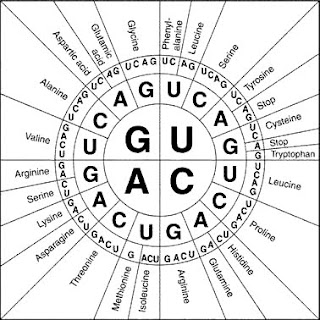
In essays on the subject of centricity, I've most often used the image of a geometrical circle, which, as I explained here,  owes someth...

Saturday, August 25, 2012

THE ILLEGITIMACY OF 'LEGITIMATE RAPE'

A week or so has passed since Missouri Representative Todd Akin recanted his comments on "legitimate rape."  Originally he claimed that certain unnamed "doctors" had demonstrated that in the cases of real rape (as opposed to those that were falsified, presumably by the woman) pregnancy was unlikely to occur, because "the female body has ways to try to shut that whole thing down."  Following a firestorm of objections, including pregnancy specialists who claimed that the body had no such "rape-prevention" potential, Akin claimed that he had simply "used the wrong words in the wrong way."

For a short period following Akin's original comments, I wondered if he had, against all likelihood, been exposed to a scientific theory like the one expressed by Leonard Shlain in his book SEX, TIME, AND POWER:

...the resting PH level of a woman's vaginal lining creates an environment deadly to sperm. Responding to a lover she desires, a woman secretes a lubricating fluid that has as one of its primary properties the ability to neutralize her vaginal PH level's spermicidal effects.  The more foreplay, the more lubricated a woman becomes, the stronger the likelihood that a man's sperm will survive.  A rapist's sperm would enter a killing field."-- p.220.
 
However, in the ensuing days, I never heard any of the health professionals consulted bring up this theory, so it may be that Shlain's interpretation of the female biological mechanism is not one held by the majority of professionals.  (To be sure, though the "killing field" concept is presented as simple fact, Shlain does toss out some heuristic speculations throughout the book, some of which are more than a little wild.)

Further, Shlain would be an unlikely choice for the conservative Missouri congressman to consult. Far from being a soldier in the Republican "war on women," Shlain's book is if anything a valentine to the importance of the female human being (whom he calls "gyna sapiens," as against the androcentric "homo sapiens") in the biological and cultural development of the species.  In addition, Shlain (who passed away in 2009) was not the sort of marginal medical man favored by the far right, having served as the Chairman of Laparoscopic Surgery at a San Francisco hospital.

Later, thanks to a post on a comics message-board, I was exposed to a more likely source for the Republican congressman's politcized views on female reproductivity.  This essay from the St. Louis Post-Dispatch raises the possibility that Akin and his fellow travelers may be basing their "rape-prevention biology" on a rather questionable source of scientific data: that of Nazi concentration camp doctors.

Comparisons between Nazis and Republican anti-abortionists are of course just too easy to be worth making, and of course neither Akin nor any of his few defenders are going to affirm that the roots of their research lie in the Nazi death-camps.  And certainly there's nothing new about people devoted to a given cause asserting that their "ought" must and should outweight any "is" that might contradict it.   

What interests me about the situation is that even though Akin's anti-abortion position is rooted in religion, which should need no buttressing from scientific data, he adopted the language of science in order to promulgate a religiously-based theory.  It is as if he really wants to say, "A just God, such as I worship, would not allow innocent children to be conceived through acts of rage and violence; therefore it must be that the female body has been given the propensity to prevent such things by simply 'shutting down.'"  This is quite different from Shlain's theory, which asserts that the vagina does have a potential defense against unwanted sperm, but never claims that such a defense is absolute.

Like many liberals, I don't believe that Akin simply "mispoke."  Dozens of sites on the web have reported similar remarks by Akin and his fellow travelers (including vice-presidential candidate Paul Ryan), so I need not rehearse those here. 

Now, it's possible that I give the congressman too much credit in assuming that he might have some real feeling for the "innocents" that he and his anti-abortion fellows say that they want to protect.  It could well be that he's doing so with no personal feeling whatever, as a cynical attempt to manipulate the more conservative members of the electorate.

Yet, whether Akin's protective emotions are sincere or not, I think that many of his target citizens are moved by a sympathy for the innocent, for the defenseless child.  On one messageboard I aroused considerable net-ire by saying that this sympathy in itself was not political in nature.  The ultraliberals that attacked me wanted to believe that to say this was to give tacit support to the anti-abortion movement.  Anything that did not demonize that movement was the equivalent of aid and comfort to the enemy.  I also cheesed off the ultraliberals by saying that while I didn't oppose others using the term "pro-choice," I thought it was a little dodgy in that "choice" is not the main issue.  The main issue is the right of the state to speak for its citizens in deciding questions of life and death, for the "innocent unborn" as well as those who are already full, functioning citizens.

Though individual Christians have been known to oppose the state's use of that power in respect to
military induction and to the death penalty-- both of which have the manifest power to take life, whether in service to the state or for the protection of it-- I know of no organized churches who oppose these particular instances of "rendering unto Caesar what is Caesar's."  Only the lives of the unborn cause this upsurge in popular sentiment.

I am opposed categorically to the politicized sentiments of Akin's kind.  Their only solution to the multifarous problems relating to unwanted conception-- which include, but certainly are not limited to, conceptions through rape-- is an absolute refusal of the state's power to kill the unborn. 

And, unpleasant though it may seem, the unborn cannot be given special rights, despite any and all societal instincts to protect future generations.  It goes without saying that the state probably has made many mistakes in executing particular abortions, just as it has in executing particular prisoners.  But it does not follow that all of the executions were mistakes.  There are times when the unborn, innocent though they may be, simply have to suffer from living in an imperfect world.

I sympathize somewhat more with those individuals-- none of whom are affiliated with the anti-abortion crowd-- who recommend, not an absolute ban on abortion, but merely restrictions as to how *often* citizens might "choose" to have abortions.  But it's seems almost certain that our society, having become polarized between two extremes, will never explore this area of legal theory. 


AN ANTI-CANONICAL CANNONADE

Though I've said earlier that most readers of popular fiction are attracted to that form precisely because it doesn't require them to evaluate it, it's inevitable that a few readers will form their own "canons" for these sort of anti-canonical works.  It's inevitable because no matter how simple or how debased a given popular genre may seem to elitists, some creators will invest considerable passion and imagination into those works.

I once said I'd try to formulate a list of "adult pulp" comic books, but never got around to it.  But of late I've been cogitating on pulp magazines (and some of their contemporaneous fellow travelers).  Since these were the predecessors of comic books, here's my list of some above-average popfic tales from the pages that gave birth to many of America's most lurid and extravagant dreams.

_________________


Edgar Rice Burroughs-- TARZAN OF THE APES and THE RETURN OF TARZAN (Tarzan series), GODS OF MARS and MASTER MIND OF MARS (Mars series)

H.P. Lovecraft-- THE CALL OF CTHULHU and THE WHISPERER IN DARKNESS

Robert E. Howard-- "Tower of the Elephant" and HOUR OF THE DRAGON (Conan), THE MOON OF SKULLS (Solomon Kane)

A. Merritt-- THE MOON POOL and THE SHIP OF ISHTAR

Clark Ashton Smith-- the "Zothique" cycle and THE HASHISH-EATER

Lester Dent-- THE LAND OF TERROR and THE MUNITIONS MASTER (Doc Savage)

Seabury Quinn-- THE DEVIL'S BRIDE

Sax Rohmer-- THE INSIDIOUS DOCTOR FU MANCHU and BROOD OF THE WITCH-QUEEN

Donald Wandrei-- "The Red Brain"

Norvell Page-- THE RED DEATH RAIN (The Spider)

C.L. Moore-- "Black God's Kiss" and "Jirel Meets Magic" (Jirel of Joiry)

Russell Fearn's "The Golden Amazon Returns"

Robert J. Hogan-- THE BAT STAFFEL (G-8)


Wednesday, August 22, 2012

QUICK CRONENBERG POST

I'm taking part in a thread debating the substance of director David Cronenberg's remarks on NextMovie.

 In response to one poster on the thread, I wrote the following regarding the dividing line between "high and low culture," which I've been treating as "big and little myths" in recent essays:

"I haven't encountered any arguments as to how the GODFATHER book (which I've not read) might be better than the film, but I've seen comparable instances: there are things about Bloch's PSYCHO-- another not-classic book-- which I like better than Hitchcock's adaptation, even though the PSYCHO film is indubitably classic.

If I had to set down some rough standards, it might be that people tend to see "elevated" art (whether it's there or not) in works that suggest elevated levels of communicability. Bloch's PSYCHO is written with a meat-and-potatoes clarity; it has some depths, but it doesn't express them with any great style. Hitchcock and his collaborators take essentially the same story Bloch wrote (with some differences) and bring to it a great deal more style, though perhaps no greater content.

I think certain Cronenberg films, such as SCANNERS and THE FLY, are just like Nolan's trilogy in that they take melodramatic subject matter and express it with a great deal of attention to style. Again, as with my example of PSYCHO, this does not mean that melodrama has no deep symbolic content, but a lot of it doesn't. I'd consider THE FLY to possess more story-content than any of the Nolan trilogy, but I regard the Nolan trilogy, flawed as it is, to have more content than SCANNERS or, frankly, Cronenberg's graphic-novel adaptation HISTORY OF VIOLENCE.

Now I don't know precisely what Cronenberg is thinking about when he avers to Nextmovie that superhero directors in general-- not just Nolan-- aren't making an "elevated art form" (his words). I suspect that he's thinking that as soon as you've got a man in a funny suit, that's zero content. I disagree; I think there can be as much substantive content as THE FLY at the very least, possibly more. He's also got a bone to pick with the idea that artists don't have to answer to outside interests. I think I'd like to see the shade of Michelangelo conjured up, to ask him if he thought he still produced art despite having to answer to the Church of Rome."


I'll expand these remarks somewhat to say that what I called "melodramatic subject matter" is more or less covalent with the "little myths" of non-canonical fiction, and also with what I've termed works of "thematic escapism."

In contrast, the "big myths" of canonical fiction compare well with the works of "thematic realism," also discussed in the essay referenced above.

It's unfortunate that an intelligent director like Cronenberg-- who has himself dealt with material that is at heart no less thematic escapist than Batman (specifically the Batman of the comic books, just to keep to Cronenberg's original context).  I for one found Cronenberg's HISTORY OF VIOLENCE to be no more than a well-executed revenge melodrama, different from Batman not in terms of the realism of its theme but only of its naturalistic phenomenal orientation.  I think his confusion springs from the Aristotelian notion of art being governed by *mimesis,* often interpreted to mean the imitation of experiential reality.  It's a shame that a man who has made a great number of sophisticated fantasy-films is apparently unable to see that superhero fantasies can have a level of distinct content that stands independent of how "elevated" they may appear to be.

NOTE: The phrase I tossed off for the thread, "elevated levels of communicability," compares favorably with Philip Wheelwright's concept of plurisignative poeto-langage, discussed here.

Monday, August 20, 2012

THE CARE AND ESTEEMING OF LITTLE MYTHS, PART 2


Having spent Part 1 discussing literary culture in terms of its being “high” or “low,” in this part I’ll confuse that familiar metaphor all to hell by suggesting a counter-metaphor: that of “big” versus “little.”


In some ways a dualistic metaphor relating to size might prove less prejudicial than the high/low dichotomy.  As humans are hierarchical beings, they have a tendency to conceive that things rated “higher” than others on a given scale are perforce “better.”


There’s arguably more leeway in using size to denote quality.  Some individuals will argue that “bigger is better,” while others will respond, “good things come in small packages.” In biological terms, an elephant fits one ecological niche, while a mouse fits another.  This dichotomy applies equally well to the ecological interactions of canonical literature (usually considered to be “high culture”) and non-canonical literature (usually rated as “low culture.”)


Canonical literature perpetuates its existence through its promulgation of “big myths”— which means by and large “literary myths” rather than “religious myths,” though the distinction is not always as absolute as some critics have claimed.  “Big” literary myths are those works of such colossal significance that they will (in theory) appeal not just to the sophisticated audiences of their own time, but also to many if not all sophisticated audiences from then on.

To be sure, not every work that attempts to obtain the status of lasting “for the ages” succeeds in doing so.  However, even the failures “prove the rule,” as it were, while some works may seize the brass ring of canonical status for a time and then fall into comparative obscurity.  Or, like Melville’s MOBY DICK, some works may not succeed in their time but become canonical myths long after an author’s death. 


In contrast, non-canonical literature is meant to serve the needs of contemporary buyers only, and shows few aspirations toward literary immortality.  It propagates “little myths” that have more widespread accessibility in their time, spreading hither and yon like dandelions on the wind. Canonical myths propagate themselves more like frogs, as the “eggs,” the works themselves, depend on a complex process of cross-fertilization from peers and critical journals in order to obtain their desired “big” reputations.  It’s possible for certain “little myths” to take on a quasi-canonical status—I’m thinking here of the Sherlock Holmes tales of Arthur Conan Doyle.  However, Sherlock Holmes’ “little myth” reputation is partly sustained not solely by the original stories, but by the accessibility of the concept to adaptation in other media—films, prose pastiches, and so on.  In contrast, Melville’s MOBY DICK sustains its “big myth” reputation on the appeal of the original work alone, irrespective of how many movies or pastiches may spring from that appeal.


Now all this talk about “popularity” should not be seen as opening a door to the mistaken definition of “myth” as simply being “that which is popular,” which is what many comics-fans mean when they speak of Batman being “mythic.”  As I’ve specified many times, literary mythicity is defined by the complexity of symbolism in a given work, not by its popularity.  Literary myths, like religious myths, must construct their narratives around aspects of life that their audiences deem important, or else no one would trouble to read any kind of literature, “big” or “little.”  These life-aspects have been most insightfully organized by Joseph Campbell—who admittedly applied them dominantly to religious, not literary, myths—into four crucial functions: the psychological (the dynamics of individual personality), the sociological (the dynamics of the society), the cosmological (the dynamics of the physical world), and the metaphysical (obviously, dealing with whatever is conceived as “behind” the merely physical).


As a quick side-note, I can’t help observing that the function that receives the least amount of attention from canonical critics—that of the cosmological—is extremely important to both of my chosen examples.  Through Ishmael and his fellow whalers, Melville explores the physical nature of the leviathans of the deep.  Through Sherlock Holmes, Doyle anatomizes the physical nature of London itself.


Having re-stated a major component of my theory, I recognize that popularity—or the attempt to garner popularity—is the medium through which the germs of myth are dispersed.  In this essay I examined how a particular story from a Silver Age comics-feature, ADVENTURES OF THE JAGUAR, displayed a higher-than-average level of mythicity.  Still, the author of the story was certainly attempting to garner some level of non-canonical popularity, for the tone and substance of the story are imitative of Silver Age SUPERMAN comics, which were among the best-selling comics-features of the period.  Most JAGUAR stories imitated the tone and substance without managing to convey any content, and this may be a key reason that the existing fandom for Silver Age comics pays scant attention to the Jaguar’s 1960s incarnation.  In contrast, even weak Superman stories of the period derive some glamour from their association with a host of better-regarded stories.


        When I speak of “the care and esteeming of little myths” in my title, I have in mind the point I made in Part 1: that neither “big myths” nor “little myths” are worthy of love as such.  However, one can esteem them as well-made artifacts, artifacts that in some cases succeed in attempting more than the average artifact does.  I’ll add that because modern elitist critics are so concerned with emphasizing the portentous importance of the “big myths” they champion, as against the “little myths” that usually enjoy wider contemporary popularity, those critics are unable to analyze the “big myths” in terms of their actual content, too often falling back on parroting the intellectual arguments of Sigmund Freud or Karl Marx, as if the work became good simply because its complexities can be explained through those conceptual lenses.  Alternately, those same techniques can be used to prove a work to be bad, because the work is then reduced to the level of a symptom of some undesireable "false consciousness." An example can be seen in the Charles Reece WONDER WOMAN essays I critiqued in June, starting here


        Without a firm grasp as to how narrative works in its "little" manifestation, one can have no genuine insight into the way it works in the "big" version.


Thursday, August 16, 2012

THE CARE AND ESTEEMING OF LITTLE MYTHS, PART 1


In GROTHERY STORES I referenced a Gary Groth blogpost in which Groth tossed out George Santayana’s second-best-known quotation:

"Americans love junk; it’s not the junk that bothers me, it’s the love."


Now what does this statement mean, ripped as it so often has been from whatever context lay behind it?


On the bare face of it, it states the author’s disapproval that anyone should show love toward, not literal junk, but the "junk" of popular culture.  Santayana does not state what one should love rather than popular culture, but the construction implies that there is something worthier of love than mere "junky" artifacts.


Given the usual opposition of the terms “high” and “low,” it follows that if one disapproves of other persons loving what’s often termed “low culture,” then its opposite, “high culture,” may well be the missing thing that is worthy of love.  It’s not unlike the logic that says that one may sleep with a “low-class” prostitute and then cast her aside—which seems the attitude Santayana evinces toward low junk-culture—while one confers love and marital status only upon those of a higher and more seemly class.


Given the fuzziness of his statement, I do not know if this is what George Santayana meant.  Gary Groth has made statements to this effect many times, usually following the Adornite argument that high culture leads to greater and finer thought while low culture leads to mental sloth, voting Republican and herpes simplex.  He’s made so many such assertions that I hope the reader will forgive me for not bothering to ferret out an example thereof, in order to stick to the subject: what should one love?


Should George Santayana “love” the play HAMLET, so often heralded as a high point in Western culture?  And if he did love it, as the phrase goes, why didn’t he marry it?  To extend my prostitute/wife analogy, surely no one would disapprove of such a high-minded marriage, even if he did keep some low-culture doxy on the side.  Maybe, while expousing his love of HAMLET to all and sundry, he kept a set of John Buchan books in a cubbyhole somewhere, taking them out only to use them for some quick unearned gratification, though always taking care that the neighbors should never find out.


Now, by my lights one *should not* love either HAMLET nor BATMAN (to choose a pop-culture icon better known than anything George Santayana might’ve read).  It should seem ludicrous to love either the high-culture or the low-culture icon, for the simple reason that no icons, or any of the works in which they appear, can ever love anyone back.    


Of course human beings do, against all logic, express vivid affection for all manner of fictional works and characters, or even for certain kinds of nonfiction (one thinks of Nietzsche’s recollections of his first exposure to the work of Schopenhauer).  But I suspect that the affection people feel for the phantasms of fiction and philosophy are akin to what Herman Melville termed “the shock of recognition.”  Melville claimed that upon reading Hawthorne, he recognized a spirit akin to his own in the works of the older author.


It could be argued that, whatever similarities existed between the two men, there may have been far more differences.  But even admitting this, Melville’s experience of “shock” is not invalidated.  Melville saw in Hawthorne’s works not the spirit of Hawthorne, but the spirit of Melville himself, reflected by the work of Hawthorne, as in a mirror.


The notion of intersubjectivity explains much of the appeal of fiction.  Elitists like Groth generally insist that the difference between good and bad fiction is a matter of highflown sophistication; that which lacks sophistication is perforce bad.  Yet even elitist critics differ among themselves over what is good or bad in Shakespeare just as much as comics-fans do about the proper depiction of Batman.  The arguments themselves may be more sophisticated, but the response for or against any given work spring from the extent to which the work mirrors the subjectivities of critic, fan, or general audience-member.  But subjectivity doesn’t exist in a vacuum, and so we must speak of intersubjectivity as a way of understanding how persons from all walks of life can see reflections of themselves in the works of strangers, often strangers from other times and cultures. Thus, when we feel affection for the works of Shakespeare or of Bill Finger, what we “love” are shadows of our own tastes and personalities.


Yet we need not dismiss this sort of “love”—which, when examined more fully, might be better termed “esteem”-- as mere solipsism.  Even as people with wildly differing tastes and personalities can work together to produce civilization, all forms of literature can and do play off one another to create a greater whole.  (And yes, the verbal contrast of “working together” vs. “playing off one another” is no coincidence.)  Northrop Frye, from whom I derived my own “shock of recognition” despite his being one of many intellectual-mentors-whom-I-never-met, viewed this whole as possessing the integrity of archaic myth.  To any reader of this blog, it should be more than clear that I do as well, whatever disagreements I have with Frye (see here).  In part 2 I’ll address the proper way to show esteem for literary myths, be they of noble or base extraction.  

Tuesday, August 14, 2012

MISSING: ONE OUTRAGED POST

An odd thing happened on THE BEAT this week: a blogpost on a particular type of fannish outrage was *bleeped* out of existence, presumably through the auspices of the editors.

As of today one can still call up either of THE BEAT's two posts on the death of Joe Kubert, and see a small display under "Related Stories" that references the missing post, but clicking on the icon takes you noplace.  Presumably the link will go away in future.

The substance of the missing post was a mini-controversy started when some publicity-person at DC Comics responded to Kubert's death by highlighting his contribution to a current BEFORE WATCHMEN title, rather than his many earlier and more esteemed productions.  It was a gaffe that DC later corrected somewhat with an amended comment stressing Kubert's long history (though BEFORE WATCHMEN was still listed).

The only point of interest for me in this minor kerfluffle was that another poster directed me to a post by Alan David Doane, on his blog TROUBLE WITH COMICS. After Doane celebrates Kubert's immense influence and talent, Doane says:

Unfortunately, and because of [Kubert's] own choice, I’ll always also remember Joe Kubert as a scab artist who chose a paycheck over decency in signing on to DC’s egregious Before Watchmen project. The disgust I felt when people like Brian Azzarello or J. Michael Straczynski signed on board was nothing compared to the enormous confusion and disappointment I felt when people like Kubert, or Len Wein, or Darwyn Cooke agreed to be a part of Before Watchmen, against the clearly stated wishes of the writer of Watchmen, Alan Moore.
I responded on the BEAT post, saying something to the effect that this was a "noxious" thing to say about Joe Kubert.  It's certainly possible to take up a moral position against DC's decision to bring out BEFORE WATCHMEN, though most of the rhetoric against it I've found poorly reasoned.  But comparing Joe Kubert to scab labor isn't even a good metaphor for the situation between Alan Moore (who is, one might like to remember, only one of WATCHMEN's two creators) and DC Comics. 

Fans may not like it, but Alan Moore and Dave Gibbons signed a legally binding agreement with DC Comics, thus making it possible for the characters to be "farmed out" in whatever way DC Comics might please.  No professional, regardless of their high or low status, owes Alan Moore the favor of refusing to execute such a continuation simply because Moore made a bad deal.

Case closed.

Except this quick ADDENDA--

I'll note that Doane originally had even harsher words for Joe Kubert than "scab artist" in his original post, and anyone curious can find reference to those remarks online.

Also, the vanished BEAT post also referenced Tom Spurgeon cursing out DC for their disrespect to Kubert's memory.  A couple of posters took issue with Spurgeon, so it's likely that McDonald took the post down for excessive toxicity.  Spurgeon later expressed regret, not for his anger, but for detracting from the appreciation of Kubert's legacy-- a general spirit with which I concur.

Monday, August 13, 2012

SUBMARINE SUBLIMITY

At the end of THE THREE PART HARMONY OF DYNAMICITY I said:

In a future essay I'll relate these three levels of dynamicity to the more general concept of *sublimity,* which I relate to science fiction's "sense of wonder"-- of which Verne's book is a leading exemplar.
Possibly I shouldn't have implied that "sense of wonder" was characteristic of science fiction alone, since I devoted this entire essay to the proposition that isophemenal literaure could capture the sublime as well as any metaphenomenal work, using the specific example of Joseph Conrad,  noted pooh-pooher of fantastic tales. I said, among other things:


Plainly, in contrast to the TYPHOON passages I cited earlier in my Conrad analyses, this is Conrad picturing a naturalistic scene with just as much "sense of wonder" as anything in fantasy or science fiction.
And of course the literature of the metaphenomenal-- be it uncanny or marvelous-- may also draw on naturalistic descriptions to the same end of conveying wonder.  Here's another section from Chapter 24 of Verne's 20,000 LEAGUES UNDER THE SEA:


Actual petrified thickets and long alcoves from some fantastic school of architecture kept opening up before our steps. Captain Nemo entered beneath a dark gallery whose gentle slope took us to a depth of 100 meters. The light from our glass coils produced magical effects at times, lingering on the wrinkled roughness of some natural arch, or some overhang suspended like a chandelier, which our lamps flecked with fiery sparks. Amid these shrubs of precious coral, I observed other polyps no less unusual: melita coral, rainbow coral with jointed outgrowths, then a few tufts of genus Corallina, some green and others red, actually a type of seaweed encrusted with limestone salts, which, after long disputes, naturalists have finally placed in the vegetable kingdom. But as one intellectual has remarked, "Here, perhaps, is the actual point where life rises humbly out of slumbering stone, but without breaking away from its crude starting point."
Finally, after two hours of walking, we reached a depth of about 300 meters, in other words, the lowermost limit at which coral can begin to form. But here it was no longer some isolated bush or a modest grove of low timber. It was an immense forest, huge mineral vegetation, enormous petrified trees linked by garlands of elegant hydras from the genus Plumularia, those tropical creepers of the sea, all decked out in shades and gleams. We passed freely under their lofty boughs, lost up in the shadows of the waves, while at our feet organ–pipe coral, stony coral, star coral, fungus coral, and sea anemone from the genus Caryophylia formed a carpet of flowers all strewn with dazzling gems.
What an indescribable sight! Oh, if only we could share our feelings! Why were we imprisoned behind these masks of metal and glass! Why were we forbidden to talk with each other! At least let us lead the lives of the fish that populate this liquid element, or better yet, the lives of amphibians, which can spend long hours either at sea or on shore, traveling through their double domain as their whims dictate!
This dazzling vision-- very much in accord with one of the qualities Edmund Burke found in the sublime, "the richness and profusion of images"-- describes nothing that is either uncanny or marvelous, except for the brief reference to the futuristic diving-suits of Nemo and narrator Aronnax.  Nearly everything in this passage shows Verne attempting to capture the wonder of real submarine life-- most of which, I'm told, he managed to render with extraordinary faithfulness.  Yet without doubt the entire tonality of the scene is charged not with the "atypical-sublime" that one might find in a Conrad wonder-producing story, but with the "strange-sublime," which possesses a different character simply by virtue of the presence of the overall qualify of "strangeness."  Without the marvels produced from the genius of "superman" Nemo--  the diving-suits, the Nautilus-- this richness of imagery would be inaccessible to the eyes of humankind, at least in this fictional universe.  Thus even naturalistic details within a marvelous cosmos might be said to take on "the strange-sublime."

To touch on the concerns mentioned in THREE PART HARMONY, the above section from LEAGUES parallels the first section quoted in the earlier essay: all energies in the excerpt are "at rest," whether or not they are capable of greater activity.  This renders all agents in the except as "microdynamic."

How, then, is the section "sublime" if there is no sense of "might" or of danger?  Kant very definitely alloys the sublime with a sense of possible peril-- thus calling once more for what should now be a very familiar Kant-quote:

“…consider bold, overhanging, and, as it were, threatening rocks, thunderclouds piling up in the sky [and other examples of furious nature]... Compared to the might of any of these, our ability to resist becomes an insignificant trifle. Yet the sight of them becomes all the more attractive the more fearful it is, provided we are in a safe place. And we like to call these objects sublime because they raise the soul’s fortitude above its usual middle range..."-- Section 261.
Schopenhauer more or less agrees:

"The feeling of the sublime arose from the fact that something positively unfavourable to the will becomes [an] object of pure contemplation."
In this essay I disagreed with both Kant and Schopenhauer and allied myself somewhat more with Burke, for all that Burke was of the Empiricist faction:


I can agree with every aspect of [Schopenhauer's] statement but one. For the word "positively" I would substitute "potentially." Longinus, Burke and Kant all agree that the affect of sublimity comes into being only through a subject's contact with some overwhelming power/might/infinitude. However, none of them go so far as to say that this power must be invariably unfavorable to the human will.
Indeed, I would say that many of the most familiar "wonder-inducing" scenes in fantasy and science fiction-- of C.S. Lewis' kid-heroes stepping through a wardrobe to encounter the snowy world of Narnia, of 2001's space-station revolving in orbit to the strains of Johann Strauss-- represent nothing either "threatening" or "unfavorable."  These, I believe, are just one aspect of the sublime, which depends first and foremost on the sense that the subject experiencing the affect feels overwhelmed in some way, even as narrator Aronnax feels at the "indescribable sight" of the world of the coral realm.  Having already addressed the dual nature of the numinous in the above-linked essay, I won't repeat myself on this score.  But the multifarous nature of sublimity is worth keeping in mind as I continue to develop some of these distinctions re: dynamicity.