Featured Post

SIX KEYS TO A LITERARY GENETIC CODE

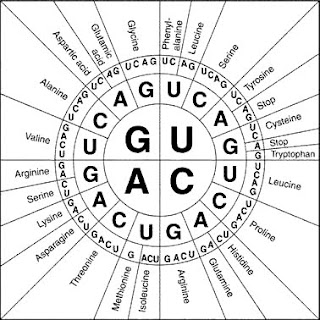
In essays on the subject of centricity, I've most often used the image of a geometrical circle, which, as I explained here,  owes someth...

Sunday, May 25, 2025

WEIRDIES AND WORLDIES PT. 3

 I would say, then, that all mysteries after Poe tend to follow either the rational model of the Dupin stories, where the detective's acumen resolves all the problems, and or the irrational model of "The Oblong Box," where even the solution of a given problem merely generates a sense of greater mystery, often of some mystery that remains insoluble.-- RATIONAL AND IRRATIONAL PROBLEMS, 2019.

In Part 2 of this series, I mentioned that Infantino's investment in infusing "Rational DC" with the irrationality of the Gothic was signified by (1) the "spookification" of HOUSE OF MYSTERY and the debut of DEADMAN, both in 1967, and (2) the reinvention of the 1950s character The Phantom Stranger in SHOWCASE #80, in 1969. But in between those two, another DC stalwart showed similar changes in 1968, a little before the Bat-books went full-bore Gothic. I have no direct testimony that Infantino intervened to alter the direction of DC's CHALLENGERS OF THE UNKNOWN, which had dealt with rationalized versions of the metaphenomenal since its genesis under Jack Kirby and Dave Wood.


For roughly six years Arnold Drake had been writing the CHALLENGERS title, often with art by Bob Brown, and all of their contributions had fallen into the rational model. By some odd chance, their last two issues on the title effectively launched the irrational, Gothic direction for the remainder of the series' original run. In issue 62 (June-July 1968), Drake introduced a new set of villains for the heroes, The Legion of the Weird, which comprised five villainous wizards from different cultures: the vaguely East European Count Karnak. the Egyptian Kaftu, the possibly American Mistress Wycker, the archaic Brit druid Hordred, and the unspecifically Indian medicine man Madoga. Drake had used this multicultural approach to sorcerous evildoers before in a 1964 Mark Merlin story, which took much the same rational approach as everything else DC published in that year. 


The Legion "weirdies," as one panel calls them, uses various mystic forces against the Challengers, not least with a gigantic mummy named Tukamenon. However, for whatever reason Drake and Brown were unable to finish the Legion's battle with the "Challs."  


Though #63 ended in a cliffhanger, the next two issues of CHALLENGERS were fill-in stories written by Robert Kanigher and drawn by Jack Sparling, who would be the closest thing the title had to a regular penciler. Though many of the stories that followed involved mad science as much as mysticism, Sparling, whatever his limitations, was much better than Brown at rendering freaky-deaky visuals, so it's not unlikely he was selected for just that purpose.


Issue #66 finishes up the Legion of the Weird story with Sparling and a Mike Friedrich script. The villains are defeated but escape, never (as far as I know) to return. Denny O'Neil then took over the series for the remainder of its original run, and he certainly showed even more penchant for supernatural mystery-stories than anyone previous. O'Neil's stories for the title were as pedestrian as those of Drake and Kanigher. but there are a couple of minor landmarks in his run. In #69 O'Neil finds a reason to get charter Challenger Prof Haley out of the way so that he can bring in the Challengers' first regular female member, Corrinna Stark, to take Prof's place. In the early sixties the Challs had a recurring "irregular female member"    named June Robbins, but Corrinna was the first regular female Challenger. 

O'Neil didn't really think that much about the character, though. She starts out helping the Challs because her mad-scientist father half-killed Prof, but though she offered to take Prof's place, she didn't really have any skill except that of being a hot girl, depending on whether she was drawn by Sparling, Dick Dillin or George Tuska. Three or four issues into O'Neil's run, Corrinna suddenly gets psychic medium-powers for the sake of some more spooky stories, and there's a moderately entertaining story in #74 that guest-stars both Deadman and O'Neil's private dick Jonny Double. Then in #75, Corrinna and the four guys finish the last of the mag's new material with a one-page introduction to a Kirby reprint, and such reprints take up the rest of the issues until cancellation with #80. (Technically the book on its bimonthly schedule ended in #77 and the last three Kirby reprint-issues appeared about two years later, in 1973.) There's a mention of Jack Kirby's new works for DC in the lettercol to issue #76 (1970), and that's probably the only reason the dying book went reprint at all. Someone, maybe Infantino, thought that Kirby fans might desert Marvel to pick up anything the King did at DC, even old work that was largely out of fashion. 

So the CHALLENGERS title spent most of its life as Rational Fantasy, detoured into Irrational Fantasy for its last two years, and then went back to its origins for its unspectacular finish. Infantino's Gothic preoccupations had some great results for the Bat-titles and tapped a market for horror-tales that Marvel never quite accessed. But despite preceding PHANTOM STRANGER into the new Weirdie terrain, "Gothic Challengers" is a mostly forgotten chapter in DC history.

WEIRDIES AND WORLDIES PT. 2

 I decided to supplement last year's WEIRDIES AND WORLDIES with further details, but realized that the original essay supplied only the rationale of distinguishing "weirdie" metaphenomenal fictions from the "worldie" type, as per the Brian Aldiss history mentioned, and then I jumped to a particular late manifestation of "weirdies at DC." So to bridge that gap, here's my essay from OUROBOROS DREAMS where I dealt with the importance of Carmine Infantino to my schema. ___________________________

DC jumped feet first into the supernatural/Gothic thing after having generally avoided that type of story for over 20 years, and it seems likely that Carmine Infantino was the biggest influence, as he himself claims in a JOURNAL interview:

I was trying to prepare for the inevitable. In my mind, “What if these things die? What if we’re back in the old days and suddenly superheroes drop off?” The reason I threw out a mess of different titles was, I wanted to sneak in The House of Mystery and The House of Secrets without people much realizing what was going on. Which I did. And also we had a chain of them out there, if you remember, and they were all successful before anyone at Marvel realized what was going on. So we had those going for us, and the superheroes going for us. Meanwhile I kept experimenting with different things.


So in Evanier's book KIRBY, ME claims, maybe a little dubiously, that when Kinney Corp bought DC in 1967, they thought they were getting the top company, only to become displeased when they learned that Marvel was such a strong second. (I think Roy Thomas claimed Marvel didn't obtain the majority market share until the early seventies though.) Still, that story isn't absolutely necessary to put across the notion that someone in management thought it was time for some changes. Infantino was made first art director and then editorial director in 1966 and 1967, and it looks like promoting horror and the Gothic was his major "experiment." Not only did he get rid of the superheroes in HOUSE OF MYSTERY in '67, he also debuted DEADMAN in the failing book STRANGE ADVENTURES. The Spectre had been revived earlier under the tutelage of Julie Schwartz, but the initial format was so rationalized that any "weirdie" appeal of the hero was nullified. Spectre also got his own title in 1967, and though it didn't last long it soon converted into spookier stories before it died. In the late sixties and early seventies, even some of the "mainstream" DC superheroes began exploiting Gothic/horror themes on their covers, such as (obviously) BATMAN but also less obvious types like FLASH and TEEN TITANS. 

One fan attributed the big change to the influence of DARK SHADOWS in '66, but I think it was more likely that DC saw that the Warren magazines had been doing well since 1964 (EERIE) and 1966 (CREEPY) respectively, and that they hired guys like EC stalwart Joe Orlando to cut into that action. That also probably led to the revival of The Phantom Stranger in 1969, as well as another fifties character, Doctor Thirteen. The intersection of the two seems to be the first regular convocation of two "weirdies" at DC Comics, in 1969's SHOWCASE #80-- though the good doctor was dropped from the Stranger's adventures pretty quickly.


Sunday, May 18, 2025

MYTHCOMICS: DAY OF VENGEANCE (2005)


One of my main purposes in maintaining my mythcomics-project is that I'm engaged with the ideal that great myths sometimes arise from the humblest (if not literally crappiest) prima materia. But I never quite saw my thesis validated quite so quickly as today. A day or two ago, I decided to work my way through a library loaner, THE DETECTIVE CHIMP CASEBOOK, which collected all of the Golden/Silver Age stories of the analytical animal. I didn't like any of the scripts or even Infantino's artwork, but it made me curious to find out: when exactly did DC Comics decide not only to revive "Bobo T. Chimpanzee," and why did someone decide to stick the ape in the midst of DC's newly-forged "Weirdoverse?" It was easy enough to find out that Chimp started hanging out with magic-users in the 2005 six-issue series DAY OF VENGEANCE, penciled by Justiniano and written by Bill Willingham of ELEMENTALS and FABLES fame. I hadn't read that series, but since it seemed in predictated on the "Green Spectre" storyline from DAY OF JUDGMENT, I had to re-read that limited series for the first time in 25 years. As I noted in my review today, this Geoff Johns item may be one of the worst of its type out there.         


So, as I said, I never read VENGEANCE in the twenty years since it came out, and I more or less expected some adequate formula from Willingham at best, as opposed to Johns' extremely lame hackwork. The only thing VENGEANCE took from JUDGMENT was the idea that The Spectre, the divine "Spirit of Vengeance" in the DC Universe, needed a mortal body in which to exist. He apparently had Hal Jordan's body to occupy for about four years after the events of JUDGMENT, but at some point, they got a divorce, and at the beginning of VENGEANCE, the Ghostly Guardian has gone a little nuts. Eclipso, one of the Universe's foremost tempter-figures, decides that it takes a nut to crack a nut, so he manages to possess the body of Jean Loring, who joined the domain of the cuckoos in 2004's IDENTITY CRISIS. In this new female form, Eclipso-Jean uses feminine wiles to tame the unquiet spirit and give him an inventive new mission. Since the Spectre is opposed to all lawbreaking, why not destroy all magic within the Universe, since magic is based on breaking, or at least bending, natural law? The Spectre, being a sucker for a bad girl, falls for this queasy logic and begins a jeremiad against all things mystical.                 

I suppose that Willingham sorta-borrowed one other thing from Johns: a loose confederation of magic-affiliated heroes who would save "the Day." But Johns whipped together a bunch of big-name magi and gave them the portentous name of "The Sentinels of Magic." Willingham came up with a new lineup and coined the group-name "Shadowpact," which would get its own DC title the very next year. Willingham purposely got many of the "big guns" out of the way for his story-- Doctor Fate, Phantom Stranger-- and concentrated on a Defenders-like collection of oddballs: Ragman, Enchantress, Nightshade, Blue Devil, the aforementioned analyst-ape, and the sword-and-sorcery type Nightmaster, who like the chimp had only recently been revived for a handful of stories.             


Though there are still one or two powerful forces to be enlisted against the Spectre, not least being the Original Captain Marvel, the less powerful Shadowpact members have to seek to use strategy against the supremely powerful spirit. It may not be total coincidence that this was also the modus operandi of the 1980s SUICIDE SQUAD, which is also where most DC readers would have previously encountered both Nightshade and Enchantress. The heroes' chances are not improved by the fact that Enchantress herself has an "evil self" that sometimes emerges to muck things up, or that she and Nightshade shared the same body for a time during their SQUAD days.  


Shadowpact's initial strategy is twofold: Enchantress does a spell that draws power from other magicians and funnels it to help Captain Marvel, while the others take on Jean-Eclipso, who's considerably less powerful than her astral ally. As a backup plan, Nightshade and Chimp go looking for a trump card in Black Alice, a side-character introduced in Gail Simone's BIRDS OF PREY comic. It's during this section that Willingham explains how Chimp became one of the magic-users who hung out at Nightmaster's "Oblivion Bar." In line with a 1981 story that showed Chimp and Rex the Wonder Dog both becoming immortal from drinking at the Fountain of Youth, Willingham asserts that now Chimp also has the power to talk to animals as well as to converse in human speech (which wasn't a property of "Bobo T. Chimpanzee.") 


Suffice to say that despite lots of heady, cosmos-shattering battles-- the very thing JUDGMENT did not offer-- Jean-Eclipso and the Spectre aren't easily defeated, and a scene in which the crazed Spirit of Vengeance contends with the wizard Shazam upon the Rock of Eternity looks a bit like what might happen if Spectre contended with the standard long-bearded image of the Judeo-Christian God. Shazam has one of the best lines in the series when he tries to reach the Spectre and warn him that he can't do away with magic, that all he can accomplish will be to is to remove all the controls that centuries of magecraft have elaborated-- a topic that also figures into this 2018 JUSTICE LEAGUE DARK arc. Shadowpact does finally defeat Jean-Eclipso by sending both the insane Jean and her puppet-master into permanent sunlight. However, that's all the closure the reader will get, because Willingham was obliged to leave things in a state of partial chaos for the sake of the ensuing INFINITE CRISIS story by Geoff Johns. All that said, Willingham actually gave the nature of the "Weirdoverse" some thought, as well as coming up with some genuinely funny badinage for the motley crew of heroes. I'm not sure if he originated the idea that former S&S stalwart Nightmaster was now a greying fifty-something who ran the Oblivion Bar where Detective Chimp came to get drunk. But I liked the varied number of cameos that the writer and artists worked into the bar's background scenes, such as Arion, The Vixen, Andrew Bennett, Animal-Man, Jennifer Morgan of WARLORD and Valda from ARAK SON OF THUNDER.               

EDIT: On 5-23-25, I was able to read a supplement that more or less provided closure for the VENGEANCE series: a follow-up, again by Willingham and Justiniano, called DAY OF VENGEANCE-INFINITE CRISIS SPECIAL. Though the story wasn't as well-plotted as the six-issue series, the special showed various occult heroes (1) solved the problem of the Spectre running amok and (2) re-assembled the Rock of Eternity after the Ghostly Guardian shattered it. Thus, even though like DAY OF JUDGMENT the conclusion juggled more characters than it needed, the special counts as the conclusion to VENGEANCE-- even though the special also generated some new plotlines that played into both Geoff Johns' INFINITE CRISIS and Willingham's ongoing SHADOWPACT series that same year of 2005. 

NULL-MYTHS: DAY OF JUDGMENT (1999)


Though I have never tried to follow the vast majority of the DC and Marvel multi-character crossovers, I think I actually bought and read DAY OF JUDGMENT'S five issues back in The Day. I remembered nothing about the story 25 years later, except that it spotlighted the hare-brained (and quickly reversed) idea of following up Hal Jordan's crimes as a mind-controlled mass-murderer by turning the Silver Age Green Lantern into a new incarnation of The Spectre. Rereading it now, I'm ready to pronounce it not only an egregious example of a null-myth, but one even worse than the one I usually cited as the worst such multi-feature crossover, Jim Shooter's 1984 SECRET WARS. I think that even had I not reread WARS for that 2016 review, I would probably have at least remembered some of the story's events, clunky as they were. DAY is nothing but writer Geoff Johns and artist Matt Smith setting up the lame Green Spectre concept.                                  

Of course, WARS had 12 issues and DAY has only five, but that in my mind just more fully indicts the editors and creators who stuffed the story with Too Many Damn Characters. It doesn't help that artist Smith and writer Johns are just not suited to depicting a big cosmic cataclysm-story, so there are a lot of scenes with colorful figures standing around exchanging dull snatches of dialogue. Unleashing all the demons of Hell upon Earth was a plot that had been done before this by both DC and Marvel many times. But this one may be the least hellraising raisings of hell ever.     


Given that the Green Spectre idea turned into a whole lot of nothing, the only significance this DAY can be judged to possess would be that it was one of the first 1990s attempts of DC to exploit its "Weirdoverse," as discussed here. So at most DAY might have provided a stepping-stone to better things. But then, it's so bad, it would almost have to.      

Wednesday, May 14, 2025

MYTHCOMICS: BORN TO KILL (BATMAN AND ROBIN 1-8, 2011-12)


Not long after Grant Morrison finished his run on various Bat-titles with DEMON STAR, writer Peter J. Tomasi and artist Patrick Gleason launched a new BATMAN AND ROBIN title. The first eight issues continued Morrison's narrative regarding the Caped Crusader's relationship to his ten-year-old son, whom Batman agrees to train as the New Robin. And just as Morrison rewrote some elements of the 1987 SON OF THE DEMON story for his narrative, Tomasi did the same for Morrison. In SON, Batman has a consensual love affair with Talia Al Ghul and departed without knowing he'd left a bun in her oven, after which Talia put up the child for adoption. Morrison revised this scenario, in which Talia drugged Batman into having sex with her and thus knocking her up, and then kept the child Damien, but raised him as one of her assassins, capable of killing without remorse. Tomasi alludes to the copulation but implies that it was once more consensual. Tomasi may have done this because he wanted to de-emphasize Talia's role in the molding of Damien in order to better focus on the main conflict of the BORN TO KILL arc: how does a crimefighter dedicated to fighting evil without killing evildoers get through to a young boy who's been taught to "destroy your enemies before they destroy you?"                       

                           
A short prelude introduces the reader to a new Bat-enemy: a professional assassin named Nobody. He targets one of the various "international Batmen" whom Bruce Wayne funded during the Morrison run, and the killer later comments that the appearance of a particular European Batman provoked Nobody to journey to Gotham for a confrontation with the original. This event takes place around the same time as Batman's annual pilgrimage to Crime Alley, to venerate the memory of his slain parents. He encourages Damien to go along for the first time ever, and the boy does so, though he complains of his father's "sentimental nonsense." In truth, Damien desperately wants his father's approval, this being the reason he set himself to become the New Robin. However, the apple has not fallen far from the tree, for like his father Damien also does not like to admit needing anyone but himself. For Batman's part, his new role as a parent may have moved him to break with tradition for the sake of the future. He tells Damien that he will no longer honor the date of his parents' hideous deaths, but rather the date of their wedding, as a means of celebrating life. Batman concludes his last vigil in Crime Alley by taking a memento of that fateful night-- a ticket or brochure from the movie Bruce Wayne and his parents before the latter two perished. He makes the keepsake into a paper boat and watches it sail off into the sewer-river beneath Crime Alley.                                                                                                                                                                
Shortly thereafter, Batman and Robin contend with a gang of gunrunners. The criminals appear to get away but in truth they're caught and killed by the newly arrived Nobody. The villain makes a telling reference to his earlier slaying of the Euro-Batman, whom he regards as part of the crusader's "new global circus act." (Was the "circus act" metaphor a Dick Grayson reference?) Meanwhile, Bruce Wayne frets about Damien's barely repressed tendencies toward homicidal violence. The hero wonders if he's as perverse as Talia, for though Batman was born to prevent other children from meeting terrible fates, he shows an uncanny penchant for attracting younger people to serve in his crusade. But soon Batman has bigger problems, as he encounters, for the first time in many years, Morgan Ducard, grown son of Henri Ducard, one of the men who tutored Bruce Wayne in certain crimefighting skills. As a result of this new encounter with an old enemy, Batman grounds Robin from going on patrol.                                                                                                                                   
Not surprisingly, the volatile son of Batman takes the restriction as a personal affront, refusing to stay under cover from a threat his sire will not identify. Robin duly takes down some thugs harassing a couple of victims, with a very timely scene in which one thug tries to take phone-photos of Robin's death and the young crusader punches both the creep and his phone. However, his being out and about gives Nobody the chance to play mind games on the boy. Nobody correctly notes that one of Robin's opponents, while alive, is now all but brain-dead from the beating, and the assassin finishes the man off. He also paralyzes Robin, moments before Batman arrives. The older hero contends with Nobody, instantly realizing it's Morgan Ducard despite the concealing costume.                                                           

   Batman loses the fight, but Nobody, like many an earlier Bat-foe, wants the chance to gloat. He binds both heroes and makes them watch a homemade movie on an otherwise deserted drive-in movie screen, showing "Batman's Greatest Failures"-- that is, all the chaos made inevitable because Batman would not simply execute the villains he battled. Alfred comes to the rescue with Bat-tech, and Nobody is forced to flee. However, the fact that Batman didn't bare all regarding the origins of Nobody leads to new friction between the two crimefighters. Robin once more escapes Wayne Manor, though this time he plans to fake allying himself to Nobody in order to bring the villain down. While searching for Robin, Batman records, for his son's potential benefit, the full story of Bruce Wayne's experiences with Henri and Morgan Ducard. I won't elaborate that backstory here, except to say that Wayne's training under Father Henri resulted in creating Morgan's jealousy of the new student, thus leading to this current jeremiad.                                                         

    
Refreshingly, though, Tomasi reveals that Nobody never really intended to make Robin his new apprentice just to screw with Batman's head. Rather, because Morgan Ducard tried to kill Bruce Wayne, who retaliated by beating Morgan bloody and dumping Morgan in Henri's lap, Nobody intends to visit the same violence upon Damien, just to one-up Batman in symbolic terms. "You stole my father, so I'm stealing your son! Quid pro quo!" The two foes battle, and Batman wins, predictably sparing Nobody's life despite Batman's earlier "and you expect to live?" rhetoric.                                                                         


                                                                                                                                                                  However, because Nobody knows the heroes' civilian identities, and thus can strike at them again and again, Damien does what his mentor won't do: using the same paralysis technique Nobody taught him, in order to terminate the villain's life. Yet Batman does not upbraid his son this time. He only tells him that he will have to live with his act for the rest of his life-- even as Bruce Wayne lives with having come close to killing Morgan earlier-- but that he can still "be the best Damien Wayne you can be." And so, going back once more to my distinction between problems and conundrums, the "dramatic problem" of what to do about Nobody's menace is solved, but the "mythopoeic conundrum"-- as to whether killing is ever justified-- always remains partly open.      


Monday, May 12, 2025

SEXUAL DIMORPHISM BLUES, AGAIN PT. 3


   "I will surely multiply your pain in childbearing; in pain you shall bring forth children. Your desire shall be contrary to your husband, but he shall rule over you."-- God to Eve, Genesis 3:16.  

                                                                                                                                                                                                                          This familiar Biblical phrase testifies to the ease with which many men and women in traditional cultures validated the discrepancy of power between male and female. Genesis never states that men should rule over women because men have more physical power, or even that men should rule because they're the ones who sally forth to defend home and family from dinos and dragons and the like. Eve allowed the serpent to beguile her, and Adam transgressed as well because of her. Only for that reason must all of Eve's female children defer to their husbands, while all the male offspring will labor to "till the soil." After that the question of male and female power is dropped to get into the Cain story in Genesis 4. We don't read about any particular "contrary desires" on the part of wives-- who function mostly to breed-- until Genesis 21:10. There Sarah more or less orders her husband Abraham to kick out the bondswoman Hagar and her son by Abraham, so that Sarah's child will occupy the catbird seat. So Sarah takes primacy as the first post-Eden female to master the Power of the Nag.                                                                                       

                                                                                                               Of course, there will be various other conflicts of "contrary desires" in various parts of the Bible, and I think it a fair generalization to say that a lot of them come about because of the conflict between "men of violence" and "women of sex," for which the narrative of Samson and Delilah stands as an archetypal example. On occasion, as with the tale of Jael and Sisera, the woman is able to use sex to once more beguile the violent male into lowering his guard. So at long last, I'm making the claims that from these "contrary desires" are the source of "the blues" I see rising from the exigencies of sexual dimorphism.                                                                               

  Even for those with a strong religious belief, the dimorphism of the sexes must seem a very arbitrary decree by God, especially since said decree is not expressly recorded in the Bible. It's even more so from the POV of the evolutionist, who can only argue that in their archaic development into homo sapiens, women remained smaller and less able to defend themselves because (say) their function of raising children remained paramount. Either way, archaic or modern, the physical inequity remains a foundational fact of life. This leads to psychological inequities rooted in compensation, with the woman being a nag to the man and the man being a bully to the woman. And yet, the history of religions does indicate-- as I argued in the SACRED AND PROFANE VIOLENCE series-- that human beings have sometimes been able to invert the expected roles, imagining the archetypes I termed "the Barbarous Woman" and "the Compassionate Man." I don't have any solution to any of the grievances that arise from the embodied inequities of the two sexes. But I will repeat, just to be clear, that mere representation and opposition to the "status quo" often functions more to exacerbate the suffering than to alleviate it.                                                        

SEXUAL DIMORPHISM BLUES, AGAIN PT. 2

 "Oh, God, that I were a man! I would eat his heart in the market place!"-- Beatrice lamenting the limitations of her not very muscular gender, MUCH ADO ABOUT NOTHING.


"No one wants to be born a woman."-- Dave Sim, long before anyone knew what trans ideology was.

Obviously, Shakespeare's audience did not think that Beatrice really wanted to be a man, just because she fantasized about becoming one so that she could go toe-to-toe with Claudio-- who, admittedly, is something of an asshole. But since she knows she can't change her sex, she's okay with using her sexual favors to motivate Benedick into assaulting the target of Beatrice's wrath. As for Dave Sim's infamous statement-- which may have been made with an eye to being provocative-- it goes without saying that some men do wish they had been born women, whether or not one credits the diagnoses of gender dysphoria as an illness. In fact, some statistics suggest that trans women outnumber trans men two-to-one.                                                                   


I've no use for the ideology-based pseudoscience of imagining endless genetic blueprints for whatever gender-combinations can be imagined.  I consider it more logical to see even the syndromic desires to be the opposite sex to exist in a continuum that includes non-syndromic fantasies about possessing the characteristics of the sex opposite to one's birth-sex. Even the syndromic compulsions share much of the "grass is greener on the other side" mentality. I don't agree with the sexual determinism of conservative thought, but neither do I agree with the liberals' falsehood that biology can be (or should be) entirely circumvented.                                                                 

Fiction, as I've said many times, is a world where anyone can indulge any number of fantasies as to the true nature of the world, and those that challenge an alleged "status quo" are not perforce more imaginative than those that do not. For example, Dave Sim made many snide remarks (with which I have disagreed) about the fantasy of the heroic female because he thought the archetype ran contrary to "real life," even within the context of his own independent fantasy-world-- which was, of course, responsive to his own fantasies. But most of the ultraliberal feminists (which includes male feminists like Kevin Feige) wanted more female heroes not out of a deep passion for the archetype and all its possible permutations. but for an artistically barren concept of ideological representation. In my mind at least, there's no doubt that Sim is an artist and Feige is just a lucky hack, possibly one whose greatest accomplishments were entirely collaborative in nature.       

That'll teach me to bring up Dave Sim here; I totally got off the subject of the dimorphism blues. Maybe I'll make it there in Part 3.